TL;DR:
To fix videos that stop playing mid-way due to file corruption, missing codecs, or outdated drivers, you must either switch to a more resilient media player, update your system components, or run a dedicated file repair tool.
● Open the video in VLC Player, an open-source tool with built-in internal codecs capable of bypassing common playback failures and playing incomplete MP4, AVI, and MKV files.
● Resolve missing format support by installing the K-Lite Codec Pack, and eliminate hardware-based stuttering by updating your graphics drivers via the Device Manager.
● Repair severely corrupted video files using Wondershare Recoverit, which requires Windows Vista/7/8/10/11 or macOS X 10.10 or later and allows you to batch-process and preview the restored files.
Ask AI for a summary
 ChatGPT
 Perplexity
 Gemini
 Claude
 Grok
Grok
A video may stop playing in the middle because the file is damaged, the media player cannot decode the format, the system lacks the right codec, or the computer does not have enough resources to keep playback smooth. The fix depends on whether the problem happens with one video file or every video you play.
If only one .mp4, .mov, or .mkv file freezes at the same point, the video may be corrupted. If multiple videos stop, focus on the player, codec, graphics driver, storage speed, and background apps first.

Try Recoverit to Recover Corrupted Videos
 Security Verified. Over 7,302,189 people have downloaded it.
Part 1: Why Video Stops Playing in the Middle?
Use the symptoms below to identify why your video stops playing before choosing a repair method.
| Symptom | Likely Cause | Best First Fix |
| One video always stops at the same timestamp | Corrupted video file or damaged file index | Repair the file with Recoverit Data Recovery |
| All videos in one format fail | Missing or incompatible codec | Use VLC or install a trusted codec pack |
| Videos freeze, stutter, or show a black screen | Graphics driver issue or hardware acceleration conflict | Update graphics drivers and test playback again |
| Video stops when many apps are open | Low memory, CPU overload, or background app conflict | Close unnecessary apps in Task Manager |
| Only online videos pause | Network instability, browser cache, or streaming issue | Check internet connection, browser, and site status |
| Video plays in one app but not another | Player compatibility issue | Update the player or open the video in VLC |
Part 2: How to Fix Video Stop Playing Errors
Now that we understand why videos stop playing, let's look at how to fix these errors.
Which Fix Should You Try First?
| Your Situation | Try This First | Why It Works |
| Only one local video file stops | Use Recoverit Data Recovery video repair | The file itself may be corrupted |
| The same file plays in another app | Update or replace the current video player | The player may not support the format correctly |
| The format is unusual or codec-heavy | Install trusted codecs or use VLC | The system may not decode the video stream |
| Playback stops after lagging | Close background apps and free system resources | The device may be running out of CPU, RAM, or disk bandwidth |
| Videos show black screen or crash the player | Update graphics drivers | Display drivers affect hardware decoding and rendering |
There are several simple steps you can take to ensure your videos play without interruptions. From repairing corrupt files to updating your video player and installing necessary codecs, you'll find easy fixes that can make a big difference in your viewing experience.
Fix 1: Fix the Corrupt Video via Recoverit Tool
Use Recoverit Data Recovery when a local video file is corrupted, stops at the same timestamp, shows a black screen, has audio-video sync problems, or cannot open in multiple players.
- Download and install Recoverit Data Recovery on your Windows or macOS computer.
- Open the program and choose the video repair feature.
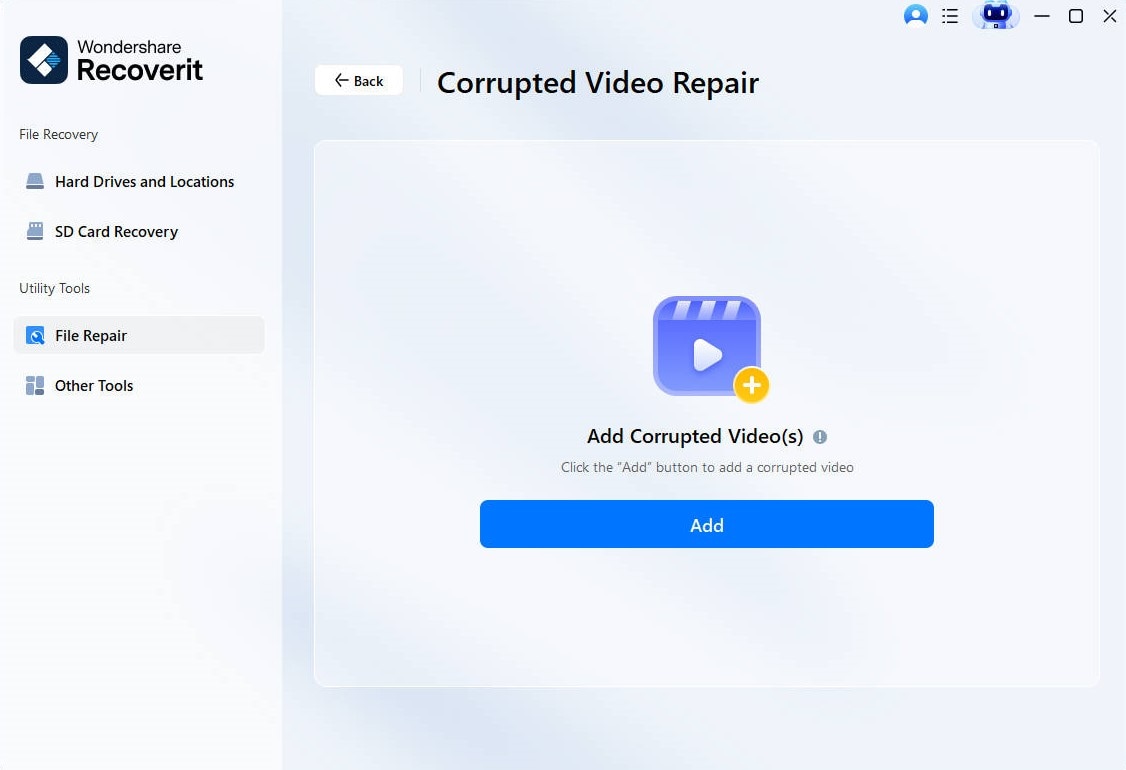
- Add the corrupted video file from your local drive, external drive, SD card, USB drive, or camera card.
- Click Repair and wait while the software analyzes the damaged video.
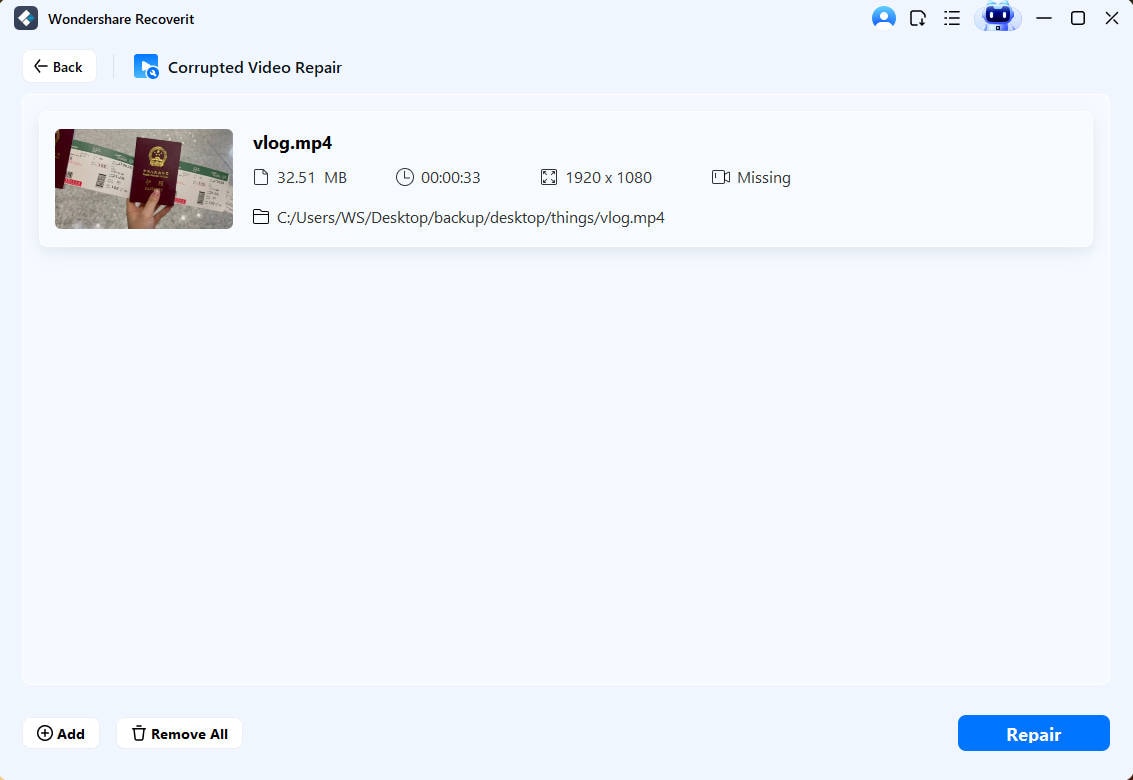
- Preview the repaired result when available.
- Save the repaired video to a different folder or drive.
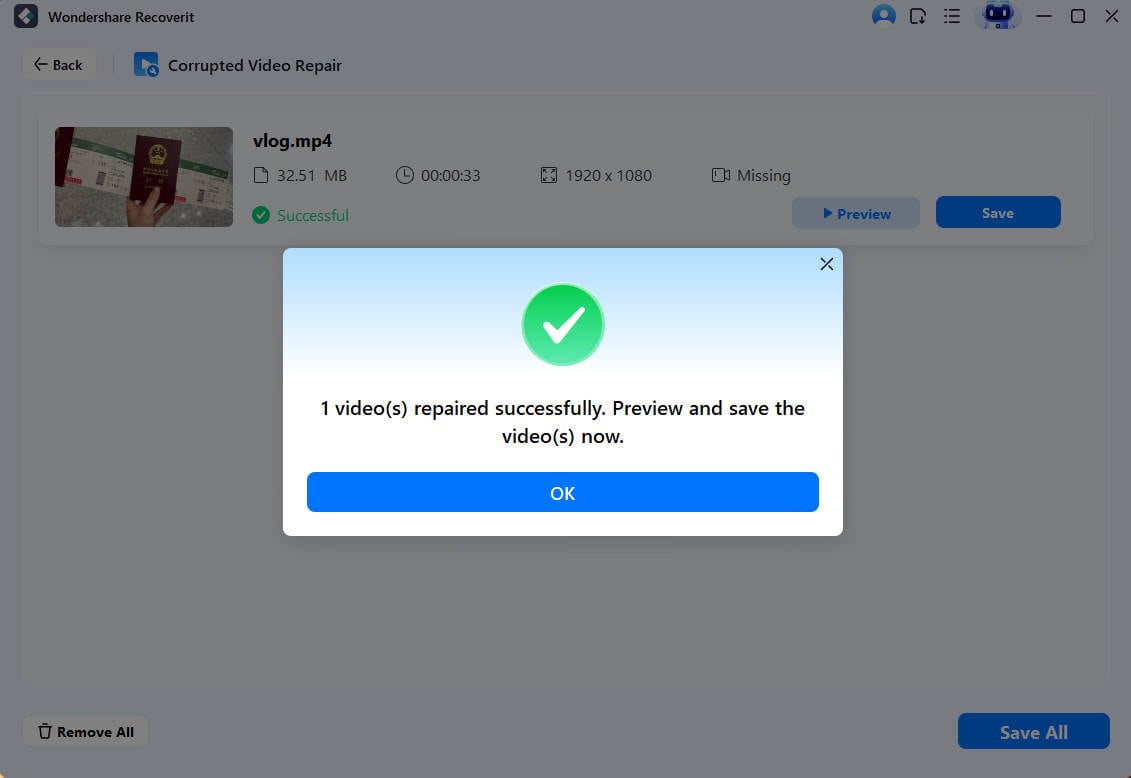
- Play the repaired file in VLC or another updated video player to confirm the issue is fixed.
Related Video >>: How to Repair Corrupted Videos?

Fix 2: Update the Player, Codecs, and Graphics Driver
If several videos stop playing or the same file plays correctly on another device, your playback environment may be outdated or incompatible.
- Update your current video player from its official website or app store.

- Restart the player and test the video again.
- If the file format is not supported, open it in VLC Media Player, which supports many common video formats and built-in codecs.
- If you still need codecs, download them only from trusted sources and avoid bundled adware.
- On Windows, open Device Manager, expand Display adapters, right-click your graphics card, and choose Update driver.
- Restart the computer after updating drivers.
- Play the video again and check whether freezing, black screen, or mid-playback stopping is resolved.
Fix 3: Free System Resources and Test Playback in VLC
When a video stops after lagging or stuttering, the device may not have enough resources for smooth playback.
- Press
Ctrl + Shift + Escto open Task Manager on Windows.
- Close unnecessary apps that are using high CPU, memory, disk, or GPU resources.
- Pause large downloads, cloud sync tasks, screen recorders, or heavy browser tabs.
- Move the video from a slow external drive to an internal drive and test playback again.
- Open the video in VLC Media Player.

- If VLC plays the file correctly, the original player is likely the problem.
- If VLC also stops at the same timestamp, repair the video with Recoverit Data Recovery.
Part 3: Tips to Avoid MP4 Video Stopped Playing in the Middle
To reduce the chance of an .mp4 video stopping in the middle, protect the file during recording, transfer, storage, and playback.
- Finish recording properly: Do not shut down the camera, phone, or screen recorder before the video is saved.
- Transfer files safely: Wait for copy, upload, or download tasks to complete before unplugging a device.
- Keep backups: Store important videos on at least one additional drive or cloud location.
- Use updated players: Keep VLC, Windows Media Player, QuickTime, or your preferred player current.
- Maintain drivers: Update graphics drivers through trusted official sources.
- Avoid low storage: Keep enough free space on the drive used for recording and playback.
- Scan storage health: Check SD cards, USB drives, and external disks if multiple videos become corrupted.
Conclusion
When a video stops playing in the middle, diagnose the pattern first. If one file fails at the same point, repair the video. If many files fail, update the player, codecs, graphics driver, and system environment.
For corrupted local videos, Recoverit Data Recovery can repair damaged files and help restore playable copies. For compatibility issues, VLC, updated drivers, trusted codecs, and fewer background apps usually solve the problem.
Try Recoverit to Recover Corrupted Videos
Security Verified. Over 7,302,189 people have downloaded it.
FAQ
-
1. Why does my video stop playing halfway?
Videos can stop playing halfway for various reasons. It might be due to corrupt video files that cannot be read by the player. Another reason could be missing codecs, which are essential for video playback. Sometimes, outdated video players or graphics drivers can also cause this issue. Ensuring your software and files are up to date can help resolve these problems. -
2. How can I fix a video that is not playing?
To fix a video that is not playing, you can try several things. First, update your video player app to the latest version. This often solves compatibility issues. Second, install necessary codecs if they're missing. Codecs allow your player to read and play video files. And finally, you can try using VLC Player, which supports a wide range of video formats. -
3. What should I do if my MP4 video stops playing in the middle?
If your MP4 video stops playing in the middle, there are a few steps you can take. Use a tool like Recoverit to repair the corrupt video file. Updating your video player can also help resolve playback issues. Additionally, make sure your graphics drivers are up-to-date to ensure smooth video playback. These steps can help you enjoy uninterrupted video watching.