To save an Instagram photo, first decide whether you want to bookmark a post inside Instagram or keep an image file on your device. The bookmark icon adds a post to your private Saved collection; it does not download a JPG. For photos you own, check the originals on your device, turn on Instagram's original-photo saving setting for future eligible posts, or request an account-data export. For a permitted image you can view, a screenshot is another option. If a photo you already saved on a computer or memory card was later deleted, file recovery is a separate task.
Quick answer: Tap the bookmark under a post to keep it in Instagram; that does not download a JPG. For your own photos, check Archiving and downloading > Save original photos where available or export a copy through Accounts Center. You can also capture a permitted image with a screenshot, but it is not the source-resolution file. Never share your Instagram password with an unverified downloader.
In This Article
Part 1. Choose the Right Instagram Photo Saving Method
Before trying a download tool, identify whose photo it is and where you need it stored. Some methods keep only a reference within Instagram, while others create a local image you can back up.
Saving A Post Versus Downloading A File
| What you need | Use this method | What you get |
| Remember a post for later | Instagram Save/bookmark | In-app Saved item, not a photo file |
| Keep a photo you posted | Original device file, Save original photos for eligible future posts, or Accounts Center export | Local image or an archive of your own account data |
| Keep another person's public photo with permission | Device screenshot | Screenshot file, not the source-resolution original |
| Find a file you saved but deleted from a device | Trash/Recently Deleted, backup, or supported storage recovery | Restored local file if available |
Important: Public visibility does not mean unrestricted permission to download and republish another creator's work. Ask for the original file when image quality and permission matter.
Part 2. Save Instagram Posts Inside the App
Instagram's Save feature is the quickest way to keep a post accessible in your account. It is not a file-download function, and the post may stop being available if its owner removes it or changes its visibility.
Bookmark An Instagram Post
Step 1. Open Instagram and navigate to the post you want to keep. Make sure you are signed in to the intended account.

Step 2. Tap the bookmark icon beneath the post. For supported interfaces, press and hold Save to choose an existing collection or create a new one.

Step 3. Open your profile menu and find Saved to view the post or collections. Instagram changes menu labels and arrangement over time.
Expected result: The post appears in your Saved area, but no JPEG or PNG is added to your phone's gallery. If you cannot find it, check which Instagram account is active and whether the post is still available.
Part 3. Keep an Instagram Photo as a Local File
If you need an actual image file, use built-in capture functions for photos you are allowed to keep. Captures include only the pixels displayed on screen and may contain app controls; they do not replace the photographer's original file.
Capture a Permitted Photo on iPhone and Android
Step 1. Open the photo you are permitted to capture. Adjust the display and hide unrelated controls where the app permits it.

Step 2. On an iPhone with Face ID, quickly press Side + Volume Up; on an iPhone with a Home button, press Side + Home (or Top + Home on older models). On many Android phones, press Power + Volume Down; check your model if that shortcut differs. The Instagram image above is an older interface example, not an illustration of the phone buttons.
Step 3. If your iPhone shows the screenshot editing screen, save it to Photos when prompted. Then open Photos or your Android gallery, crop only if necessary, and confirm the captured image is stored locally. Keep a separate backup if it matters.
If it fails: Check screenshot permissions or controls and available storage. This method produces a screenshot, not the original-resolution uploaded picture. The retained Instagram screenshot above shows an older layout; follow Apple's current iPhone screenshot steps for the buttons and the save screen.
Save A Permitted Instagram Image On A Windows Or Mac Computer
Step 1. Open the Instagram post in your browser and confirm you have permission to keep an image.
Step 2. On Windows, open Snipping Tool (or press Windows + Shift + S) and capture the image area. On a Mac, use Shift + Command + 4 to select the area to capture.
Step 3. Save the resulting image file in a clearly named folder, then reopen it to verify that the image is legible.
Expected result: You have a screenshot on your computer, not an Instagram original. If you own the photo, your source file or official account export is generally more useful than a browser capture. See Microsoft's Snipping Tool instructions or Apple's Mac screenshot guide.
Part 4. Download Your Own Instagram Photos and Information
For posts you created, Meta provides a first-party information export. This is a better starting point than granting a third-party site access to your account. Export paths can change with the Accounts Center interface.
Request Your Photos Through Accounts Center
Step 1. Open Instagram, go to your profile, and open the settings menu. Navigate to Accounts Center.
Step 2. Under Your information and permissions, choose Export your information, Download your information, or Download or transfer information, whichever appears in your account.
Step 3. Select Create export if shown, choose your Instagram profile, and use Export to device or the equivalent download option. Choose the photos and other information you want, the date range, media quality and available file options; submit the request.
Step 4. When Instagram notifies you that the download is ready, obtain the archive from the official account center, extract it on a trusted device, and verify the images inside. Availability and package contents depend on the requested categories.
Expected result: An archive of information Instagram still makes available for your account; it is not a guaranteed recovery mechanism for permanently removed posts. Refer to Meta's Instagram information download guidance.
Version note: Older tutorials may show a separate Privacy and Security > Data Download screen. Do not follow that old location if your account now displays Accounts Center.
Keep Your Original Uploads And Story Copies
If you regularly post your own photos, Instagram may offer an option to save a device copy automatically. This helps with future eligible uploads; it does not download someone else's pictures or recreate every photo you posted before the setting was enabled.
Step 1. In the Instagram mobile app, open your Profile, tap the menu in the upper-right corner, and look under Your app and media > Archiving and downloading (the grouping may differ by version).
Step 2. If available, enable Save original photos or Save original posts. Story-specific options such as Save story to camera roll or Save story to gallery may be separate. These controls apply to content and devices Instagram supports; they are not a tool for downloading another creator's posts.
Step 3. After creating or posting a new photo you own, open Photos on iPhone or Gallery on Android and check whether a local copy appears. Some app versions save content created with Instagram's camera rather than every existing upload. If no copy appears, verify photo access permissions, available storage, and the exact control shown in your Instagram version.
Step 4. For photos posted before this option was turned on, check your original camera roll, existing cloud or computer backups, or request your own account information through Accounts Center. Back up any verified files separately. Instagram's photo-saving help, also linked by the Australian eSafety Commissioner, provides an official reference for device-saving features.
If the original is missing: Check cloud and device Trash before trying local storage recovery. Neither turning on this setting now nor requesting your account archive guarantees restoration of a photo permanently deleted from your device.
Part 5. Find Instagram Photos You Previously Saved
This section is for a different problem: a JPG, PNG, or screenshot once existed on your phone, computer, SD card, or USB drive, and is now missing. Check reversible recovery options first to avoid replacing recoverable data.
Check The Photos App And Recently Deleted
Step 1. Search the phone gallery or Photos library for the date and filename of the original photo or screenshot.
Step 2. Check Recently Deleted or Trash in the same app and any synchronized cloud service; retention periods and labels vary. Restore the file if it is still present.

Step 3. Open the restored file and confirm the image is complete. If you cannot locate the file, inspect other backups before adding more files to the affected storage.
Note: The preserved iPhone image above illustrates an older Photos interface, not the latest location of Recently Deleted. In current Photos versions, open Collections and find Recently Deleted under Utilities, if available. See Apple's current photo recovery instructions for your iOS version.
Recover A Deleted Local Photo From A Computer Or Removable Card
Use this workflow only if the image was already stored on a computer drive, removable SD card, or USB drive and then deleted or became inaccessible. Recoverit desktop software does not directly retrieve private Instagram servers or bypass phone encryption.
Step 1. Stop using the affected drive or card. If the photo is still available elsewhere, copy that known-good original first. Connect the removable media through a reliable card reader if appropriate.
Step 2. Open Wondershare Recoverit, choose the drive or storage location that contained the photo, and start a scan.
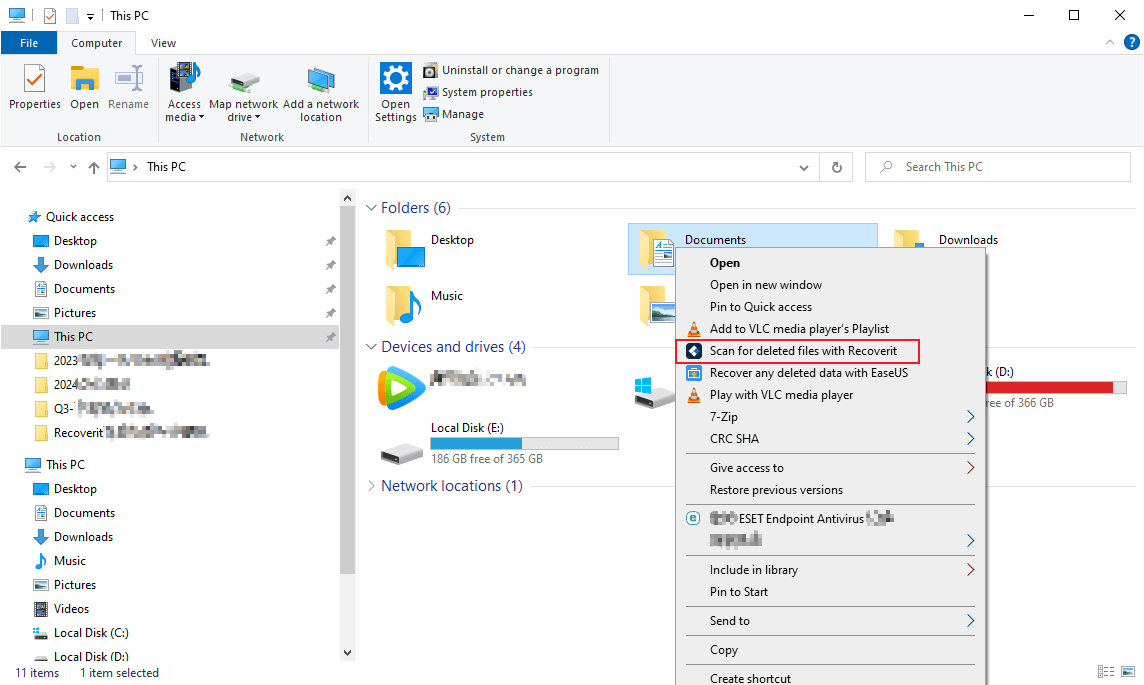
Step 3. Preview any recoverable JPG or PNG results. Restore selected files to a different healthy drive, then reopen them to confirm image quality.
If the file does not appear: Stop writing to the source and consider professional help for physically damaged media. Scanning cannot guarantee recovery of overwritten blocks or permanently deleted cloud-only content. If your missing image was an Instagram post rather than a saved JPG/PNG on a drive, the steps for recovering deleted Instagram photos are different from local file scanning. For supported storage, see Recoverit Photo Recovery.
Who should download Recoverit? People who actually lost a previously saved local photo from compatible PC or removable storage. If your only goal is to bookmark a live Instagram post, you do not need data-recovery software.
Part 6. Fix Common Instagram Photo Saving Problems
Most saving issues are either a misunderstanding of Save versus Download, a missing local permission or file, or an account/export interface difference. Try the smallest applicable fix first.
- The Save button did not put a photo in Gallery: Expected behavior: the Instagram bookmark saves a post to the app, not device storage. Use a permitted screenshot or your own original file.
- A downloaded image is blurry: A screenshot cannot recreate original resolution. Request the source image or locate the original upload and backup.
- Your own photos stopped saving to the camera roll: Check Archiving and downloading for the original-photo setting, confirm Instagram has permission to access Photos or your gallery, and test with new content. This does not automatically save past posts.
- A downloader asks for your password: Do not enter Instagram login credentials into untrusted downloader services.
- The export menu looks different: Look under Accounts Center and follow current Meta account-data instructions. Older Privacy and Security screenshots may be obsolete.
- A saved post is no longer accessible: It may have been removed or restricted by its owner; a Saved bookmark is not an independent copy.
- A previously downloaded picture disappeared: Check device/cloud Trash and backups first; use storage recovery only for a real missing local file.
Conclusion
To save Instagram photos, use the bookmark icon for in-app reference, enable original-photo saving for future eligible photos you create, or export your own account information. Screenshots can preserve permitted on-screen images but are not original files. If a real image was previously saved to your computer or removable storage and later lost, check Trash and backups first; Recoverit may help recover that local file, not download photos from Instagram.
FAQ
-
Can you download Instagram photos directly to your phone?
For your own photos, keep the camera original, enable Save original photos for future eligible posts if your app supports it, or export your account data through Accounts Center. A permitted screenshot creates a separate image; Instagram's bookmark Save control alone does not download a JPG. -
Does Instagram notify someone if I save their post?
Instagram's ordinary Save bookmark is a private account action, but platform behavior can change. Saved posts are not the same as downloading or reposting someone else's copyrighted content. -
How do I save Instagram photos to my computer?
For your own posts, request a copy through Meta Accounts Center or use the original files. For permitted on-screen content, capture the image with Windows Snipping Tool or the macOS screenshot shortcut. -
How can I recover downloaded Instagram photos that I deleted?
Check Recently Deleted, Trash and backups. If the file was already stored on a computer or removable memory card, a compatible file-recovery program may help before its storage space is overwritten. It cannot retrieve an image that never existed on that device. -
Is an Instagram photo downloader safe?
Third-party services differ in reliability, permissions and privacy practices. Avoid giving passwords or private-account access to downloader sites, and respect the creator's rights. Official account export is preferable for your own data.


