


 TL;DR:
Choosing the optimal bootable USB creator depends on your target operating system and workflow, with options like Rufus providing the fastest creation speeds and Ventoy eliminating the need to reformat drives for new ISO files.
● MultiBootUSB and Universal USB Installer support persistent file storage and booting multiple operating systems from a single drive, whereas Rufus requires Windows 8 or later and restricts users to a single ISO per session.
● Operating system compatibility dictates tool selection: DiskMaker strictly requires macOS 10.9 or later, UNetBootin targets Linux distributions, and Balena Etcher offers broad cross-platform support across Windows, macOS, and Linux.
● For specialized tasks, ImageUSB Writer performs mass bit-level duplication and flash drive zeroing, while WinToUSB creates full plug-and-play Windows installations but limits its free version strictly to non-commercial use.
Ask AI for a summary
 ChatGPT
 Perplexity
 Gemini
 Claude
 Grok
Grok
Bootable USB software helps create installation, rescue, diagnostic, or portable operating system media from ISO, IMG, WIM, VHD, or other bootable image files. The right tool depends on your operating system, target device, firmware mode, file system, and whether you need a single installer or a multiboot toolkit.
Before creating a bootable USB, back up the USB drive. Most tools format or overwrite the selected drive, and choosing the wrong disk can erase important files.
| Selection Factor | Why It Matters | Best Tool Type |
| Windows installation | Windows ISO files often need Windows-specific boot handling | Rufus, Microsoft Media Creation Tool, WinToUSB |
| Linux Live USB | Linux distributions usually work well with ISO flashers | Rufus, UNetbootin, Universal USB Installer, balenaEtcher |
| Multiboot USB | One USB can hold many ISO files | Ventoy, Universal USB Installer |
| Cross-platform flashing | Useful if you work on Windows, macOS, and Linux | balenaEtcher |
| Portable Windows | Runs Windows from external storage | WinToUSB |
| USB duplication | Writes images to multiple USB drives | ImageUSB |

Top 10 Bootable USB Creators
Best Bootable USB Software by Use Case
| If You Need To | Choose | Why |
| Create a fast Windows or Linux installer on Windows | Rufus | Portable, open-source, fast, and supports BIOS, UEFI, Windows ISO, Linux ISO, checksums, and bad-block checks |
| Create official Windows installation media | Microsoft Media Creation Tool | Official Microsoft path for Windows 10 and Windows 11 installation USB drives |
| Keep many ISO files on one USB | Ventoy | Install once, copy ISO/WIM/IMG/VHD files to the USB, and choose from a boot menu |
| Flash Linux, Raspberry Pi, or appliance images cross-platform | Balena Etcher | Simple three-step interface, validated flashing, and Windows/macOS/Linux support |
| Create a portable Windows To Go drive | WinToUSB | Designed for portable Windows, Windows installation USB, and WinPE bootable USB creation |
| Build a multiboot toolkit with persistence | Universal USB Installer | Supports multiboot toolkits, UEFI/BIOS, Linux live systems, Windows installers, and persistent storage workflows |
| Create Linux Live USB drives | UNetBootin | Good for Ubuntu and other Linux distributions, but not ideal for Windows installers |
| Duplicate USB images or zero a flash drive | ImageUSB | Useful for writing images to multiple USB drives and low-level USB imaging tasks |
| Create old macOS installer media | DiskMaker X | Legacy macOS-focused option; verify current macOS compatibility before recommending |
| Use legacy multiboot workflows | MultiBootUSB | Legacy option; modern users should usually consider Ventoy or Universal USB Installer first |
Rufus
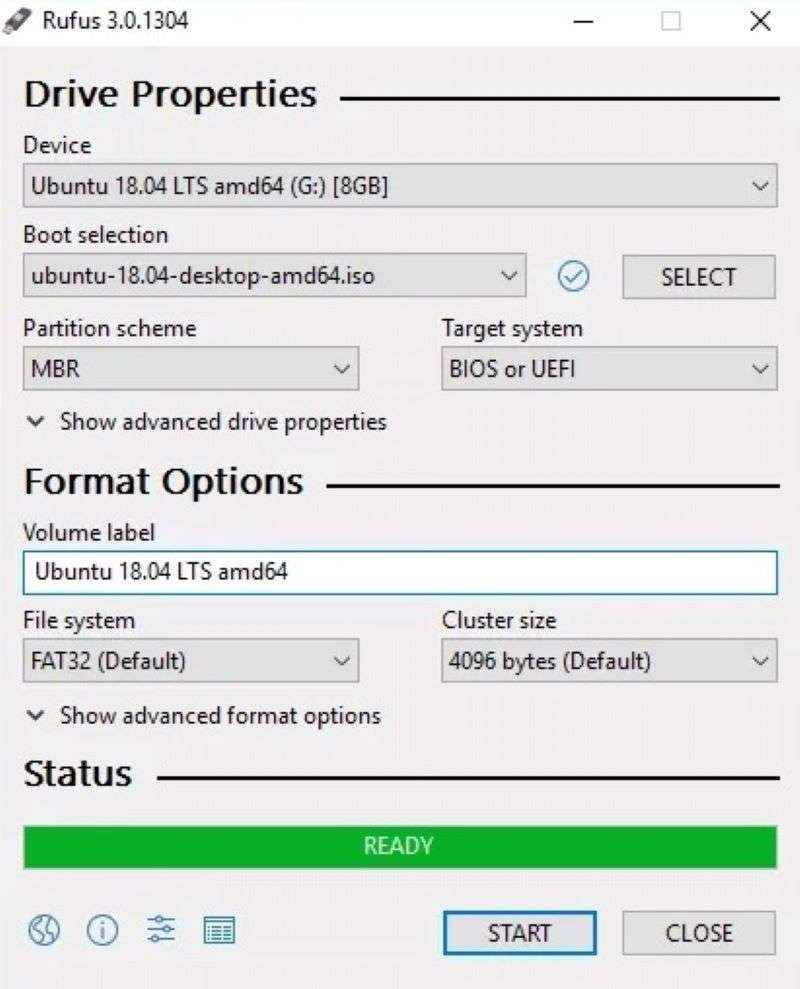
Rufus is an open-source USB booter that enables you to create a bootable USB for all versions of Windows and Linux. While running this utility, you can directly double-click the set-up file without installation. Moreover, Rufus excels in speed, outpacing competitors in bootable USB creation. It also offers advanced options for customized partition schemes and cluster sizes, along with the ability to check USB drives for bad blocks, ensuring reliability.
Ratings: 4.6/5
Compatible System: Windows 8 or later.
WinToUSB
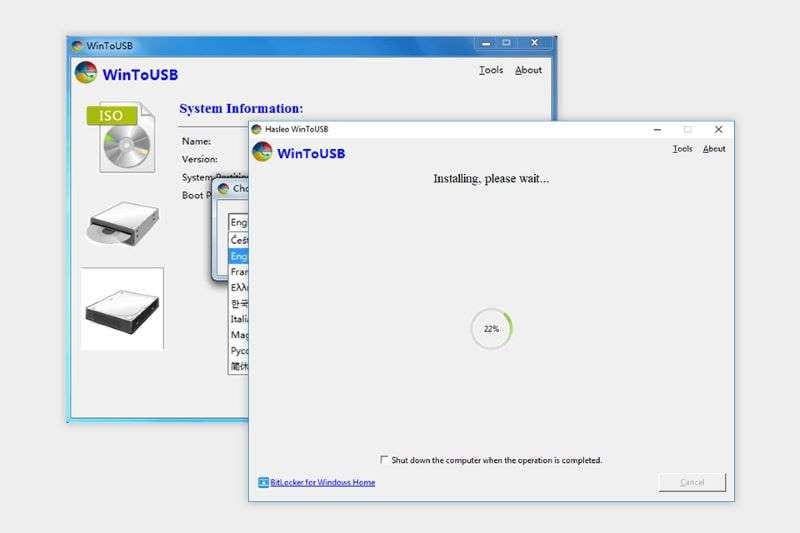
WinToUSB emerges as a plug-and-play bootable USB software, enabling the complete installation and operation of MS Windows on USB flash drives. This free, lightweight tool not only simplifies the process but also enhances security and convenience by backing up all files to the flash drive. It boasts further features, including the ability to transfer Windows PE image contents to a USB drive, expanding its capabilities. With an intuitive wizard-style interface and multilingual support, the tool ensures a seamless experience for users of varying technical levels and linguistic backgrounds.
Ratings: 4.2/5
Compatible System: Windows 7 or later (64 and 32 bits)
Universal USB Installer
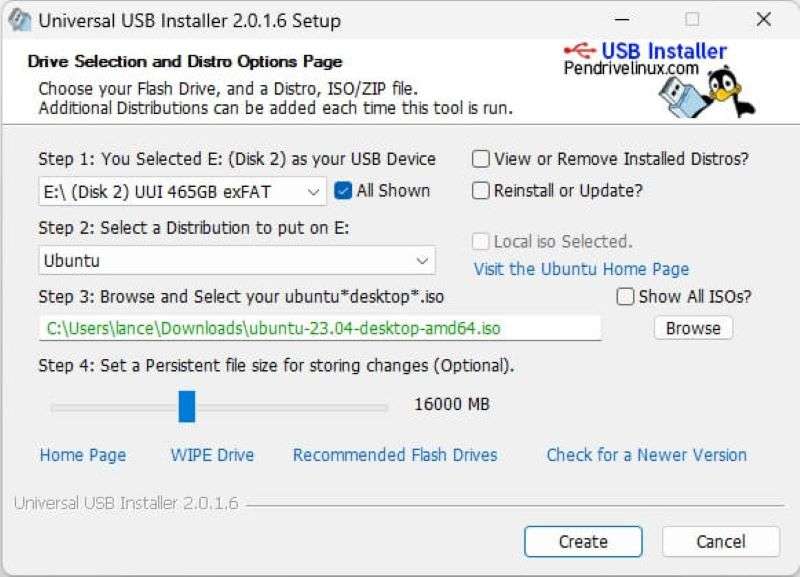
Universal USB Installer is another open-source USB booter that allows you to create multiple types of USB for Linux, Antivirus Rescue Drives, Windows, and other Bootable Drives. Distinguished by its minimalistic yet user-friendly interface, this tool caters to both novices and experienced users, ensuring an intuitive experience for all. Notably, Universal USB Installer introduces a pivotal function – the utilization of persistent storage. With this feature, you can save modifications during one session and seamlessly restore them during subsequent boots.
Rating: 4.2/5
Compatible System: Windows, Linux, BSD (Berkeley Software Distribution)
Windows Bootable Image Creator
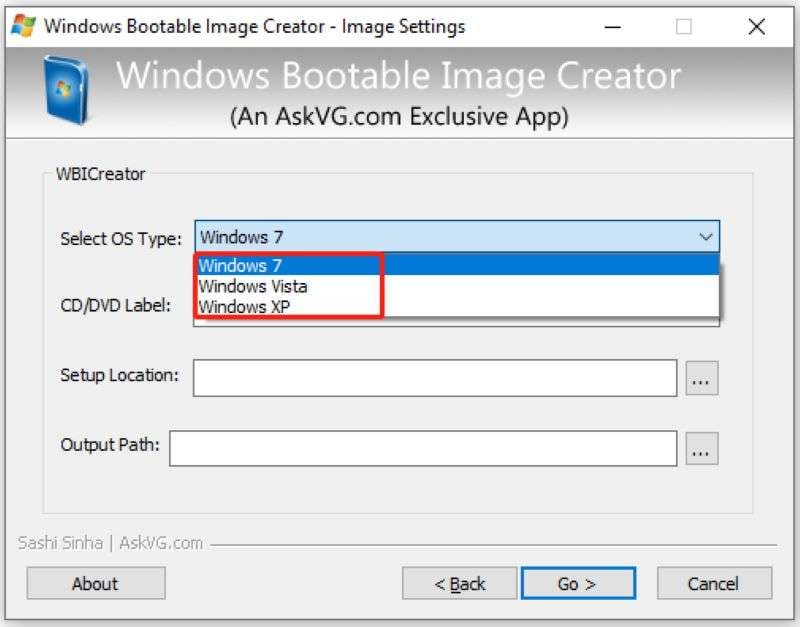
The Windows Bootable Image Creator offers a simplified process through its user-friendly interface. It guides you in selecting the OS, specifying labels, and determining output paths. Additionally, this tool ensures efficiency by avoiding unnecessary entries, and it can be conveniently run from a USB flash drive.
Ratings: 4.1/5
Compatible System: Windows 7,8, 8.1,10, Vista, and XP
UNetBootin
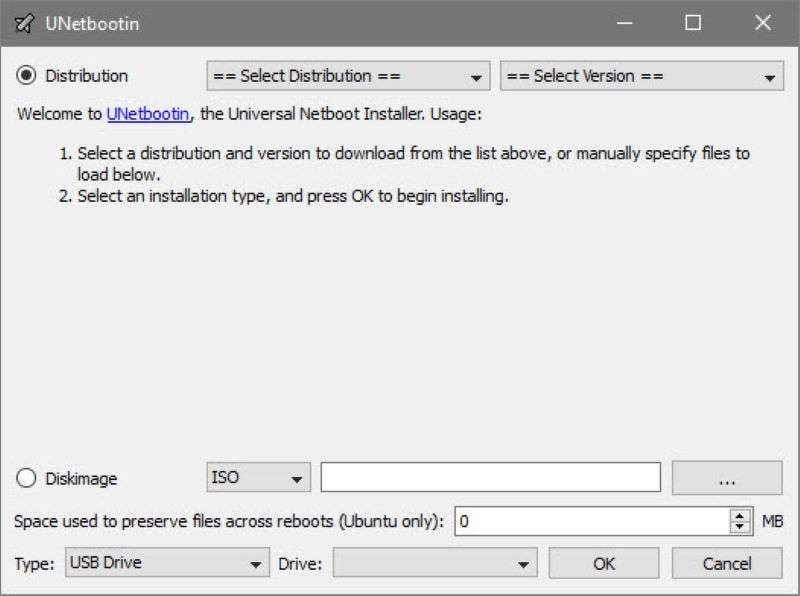
UNetbootin is a utility that caters to a broad range of Linux distributions. It's proficient in identifying and rectifying bugs that may disrupt your computer's performance. In addition, this tool also serves as partition software, enabling the restoration of damaged, corrupted, or missing files.
Rating: 4.7/5
Compatible System: Ubuntu, Fedora, and other Linux distributions
DiskMaker
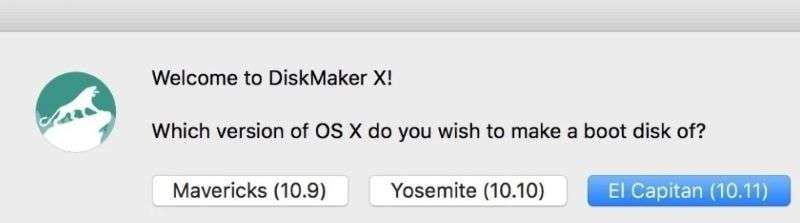
DiskMaker X, formerly known as Lion DiskMaker, is an AppleScript-based application designed for creating bootable drives from OS X/macOS installer programs. Leveraging Spotlight, DiskMaker X detects the OS X Install program, enabling the seamless creation of bootable install disks. Offering simplicity and efficiency, it features an intuitive user interface that caters to users of varying technical expertise.
Rating: 4.1/5
Compatible System: macOS 10.9 and later
Balena Etcher
Balena Etcher stands out as a versatile open-source bootable USB software, catering to Windows, macOS, and Linux users. The utility is designed to address complexities across operating systems and to prevent accidental data loss with added security measures. Noteworthy features include a Pro variant for creating over 100 bootable drives simultaneously, all while maintaining its user-friendly ethos.
Rating: 4.4/5
Compatible System: Windows, macOS, and Linux
Ventoy
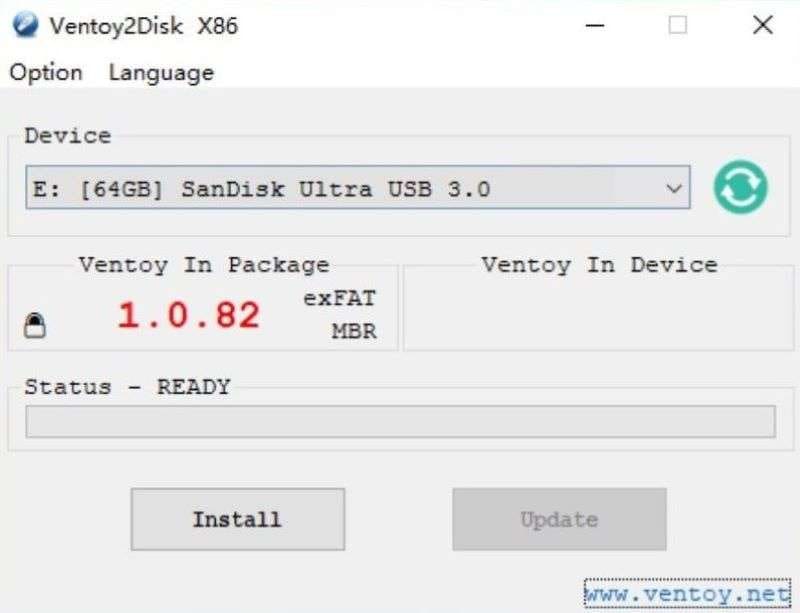
The best thing about Ventoy, an open-source software, is that you don't have to format the disk over and over; you just need to copy the files to the USB drive and boot them directly. Moreover, the tool stands out from other software with its simple interface that allows you to switch the menu dynamically between ListView and TreeView mode. Last but not least, it supports both MBR and GPT partition styles.
Rating: 4.8/5
Compatible System: Windows, WinPE, Linux, Unix, ChromeOS, VMware
ImageUSB Writer
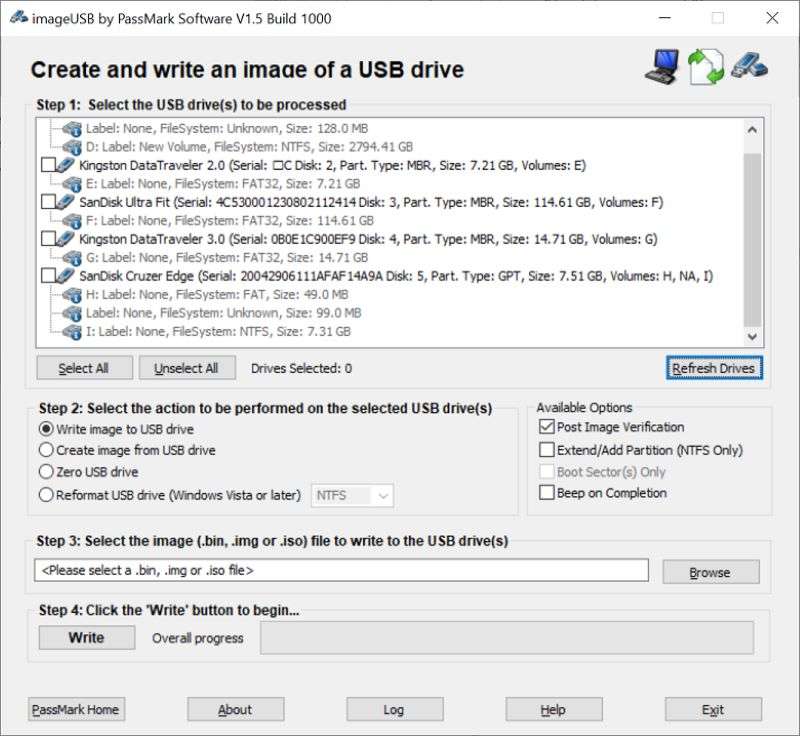
ImageUSB is a free bootable USB software that enables image writing for multiple USB drives. Designed to make USB file copies at the exact bit-level efficiently, this tool can be fully used for mass duplication of UFDs. Further, it seamlessly collaborates with PassMark OSForensics, facilitating its function to install OSFClone to USB flash drives.
Rating: 4.7/5
Compatible System: Windows 7, Windows 8, Windows 10 and Windows 11
MultiBootUSB
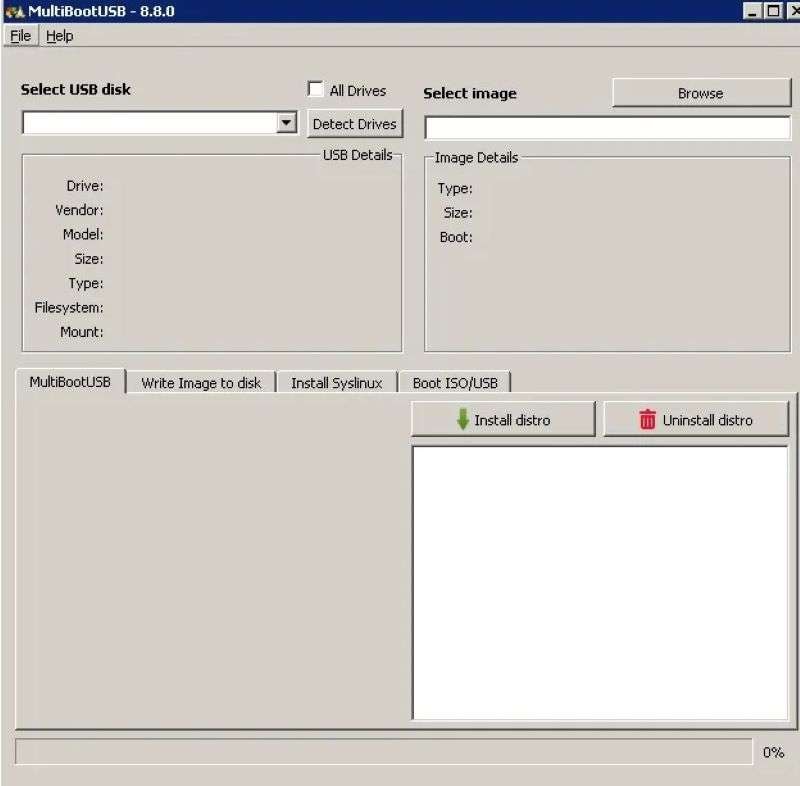
The idea behind MultiBootUSB is to allow users to have a single USB drive to boot multiple operating systems, depending on their preferences. As an easy and functional application, MultiBootUSB leads you to access various options and features only by following the main window. Moreover, it's an advanced cross-platform application that supports both BIOS and UEFI firmware.
Rating: 4.3/5
Compatible System: Windows and Linux
Updated Bootable USB Software Comparison
| Tool | Best For | Important Limitation |
| Rufus | Creating Windows, Linux, DOS, UEFI, BIOS, and Windows To Go bootable USB drives on Windows | Windows-only tool; one target workflow at a time |
| Microsoft Media Creation Tool | Official Windows 10/11 installation USB creation | Focused on standard Windows install media, not multiboot or Linux |
| WinToUSB | Portable Windows, Windows To Go, Windows installation USB, and WinPE USB workflows | Advanced cloning and business features may require paid editions |
| Universal USB Installer | Multiboot USB toolkits, Linux live USB, Windows installers, recovery tools, and persistence | Best used with supported ISO workflows and proper USB preparation |
| UNetbootin | Linux Live USB creation and downloading supported Linux distributions | Non-Linux operating systems may not boot as-is; not a data recovery or repair tool |
| DiskMaker X | Older macOS installer USB creation workflows | Legacy macOS-focused option; verify support for modern macOS before use |
| balenaEtcher | Cross-platform image flashing for Linux, Raspberry Pi, appliance, and bootable image files | Official FAQ notes Windows images need extra treatment that Etcher is not designed for |
| Ventoy | Multiboot USB drives with many ISO, WIM, IMG, VHD(x), and EFI files | Some Secure Boot or unusual ISO cases may need extra configuration |
| ImageUSB | Writing images to multiple USB flash drives, USB duplication, zeroing, and imaging tasks | More technical than beginner USB creator tools; not every ISO boot workflow is guaranteed |
| MultiBootUSB | Older multi-OS USB creation workflows | Consider it legacy; Ventoy or Universal USB Installer are usually better maintained choices |
Before You Create a Bootable USB
- Back up everything on the USB drive because most bootable USB tools erase or overwrite it.
- Download ISO files only from official OS vendors or trusted project websites.
- Verify the ISO checksum when the vendor provides one.
- Check whether your target computer uses UEFI, Legacy BIOS, Secure Boot, MBR, or GPT.
- Use a high-quality USB 3.0 or external SSD for Windows To Go or large installers.
- Do not interrupt the writing process while the tool is flashing the USB drive.
- After creation, test boot the USB before relying on it for an emergency repair.
How to Recover Your Data After Booting Your Personal Device?
If a bootable USB tool formats the wrong drive, interrupts while writing, or causes files to disappear from a USB flash drive, external disk, SD card, or computer drive, Wondershare Recoverit can help recover local files before they are overwritten.
- Stop using the affected USB drive, SD card, external drive, or computer disk immediately.
- Install and open Wondershare Recoverit on a different drive or another computer when possible.
- Connect the affected storage device to the computer.
- Go to Hard Drives and Locations and select the affected external device or drive.

- Start the scan and wait for recoverable files to appear.

- Preview recoverable documents, photos, videos, archives, and other files when available.

- Select the files you need and click Recover.
- Save recovered files to a different safe location, not back to the damaged or formatted USB drive.
Conclusion
The best bootable USB software is the one that matches your task. Use Rufus or Microsoft Media Creation Tool for Windows installation media, Ventoy for multiboot ISO collections, balenaEtcher for simple cross-platform image flashing, WinToUSB for portable Windows, and Universal USB Installer for multiboot or persistent live USB workflows.
Before creating a bootable USB, back up your drive and verify the target disk carefully. If files are lost because a USB drive was formatted, overwritten, or selected by mistake, use Wondershare Recoverit to scan the affected storage before using it again.
FAQ
-
What is the best bootable USB software for Windows?
Rufus is one of the best choices for advanced Windows bootable USB creation, while the Microsoft Media Creation Tool is the safest official option for standard Windows 10 or Windows 11 installation media. -
What is the best tool for a multiboot USB?
Ventoy is a strong choice for multiboot USB drives because you can copy multiple ISO, WIM, IMG, VHD(x), and EFI files to one USB drive and choose them from a boot menu. -
Can balenaEtcher create a Windows bootable USB?
balenaEtcher is excellent for many bootable images, especially Linux and device images. Its official FAQ notes that Windows images need extra treatment that Etcher is not designed for, so use Rufus or Microsoft Media Creation Tool for Windows ISO files. -
Will creating a bootable USB erase my files?
Usually yes. Most bootable USB tools format or overwrite the selected drive. Back up the USB first, and if you accidentally erase important files, stop using the drive and scan it with Wondershare Recoverit.


