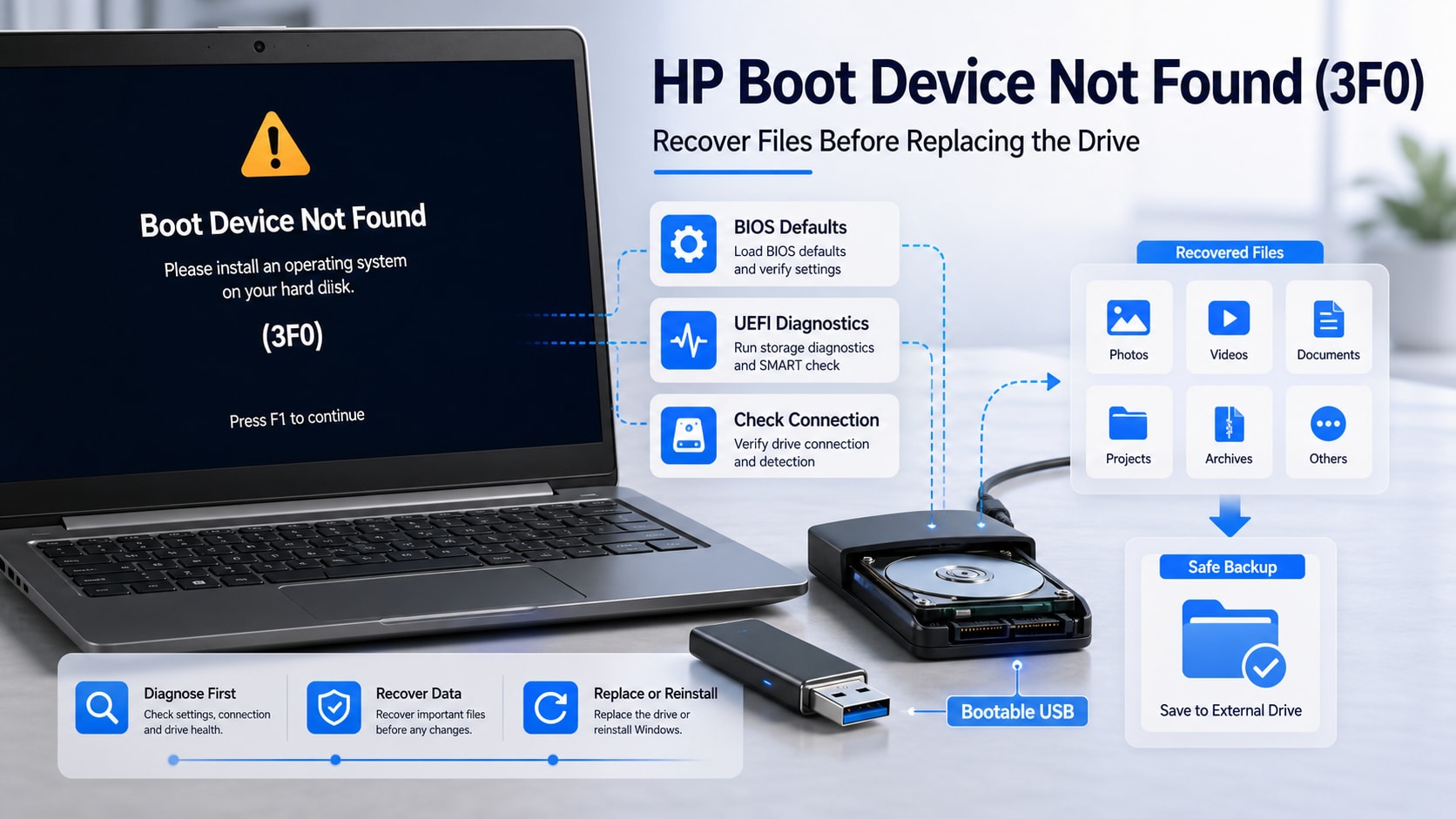

 TL;DR:
The safest way to resolve the HP Boot Device Not Found (3F0) error is to disconnect external peripherals, restore BIOS defaults using the F10 and F9 keys, and run the HP UEFI storage test via the Esc and F2 keys to confirm physical drive health before attempting data-destructive repairs.
● Proceed with Windows Startup Repair only if the internal storage passes the HP diagnostics test; if the test generates a Failure ID or the drive is entirely undetected, stop all write-heavy software repairs to prevent further hardware degradation.
● Do not arbitrarily change storage controller modes like AHCI or RAID because it can trigger BitLocker recovery lockouts, and avoid reinstalling Windows as a diagnostic tool since it permanently erases data without fixing an underlying hardware failure.
● Bootable USB software recovery is only effective if the unbootable SSD or HDD is still recognized by the system firmware; drives exhibiting physical damage, liquid exposure, or mechanical grinding noises require professional recovery services rather than software scanning.
Ask AI for a summary
 ChatGPT
 Perplexity
 Gemini
 Claude
 Grok
Grok
⚡ TL;DR: Safe HP 3F0 Fix
Protect Important Files First: Do not initialize, format, factory-reset, or reinstall Windows while needed files exist only on the affected drive.
Run HP's Preboot Storage Test: Turn on the PC, tap Esc, press F2, and run the storage Quick Test. Run the Extensive Test if the Quick Test passes but the 3F0 error remains.
Follow The Test Result: If the drive passes and is detected, restore BIOS defaults and run Windows Startup Repair. If it fails, disappears, clicks, or disconnects, stop repair writes and plan data recovery or drive replacement.
Reinstall Last: Reinstallation can erase data and will not repair a failed SSD or HDD. Recover or back up files before using HP Cloud Recovery or Windows installation media.
Quick answer: The safest hard disk 3F0 HP fix is to disconnect external storage, restore BIOS defaults with F10 > F9 > F10, and run the HP PC Hardware Diagnostics UEFI storage test with Esc > F2. Use Windows Startup Repair only if the SSD or HDD is detected and passes testing. If the drive fails, is not detected, or contains the only copy of important files, recover the data before replacement or reinstallation.
An HP Boot Device Not Found message with Hard Disk (3F0) does not prove that every file has been erased. It means the firmware could not find a valid bootable operating system at that moment. The cause may be a temporary connection or firmware-state problem, damaged Windows boot files, a missing boot entry, file-system damage, or a failing SSD or HDD. The checks below separate those cases before any destructive action.
Fact-checked on September 1, 2026: HP key sequences, BIOS-default steps, and storage-test paths were checked against current HP Support documentation. Windows Recovery Environment and Startup Repair steps were checked against current Microsoft Support instructions for Windows 11 and Windows 10.
In This Article
Part 1. What HP Hard Disk 3F0 Actually Means
HP uses the 3F0 code when the computer's firmware cannot locate a bootable operating system. The message commonly appears before Windows starts and may read Boot Device Not Found, Please install an operating system on your hard disk, and Hard Disk (3F0). HP's current Hard Disk 3F0 support page directs users to restore BIOS defaults and test the storage device before reinstalling the operating system.

The wording is important. A boot device is not exactly the same as a physical disk. The SSD or HDD can be present while its Windows Boot Manager entry, EFI System Partition, boot configuration data, or operating-system files are unavailable. Conversely, a failed or disconnected drive can produce the same screen because the firmware cannot read any boot files from it.
| Diagnostic Result | What It Suggests | Safest Next Move |
| The error appeared after a USB drive, dock, or memory card was connected | The PC may be checking the wrong device first, or the external device is interrupting startup | Disconnect nonessential devices and perform Method 1. |
| The internal drive appears in firmware and passes HP storage tests | The physical storage is readable enough to test; Windows boot files or firmware settings may be the problem | Restore BIOS defaults, then use Windows Startup Repair. |
| The Quick Test fails and shows a Failure ID | HP Diagnostics detected a storage problem | Record the Failure ID, stop write-heavy repairs, protect data, and contact HP or plan drive replacement. |
| The drive is missing from diagnostics or appears only intermittently | Connection, SSD/HDD electronics, controller, or motherboard failure is possible | Power off. Check a serviceable connection once or seek hardware support; software cannot scan a drive the computer never detects. |
| The HDD clicks, grinds, smells burnt, or suffered liquid or impact damage | Physical damage is likely | Stop powering it on and consult a professional recovery service for valuable data. |
| A replacement drive is detected but has no operating system | The new drive is blank, not necessarily faulty | Install Windows only after confirming no data needs to be recovered from the old drive. |
Because the same 3F0 screen can represent a small boot problem or a failing drive, there is no responsible one-click fix. The storage test result determines whether the next step should be Windows repair, data recovery, hardware service, or installation.
This guide is specific to HP's Hard Disk (3F0) code and HP startup keys. For a Dell, Lenovo, ASUS, Acer, or custom PC with a different message, use the general Boot Device Not Found guide instead of applying HP firmware steps to another brand.
Part 2. Decide Whether To Repair Or Recover First
Startup repairs, CHKDSK, factory recovery, and Windows installation can write to the internal drive. That is acceptable when the drive is healthy and current backups exist. It is the wrong starting point when the drive may be failing or the only copy of important data is still inside the unbootable HP computer.
- Ask Whether The Files Exist Elsewhere: If current backups contain everything important, proceed with diagnostics and non-destructive boot repair. If not, keep the number of power cycles and write operations low.
- Listen And Observe: Stop if a mechanical hard drive clicks or grinds, the PC was dropped or exposed to liquid, the drive becomes unusually hot, or it repeatedly appears and disappears. These are not Windows configuration symptoms.
- Preserve The Failure Information: Photograph the full 3F0 screen and record any Failure ID from HP Diagnostics. Support staff use those details to identify the failing component and warranty path.
- Find The BitLocker Recovery Key: Windows Startup Repair or access from another environment may request it. Microsoft's BitLocker recovery-key guide explains the Microsoft-account, work/school, printout, and USB locations where the key may be stored.
- Prepare A Separate Destination: Any copied or recovered data must go to another healthy physical drive. Saving it back to the affected SSD or HDD can overwrite other recoverable files.
| Your Situation | Repair First? | Reason |
| Drive passes HP tests and all important files are backed up | Yes | BIOS defaults and Startup Repair are reasonable next steps. |
| Drive passes, but important files have no backup | Prefer recovery or file copy first | Even normal repairs can change disk metadata. |
| Drive fails a storage test or shows a Failure ID | No | Repeated repair writes can stress a deteriorating device and do not fix hardware. |
| Drive is not detected in BIOS or HP Diagnostics | No software repair yet | The storage must be detected before Startup Repair or recovery software can access it. |
| Drive has physical warning signs | No | Professional diagnosis is safer than repeated DIY power cycles. |
A data-first decision is especially important for SSDs. Deleted or reset data can become difficult to recover after TRIM and background cleanup, while an unstable SSD controller may stop presenting the drive without warning. Do not use a factory reset as a diagnostic test.
Part 3. How To Fix HP Boot Device Not Found 3F0
Work from the least invasive check to the result-driven repair. Restart after each completed method. If the HP storage test fails, skip Windows repair and move to data protection and hardware service.
Method 1. Disconnect External Devices And Perform A Power Reset
A dock, USB drive, external SSD, memory card, or optical disc can alter the available boot-device list. A power reset also clears temporary hardware state without deleting personal files. It does not repair a failed internal drive.
- Turn off the HP computer completely.
- Disconnect USB storage, hubs, docks, memory cards, printers, and other nonessential peripherals. Leave only the power adapter, display, keyboard, and mouse required to operate the PC.

- For a notebook with a non-removable battery, disconnect AC power and hold the power button for about 15 seconds. For a desktop, unplug the power cable and hold the power button for about 15 seconds. If the exact model's HP guide specifies a different reset procedure, follow that guide.
- Reconnect AC power only and turn on the computer.
- If Windows starts, reconnect peripherals one at a time after login. If 3F0 remains, continue to BIOS defaults.
Do not remove a sealed internal battery unless the model's maintenance guide instructs you to do so. A power reset is meant to discharge residual state, not to disassemble the computer.
Method 2. Restore HP BIOS Defaults
Incorrect boot settings can prevent firmware from finding Windows Boot Manager. HP's current 3F0 instructions use the notebook sequence F10 to open BIOS Setup, F9 to load defaults, and F10 to save and exit. Labels can vary between HP consumer and business firmware.
- Turn off the computer and wait about five seconds.
- Turn it on and immediately tap F10 repeatedly until BIOS Setup opens. If the startup menu appears first, choose BIOS Setup.
- Press F9 to load setup defaults. On some systems, select Main or File > Restore Defaults.
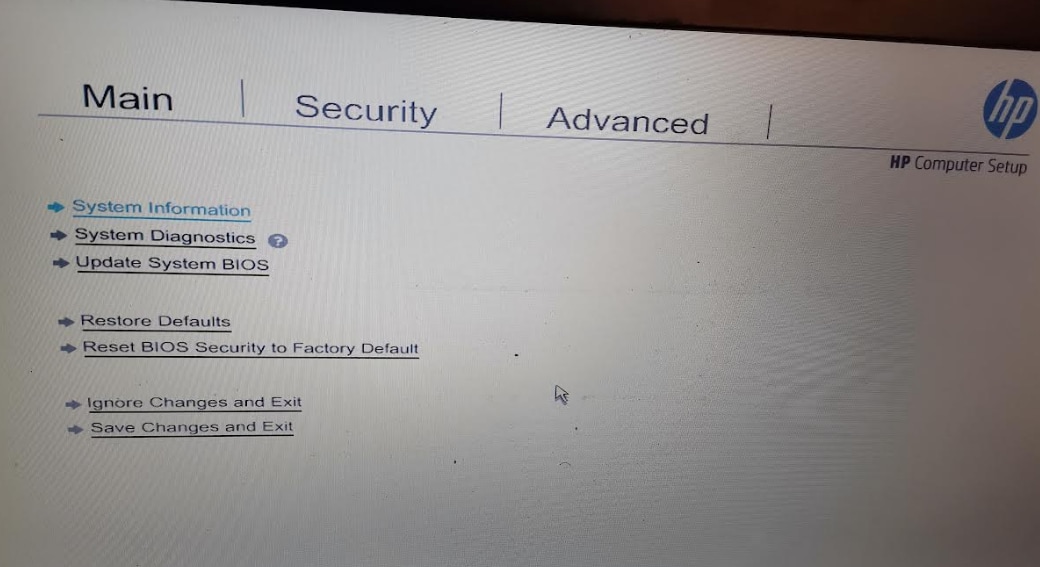
- Confirm the default configuration.
- Press F10, choose Save Changes And Exit, and let the computer restart.
- If the 3F0 message returns, run HP's preboot storage test instead of changing additional firmware settings at random.
Do not switch AHCI, RAID, Intel RST, Optane, or VMD modes as a generic fix. Windows may have been installed for the current controller mode, and changing it can create a new boot failure or trigger BitLocker recovery. Restore documented defaults only; use model-specific HP instructions for any controller change.
Method 3. Run HP UEFI Storage Diagnostics
This is the decisive HP 3F0 test because it runs before Windows. HP's current HP PC Hardware Diagnostics UEFI 8.0 guide uses either a symptom-based test or the Storage component test, depending on the diagnostics version installed on the computer.
- Turn off the HP PC.
- Turn it on and tap Esc about once per second until the Startup Menu opens. Press F2 for System Diagnostics.
- If the current UEFI shows Symptom Tests, choose the hard disk/SSD detection or boot-failure symptom. If it shows Component Tests, choose Storage or Hard Drive.
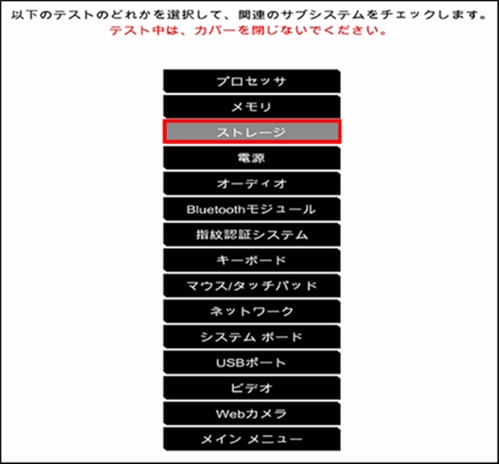
- Run the Quick Test. Keep the notebook connected to AC power and do not close its lid while testing.
- If the Quick Test passes but 3F0 continues, run the Extensive Test. It can take much longer and should not be repeated on a drive that becomes unstable or noisy.
- Record the result and any displayed Failure ID. A phone photo prevents transcription errors.
| HP Test Result | Meaning | Next Step |
| Quick and Extensive Tests pass | No storage failure was found by those tests | Run Windows Startup Repair. A passing test lowers, but does not eliminate, the possibility of an intermittent drive problem. |
| SMART, Short DST, Long DST, or another storage test fails | The test found a problem with the drive or its ability to complete self-testing | Record the Failure ID. Recover important data if the drive remains readable, then contact HP or replace the drive. |
| No internal storage device appears | The drive, connection, storage controller, or motherboard may not be presenting the hardware | Power off. Check a serviceable connection once or seek HP/hardware support. Startup Repair cannot work without a detected system disk. |
| Test passes once but the drive later disappears | An intermittent connection or hardware fault remains possible | Back up or recover immediately; do not treat one pass as proof that the drive is reliable. |
A failed storage test is not repaired by reinstalling Windows. The operating system belongs on a healthy drive. If the test fails and the files matter, protect the data before authorizing replacement or factory recovery.
Method 4. Run Windows Startup Repair
Use this method only when the internal drive is detected and HP storage tests pass. Microsoft's current Startup Repair instructions say the tool can address missing or damaged system files, corrupted boot configuration data, damaged MBR data, incompatible drivers, and registry errors that prevent Windows from starting.
If Windows Recovery Environment opens automatically, begin there. If it does not, create official Windows installation media on another PC, boot the HP computer from it, and select Repair your computer instead of Install now. Recover irreplaceable files first if the drive has shown any instability.
- On the Choose an option screen, select Troubleshoot.
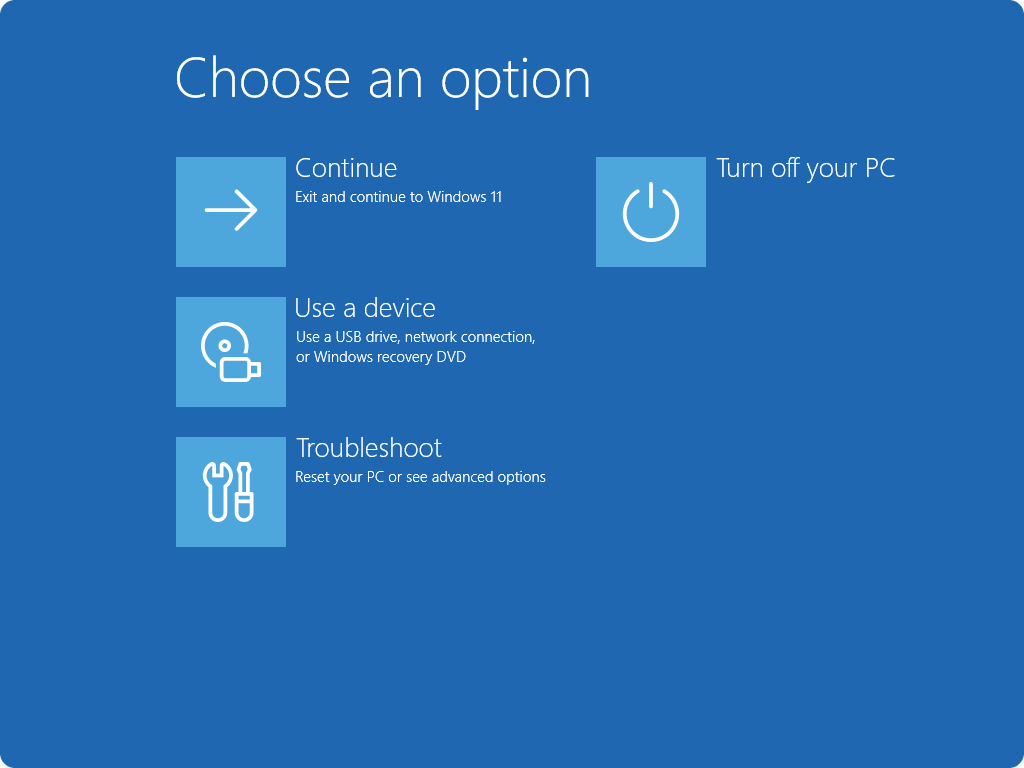
- Select Advanced options.
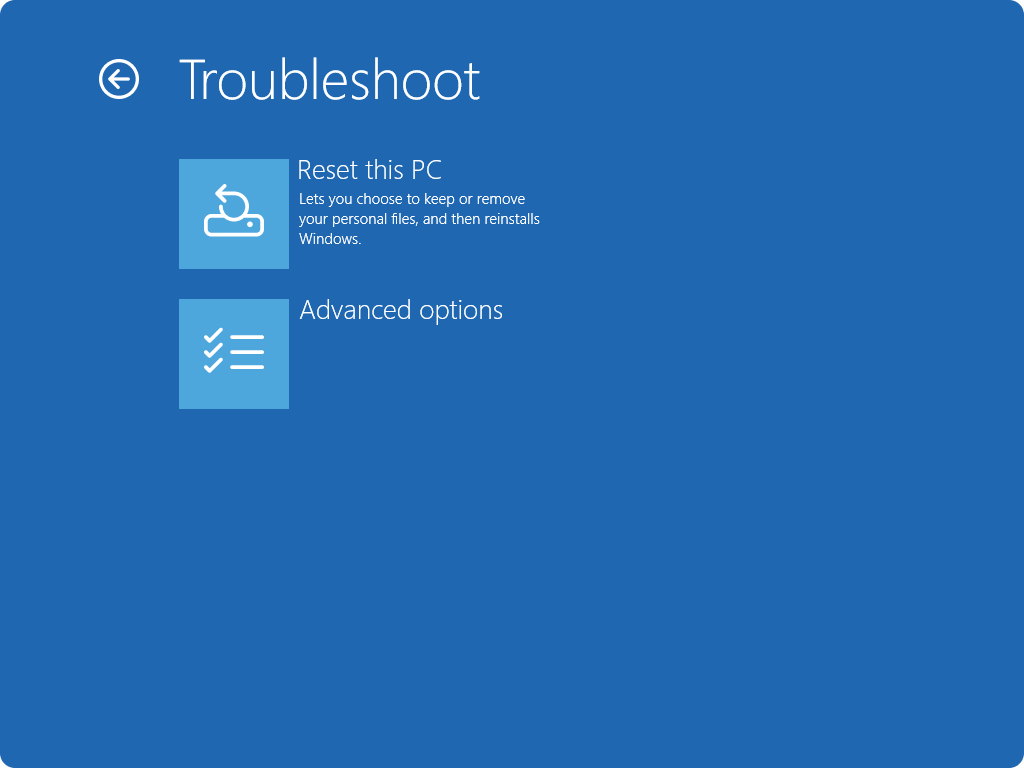
- Select Startup Repair, then choose Restart.
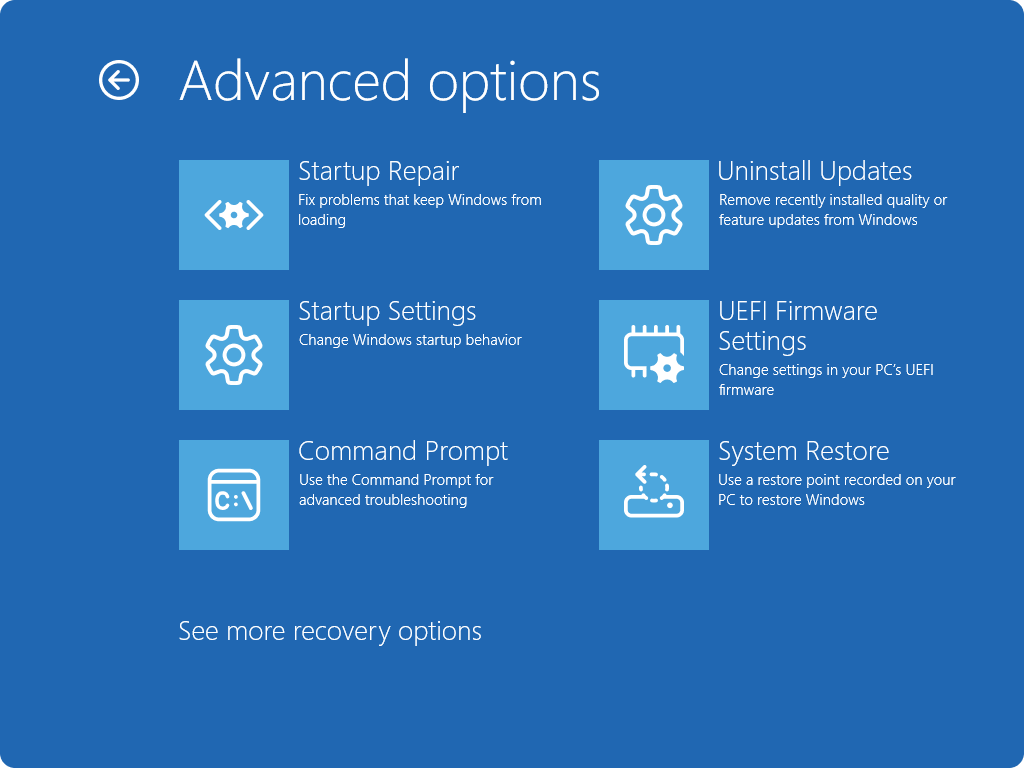
- Select the Windows installation if prompted and enter the BitLocker recovery key when required.
- Let Startup Repair finish, then restart without the installation USB.
- If it reports that it could not repair the PC, do not repeat it indefinitely. Protect the data, then evaluate recovery, restore, reset, or reinstall options.
Startup Repair is safer than beginning with manual DiskPart or boot-sector commands because it diagnoses common startup problems automatically. It cannot repair an SSD/HDD that is absent or failing its hardware test.
Method 5. Check The SSD Or HDD Connection Safely
A loose SATA cable, an incompletely seated drive, or damaged connector can cause hard disk 3F0 on a serviceable HP desktop or notebook. This step is appropriate only when the exact model's HP Maintenance and Service Guide permits drive access and you are comfortable following anti-static precautions.
- Turn off the computer, disconnect AC power, and follow the model-specific guide for battery isolation and electrostatic discharge.
- For a desktop SATA drive, inspect and reseat the SATA data and power connectors at both ends. Replace a visibly damaged cable with a compatible one.

- For an M.2 NVMe or M.2 SATA SSD, follow the exact model guide. Do not apply desktop SATA-cable instructions to an M.2 module.
- Reassemble the computer, reconnect power, and run HP UEFI Diagnostics again.
- If the drive remains absent, stop opening or reseating it repeatedly. Contact HP support, an authorized repair provider, or a professional recovery service as the data value requires.
Do not open a sealed, enterprise-managed, or in-warranty computer without checking service terms. If the hard drive clicks, grinds, or has impact/liquid damage, skip this method; powering a physically damaged drive can worsen the condition.
Part 4. Recover Files Before Replacing The Drive Or Reinstalling Windows
Recovery software belongs at a specific point in the HP 3F0 workflow: Windows will not boot, important files lack a current backup, and the internal drive is still detected and readable enough to scan. If the drive is absent from BIOS/UEFI, has severe physical damage, or disconnects during access, software is not the correct first tool.
If the drive is accessible after removal and the model is serviceable, connecting it to another working computer through a compatible enclosure or adapter may allow a normal file copy. Copy readable files first. Use a recovery scan only when files are missing, the volume is inaccessible, or the folder structure is damaged. The unbootable Windows file recovery guide explains the choice between an external connection, bootable media, software scanning, and professional service.
Method 6. Recover Files With A Recoverit Bootable USB

Recoverit Windows System Recovery can create bootable media on a healthy Windows computer and start an unbootable PC without loading Windows from its internal system drive. The affected SSD or HDD must still be detected. Results depend on drive health, encryption, overwritten data, and whether its sectors remain readable.
- Create The Recovery USB On A Working PC: Install Recoverit on a healthy computer, open System Crashed Computer, and connect a blank USB flash drive larger than 4 GB. Verify the USB selection because creating the bootable drive erases its existing contents.
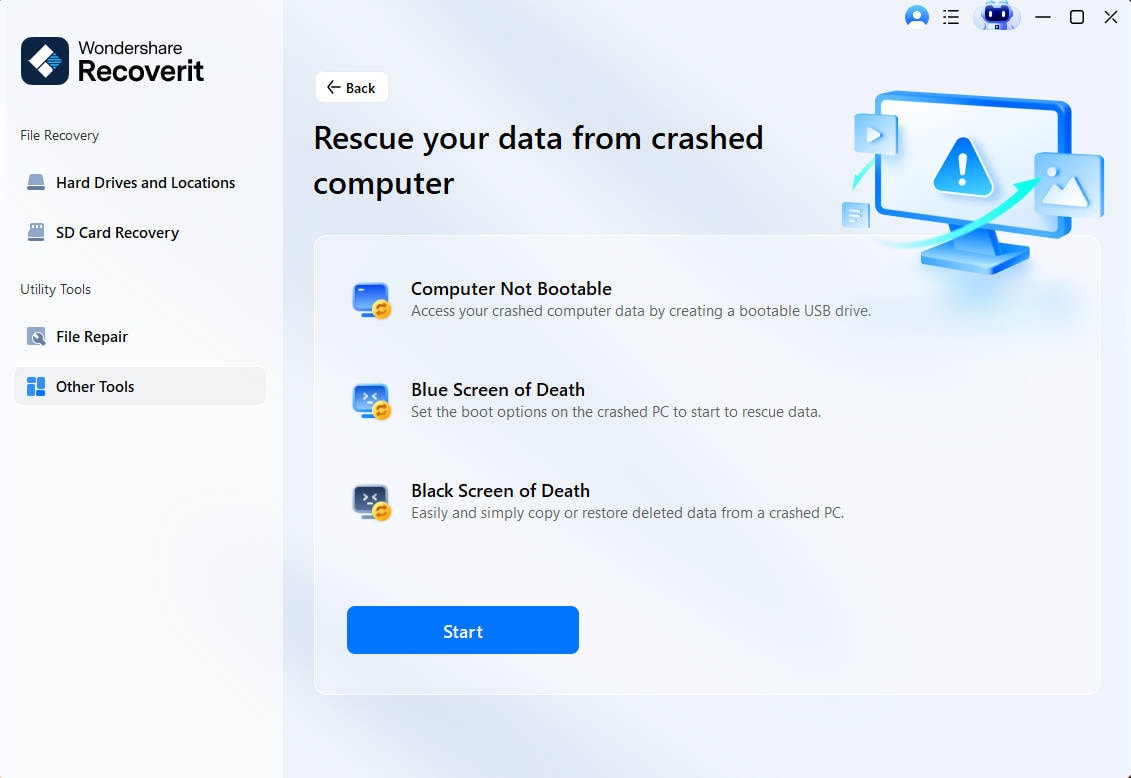
- Build The Bootable Media: Start creation and leave the working PC online and powered until Recoverit reports that the bootable USB is complete.

- Start The HP PC From USB: Connect the completed USB and a separate destination drive to the affected HP computer. Power on, tap Esc, press F9 for Boot Device Options on supported HP models, and select the UEFI USB entry. Menu keys vary by model, so use the displayed Startup Menu if it differs.
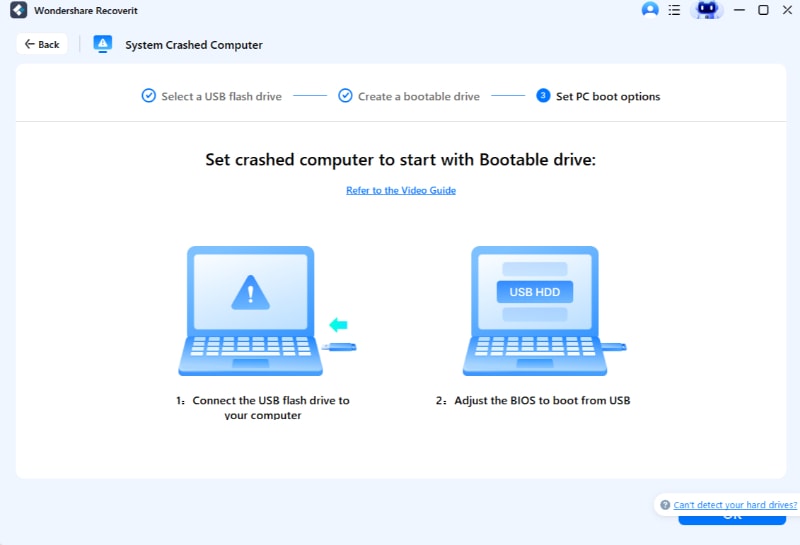
- Scan The Internal Drive: In the bootable recovery environment, select the detected HP system drive and start scanning. If the drive disappears, makes abnormal noises, or causes repeated read errors, stop and seek professional help.
- Preview And Recover Elsewhere: Preview supported files, select the needed folders, and recover them to the separate external drive. Never use the affected internal disk or the recovery USB as the destination.
- Verify Before Repair: Open representative documents, photos, videos, and archives from the destination drive. Only after verification should you replace, format, reset, or reinstall the original storage.
Recover Files With A Recoverit Bootable USB
 Security Verified. Over 7,302,189 people have downloaded it.
Recoverit does not repair the HP firmware, reconnect missing hardware, or guarantee recovery from a physically failed SSD/HDD. For a drive removed from the PC and detected normally on another computer, Recoverit Hard Drive Recovery is the broader scan path. Save all recoverable files to another physical drive.
Part 5. When To Replace The Drive Or Reinstall Windows
Replacement and reinstallation solve different problems. Replace the storage when HP Diagnostics fails, detection remains intermittent, or the device has physical symptoms. Reinstall Windows when the storage passes testing but boot repair fails and a clean operating system is appropriate. Installing Windows on a failing drive only postpones another failure.
| Condition | Replace The Drive? | Reinstall Windows? |
| HP storage test fails with a Failure ID | Usually, after data protection and HP/warranty review | Install Windows on the healthy replacement, not the failed drive. |
| Drive is not detected after one safe connection check | Hardware diagnosis is required | No. Installation cannot target a drive the system does not detect. |
| Drive passes, Startup Repair fails, files are backed up | Not automatically | Yes, reset/recovery or clean installation can be considered. |
| 3F0 began after replacing the drive | Only if the replacement is incompatible or fails testing | A blank replacement normally needs Windows or an image restored to it. |
| 3F0 returns after a temporary fix | Re-test and treat intermittent detection seriously | Do not reinstall until hardware reliability is established. |
Before reinstalling, confirm that recovered or backed-up files open correctly and locate the BitLocker recovery key and Windows account credentials. Microsoft's current Windows installation-media instructions require a blank USB flash drive with at least 8 GB and warn users to back up files before reinstalling. HP Cloud Recovery availability depends on the exact product and operating-system image.
Use the current Microsoft or HP recovery route for the exact model. The old HP Recovery Manager interface shown in earlier guides does not represent many current Windows 11 systems and should not be used as a universal instruction.
Part 6. What Not To Do After An HP 3F0 Error
| Avoid | Why It Is Risky | Safer Alternative |
| Formatting or initializing the disk when prompted | It changes disk structures and can remove an easier path to existing files | Recover or copy data first. |
| Changing AHCI, RAID, RST, Optane, or VMD at random | The installed Windows configuration may depend on the current mode and BitLocker may react to firmware changes | Restore HP defaults or follow model-specific documentation. |
| Running DiskPart clean, partition creation, or repeated CHKDSK before recovery | These operations write to disk metadata and can complicate recovery | Diagnose hardware and protect files first. |
| Repeating Quick/Extensive tests on an unstable or noisy drive | Long reads can add stress without repairing physical damage | Stop after recording the failure and choose recovery or service. |
| Saving recovered files to the same internal drive | New data can overwrite files that have not yet been recovered | Use a separate healthy external drive. |
| Opening a sealed or in-warranty notebook without checking the service guide | It can damage connectors, create safety risks, or affect service terms | Use HP support or an authorized technician. |
| Assuming one passing test makes an intermittently missing drive safe | Intermittent controller, connector, or media faults can return suddenly | Back up immediately and monitor or replace the device. |
Manual boot-record commands are not the first-line answer for every HP hard drive 3F0 case. Modern Windows 11 systems commonly use UEFI, GPT, an EFI System Partition, BitLocker, and device-specific storage drivers. Use Startup Repair first when hardware passes; use advanced command-line work only with a verified backup and instructions matched to the actual disk layout.
Part 7. Prevent Another Boot Device Not Found Error
- Keep A Current Backup: Use at least one separate local or cloud copy for irreplaceable files. A recovery partition on the same physical drive is not a backup of that drive.
- Respond To Early Warnings: Back up immediately after intermittent boot delays, storage-test warnings, unexplained read errors, repeated freezes, or a drive that disappears and returns.
- Install HP BIOS Updates Carefully: Use the exact HP support page or HP Support Assistant for the model, keep stable AC power, and do not interrupt firmware updates.
- Avoid Unplanned Firmware Changes: Record existing boot and controller settings before authorized maintenance. Do not copy settings from a different HP model.
- Shut Down Before Hardware Work: Disconnect power and follow the Maintenance and Service Guide before touching internal storage or cables.
- Verify A Replacement Drive: Run HP storage diagnostics after installation, then install Windows or restore a known-good system image.
- Keep Recovery Tools Ready: Store the BitLocker recovery key safely and keep a separate Windows installation/recovery USB that is tested but does not contain the only copy of personal files.
The reliable HP 3F0 fix is a diagnosis sequence, not a collection of random boot commands. Remove external interference, restore documented firmware defaults, test the storage outside Windows, and let the result decide between Startup Repair, data recovery, hardware replacement, and reinstallation.
Conclusion
For an HP Boot Device Not Found Hard Disk (3F0) error, start by protecting the data and proving whether the SSD or HDD is healthy. Disconnect external devices, restore HP BIOS defaults, and run the HP UEFI storage tests. A detected drive that passes is a candidate for Windows Startup Repair. A failed, missing, noisy, or intermittent drive is a hardware and data-recovery problem first.
Do not format, initialize, change controller modes, or reinstall simply to see what happens. If important files lack a backup and the internal drive remains readable, a bootable recovery workflow can copy them to another drive before system changes. Replace failed storage, reinstall only on healthy hardware, and verify recovered or backed-up files before erasing anything.
FAQ
-
What Does Hard Disk 3F0 Mean On An HP Laptop?
Hard Disk (3F0) means the HP firmware could not find a valid bootable operating system. The SSD or HDD may be missing or failing, but it can also be detected while Windows boot files, the EFI partition, or the boot entry is damaged. HP UEFI storage testing separates hardware failure from a likely boot-software problem. -
How Do I Fix HP Boot Device Not Found 3F0?
Disconnect external storage, perform a power reset, restore BIOS defaults with F10, F9, and F10, then open HP Diagnostics with Esc and F2 and run the storage Quick Test. If the drive passes, run Windows Startup Repair. If it fails or disappears, protect data and replace or service the drive instead of reinstalling on it. -
Does Hard Disk 3F0 Mean My Files Are Gone?
No. The message means the PC did not find a bootable operating system; it does not by itself prove that personal files were erased. Files may remain readable if the drive is detected. Stop destructive repair or reinstallation and recover or copy needed data first. -
What Should I Do If The HP Hard Drive Test Fails?
Record the Failure ID and stop repeated write-heavy repair attempts. If the drive remains readable and data matters, recover the files to another physical drive. Then contact HP, review warranty coverage, or replace the SSD/HDD. Reinstalling Windows does not repair a failed storage device. -
What If The SSD Or HDD Is Not Detected In HP Diagnostics?
Software repair and recovery cannot access a drive the computer never detects. Power off, follow the exact model's service guide for one safe connection check if the drive is user-serviceable, or contact HP. For a clicking, damaged, or intermittently detected drive with valuable data, use a professional recovery service. -
Can Startup Repair Fix HP Hard Disk 3F0?
It can help when the drive is detected and healthy enough to pass storage tests but Windows boot files or configuration are damaged. Microsoft says Startup Repair can address corrupted BCD, damaged MBR information, missing system files, incompatible drivers, and registry errors. It cannot repair failed hardware. -
Should I Change SATA Mode From AHCI To RAID To Fix 3F0?
Not as a generic fix. Windows may have been installed for the current controller mode, and changing AHCI, RAID, RST, Optane, or VMD can create another boot failure or trigger BitLocker recovery. Restore HP defaults or follow instructions written for the exact model and installation. -
Can Recoverit Recover Files From An HP Computer That Will Not Boot?
Recoverit Windows System Recovery can use a bootable USB to scan an unbootable computer when the internal drive is still detected and readable. Recovery depends on drive health, encryption, overwriting, and sector readability. Save recovered files to a separate healthy drive. Physically undetected or damaged storage may require professional service. -
Will Reinstalling Windows Fix Boot Device Not Found 3F0?
Only when the drive is healthy and the problem is the operating system or boot configuration. Reinstallation will not fix a failed or disconnected SSD/HDD and may erase recoverable data. Test the storage and back up or recover important files before reinstalling.