

 TL;DR:
AV1 is a video compression codec commonly stored inside MP4, WebM, or MKV containers, and the Microsoft AV1 Video Extension is an optional Windows 10 or 11 add-on only required if your specific media application relies on system-level decoding instead of providing its own built-in AV1 support.
● Installing the official extension cannot upgrade an older GPU into a hardware decoder; hardware acceleration strictly requires a graphics processor with native AV1 decode specifications.
● If a video displays a black screen or playback error, use FFprobe to verify the actual stream codec before using FFmpeg to convert the file to an H.264 MP4, which is only recommended when targeting broad compatibility with older hardware or editing software.
● An unsupported codec message is a playback limitation rather than lost data, so data recovery software like Wondershare Recoverit should only be utilized if the source file was accidentally deleted or the underlying storage device is inaccessible.
Ask AI for a summary
 ChatGPT
 Perplexity
 Gemini
 Claude
 Grok
If you see “AV1” in a video description or Windows app list, you may wonder what it does and whether it needs a separate download. AV1 is a compression codec, while MP4, WebM and MKV are file containers. You need a decoder that can read the actual AV1 stream, not a new filename extension. This guide explains how to decide whether Microsoft AV1 Video Extension is useful, check the underlying stream, test playback and preserve important original videos.
In This Article
Part 1. What Is AV1? Codec, Video Format and File Extensions
Start with the terminology, because an AV1 codec and a video file extension describe different parts of the same media workflow.
AV1 stands for AOMedia Video 1, a modern video compression codec developed by the Alliance for Open Media. It describes how picture frames are encoded and decoded, not a mandatory filename ending. AV1 video is found in streaming services, browser playback and files saved in common containers. Its goal is to deliver useful visual quality at lower bitrates than older approaches for many types of video, but actual results depend on encoder settings and content.
The practical question is whether your player can decode the video stream and whether the container is supported. A filename such as movie.mp4 alone does not tell you whether the picture is AV1, H.264 or another codec.
Is AV1 a File Extension or a Video Codec?
The following distinction or workflow helps you decide what to do without changing the original file unnecessarily.
AV1 is the video codec. MP4, WebM and MKV are container types that can carry AV1 video; they may also carry audio tracks, subtitles or metadata. A raw AV1 bitstream can use a .obu or .ivf form in technical workflows, but ordinary consumers should not expect every AV1 video to use an .av1 suffix. Changing .webm to .mp4 does not transcode the contained AV1 stream.
| Item | What it describes |
| AV1 codec | Compressed video picture stream |
| .mp4 | Multimedia container; codec depends on what is inside |
| .webm | Web-oriented container that may contain AV1 |
| .mkv | Matroska container that may contain AV1 |
| Microsoft AV1 Video Extension | Optional Windows codec extension for compatible applications |
AV1 vs H.264, HEVC and VP9
The following distinction or workflow helps you decide what to do without changing the original file unnecessarily.
AV1 can reduce the bitrate required for visually similar results, especially where modern encoders are tuned carefully. It can also impose higher encoding cost and uneven compatibility on older hardware. H.264 is still useful for broad device playback; HEVC and VP9 are other modern compressed video formats with different licensing and device ecosystems. No single codec is best for every editing, archival or streaming workflow.
If your goal is simple sharing with an older TV or editing program, H.264 inside MP4 can be a practical target even when the AV1 original is more storage-efficient. Preserve the AV1 source when possible because any lossy re-encode can change quality.
Where AV1 Video Works and Where It May Fail
The following distinction or workflow helps you decide what to do without changing the original file unnecessarily.
Modern browsers and updated media players may decode AV1 in software, or use available GPU hardware acceleration. Problems are more likely with older TVs, unsupported apps, drivers, or high-resolution/high-bit-depth videos. A black screen or an unsupported-codec message does not by itself prove that the file is corrupted.
- Browser: use an updated browser and test a known-good AV1 sample. Browser and operating-system combinations vary.
- Desktop: first check the application itself; some players ship their own decoder and do not need a Windows extension.
- TV or hardware player: check the exact model specifications, not just the device release year.
- Editing software: import support may differ from simple playback support.
Part 2. Do You Need Microsoft AV1 Video Extension?
The decision to install Microsoft’s extension depends on your application and the hardware you already have.
You do not need to install AV1 Video Extension solely because Windows lists it, or because you have seen the term AV1 online. It is useful when a particular Windows application depends on that system codec and cannot otherwise decode an AV1 video. Other applications may carry their own AV1 decoding support.
What the Microsoft AV1 Video Extension Does
The following distinction or workflow helps you decide what to do without changing the original file unnecessarily.
Microsoft publishes the AV1 Video Extension in Microsoft Store. It supplies AV1 support to compatible Windows media workflows. The Store listing and your actual Windows build determine current availability and compatibility; the extension does not upgrade an unsupported processor or graphics device into a hardware decoder.
The Microsoft app identifier is more reliable than searching for downloadable DLLs or third-party “codec packs.” Avoid unofficial installers with misleading names. A compatible standalone player may already work with your files without any added extension.
How to Install AV1 Video Extension on Windows 10 or 11
The following distinction or workflow helps you decide what to do without changing the original file unnecessarily.
Use this route only when a Windows app requests AV1 support or a known AV1 file does not play. Installing the official app may require a supported Windows build and an active Store connection.
Step 1. Open Microsoft Store using the Start menu, and search for AV1 Video Extension by Microsoft. The official listing can also be opened from the link in the preceding section.
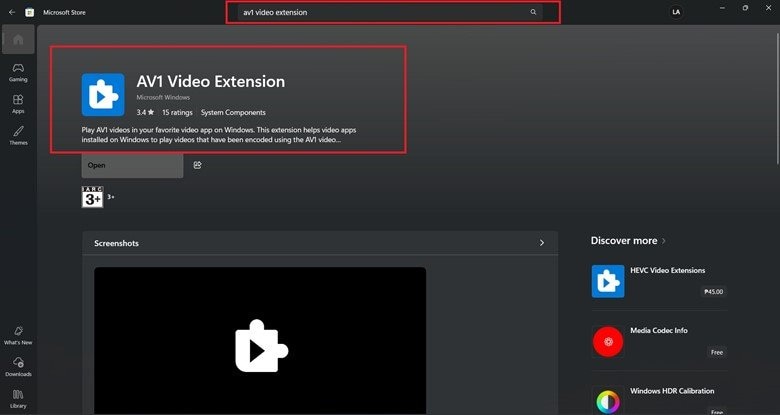
Step 2. Review the application publisher, device requirements and availability shown for your Microsoft account and Windows build. Select Get or Install when offered.
Step 3. After installation, close and reopen the affected player. Retry a known-good AV1 video and compare it with the original failure.
Check the result: the affected Windows application should now play the video if missing system AV1 decoding was its only problem. If it still fails, check the container and file codec, player support and display drivers before reinstalling anything. The screenshot is an existing Wondershare editorial capture of the AV1 Video Extension listing, not a new installation performed for this article. The button may appear as Open when already installed.
Windows 10 note: Microsoft ended standard Windows 10 support on October 14, 2025. A Windows 10 user should consider the current support and security status of their installation, not assume this codec add-on extends operating-system support.
Is AV1 Hardware Decode Available on Your GPU?
The following distinction or workflow helps you decide what to do without changing the original file unnecessarily.
Hardware AV1 decoding is a feature of specific graphics processors, driver stacks and operating-system APIs. Software decoding can still work on many CPUs but may use more power and can stutter at demanding resolutions. Installing Microsoft’s extension does not add absent GPU decoding circuitry.
Step 1. Find your GPU model in Windows Device Manager > Display adapters or the manufacturer utility, and note the exact chipset and graphics configuration.
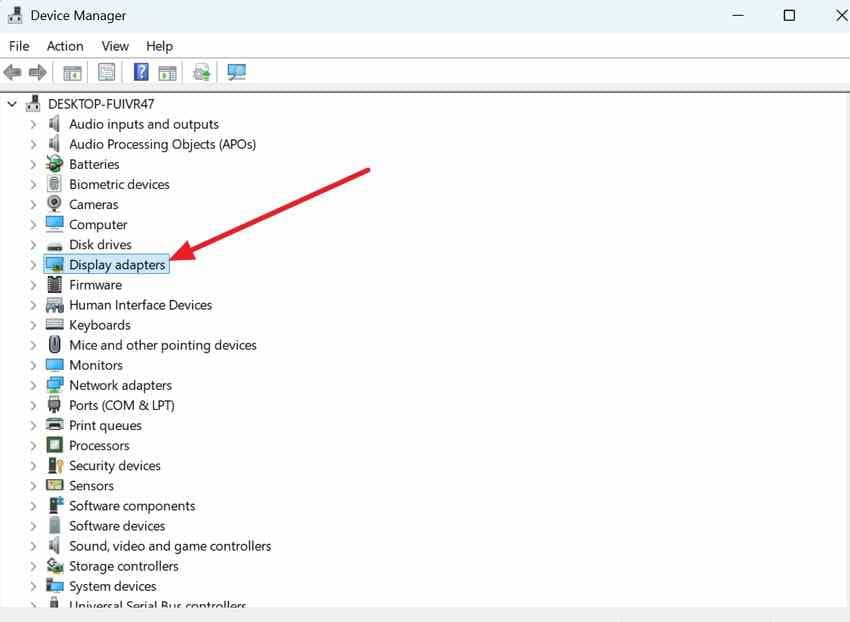
Step 2. Check the official GPU specifications for AV1 decode, which is distinct from AV1 encode. Verify the driver and player can use acceleration.
Step 3. Test a file with the actual profile and resolution you plan to view; use the player performance indicators and system resource usage to compare software and hardware paths.
Check the result: if video plays smoothly while using documented acceleration, keep that configuration. If it stutters, use a player with software AV1 support, reduce playback resolution or convert a copy to a broadly supported codec. Exact GPU models differ, so a family name alone is not a guaranteed compatibility checklist.
Part 3. How to Check and Play an AV1 Video
If a file fails to play, confirm that its actual video stream is AV1 before changing settings or replacing software.
Before downloading codecs, determine whether the file really contains AV1 and whether the failure belongs to the container, stream or media player. The following steps use a small, synthetic AV1/WebM sample created locally for validation; no private video was used.
Check the Actual Video Codec with FFprobe
The following distinction or workflow helps you decide what to do without changing the original file unnecessarily.
FFprobe is included with FFmpeg builds. It can report stream details without converting or modifying the file. It is appropriate for verifying an MP4, WebM or MKV video that displays an unsupported-codec warning.
Step 1. Use the official FFmpeg download options for your operating system; install a trusted build that includes ffprobe. Open Terminal or Command Prompt.
Step 2. Run ffprobe -v error -show_entries format=format_name:stream=codec_name,profile,width,height -of default=noprint_wrappers=1 "input.webm", replacing input.webm with your real file path.

Step 3. Read the returned codec_name. If it says av1, the picture uses AV1 regardless of the filename suffix. Keep a copy of the original video unchanged.
Check the result: the accompanying genuine screenshot shows ffprobe reporting codec_name=av1 for a locally encoded AV1/WebM file. If ffprobe cannot read any streams, confirm that the file finished downloading and that the source is not an empty or incomplete copy before attempting conversion.
Play AV1 in a Supported Player or Browser
The following distinction or workflow helps you decide what to do without changing the original file unnecessarily.
Use an updated media player capable of AV1 decoding, or a browser that supports the profile and container. VLC, for example, maintains supported versions on its official download page. Do not assume Windows system codecs are required for every such player.
Step 1. Save the file locally first so network streaming and browser permissions are not confused with codec support.
Step 2. Open the file through the chosen player using Media > Open File when supported. Start with a small known-good AV1 sample to establish a control case.
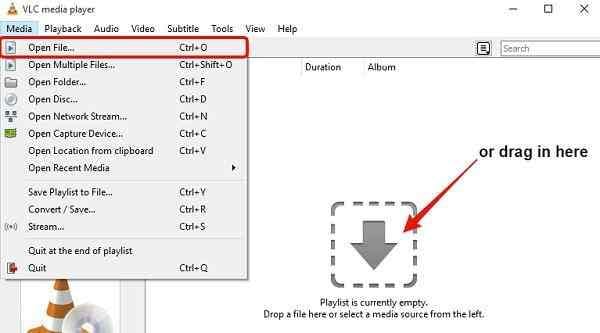
Step 3. If the control clip works but the target video does not, inspect the target with ffprobe; check its audio/video streams, bit depth, container integrity, and whether the download is complete.
Check the result: successful playback means smooth picture and expected audio, if an audio track exists. If both control and target fail, update the player and display drivers, or follow the Windows system codec path above. The illustration shows the actual VLC Media > Open File menu in a previously published Windows capture; menu appearance depends on the player version.
Part 4. How to Convert AV1 Video to a More Compatible Format
Conversion is an alternative when your destination app or device does not support AV1, but it should not be mistaken for file repair.
Re-encoding is useful when an older TV, editor or application cannot decode AV1. It does not repair truncated data and it does not magically change the codec when only a filename or container extension changes.
Convert AV1 to H.264 MP4 with FFmpeg
The following distinction or workflow helps you decide what to do without changing the original file unnecessarily.
The following example produces a new H.264 video stream in an MP4 container. In a real file that includes audio, AAC audio can be used for common playback compatibility. Lossy re-encoding may change image quality, so preserve the original.
Step 1. Make a separate backup copy of the AV1 file and confirm that it plays or at least decodes in a trusted tool.
Step 2. In Terminal or Command Prompt, run ffmpeg -i "input.webm" -c:v libx264 -crf 23 -preset medium -c:a aac -b:a 160k "output.mp4". Replace both filenames with your actual source and destination paths.
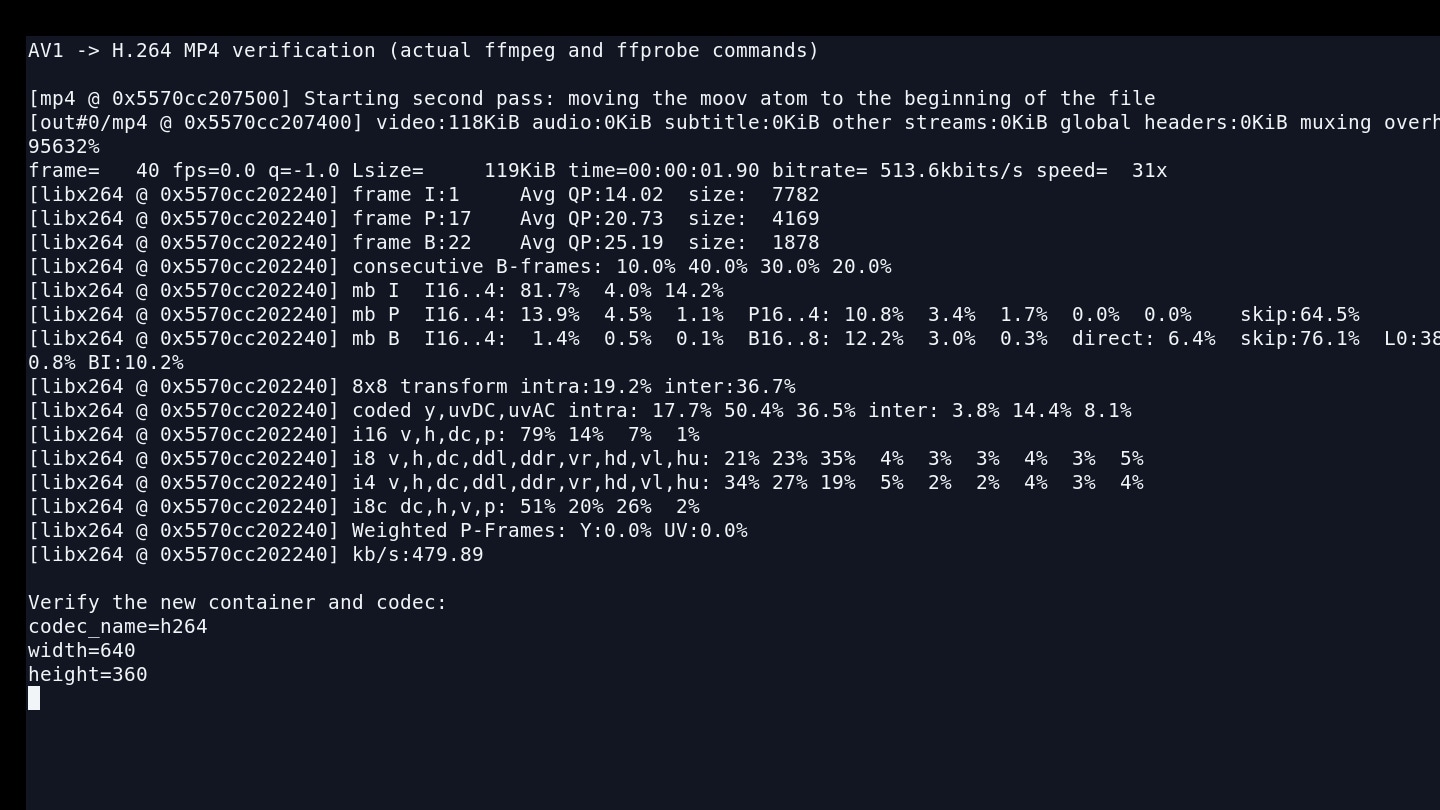
Step 3. Verify the output using ffprobe. It should report codec_name=h264 for the video stream, confirming that the encoder changed the codec rather than merely renaming the file.
Check the result: in a local two-second synthetic AV1 test, the output MP4 stream reported H.264. This confirms the command approach only for that test; device-wide compatibility and the quality of third-party video files still require user verification. If decoding errors appear, preserve the source and address the source integrity first.
When to Keep the AV1 Original Instead
The following distinction or workflow helps you decide what to do without changing the original file unnecessarily.
Keep the source AV1 video if the current player or browser can already decode it or if you need the original for editing, archiving or future re-encoding. Repeatedly converting between lossy codecs can compound quality loss. For sharing, a smaller H.264 MP4 may be more compatible but can also be larger than the AV1 source at comparable settings.
If conversion runs successfully but the video lacks audio, check whether the original contains an audio stream. AV1 specifies video compression; it does not supply a missing audio track.
Part 5. When Does an AV1 File Need Recoverit?
Data recovery is a separate workflow for missing or accidentally deleted source videos, not a cure for missing AV1 decoding.
Only move from codec troubleshooting to data recovery when the original video file is missing, accidentally deleted, or inaccessible on a drive. Missing playback support is not lost data. Conversion is not a recovery solution for deleted files and recovery software does not add an unsupported AV1 decoder.
First Preserve the Source Storage Device
The following distinction or workflow helps you decide what to do without changing the original file unnecessarily.
If an AV1-containing MP4, MKV or WebM file was deleted from a drive or memory card, stop creating new files on that storage location. Continued writes can overwrite recoverable data. Where possible, recover to a different destination drive and check recovered content before modifying it.
- Video exists but will not open: verify container and codec first, as covered above.
- Video was deleted: stop writing to its original location and investigate recovery.
- Video is incomplete or zero bytes: check the original source or backup; neither a codec extension nor a converter can recreate data that was never present.
Recover Accidentally Deleted AV1-Containing Video Files
The following distinction or workflow helps you decide what to do without changing the original file unnecessarily.
For genuine file-loss cases, Wondershare Recoverit video recovery may help locate deleted or inaccessible video files when the storage device is detectable and the relevant bytes have not been overwritten. Recovery results depend on storage condition, file system, overwrite activity, and source file integrity. Availability of preview or playback for a specific AV1 profile must be checked rather than assumed.
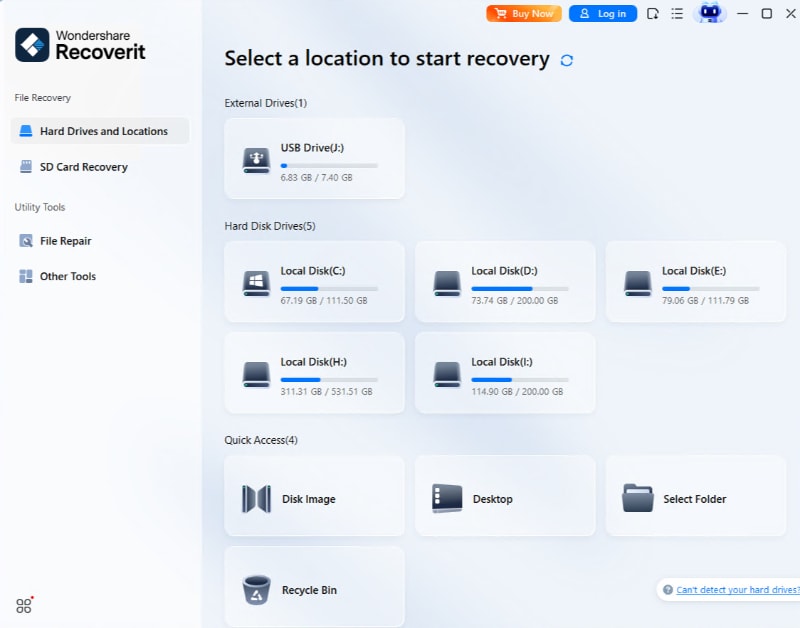
Step 1. Connect the affected storage drive safely without saving new files onto it. In Recoverit, choose the source drive or original location where the video was lost.
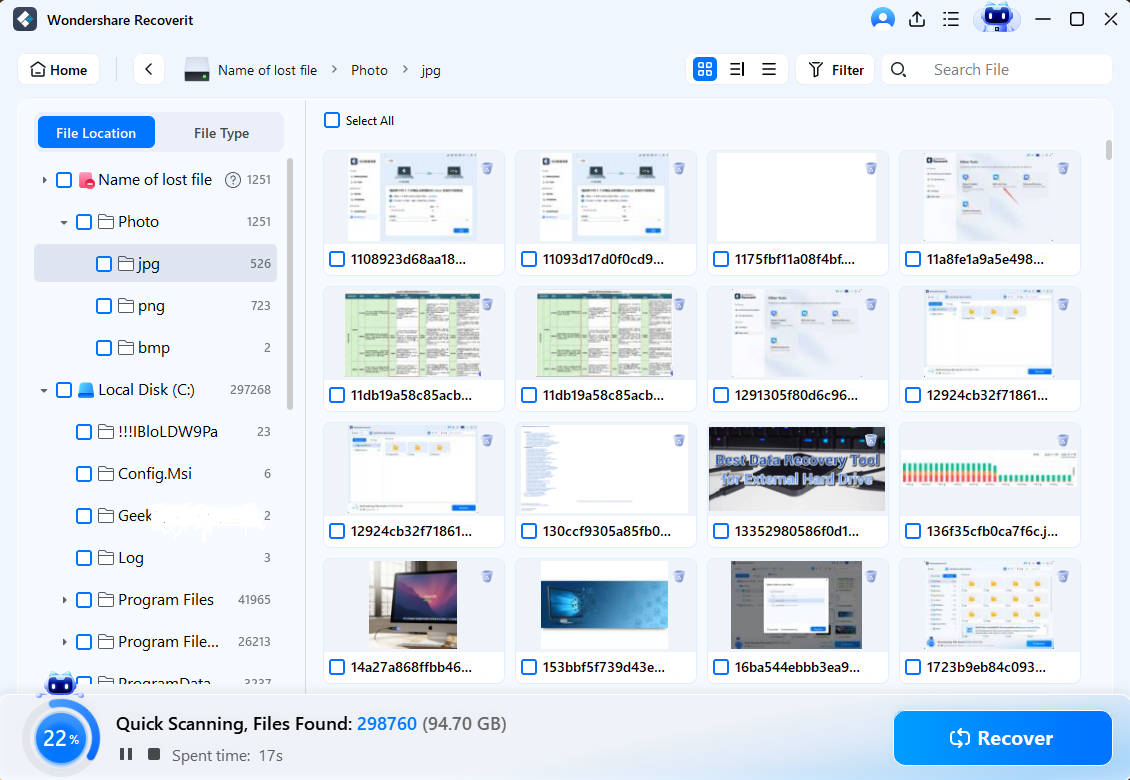
Step 2. Allow the recovery scan to search for deleted files. Use filenames, locations or supported file-type filters to narrow relevant MP4, MKV or WebM candidates.
Step 3. Inspect recoverable files and preview only where supported. Save chosen results to a different healthy storage device, then use a suitable AV1-capable player to check video playback.
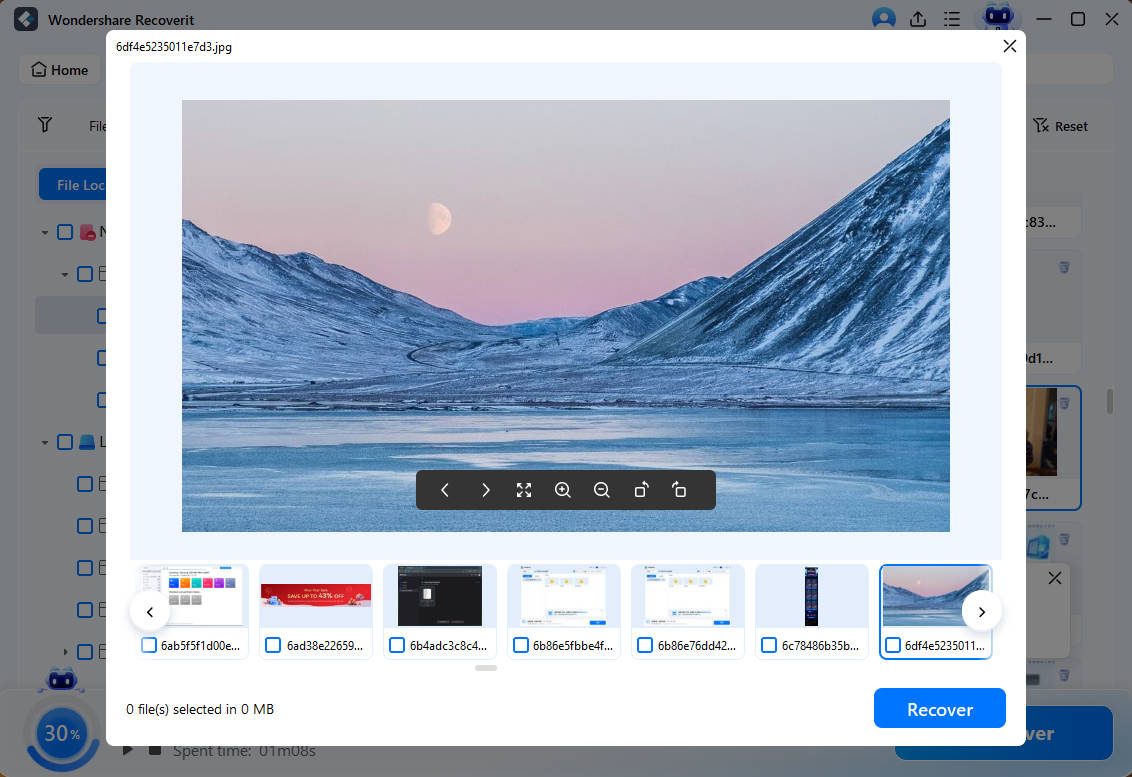
Check the result: the recovered output should exist on the destination storage device and be readable by a supporting player. A successful scan does not guarantee that a deleted AV1 video can be reconstructed or decoded. See the Recoverit official user guide for the latest platform-specific recovery controls.
Conclusion
AV1 is a video codec, not a universal .av1 file extension. Most AV1 playback decisions depend on the player, the media container and available software or hardware decoding. Microsoft AV1 Video Extension is optional and useful for certain Windows applications, but it is not a required download for every user. Inspect the actual stream before installing components or converting files, and re-encode a separate copy only when compatibility requires it. If the original recording is genuinely missing or deleted, preserve the source drive and consider data recovery separately from the codec question.
FAQ
-
Is AV1 Video Extension necessary on Windows 10 or 11?
Only if a particular Windows application needs that system component for AV1 decoding. Applications with their own AV1 decoder may not require it. Follow the supported Microsoft Store listing for your specific system. -
Does AV1 have a .av1 extension?
Not necessarily. AV1 video commonly appears within MP4, WebM or MKV containers. Inspect the actual video stream to identify its codec. -
Can I download an AV1 codec for free?
Many players and libraries support AV1, and Microsoft offers its official AV1 Video Extension through Microsoft Store. Use trusted publisher sources rather than third-party DLL packs. -
Does AV1 Video Extension enable hardware decoding?
No. Hardware decoding requires compatible video decode hardware, drivers and software support. A codec extension cannot add features absent from the GPU. -
Why will an AV1 MP4 not play?
Its container may be recognized while its AV1 stream is unsupported by the chosen player or device. Check the stream with ffprobe and compare it with a known-good AV1 file. -
Is AV1 better than H.264?
AV1 can achieve better compression at comparable visual quality in many workflows, but older devices and editing software may be more compatible with H.264. -
Can Recoverit fix an unsupported AV1 codec?
No. Recoverit addresses file-loss scenarios, not missing video decoders. For unsupported codecs, use a suitable player or re-encode a copy of the video.


