


Does PowerPoint say “PowerPoint cannot insert a video from the selected file” when you try to add an MP4? That message does not necessarily mean the video is damaged. A video can have an .mp4 extension while containing a video or audio codec that the version of PowerPoint cannot handle. Other causes include a missing file, an unavailable cloud or network location, or a media stream that cannot be read.
Start by playing the exact file outside PowerPoint, then try a local copy and an H.264/AAC-encoded MP4. These steps are safer than installing random codec packs or renaming an extension. The instructions below distinguish a video that will not insert from one that inserts but will not play.
In This Article
Part 1. Why PowerPoint Cannot Insert a Video From the Selected File
The quickest way to resolve this error is to identify what PowerPoint cannot access: the path, the underlying streams, or the application’s ability to read them.
Recent desktop versions of PowerPoint are best served by an MP4 file containing H.264 video and AAC audio, as recommended by Microsoft. MP4 is a container, not a guarantee about the streams inside it. An MP4 could contain HEVC/H.265, AV1, or a less compatible audio stream. Replacing .mov with .mp4 in the filename does not transcode those streams.
| What happens? | Likely area to check | First useful action |
| The same clip fails in PowerPoint and a second player | Unreadable, incomplete, or unusual file | Test an untouched backup; verify stream information |
| The clip plays in a player but will not insert | Codec, PowerPoint version, or local-path issue | Copy locally; export to H.264/AAC MP4 |
| The original location is unavailable | Disconnected drive, moved file, or deleted video | Locate or restore the source without writing over it |
| The video inserts but playback fails later | Playback, media compatibility, or presentation environment | Check File > Info for available compatibility options |
The wording about a “necessary 64-bit codec” appears in some older Windows PowerPoint builds. It is a clue about a decoding dependency, not an instruction to install an unverified codec pack. The official compatibility guidance is a safer starting point than generic codec downloads.
Also distinguish the desktop PowerPoint app from PowerPoint on the web and older perpetual Office versions. Ribbon labels and available commands vary. These methods focus on desktop PowerPoint for Windows, with Mac differences noted where they change the answer.
Part 2. Five Ways to Fix the PowerPoint Video Insertion Error
Try the methods in order and keep a backup of the original clip. Each method includes a quick success test and a fallback so you can stop troubleshooting when the insertion works.
Fix 1. Confirm That the Original Video Plays From a Local Folder
This is the right first check when a clip came from a cloud-sync folder, external drive, downloaded archive, email attachment, or shared network path. PowerPoint must be able to read the actual media bytes, not just a shortcut or an online placeholder.
Step 1. Open File Explorer and locate the actual video. If it is in OneDrive or another synced location, make sure the file has finished downloading. Copy the video into a short local folder such as your Documents folder, leaving the original untouched.
Step 2. Right-click that local copy and choose Open with a media player. Play it through a section with both picture and sound rather than stopping after the thumbnail appears.
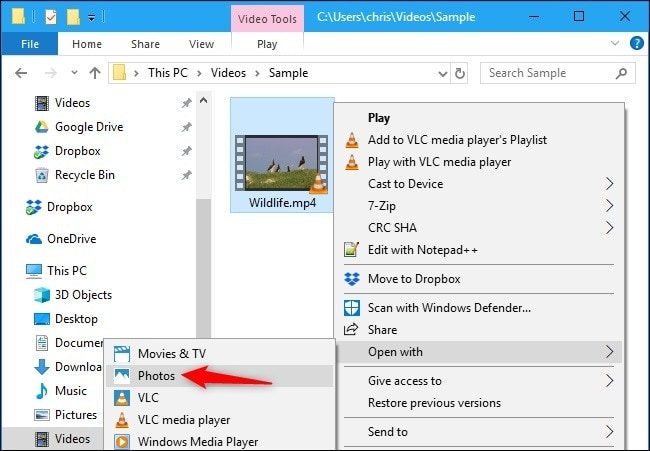
Step 3. Compare the file size with the source copy and verify the extension is still the original .mp4, .mov, or .webm. If the copy fails, do not rename it or repeatedly overwrite it.
Success check: The exact local copy plays normally from beginning to end. Try that same file in PowerPoint before converting anything. If it fails: Move to the codec-compatible export in Fix 2. If it cannot be opened in any player, use another known-good copy or assess whether the file is incomplete instead of assuming a PowerPoint fault.
Fix 2. Convert the Video to MP4 With H.264 Video and AAC Audio
Use this fix when the file plays in VLC or another capable player but PowerPoint still reports a selected-file error. Conversion can replace an incompatible video or audio stream while keeping your original safe.
Step 1. Open a trustworthy video conversion application and import the local copy of the failing video. Do not use an untrusted codec installer or upload confidential presentations and clips to unknown web services.
Step 2. Choose the output container MP4, video encoder H.264/AVC, and audio encoder AAC. Select a sensible resolution and frame rate supported by your target device. If using FFmpeg directly, a typical command is ffmpeg -i input.mov -c:v libx264 -pix_fmt yuv420p -c:a aac -movflags +faststart output.mp4; adapt the filenames to your own content.
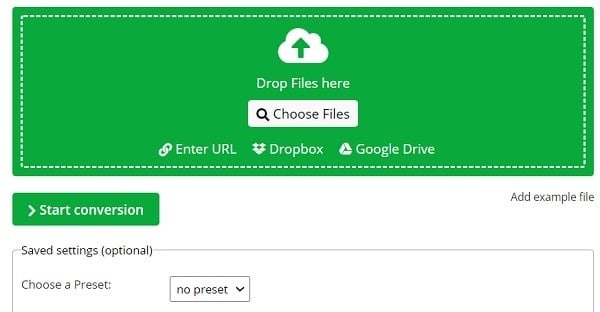
Step 3. Save the output as a new file, not over the original, and play it outside PowerPoint. Inspect its encoding if possible; the new filename alone is not proof that the conversion succeeded.
Success check: The exported MP4 plays in a normal player and is accepted by PowerPoint. If it fails: Confirm the video and audio streams really are H.264 and AAC, then test the converted file in a brand-new presentation. A conversion that cannot read the input will not repair missing data.
Fix 3. Insert the Converted Video From Your Device Again
Once a compatible local MP4 exists, retry insertion using PowerPoint’s own Insert workflow. This eliminates uncertainties caused by dragging files from browsers, cloud interfaces, or applications.
Step 1. Open a new blank presentation in a supported desktop version of PowerPoint. Keep the video in a local directory and close any application that might still be writing it.
Step 2. On the slide, select Insert > Video > This Device (or Video on My PC, depending on version), browse to the converted MP4, select it, and choose Insert.

Step 3. Start the slideshow and play the inserted video for a few seconds. Save, close, and reopen the test presentation to verify that the video remains available.
Success check: PowerPoint embeds or links the video as expected and playback works in the test presentation. If it fails: Check whether even a second, known-good H.264/AAC MP4 fails to insert. If both fail, examine PowerPoint installation or policy restrictions rather than blaming the first file. The accompanying image is an older authentic error-dialog example, so its message appearance may differ in Microsoft 365.
Fix 4. Use Optimize Media Compatibility When Available
This option applies when a video has already been added to a presentation but causes compatibility or playback problems. It is not a way to make a file insert successfully before PowerPoint can read it, and the command is not available in every platform or version.
Step 1. Open the presentation that already contains the media and go to File > Info in the desktop Windows application. Look for Optimize Compatibility or Optimize Media Compatibility, if the command is offered.
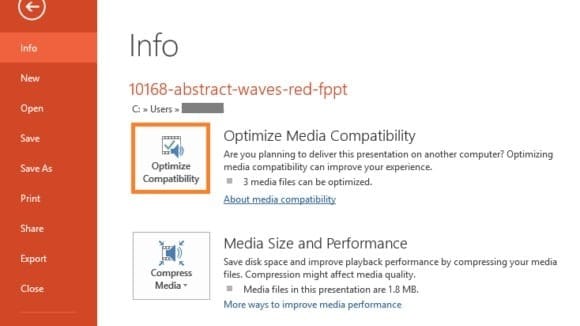
Step 2. Save a separate copy of the presentation, run the optimization, and let PowerPoint finish any offered processing before closing the document.
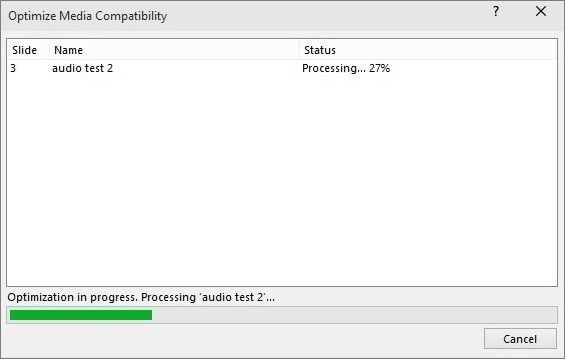
Step 3. Test the slide in presentation mode, then reopen the file on the device or PowerPoint version where it previously failed.
Success check: Previously embedded media plays correctly. If it fails: Return to Fix 2 and create a new H.264/AAC output, then replace the old embedded clip. If this option does not appear, do not search for registry tweaks to force it: it can be absent when no media is eligible or in versions with different functionality.
Fix 5. Recover an Original Video That Has Gone Missing

Data recovery is relevant only when the original video has been deleted, lost from a drive, or become inaccessible because of a storage problem. It will not install a missing codec, change PowerPoint settings, or guarantee that a damaged video can be decoded.
Step 1. Check the original folder, Recycle Bin, version history, and backups first. If the video disappeared from removable storage, stop saving new files to that device so previously deleted data is less likely to be overwritten.
Step 2. If a recoverable source drive is available, open Wondershare Recoverit data recovery software and select the drive or location where the original MP4 or MOV was stored. Follow the official recovery workflow rather than scanning the folder where you plan to save the restored file.
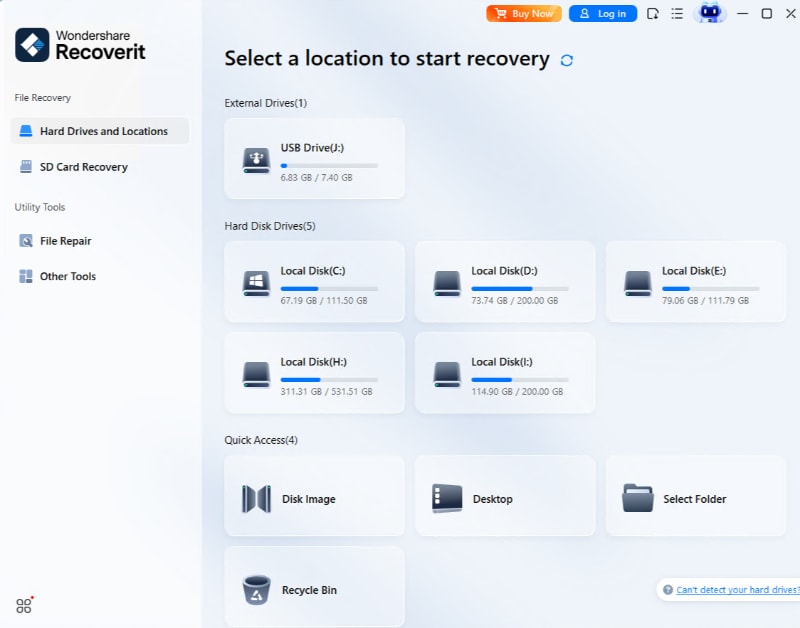
Step 3. Scan, inspect the video results and available previews, and recover suitable results to a different physical drive. Recovery depends on device health, overwriting and file condition; a scan result is not proof that the video will play.
Success check: The restored source opens in a player. Only then attempt PowerPoint insertion, converting a separate copy if necessary. If it fails: Stop writing to the affected source and consider professional recovery for critical files rather than repeatedly running destructive repairs.
Part 3. Version Differences, Common Mistakes, and Next Checks
Before you spend time changing software settings, make sure the error belongs to the correct failure stage and Office environment.
| Case | What it means | Safer next step |
| .mp4 is selected but rejected | The suffix does not identify the internal codec | Confirm H.264 video and AAC audio; transcode if needed |
| Message mentions 64-bit codec | Older installation may depend on an available decoder | Prefer a correctly encoded H.264/AAC MP4; update Office from Microsoft |
| PowerPoint on Mac | Windows-only ribbon features or codecs may not apply | Use the current Mac-supported insertion workflow; check the media codec |
| PowerPoint on the web | Upload, insertion, and playback capabilities differ from desktop | Try the same prepared file in a supported desktop version |
| Presentation plays locally but fails elsewhere | The other device or presentation may lack compatible playback support | Re-encode the source and retest on the target device |
Microsoft maintains current PowerPoint video and audio format guidance, including its preferred codec combination. The file-format support of a specific older Office build can differ; consult the documentation for that edition rather than assuming all historical formats work today.
If an MP4 works in VLC but not in PowerPoint, that is evidence of a compatibility difference, not proof of corruption. A video can also have picture with no sound when its audio codec is not supported. For additional diagnosis, see video playback troubleshooting and deleted video recovery guidance when those separate symptoms apply.
A separate problem occurs when the file has valid metadata but damaged frames or a truncated stream. Conversion is not guaranteed to fix structural damage; keep backups of any remaining playable copy. For files that are actually unreadable, distinguish corrupt video repair from recovering a deleted file. Never infer data loss solely from an insertion error.
After testing, retain a small known-good MP4 as a control file for future presentations. If both that file and your converted clip fail on one installation, investigate the application's updates, organization's media restrictions and Office repair options through supported Microsoft channels. Avoid registry edits and unknown third-party codec bundles as first-line fixes.
For an important presentation, keep the original footage and the prepared PowerPoint copy as separate files. That makes it possible to compare the preconversion and postconversion results without accidentally losing quality. If the presentation is being shared with another Windows or macOS device, test the destination machine rather than assuming playback in your editing environment proves universal compatibility.
A practical codec check starts with the actual stream properties, not a Windows file-type icon. Two files named meeting.mp4 may use different codecs, bit depths or audio formats, and one may be incompatible with a particular PowerPoint build. If the conversion tool offers “copy video” or “passthrough,” do not use that option to resolve an incompatible codec: it can keep the same unsupported stream. Choose actual H.264 encoding and test the resulting file. Some content recorded in variable frame rate can also behave differently in editors; choosing a stable export profile may help, but preserve the camera original for future work.
For legacy presentations, be mindful of older 32-bit and 64-bit Office-era error messages. The presence of “64-bit codec” in an alert does not mean that a codec download advertised on a random site is necessary or safe. A user with a managed work computer may also lack privileges to change codec components. A current, supported Office build and a properly encoded video are the preferable first path. For any Office-specific repair or policy limitation, follow the organization's approved Microsoft 365 support process after preserving the media and presentation.
Conclusion
The “PowerPoint cannot insert a video from the selected file” message is most often approached by checking whether the original source is readable, then using an MP4 encoded with H.264 video and AAC audio. Work on copies, test the converted file in a new slide, and use Optimize Media Compatibility only for presentations that already contain eligible media. If the source clip is truly missing, preserve the drive and consider recovery instead of codec changes.
Successful troubleshooting means the same video inserts, plays and remains accessible after reopening the presentation. If a known-good MP4 also fails, turn to the PowerPoint version and installation rather than risking the original file with repeated conversion or overwrite attempts.
FAQ
-
Why does PowerPoint say it cannot insert a video from the selected file?
The clip may be inaccessible, encoded with an unsupported stream, or incompatible with your PowerPoint version. Check a local copy in a player before troubleshooting codecs. -
Why can't PowerPoint insert an MP4 video?
MP4 is only a container. A compatible MP4 typically uses H.264 video and AAC audio. The extension alone cannot confirm the codecs inside. -
Should I install a 64-bit codec pack to fix the PowerPoint error?
Not as a first step. Older error messages may mention codecs, but exporting a supported H.264/AAC file and updating Office through official channels is safer than installing an unknown codec bundle. -
Can Optimize Media Compatibility fix a video that cannot be inserted?
Usually not. That feature is designed for eligible media already present in a presentation; it does not make an unreadable source file insertable. -
Can Recoverit fix PowerPoint's video insertion error?
Recoverit is relevant when the underlying original video was lost or deleted and may be recoverable. It does not fix PowerPoint's supported formats or install missing decoders.


