Hard Drive Recovery
- Recovers deleted or lost files from hard drive effectively, safely and completely.
- Supports data recovery from 500+ data loss scenarios, including computer crash, partition loss, accidental human error, etc.
- Supports 1000+ file formats recovery with a high success rate and without any quality loss.

How to Fix Reallocated Sector Count Warning

Sep 02, 2026 • Filed to: Answer Hard Drive Problems • Proven solutions
 TL;DR:
A reallocated sector count warning indicates permanent, unrepairable hard drive failure, meaning your only effective solution is to immediately back up your data and replace the disk entirely.
● Running a CHKDSK /r /f command can map out bad sectors, but executing this before securing your files is highly discouraged because the intensive scanning process can destroy data in unresponsive sectors and trigger complete drive failure.
● If the failing drive has already turned RAW or data is inaccessible, utilize a recovery tool like Recoverit to extract your files, ensuring you strictly save all recovered data to an entirely different storage device to avoid overwriting.
● Prevent sudden data loss by monitoring your drive's S.M.A.R.T. health status with a drive monitor, keeping operating temperatures between 20 to 25 degrees Celsius, and always safely ejecting external drives to avoid file system corruption.
Ask AI for a summary
 ChatGPT
 Perplexity
 Gemini
 Claude
 Grok
Grok
Q: How to fix the reallocated sector count warning?
"Hello, guys. I bought a new HDD around three years ago. It was working fine till the last week. But now, I can't access anything when I start my PC. I have been receiving a reallocated sector count warning. Is there any way to fix this issue?"
Did you know that you can monitor the health status of your hard drive? This is by using S.M.A.R.T which is in-built in your PC’s hard disk drives (HDDs). Self-Monitoring, Analysis, and Reporting Technology might show Caution as its status information. If this happens and there is a consistent increase in the value of Reallocated Sector Count you need to do something. You must monitor your hard drive and the data in it.
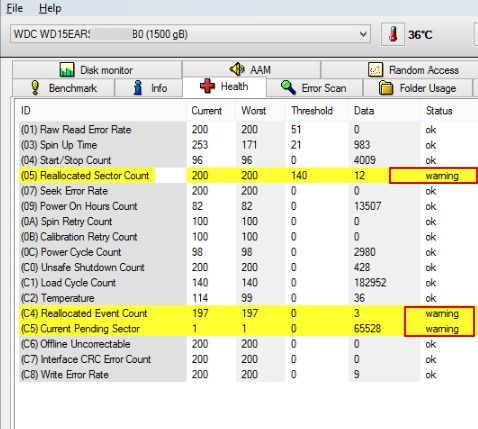
This warning means the hard drive is failing and if it is used like this, it could result in a permanent data loss. Below is more information about the hard drive reallocated sector count fix.
Part 1: Reasons for Reallocated Sector Count Warning
Can reallocated sectors be trusted to store data safely? The answer is no. These parts of the hard drive platter that stores 512B of data should not be used like this. The sectors are reallocated when the hard drive gets errors while writing, reading, or verifying data. The data is then moved to the spare sectors of the disk. This part of the hard drive operation prevents corruption and data loss.
- The Bad Sectors. A hard drive reallocated sector count or a drive with several bad sectors causes corruption. The issue with bad sectors is that it damages data that has file information. These disks can no longer be accessed as they turn RAW but the good thing is that this can be fixed. A data recovery tool can help in retrieving the lost data. The tool must support the corrupt drive recovery.
- Physical Damage to the Drive. Physical and logical damage to the drive causes bad sectors even with normal use. Physical damage creates hard bad sectors while logical damage creates soft ones.
- Intense Drive Usage for a Longer Duration. When you buy a new hard drive, it should not have reallocated sectors as they appear once you start using it. Intense usage of the drive for a long period could lead to this warning appearing.
- Force shutdown. During usage of the hard drive, it does so at a high speed. In this time, the drive needs to read data on the disk and in this case, the head is fixed in different locations. The drive head backs in place if the computer is forcedly shutdown. Bad sectors could be as a result of the drive head rubbing against the disk during the process. With this in mind, properly shutting off the computer should be adhered to.
- Overheating. Internal hardware damage results from overheating since there is a frequent change of the crystal oscillator clock. Remember that the ideal temperature for hard drives is 20 to 25 degrees Celsius. Consider cooling measures and prevent the hard drive from overheating.
- Corrupt File. Newly assigned sector numbers and a huge number of defective sectors cause corruption. Parts of data containing file system information or file system information can be damaged by bad sectors. Logical errors will happen when the file system is corrupted and there will be bad sectors on your hard drive.
- Aging Hardware. Each hard drive has a lifespan and the more it is used, the more it ages. This will lead to bad sectors eventually.
- Mechanical Drive Issues. Mechanical issues on the hard drive also lead to bad sectors. You can detect these issues if you heard a clicking or a screeching sound on the hard drive.
- Run CHKDSK Scans: All Windows Server and Microsoft Windows versions have CHKDSK. To find this utility on your computer, type "chkdsk" on the "Command Prompt." Whenever you notice disk errors on your PC, use this utility to fix them.
- Safely Remove: As you remove an external drive from a computer, first make sure it is safe to do so. Without doing this, you will have to deal with corrupt files. To prevent such a disaster, remove or eject the hard disk safely. You will be minimizing the possibility of bad sectors and disk errors.
- Keep Backup: Hard drive reallocated sector count causes drive errors, failure, and corruption that leads to data loss. To avoid this problem, it is imperative to back up the hard drive. To keep the files protected, you should store them on local storage and a cloud service.
- Use Drive Monitor: As a user, you get to see the overall performance of your disk drive. You can get this by use of a drive monitor. You can monitor and analyze the disk usage, file system, activity, writing, and reading speeds. Also, you see all the details of removable media or disk drives connected to your PC which means you can see their performance.
-
What is a hard drive reallocated sector count warning?
A hard drive reallocated sector count warning is a notification from your computer's operating system that indicates the hard drive has encountered a significant number of errors in the physical storage sectors, and the drive is reallocating data to healthy sectors to prevent data loss. -
What causes a hard drive reallocated sector count warning?
There are several potential causes for a reallocated sector count warning, including physical damage to the hard drive, aging of the drive's components, or excessive wear and tear from heavy use. -
Is it safe to continue using a hard drive with a reallocated sector count warning?
Continuing to use a hard drive with a reallocated sector count warning is not recommended, as it indicates potential hardware failure. It is best to back up your data immediately and consider replacing the hard drive. -
Can a reallocated sector count warning be fixed?
In some cases, a reallocated sector count warning can be temporarily resolved by running disk repair tools or performing a low-level format on the hard drive. However, these are temporary solutions, and the warning may reappear if the underlying issue is not addressed. -
How can I prevent a hard drive reallocated sector count warning?
Regularly backing up your data, avoiding physical damage to the hard drive, and monitoring the health of your hard drive using diagnostic tools can help prevent a reallocated sector count warning. Additionally, replacing a hard drive before it reaches the end of its expected lifespan can reduce the risk of encountering this warning. - Recover Your Drive
- Get WD files back now.
- Recover Seagate data easily.
- Drive damaged? Recover data
- Recover Toshiba drive data.
- Top tools to recover hard disk.
- Recover deleted files from C drive
- Fix Your Drive
- Repair external hard drive
- Fix an undetected hard disk.
- Fix drive I/O error.
- Solve hard drive crash.
- Remove all bad sectors.
- Get data off old hard drive
- Fix "The file or directory is corrupted and unreadable"
- Format/Wipe Drive
- Best hard drive eraser.
- Recover hard drive without formatting
- How to unformat a hard drive
- Erase Mac drive
- Format external hard drive on Mac
- Know Your Drive
- What is PATA?
- What is a Solid State Drive?
- What is a hybrid drive and do i need it?
- What is optical drive and how does it work?
- Magnetic Disk Guide
- Increase hard drive speed.
- What Is Zip Drive?
- What Is Floppy Disk?
- What Is SATA?
- What Is NVMe?
- Top 10 cheapest external drive.
- 5 external drive for Mac.
- Clone your hard drive.
- Recover data from dead computer
Part 2: How to Fix Reallocated Sector Count Warning?
How does one perform a hard drive reallocated sector count fix? Cloning the drive with bad sectors to a new one is the only solution. Whether the bad sectors are soft or hard, there is no other option as it cannot be repaired.
Method 1. Backup Hard Drive Data
Before attempting to repair the reallocated sector count warning, you should backup your data stored on the drive first in case of any data loss. And if you need to restore lost files from a drive turned RAW and is not accessible, you should use Recoverit. This is known to be an exceptional data recovery tool. Download Recoverit on your Windows PC and then install it. The below steps will help you backup and recover your data even from a corrupt drive.
Step 1: Download and Open the Software
Now that you have downloaded the software, the next step is to open it.
Step 2: Choosing the Drive
In the window that shows up, select the affected hard drive. Once this is done, you need to start searching for the files on the drive. Proceed to select "Start."

Step 3: The Scanning Process
In this step, Recoverit will scan the affected hard drive. Give it time before previewing the scanned data. In some scenarios, you may not recover files from the hard drive with bad sectors. A deeper scanning should be performed by clicking on "All-Around Recovery."

Step 4: Recovering Files
In the program window, you will see files from the partition of your hard drive. You can confirm the number of bad sectors that you can reclaim. To do this, check the original file or folder names. The next thing is to choose the files you want to restore. To save them on your PC, click "Recover."

Note: Avoid keeping your recovered data in the hard drive with bad sectors. This will prevent it from being overwritten.
With these steps, you will easily backup and recover files from even the corrupted hard drive.
Method 2. Try CHKDSK Scan for Bad Sectors and Fix Drive Errors
Although you can run the CHKDSK scan, this is not recommended as the drive could fail permanently. It is also not safe, and it is tedious. Data stored in unresponsive sectors of the disk can be destroyed as the scanning could mark them as bad sectors. Cloning your drive or backing up data should be your first option.
Now that you have backed up your data or you have recovered it, it is time to run the CHKDSK command. This will repair the drive and fix the errors.
Step 1: The first thing that you need to do is open "Command Prompt" in administrator mode. Next, type "CHKDSK /r /f X:" and replace X with the drive volume letter.
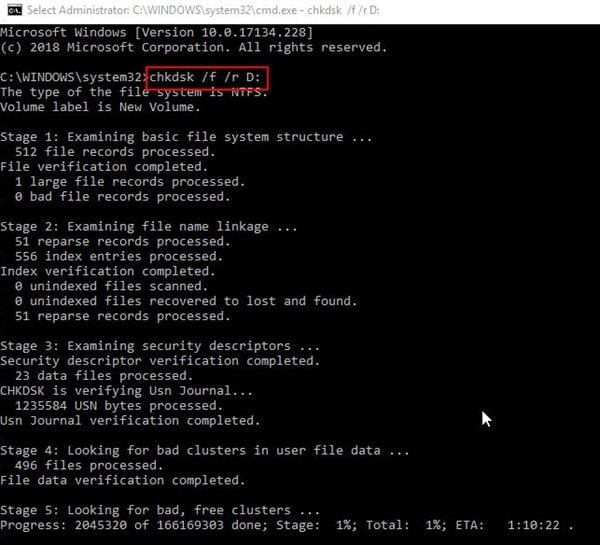
Step 2: Proceed to press the "Enter" and give the scanning process time to finish.
You can get to tell whether there are issues on the hard disk or not. By performing the two steps above, you will get a report summary of any issues as it runs a non-intrusive scan.
Video Tutorial on How to Run CHKDSK For Repairing Bad Sectors?

Part 3: How to Prevent Reallocated Sector Warning?
To prevent hard drive reallocated sector count warning, below are precautionary measures to take.
With the drive monitor, you can check hard drive reallocated sector count errors among other SMART errors. Besides, you can also scan the drive to see whether it has bad sectors. There are varieties of drive monitor tools in the market.
Conclusion
A hard drive reallocated sector count fix is not possible, and it cannot be lowered. A hard drive will not store data or use sectors that have been reallocated. Buying a new hard drive would be your best solution. You will use it to replace the original one that has several reallocated sectors.
With hard drive reallocated sector count, it is easy to lose data. The first thing is to back up your data when you experience these two problems- a reallocated Sector Count HDD or SSD. On the other hand, Recoverit will help you restore data that may have been lost due to hard drive problems.


Theo Lucia
chief Editor