 TL;DR:
To fix a missing D drive in Windows 11 or 10, immediately open Disk Management to determine if the partition simply lost its drive letter, requires a manual rescan, or needs data extraction due to file system corruption.
● If the drive appears in Disk Management with a blue bar but no letter, right-click the partition and select Change Drive Letter and Paths to manually assign it and restore File Explorer visibility.
● If the drive displays a black bar indicating it is Unallocated or RAW, do not format the disk or run CHKDSK; instead, use Wondershare Recoverit to extract your files before attempting structural partition repairs.
● If the drive disappears only after the laptop wakes from sleep, bypass Windows 11 Modern Standby bugs by updating your NVMe Controller drivers and disabling the turn off hard disk option in Advanced Power Settings.
Ask AI for a summary
 ChatGPT
 Perplexity
 Gemini
 Claude
 Grok
Grok
The D drive missing Windows 10/11 issue highlights a gap in system accessibility that users cannot afford to ignore. For many, the D drive is a storage space separate from the operating system, making its availability essential for an organized workflow. Once it goes missing, even simple tasks like opening saved files or accessing installed software can become an obstacle.
However, if the problem is caused by partition errors, system glitches, or outdated drivers, they all require timely attention. In this context, the guide will help you identify the exact cause of the issue and apply tested workarounds.
Try Recoverit to Perform Data Recovery
 Security Verified. 3,591,664 people have downloaded it.
Part 1. What It Means When Your D Drive Is Missing Windows 10
The D drive not showing up in Windows 11 means Windows cannot properly see that storage partition or disk. In many cases, the data is still there, but Windows File Explorer just does not show the drive icon. Precisely, you need to check Disk Management to see if the drive exists but has no letter or is marked as unallocated.
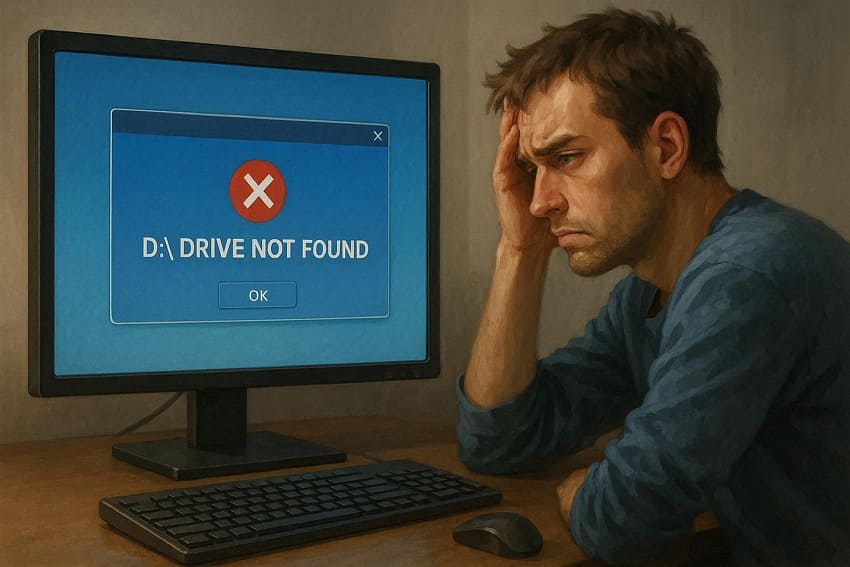
Common Symptoms of D Drive Not Showing Up
Before solutions, review the given symptoms to confirm the problem and take the right steps towards fixing it:
- D Drive Icon Missing in This PC: You open “This PC” or File Explorer and only see “C:”, but no “D:” drive at all.
- Programs or Games on D: Stop Working: Apps or games that were installed on the D drive suddenly give errors like “path not found” or “drive not available.”
- Files Saved on D: Seem to “Disappear”: The files were saved to the D drive, but you cannot reach them because the drive is not listed.
- No D Drive, but Disk shows in Disk Management: Users can see a partition or disk that has no letter or shows as “unallocated”, but no D drive in File Explorer.
- Goes Missing After Windows Update or Reinstall: D Drive disappears right after a big Windows update, reinstall, or after changing the partition.
| What You See | Probable Cause | Priority Fix |
| Drive is missing in File Explorer but visible in Disk Management | Missing Drive Letter | Way 5: Assign Drive Letter |
| Drive appears as "Unallocated" (Black bar) | Deleted Partition | Pro Tip: Recover Data First |
| Drive appears as "RAW" or "Not Initialized" | File System Corruption | Way 7: Run CHKDSK |
| Drive is missing from both Explorer and Disk Management | Hardware/Cable Issue | Way 1: Physical Check |
Part 2. Why D Drive Not Showing Up in Windows 11 Happens - 5 Reasons
Proceed and understand these underlying reasons for the “D drive missing Windows 10” issue to ensure your data remains accessible:
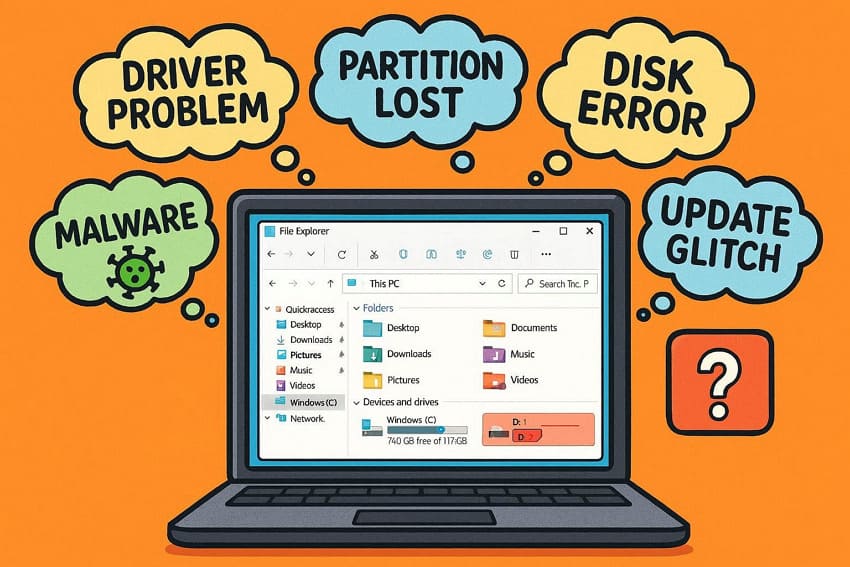
- No Drive Letter is Assigned: Sometimes Windows removes or doesn't allocate a letter (D:), so the drive exists without a name in File Explorer. In fact, you can usually see it in Disk Management, just without a letter.
- Partition Became Unallocated or Deleted: If the partition was deleted, resized incorrectly, or became unallocated, Windows cannot show it as "D:" anymore. In Disk Management, this space appears with a black bar and no drive letter or file system.
- The Drive is Hidden by Settings or Policy: Some settings or group policies can hide certain drives from File Explorer, so “D:” is there but purposely hidden. Simply, apps and users cannot see or use that drive until the settings are altered.
- Driver or System Update Problems: After a Windows 11 update or driver change, Windows may stop detecting the disk or change drive letters. This can make the old “D:” drive disappear or show under a different letter.
- Due to Hardware or Connection Issues: Loose cables, a failing hard drive/SSD, or a bad USB/SATA port can make the D drive disappear. Often, the drive may also be missing in Disk Management and sometimes in the BIOS, indicating a physical problem.

In newer Windows 11 laptops, a feature called Modern Standby (S0) can sometimes cause secondary HDDs or SSDs to remain in a low-power "sleep" state even after the system wakes up. If your D drive disappears only after the laptop wakes from sleep, try disabling "Turn off hard disk after..." in your Advanced Power Settings or updating your NVMe Controller drivers.
Part 3. How to Restore the D Drive Missing Windows Without Losing Data
Knowledge of how to fix a missing D drive in Windows equips you with practical steps to keep your system running smoothly. Thus, detailed stepwise guidance is provided in this section to assist users in handling the problem confidently:
Way 1. Check Physical Connections
At times, the D drive may not appear simply because the hardware connection is loose or faulty. Ensuring all cables connecting your hard drive or SSD to your PC are secure can instantly restore visibility. To do so, shut down your PC initially, then check the SATA/Power cables and reconnect them securely. A quick physical check can resolve the issue immediately, confirming your drive is properly powered and connected.
Way 2. Show All Drives in Folder Options
Hidden drives can be invisible in File Explorer if Windows settings hide empty drives. Once you adjust Folder Options, you can make all drives visible again without altering the drives themselves. This method helps users quickly recover access to drives that are hidden by system settings. For more clarity, follow the guided tutorial and ensure you don’t miss files that are still intact:
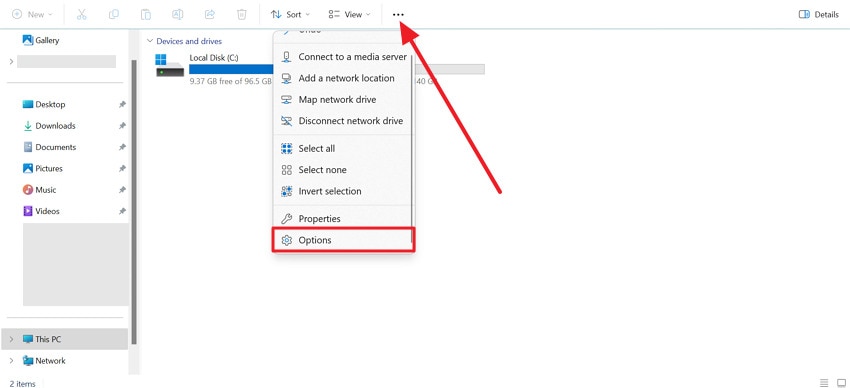
- Enter File Explorer, go to This PC, then click the “Three Dots” icon and choose “Options.”
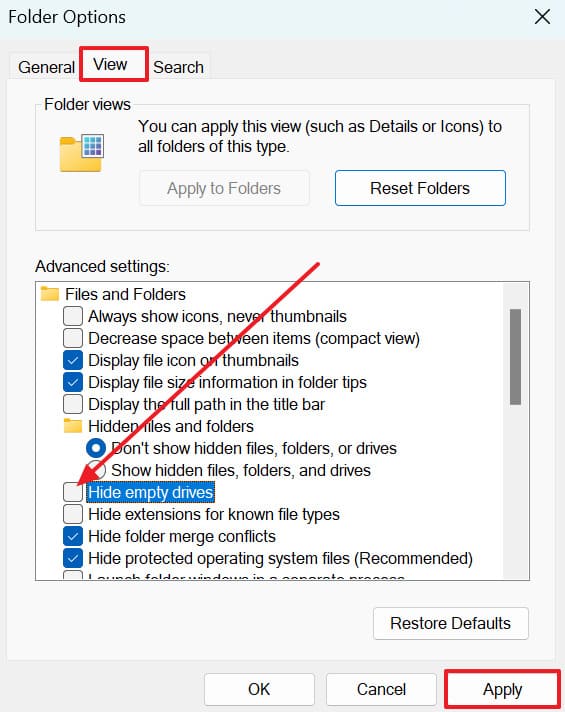
- In the Folder Options window, access the “View” section and uncheck the “Hide Empty Drives” option. Once done, press the “Apply” button to keep the changes, then “OK.”
Way 3. Unhide Hidden Drives/Partitions
Disk Management can be used to unhide the drive that Windows won’t display in the File Explorer. To recover the missing D drive in Windows, this approach helps address drives that are technically functional but somehow invisible. It further ensures that all existing partitions are properly recognized by Windows, thereby restoring accessibility. Adhere to the given manual and unhide all the hidden drives/partitions in Disk Management:
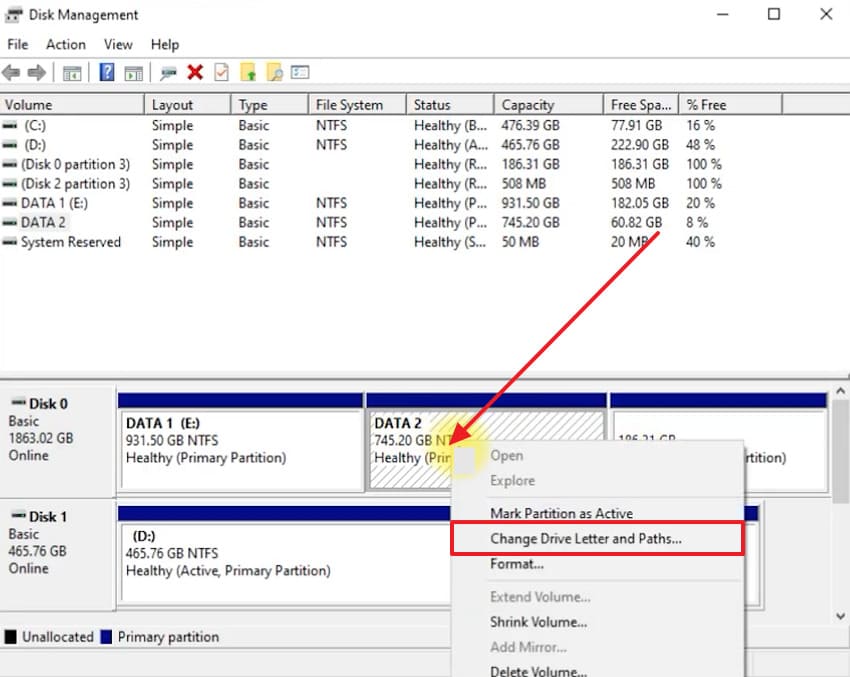
- Open Disk Management in Windows, find the volume that seems hidden, and right-click it. After this, choose the “Change Drive Letter and Paths” option from the menu to proceed.
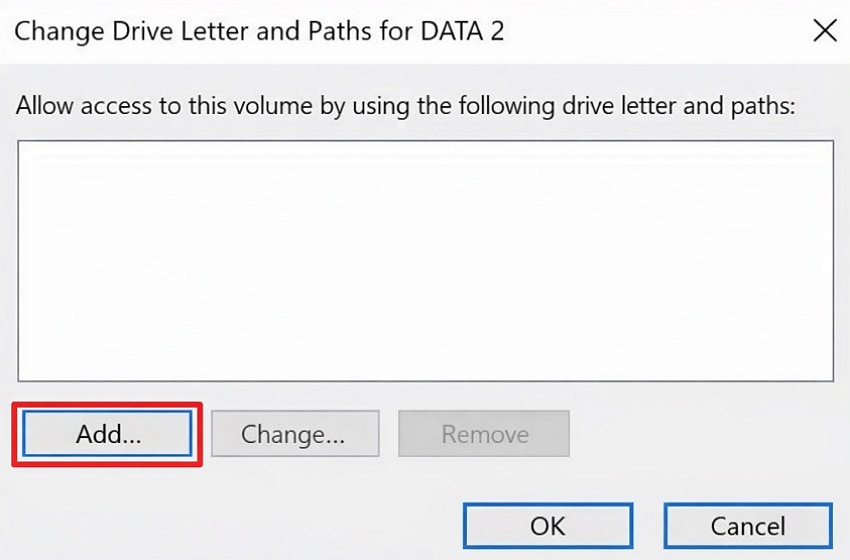
- If there’s no letter, press the “Add” button to add a drive letter later.
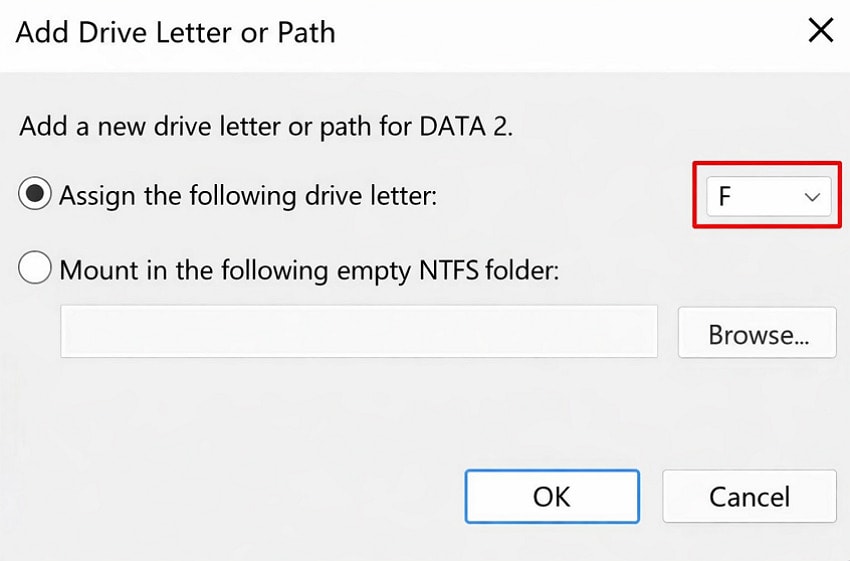
- Now, choose a drive letter by extending the menu for “Assign the Following Drive Letter.” After this, click OK to confirm and unhide the drive/partition again.
Way 4. Rescan Disks in Disk Management
If Windows doesn’t recognize the drive, a manual scan can force the system to recognize the newly connected or hidden drives. This approach is useful when the drive is functional but not being detected due to temporary system glitches. In fact, rescanning refreshes your Windows disk recognition without making any changes to the drive itself. Follow the given instructions to rescan the disk in Disk Management and restore access:
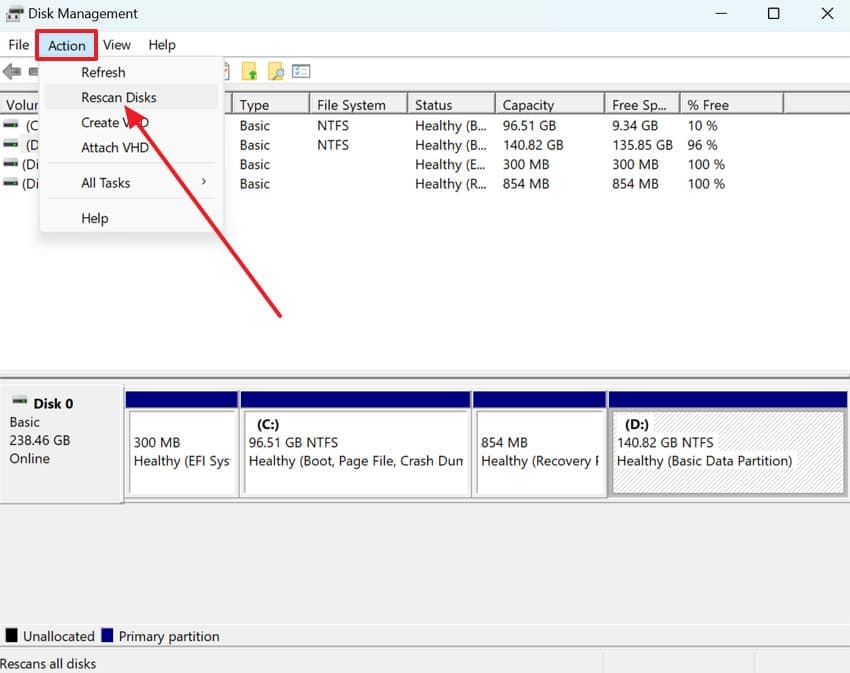
Instructions. Upon entering Disk Management, press the “Action” option from the toolbar and select “Rescan Disks.” Now, wait for Windows to scan all connected drives, then check whether the missing D: drive appears.
Way 5. Assign or Change Drive Letter
A “D drive missing Windows 10” issue can sometimes be caused by a drive letter conflict or absence. For this, assign or change the drive letter to ensure that Windows can recognize and display the drive properly. This step is particularly effective, as it directly addresses configuration issues without affecting the driver’s data. To restore the drive’s visibility and continue working, assign/change its letter through the guided tutorial:
- In Disk Management, find the partition that should be “D: (correct size and “Healthy” status).” Once located, right-click it and choose the “Change Drive Letter and Paths…” option. Move forward, and press the “Change” button to change the drive’s initial.
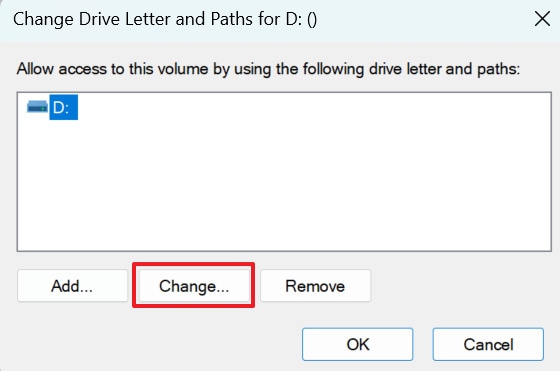
- After this, change the driver letter by expanding the menu and pressing OK once done.
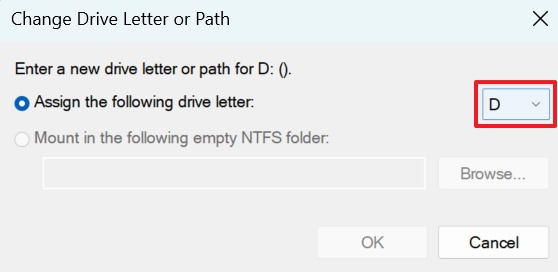
Way 6. Update Storage and Chipset Drivers
Incompatible or obsolete storage and chipset drivers can prevent Windows from detecting drives. However, an updated driver ensures your system communicates properly with connected hardware, enough to restore missing drivers. Keeping your drivers updated not only recovers the missing D drive Windows but also assures complete system stability. To update your storage drivers, go through the entire workflow and install missing drivers:
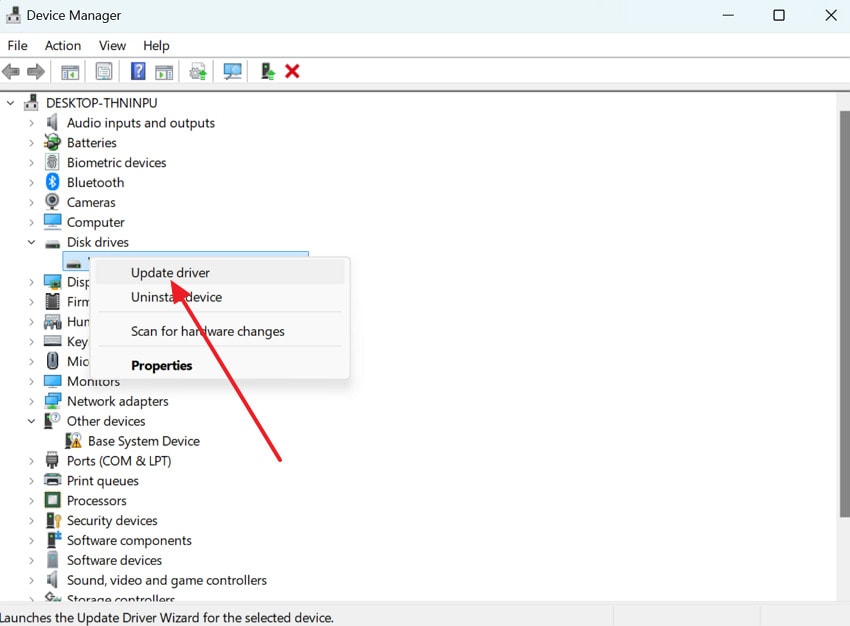
- On your Windows, open Device Manager, then expand the Disk Drivers option. Afterward, right-click each relevant storage drive or controller and press the “Update Driver” option.
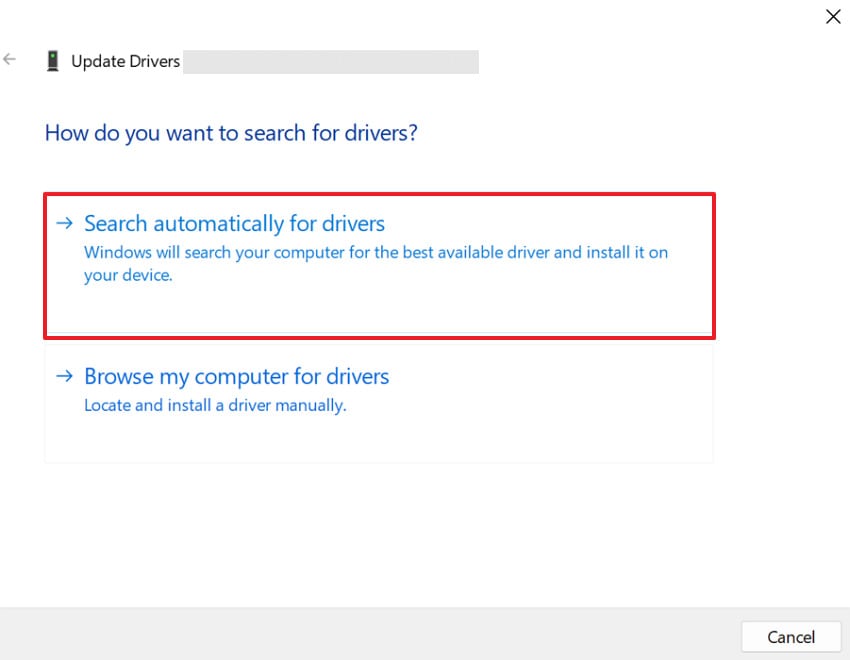
- Next, click the “Search Automatically for Drivers” option to let Windows check for a better available driver.
Way 7. Run CHKDSK to Repair the File System
File system errors, such as corrupted sectors or bad clusters, can make your D drive inaccessible even if it’s physically fine. Consider running a CHKDSK scan, which allows Windows to check for drive errors and repair them automatically. It not only restores a missing drive but also strengthens the integrity of the file system. To understand how to fix missing D drive Windows, run CHKDSK and fix underlying disk issues:
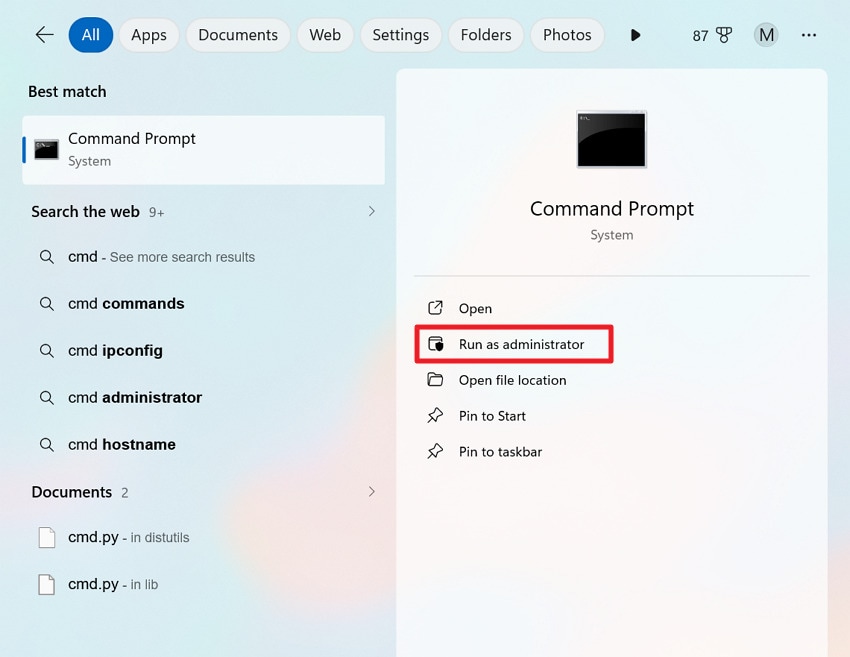
- Type “CMD” in your Windows search bar, then choose the “Run as Administrator” option for the command terminal.
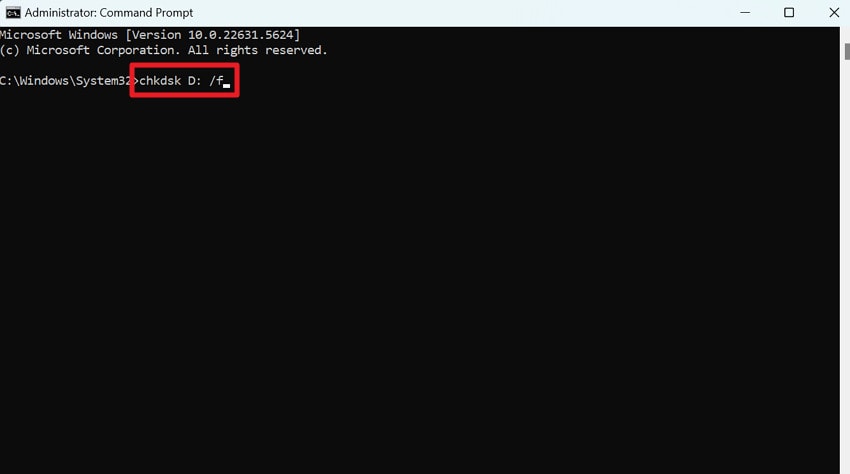
- Now, type “chkdsk D: /f” and press the “Enter” key (replace D: with the correct letter if different). Later, restart your PC to fix any file system errors.
Way 8. Roll Back or Restore After Windows Update
Occasionally, a recent Windows update can interfere with drive recognition, causing the D drive to disappear. To address the D drive not showing up in Windows 11 issue, roll back the update or restore the system to a previous state. This way, you reverse changes that may have caused conflicts with the drive detection. For a better understanding, follow the guidelines and restore Windows previous version to regain drive access:
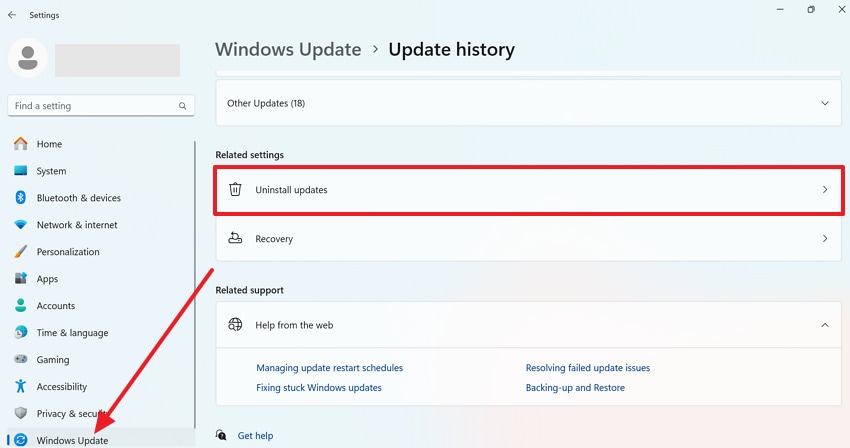
- Access Windows Settings, press the “Windows Update” tab, and click the “Update History” option. After this, scroll and select the “Uninstall Updates” option to look for the recently installed updates.
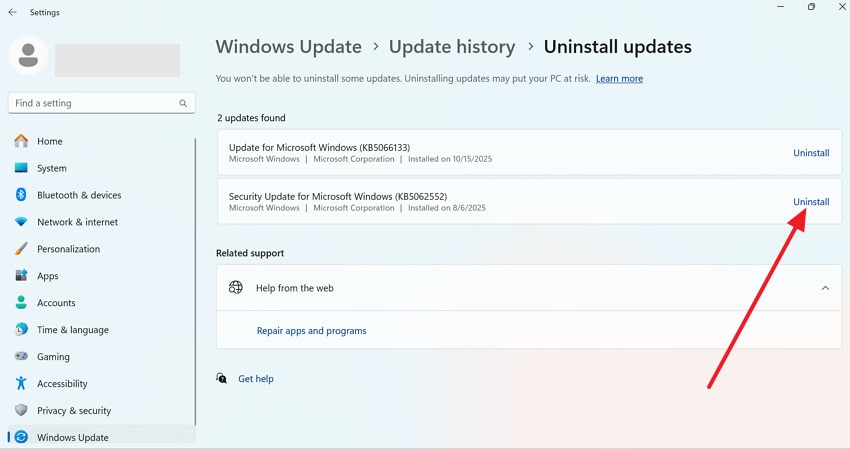
- Proceed to “Uninstall” the latest updates (KB5062552), then restart your PC and check your Windows version.
Pro Tip. Restore Lost D Drive Windows Files Quickly with Recoverit
When dealing with a missing drive, one of the biggest concerns is data loss. Even though you somehow manage to fix the issue, there’s always a possibility that some files may not be immediately accessible. To completely recover the missing D drive in Windows, you’ll need professional help from Recoverit, which retrieves 500 MB of data for free. Besides this, it handles numerous D-drive loss cases like accidental deletion, formatting, and partition loss.
The program supports many interfaces (SATA, NVMe, etc.), helping even if your missing D drive is on an external disk. Most importantly, it scans and recovers data from corrupted or crashed hard drives on Windows, Mac, and Linux. Plus, support recovery from encrypted drives, which helps when your D drive is protected or locked. It lets you recover data to another safe location, avoiding overwriting files on the problematic drive.
| Scenario | Success Rate | Recoverit Best Feature |
| Missing/Deleted Partition | 98% (High) | Deep Partition Scan |
| RAW Drive (D:) | 96% (High) | RAW Drive Recovery |
| Formatted D Drive | 94% (Very High) | Formatted Disk Recovery |
| Drive Missing in BIOS | Variable | Bootable Media Recovery |
Key Features
- Supports Multiple File Types: The software supports 1000+ file types, including photos or emails, recovering most of the D drive data.
- Preview Files After Recovery: Once data recovery is complete, you can review the files before downloading them to your device.
- AI-Driven Recovery Process: It uses AI-based identification to detect devices and data loss scenarios across more than a million devices.
Simple Step-by-Step Guide to Restore Lost D Drive Data Using Recoverit
Follow the guidelines provided below and restore your lost D drive Windows files via Recoverit in no time:
- Choose the Location for Lost Files
After launch, access the “Hard Drive and Locations” tab, then select “Local Disk (D)” as your scan location.
- Analyze the Scan Process on the Screen
Now, an all-around scan will start automatically, with real-time scanning results displayed on the interface.
- Review and Recover Data on Your Device
Once the scan finishes, review the files, then press the “Recover” button to retrieve all your lost data. After this, choose a path to save the recovered files on your device.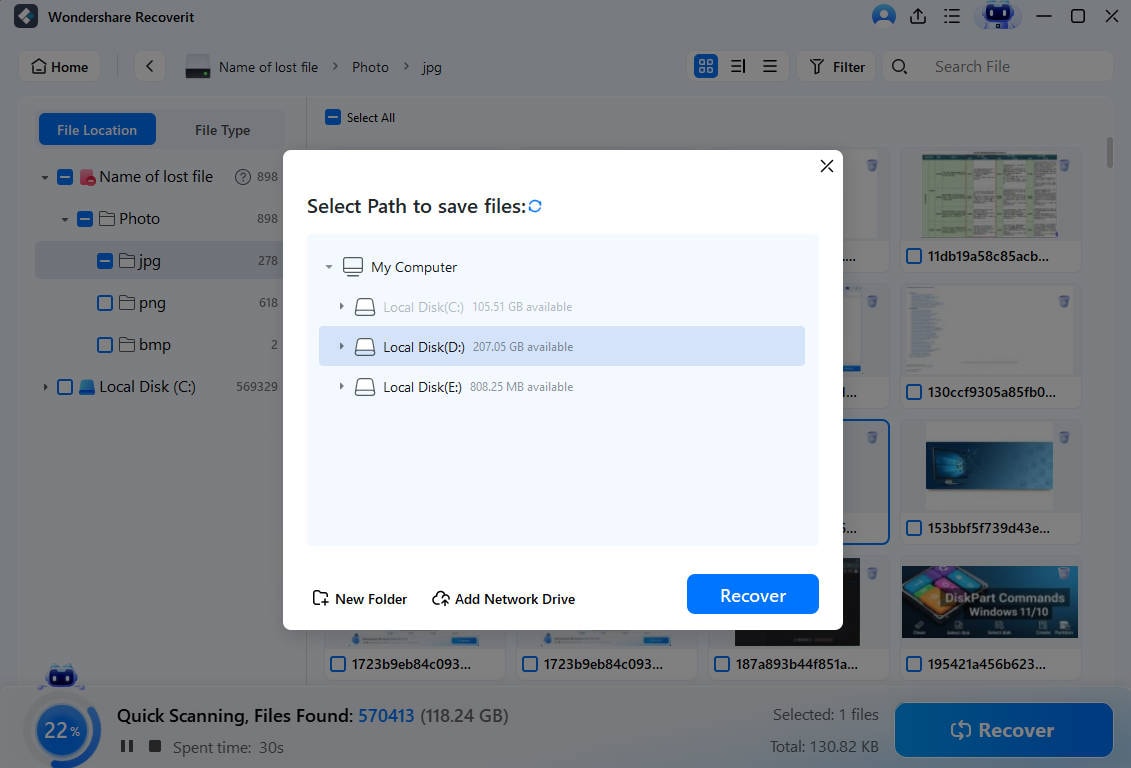
Video Tutorial On D Drive Suddenly Missing in Windows 10/11
Part 4. 5 Expert Tips to Keep Your D Drive from Going Missing
Go through the listed measures to avoid the D drive not showing up Windows 11 issue in later years:
- Always Shut Down and Eject Properly: Do not force-shut down your PC by holding the power button because sudden power loss can damage the file system. Always shut down Windows normally and safely remove any external drive that appears as "D:" before unplugging it.
- Keep Regular Backups of Your D Drive: Save copies of important D‑drive files to another disk or cloud storage on a schedule. If the D drive ever turns RAW or disappears, you can still get your important data from the backup.
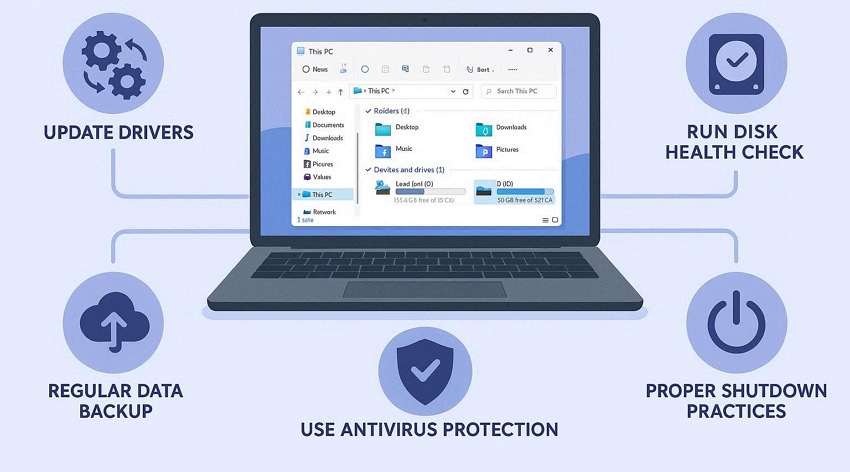
- Avoid Risking Partition Changes: Do not shrink, delete, or move partitions on your main disk unless you have a secure backup. Incorrect partition operations can delete or hide the D drive, or change its letter, so it no longer appears.
- Maintain Windows and Drivers' Health: Install Windows updates and keep storage/chipset drivers up to date, enabling the system to detect drives correctly. Plus, scan your PC for malware regularly, because some infections can damage partitions or hide drives.
- Watch Disk Health and Free Space: Use a disk‑health tool often to check if the hard drive or SSD that holds D: is starting to fail. Keep some free space on the drive and clean up junk files so Windows can work and doesn’t run into disk errors.
🏁 Troubleshooting Action Plan
- Check Visibility: Rescan disks in Disk Management to rule out minor OS glitches.
- Restore Path: Assign the letter 'D' if the partition is healthy but nameless.
- Repair Integrity: Run chkdsk D: /f only if the drive letter is visible.
- Update Drivers: Focus on Chipset and SATA/NVMe controllers in Device Manager.
- Emergency Recovery: If the partition appears "Unallocated," use Wondershare Recoverit immediately to save your data before creating a new partition.
Conclusion
In summary, you’re now aware that the “D drive missing Windows 10” issue doesn’t mean losing your data at all. Most of the solutions discussed above will surely help you identify the cause, restore your drive, and regain access to files. Still, if any data becomes inaccessible along the way, a reliable program like Recoverit is recommended to ensure it remains protected. You can also learn about other successful data recovery stories.
FAQ
-
Q1. Why does my D drive sometimes appear and sometimes disappear?
This intermittent visibility often points to a loose physical connection, unstable SATA/Power cables, or temporary system glitches. For this, check your connections, update drivers, and ensure a stable power supply to prevent these unpredictable disappearances. -
Q2. Will reinstalling Windows fix the missing D drive issue?
Indeed, it can, but reinstalling Windows is generally a last resort in the "D drive not showing up Windows 11" issue. Most of such issues can be resolved without reinstalling through fixes such as assigning a drive letter and updating drivers. -
Q3. Can external drives cause the D drive to disappear?
Yes, it is possible that sometimes connecting a USB drive or other external storage can create drive letter conflicts. As a result, the D drive temporarily disappears, and reassigning drive letters usually resolves the issue.



