A fragmented file is stored in separate, non-adjacent areas of a drive. Fragmentation alone does not mean the file is damaged. If it opens normally, you do not need file recovery. But if the file was deleted, the drive lost track of its pieces, or a recovered video or photo will not open, getting it back can be more complicated.
Quick answer: Stop writing to the affected drive, check for an intact backup, and use recovery software only when the source device is stable and readable. The result depends on whether the original file data and the information needed to locate its pieces still exist. Recover recovered files to a different drive, and check that each file actually opens. Do not run defragmentation, CHKDSK, formatting, or repair operations on a source with important missing data before protecting that data.
In This Article
Part 1. What Are Fragmented Files?
When a drive cannot place a growing file in one continuous stretch of free space, its file system may save different portions in different locations. The file system normally keeps track of those locations and reads the pieces in the correct order. This is common on hard disk drives and does not, by itself, mean that anything has been deleted.
Fragmented Files and Recovered File Fragments
These terms sound alike but describe different problems. A fragmented file can be a healthy JPG, DOCX, or video whose data occupies non-contiguous blocks. Recovered file fragments is also wording Windows may display for .CHK files, often found in a FOUND.000 folder after a file-system check. A .CHK file may contain a partial or complete file, but its original name and structure may not be available.
If you have files named FILE0000.CHK or a FOUND.000 folder, use the separate guide to recover .CHK files from FOUND.000. Do not rename every .CHK file to the same extension or delete the originals before checking their contents.
Does Fragmentation Make a File Unreadable?
Usually not. A file that still opens does not need to be reconstructed. On a healthy hard disk, fragmentation can affect access performance, while Windows drive optimization is a separate maintenance task. Microsoft's drive optimization guidance distinguishes HDD defragmentation from SSD optimization.
Recovery becomes difficult when the file has been deleted and the system can no longer identify all the blocks that belonged to it. For example, some NTFS metadata may preserve a map of non-contiguous blocks until it is overwritten, whereas recovery without reliable file-system records can require file-specific reconstruction. Missing or overwritten blocks cannot simply be recreated by defragmenting the drive.
Part 2. Can a Fragmented File Be Recovered?
Before choosing a tool, look at what actually happened to your file. The safest next action changes depending on whether the file is merely fragmented, was deleted, appears as a .CHK fragment, or sits on a failing device.
| What you see | What it usually means | Safest next step |
| The file opens, but Windows reports disk fragmentation | The file may be intact; this is not a data-loss symptom | Keep your backup. No file recovery is necessary |
| A file was deleted from a drive that still works | File data and its block map may or may not remain | Stop writes, check backup copies, then consider a scan |
| Windows shows .CHK files or FOUND.000 | File-system checking may have saved recovered fragments | Keep the fragments unchanged and follow the CHK recovery guide |
| A USB drive or SD card is recognized but asks to be formatted | File-system damage is possible; a format would write changes | Do not format. Protect the source and consider image-based or read-only recovery |
| A recovered MP4, MOV, or photo will not open | Some data may be missing, mismatched, or structurally damaged | Check a different recovered copy; assess enhanced recovery or file repair |
| A drive repeatedly disconnects, clicks, or vanishes from storage tools | A hardware or controller problem may be developing | Stop repeated scans and seek a qualified data-recovery service |
Protect the Original Drive Before You Try
If the missing files matter, keep the source unchanged. Do not download software onto it, move more files to it, initialize a missing partition, or run a defragmentation job. On a suspect drive, CHKDSK or other repair tools may modify file-system structures before you have secured your data. If the drive is stable and a complete disk image can be created without undue risk, using that image can help preserve the original while investigating recovery options.
Do not keep powering on a drive that behaves as though it is physically failing. For a failing HDD, SSD, USB controller, or memory card, professional assessment may be safer than repeated software scans.
Part 3. Check Safe Recovery Options First
Recovery software is not always the first or best choice. An intact copy from a backup or another device is more reliable than attempting to reconstruct a deleted file from uncertain fragments.
Restore an Existing Copy If One Is Available
Check a backup drive, your file sync service's version history, the Recycle Bin when applicable, and any exported copy of the original file. On Windows, if File History was set up before the loss, open the folder that previously held the file, right-click it, and choose Restore previous versions. Review an available version and select Restore to... when possible so that you do not overwrite an existing file. Microsoft's File History instructions explain these choices.
If the intact backup opens correctly, copy it to a healthy destination and stop: there is no benefit in scanning the source drive just because the restored file was previously fragmented.
Use Recovery Software When the Original Drive Is Readable
If the file is missing and no usable copy exists, a scan may locate recoverable data on a stable HDD, USB drive, memory card, or other readable storage. Wondershare Recoverit for Windows provides source selection, scanning, preview, and recovery. Its Version 15 release notes describe improvements for fragmented and non-contiguous data-loss scenarios; that is not a promise that every fragmented file can be rebuilt.
Note: The following detailed interface instructions are for Windows. Menu names may vary with the installed Recoverit build and your device type. A scan cannot repair a failing physical drive or reconstruct sectors that no longer contain the original data.
Part 4. How to Recover Lost Fragmented Files with Recoverit
Use this workflow when the original source is stable and recognized by Windows, and you have checked for an existing intact copy. Select the actual drive where the file was lost rather than a new folder that happens to have the same name. The workflow follows the official Recoverit Windows user guide.
Step 1. Select the Original Location
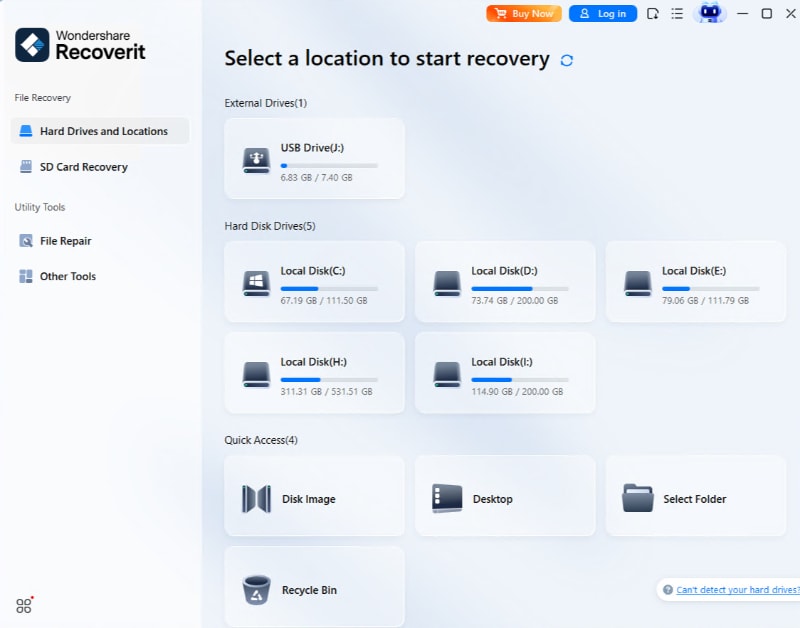
Open Recoverit on your computer. For files lost from an internal Windows disk, choose the affected drive under Hard Drives and Locations and start the scan. For an external hard drive or USB device, connect the device first and select the recognized source in the external-device recovery flow. In Recoverit 15, removable-media choices may also appear in a dedicated device-recovery section. Confirm the disk name or capacity before proceeding.
Step 2. Scan the Drive and Check the Results
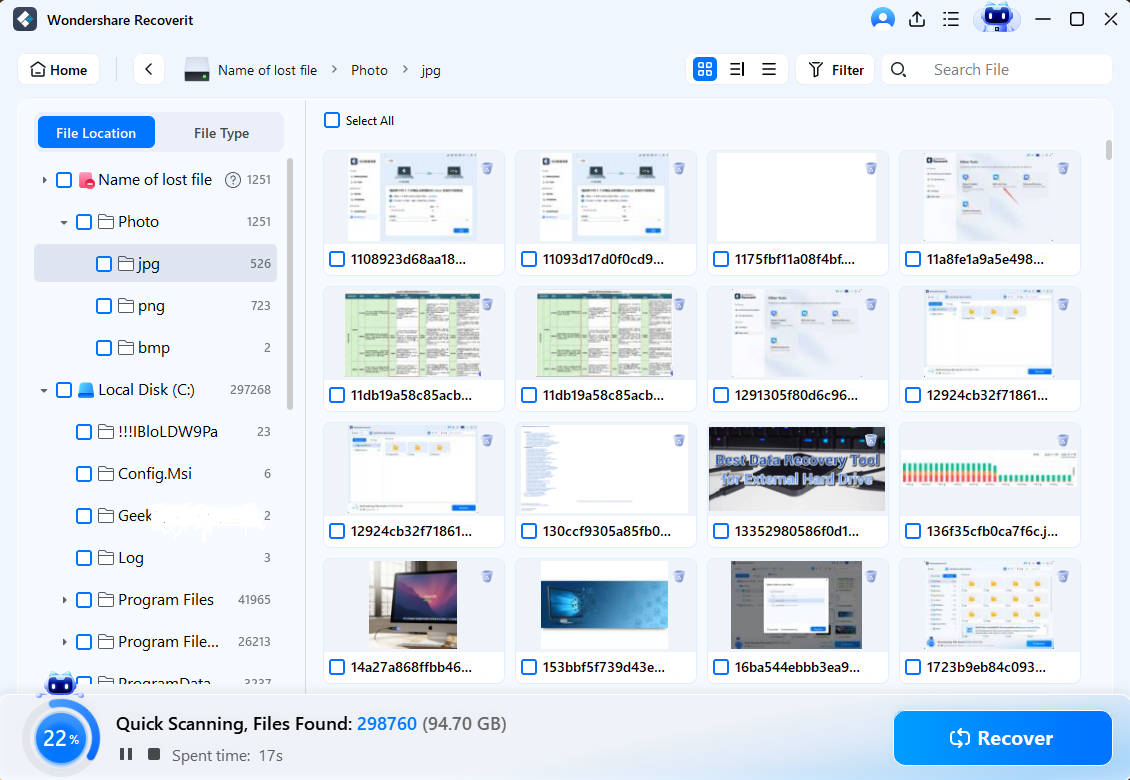
Let Recoverit scan the selected location. Review the file list and narrow it by type, size, date, or name when those details are available. If your concern is incomplete video footage, wait for the relevant scan to finish before judging file completeness. A filename or thumbnail alone does not prove that every portion of the file has been found.
Step 3. Preview, Recover, and Verify the Files
Select the candidate file and use Preview where available. Check the file size and recognizable content, then choose Recover. Save the output to a different physical drive, not the disk you are scanning. Open the saved document, play the whole video, or inspect the photo at full size. For multi-page documents or long recordings, checking only the first few seconds is not enough to confirm a complete result.
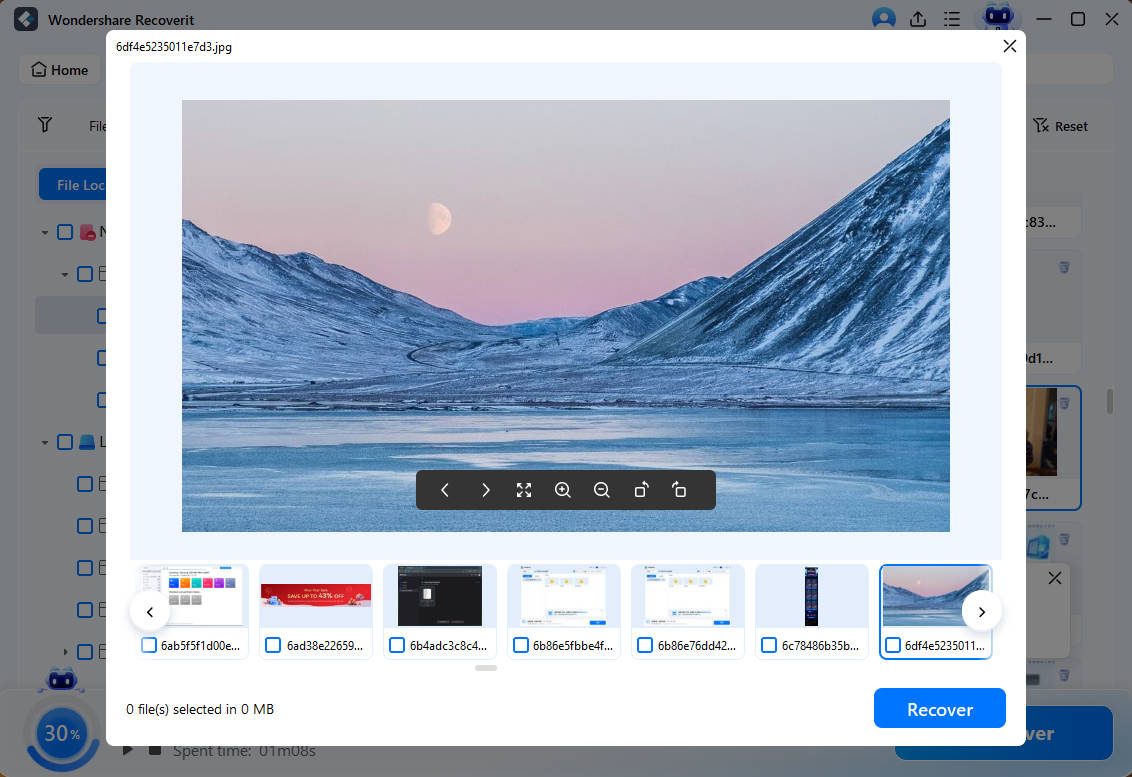
If the preview fails or the recovered file does not open, do not overwrite the original with another attempt. Move to Part 5 and identify whether you are dealing with missing file data or a file structure that may be repairable.
Video walkthrough: This existing Recoverit tutorial demonstrates a general deleted-file recovery workflow. It does not independently prove recovery of heavily fragmented files or the result of the example steps above.

Part 5. What If a Recovered File Will Not Open?
A scan result and a usable file are not the same thing. If a fragmented file is partially missing, the recovery software may find its name or some content without locating every necessary block. The next action depends on whether the missing information still exists and what type of file you are trying to open.
A File Is Found but Its Contents Are Incomplete
Try a different recovered copy from the same scan or an earlier backup. If you have a healthy disk image, keep it unchanged while you compare results. The original file's layout information can matter: recovering a deleted fragmented file from NTFS may be more straightforward when useful metadata survives, while a file found by raw signature scanning can be harder to reassemble without that block map.
If the file is only a partial copy, changing its extension does not restore absent data. It is also possible for an incomplete photo or document to open only partly rather than fail outright.
A Recovered Photo or Video Is Corrupted
For large video recordings, Recoverit's Enhanced Recovery workflow is designed to search for and match certain media fragments. The current official guide explains how to choose a source and suitable video formats, run the deeper scan, and preview its output. Recoverit 15 also documents improvements to fragmented-data recovery. These features may help when the relevant source data remains accessible; they cannot guarantee reconstruction of overwritten or physically missing blocks.
When a file has been recovered but its container or internal structure is damaged, a separate file-repair step may help, provided enough genuine content survives. Repair and recovery solve different problems: a repair tool may fix structure but cannot recreate source material that no longer exists. For media-specific advice, see video fragmentation and video recovery options.
The Drive Is Failing or Disappearing
Stop ordinary recovery attempts if the disk repeatedly disconnects, makes unusual mechanical noises, shows unstable capacity, or reports persistent read errors. Reconnecting it again and again, formatting it, or forcing file-system repairs can make recovery more difficult. If the data is valuable, seek a qualified recovery lab and tell them what actions have already been attempted.
Conclusion
Fragmentation by itself is not file damage. When a fragmented file has been deleted, recovery depends on what remains of its data and file-system records. Protect the original drive, restore a good backup if you have one, and scan only a stable device. Recover any promising files to another drive and test them fully. If Windows instead shows .CHK recovered fragments, use the dedicated CHK workflow; if a disk is failing, stop DIY scanning.
FAQ
-
Can I recover a fragmented file after deleting it?
Sometimes. Recovery depends on the file system, whether the drive still contains the file's data blocks, and whether usable location information survives. Stop writing to the drive and check backups before trying a scan. -
Does defragmenting a drive restore deleted files?
No. Defragmentation reorganizes existing file data on a healthy hard disk for performance; it is not a deleted-file recovery method. Avoid defragmenting a drive that contains important lost data until that data is secured. -
What does Recovered File Fragments mean in Windows?
It may refer to .CHK files created during a file-system check, often stored in FOUND.000. These are not automatically the same thing as an ordinary fragmented file. Keep the originals and use a CHK-specific recovery procedure. -
Can Recoverit join every fragment of a damaged video?
No tool can guarantee that. Recoverit's Enhanced Recovery can look for and match fragments in supported media scenarios, but success still depends on the original data and whether necessary portions remain readable. -
What if a deleted file was stored on an SSD?
Recovery can be especially limited if TRIM and the SSD's internal cleanup have made the original data inaccessible. Check backups first, avoid further writes, and do not assume a scan can reverse cleared data.


