


 TL;DR:
To safely handle a lost partition on Windows 11/10, immediately stop using the affected drive and extract your files using recovery software before attempting risky structural modifications like formatting, creating new volumes, or converting MBR/GPT.
● When a drive appears as unallocated space or RAW, avoid using Disk Management to initialize the disk or DiskPart to assign drive letters, as these built-in tools require an existing healthy volume and will destroy recoverable data if forced.
● Recoverit provides a visual scan-and-preview workflow for extracting individual files to a separate healthy drive, whereas TestDisk is an open-source command-line tool strictly for advanced users attempting to rewrite the actual partition table.
● Software recovery is conditional upon the storage device remaining stable and logically readable; if the drive is physically damaged, clicks, or repeatedly disconnects, continuous scanning will worsen the failure and requires a professional data recovery lab.
Ask AI for a summary
 ChatGPT
 Perplexity
 Gemini
 Claude
 Grok
Grok
Quick answer: If a partition disappeared in Windows 11 or Windows 10, stop using the affected drive first. Do not format the disk, create a new volume, convert MBR/GPT, run DiskPart clean, or write partition changes before your files are protected. A lost partition often means Windows has lost the map to the data area. The files may still be recoverable if the disk is readable and the old data has not been overwritten.
Recoverit's new partition recovery workflow is designed for these heavier partition-loss cases: lost or deleted partitions, unallocated space, RAW partitions, missing volumes, SD cards asking to be formatted, and inaccessible disks. It helps scan the affected storage device, identify recoverable data from the lost partition area, preview files, and recover them to another safe drive before risky disk-management operations.
This guide explains how to recover data from a lost partition on Windows 11/10, how to tell a true lost partition from a missing drive letter, when Disk Management or DiskPart can help, and when tools such as TestDisk should be used only by advanced users.
Try Wondershare Recoverit to Recover Lost Partition Data
 Security Verified. Over 7,302,189 people have downloaded it.
In this article
Part 1. Can You Recover Data From a Lost Partition?
Yes, lost partition recovery is possible in many cases, but it depends on why the partition disappeared, whether the drive is still detected, and whether new data has overwritten the old partition area. When a partition is deleted or its partition table entry is damaged, Windows may stop showing the original drive letter. The data area may still remain on the disk until it is overwritten or physically damaged.
The safest recovery order is:
- Stop using the affected disk, SD card, USB drive, or external drive.
- Do not create, format, extend, shrink, or convert partitions first.
- Recover important files to a different storage device.
- Only after recovery, decide whether to rebuild the partition or replace the drive.
Recoverit Partition Data Recovery supports recovery from lost, deleted, formatted, corrupted, RAW, and inaccessible partition scenarios. For this page, the important message is not "click one button to restore everything." The real value is recovering partition data before actions that may rewrite the disk structure.
Part 2. Lost Partition Symptoms on Windows 11/10
A lost partition can look different depending on what failed. Use this table before choosing a method.
| What you see | Likely meaning | Safe first move |
| Disk Management shows unallocated space | Windows does not see a usable partition in that region. | Recover files first, then create a new volume if needed. |
| The partition is missing from File Explorer | The drive letter may be missing, or the partition record may be damaged. | Check Disk Management before using DiskPart or formatting. |
| The partition appears as RAW | The file system is unreadable or damaged. | Use RAW drive recovery before formatting. |
| Windows asks to initialize the disk | Windows cannot read the disk structure normally. | Recover or clone data first if the disk previously stored files. |
| The external drive clicks or disconnects | The storage device may have physical failure. | Stop DIY recovery and contact a lab. |
For SD cards, USB drives, camera cards, and external drives, the same rule applies: recover files before formatting the device. If your issue is device-specific, you can also continue with Recoverit guides for memory card recovery or USB drive recovery.
Part 3. Why Partitions Get Lost or Deleted
Understanding the cause helps you choose the least risky recovery path. Most lost partitions come from one of these situations.
| Cause | How it happens | Recovery note |
| Accidental deletion | A user deletes the wrong volume in Disk Management or another partition tool. | Recovery is more likely if no new partition or format was applied afterward. |
| Power loss or unsafe removal | A write process is interrupted while the file system or partition metadata is being updated. | Stop using the disk and scan it before running repairs. |
| Partition table corruption | MBR/GPT entries are damaged, so Windows cannot locate the original volume. | Recover files first; advanced partition write-back needs caution. |
| RAW file system | The partition exists but the file system cannot be read normally. | Do not format before recovery. |
| Repartitioning error | Resize, merge, split, or conversion fails midway. | Avoid repeating the operation until data is protected. |
| Malware or abnormal software behavior | Malware or a faulty tool changes metadata, hides volumes, or corrupts access. | Recover clean local files first, then scan the system with security software. |
| Hardware failure | Bad sectors, failing heads, or controller problems make partitions disappear. | Software is safe only if the drive remains stable and detectable. |
Part 4. What Not to Do Before Lost Partition Recovery
Top-ranking lost partition pages usually separate two goals: recover the files and restore the partition entry. They are not the same task. If you only need files, a preview-based recovery workflow is safer. If you want the partition to appear again with the original drive letter, tools such as DiskPart or TestDisk may be involved, but those options can write changes to the disk.
| Your situation | Best first method | Why |
| You need work files, photos, videos, or documents from the missing partition. | Recover files with Recoverit before changing the disk. | It keeps the focus on data protection and avoids writing a new partition structure too early. |
| The volume still exists but has no drive letter. | Assign a drive letter in Disk Management or DiskPart. | This can restore visibility only when Windows still has a valid volume to assign. |
| Disk Management shows unallocated space. | Recover files first, then create a new volume. | Creating a new volume before recovery may overwrite metadata from the old partition. |
| TestDisk finds a likely lost partition. | Copy files or verify carefully before using Write. | Write changes the partition table and should not be rushed. |
| The drive clicks, disconnects, or is not detected. | Stop DIY recovery and contact a lab. | Physical failure can get worse with repeated scans or reconnect attempts. |
Many lost-partition mistakes happen after the partition disappears. Users try to make the drive visible again, but the first fix may write new data to the disk. Avoid these actions until your important files are recovered or backed up.
| Action | Why it is risky | Safer alternative |
| Create a New Simple Volume | It creates a new partition in the affected space and may lead to formatting. | Recover files first, then create the new volume. |
| Format the partition | Microsoft warns that formatting destroys data on the partition. | Use recovery software or backup restore before formatting. |
| Run DiskPart clean | It deletes partitions and volumes from the selected disk. | Do not use it on a disk that still contains needed data. |
| Convert MBR to GPT or GPT to MBR | Microsoft requires deleting existing partitions or volumes before conversion. | Back up or recover data first. |
| Write a found partition in TestDisk too quickly | A wrong write-back can change the partition table. | Copy files or verify the result before writing changes. |
| Save recovered files to the same disk | New writes may overwrite data still waiting to be recovered. | Save recovered files to another healthy drive. |
Part 5. Recover Lost Partition Data With Recoverit Partition Recovery
Use Recoverit when your priority is to recover files from a lost, deleted, RAW, unallocated, or inaccessible partition before rebuilding the disk structure. This is the core GTM message for the new version: Recoverit is no longer positioned only for ordinary deleted-file cases. It is designed to help users handle complex partition-loss scenarios where the storage device is still detected but the original volume is missing or unreadable.
New version value: recover before rebuilding partitions
Recoverit's new partition recovery workflow helps bridge the gap between a user panic moment and a safe recovery sequence. Instead of asking users to immediately format, assign letters, or write partition tables, it guides them through scan, preview, and recovery first.
| New Recoverit partition recovery value | What it means for lost partition recovery | User benefit |
| Lost partition structure detection | Scans the affected disk for clues from the original partition and file system structure, including MBR/GPT and common file systems when recoverable metadata remains. | Users do not need to create a blank new volume just to check whether files still exist. |
| Coverage for RAW, unallocated, and inaccessible volumes | Targets states where the device is detected but the original partition cannot be opened normally. | Matches real scenarios such as missing D drive, external drive showing unallocated, or SD card asking to format. |
| Folder and file relationship recovery | Attempts to show recoverable files with original names and folder paths when file system metadata is still usable. | Helps users recover projects, camera folders, documents, and work files in a more organized way. |
| Preview before recovery | Lets users check files before saving them to another location. | Reduces blind recovery and helps confirm whether the needed files are still recoverable. |
| Controlled partition recovery flow | Keeps formatting, new-volume creation, partition write-back, and other disk-structure changes after data protection. Use backup, verification, and rollback options when available in the release. | Gives users a safer order: recover data first, then decide how to rebuild the partition. |
Step 1. Select the lost partition or affected disk
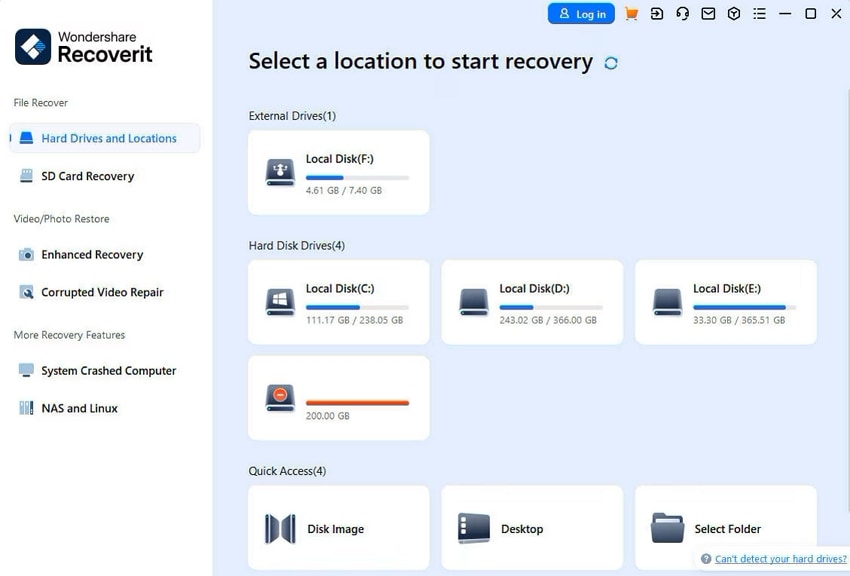
Install and open Recoverit. Go to the hard drive recovery area and select the lost partition, damaged partition, or physical disk that contains the missing partition. If the original volume no longer appears, select the affected disk so Recoverit can scan the storage area where the lost partition data may still exist.
Step 2. Scan for lost partition data
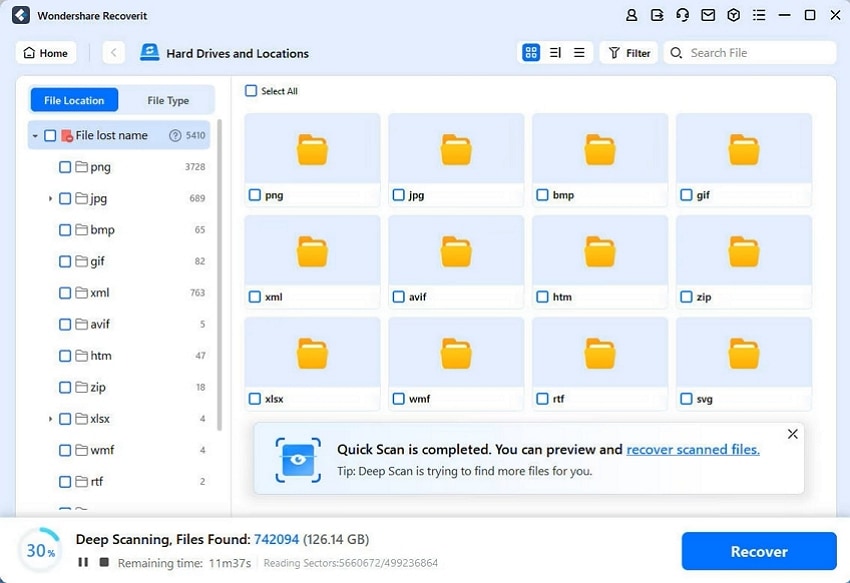
Start the scan. Recoverit will analyze the selected location and display recoverable files as the scan progresses. Use filters such as file type, file size, modified time, or file name when available. If the partition was large or held many folders, allow the scan to finish before deciding that the files are gone.
Step 3. Preview and recover files to another drive
Preview the files you need, select them, and click Recover. Save the recovered files to a different drive or external storage device. Do not save them back to the same lost partition area, because new writes can overwrite remaining recoverable data.
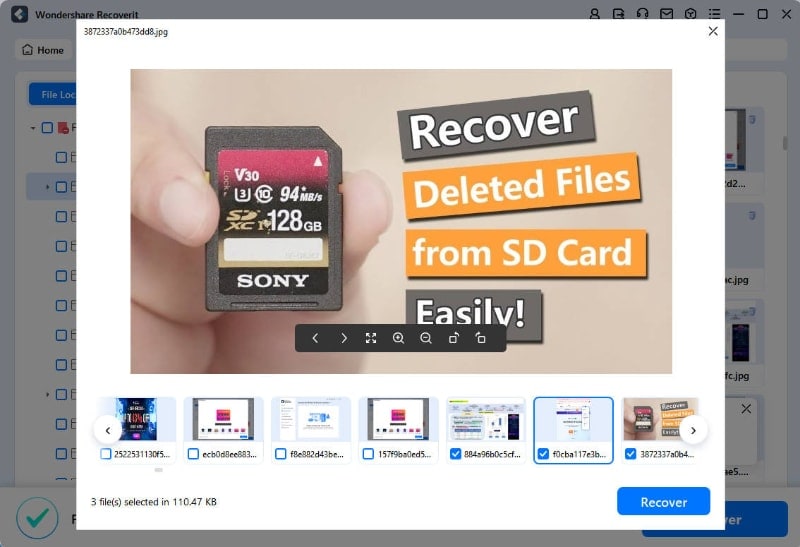
After recovery, open several important files from the destination drive to confirm they work. Then decide whether to rebuild the original partition, create a new volume, format the drive, or replace the storage device.
Try Wondershare Recoverit to Recover Lost Partition Data
Security Verified. Over 7,302,189 people have downloaded it.
Part 6. Windows Built-in Options: When They Help and When They Are Risky
Windows tools can help after you know what state the disk is in. They are also easy to misuse. Microsoft describes Disk Management as a Windows tool for initializing drives, creating and formatting volumes, changing drive letters, and extending or shrinking volumes. These are disk-management actions, not data recovery guarantees.
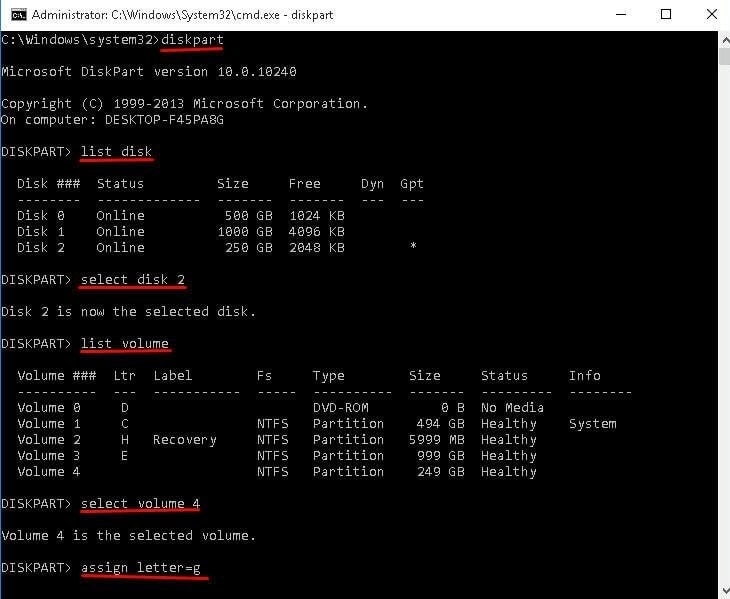
Case 1. Assign a drive letter only when the volume still exists
DiskPart's assign command assigns a drive letter or mount point to the volume with focus. That means a volume must already be selected. If the partition truly disappeared or the area is unallocated, assigning a letter will not rebuild the old data structure.
- Open Disk Management and check whether the volume exists.
- If the volume is healthy but has no drive letter, right-click it and choose Change Drive Letter and Paths.
- Assign a new letter and check File Explorer.
- If the area is unallocated or RAW, return to recovery first.
Case 2. Create or format a volume only after recovery
Disk Management can create a new volume in unallocated space and format an existing volume. Use these options only after files are safe. Microsoft notes that formatting a volume destroys data on that partition, and creating a new partition works on unallocated disk space. For lost partition data recovery, that means recovery should come first.
- Recover or back up the important files first.
- Open Disk Management.
- Right-click the unallocated region and choose New Simple Volume.
- Choose the volume size and drive letter.
- Format the new volume only after you confirm your files are safe.
Case 3. Avoid MBR/GPT conversion before data recovery
MBR and GPT are partition styles that help Windows understand how a disk is organized. Microsoft explains that a disk can be converted between MBR and GPT only when it has no partitions or volumes, and it tells users to back up or move data before converting partition styles. If the disk contains files you need, do not convert it before recovery.
If your goal is Windows 11 compatibility, UEFI boot, or a larger modern disk, conversion may be useful later. For a lost partition, the first goal is still to recover files before changing the partition scheme.
Part 7. TestDisk for Advanced Lost Partition Recovery
TestDisk is an open-source data recovery tool from CGSecurity. Its official documentation says it is designed to help recover lost partitions and make non-booting disks bootable again when the issue is caused by software, certain viruses, or human error. It can be powerful, but it is command-line based and can write changes to partition tables.
Use TestDisk when you are comfortable reading disk structures and verifying scan results. If you only need files and want a more guided workflow, use a preview-based recovery tool first. If you use TestDisk, download it from the official TestDisk download page.
- Download TestDisk from CGSecurity and extract the portable package.
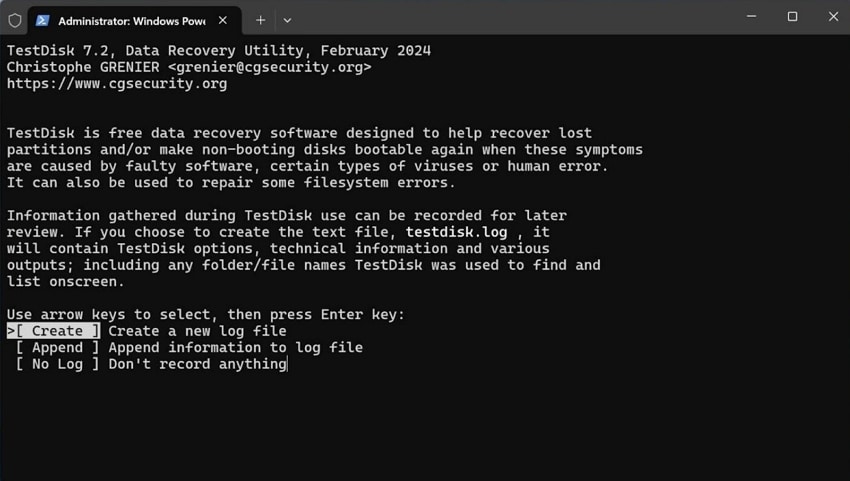
- Run `testdisk_win.exe` as administrator.
- Select the affected disk and choose the partition table type recommended by the tool.
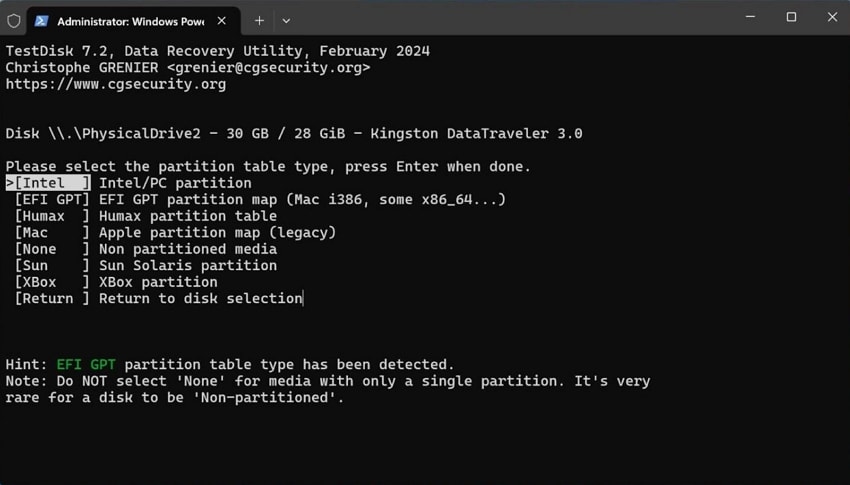
- Use Analyse, then Quick Search or Deeper Search to look for lost partitions.
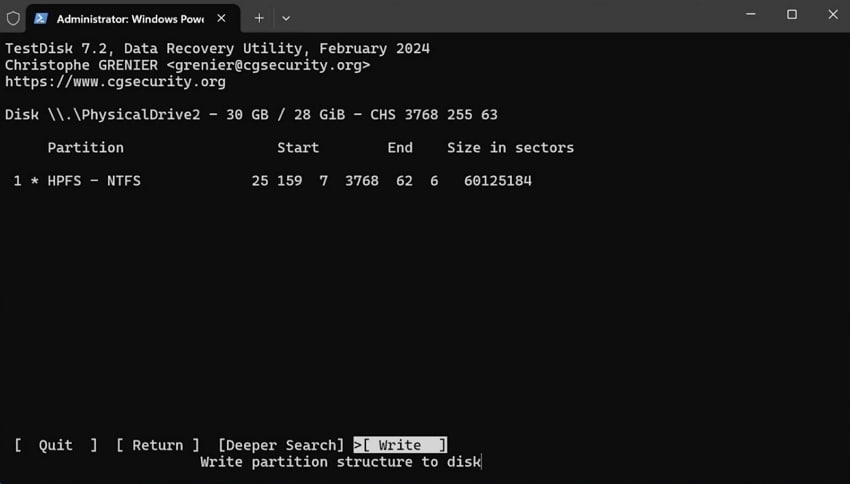
- Review the result carefully. Copy files first where possible. Use Write only when you are confident the found partition is correct.
Part 8. When Professional Data Recovery Is Safer
Software recovery is appropriate only when the storage device is still readable and stable enough to scan. Stop DIY recovery and contact a professional data recovery lab if:
- The drive clicks, beeps, spins down, or disconnects repeatedly.
- The disk is not detected in BIOS, Disk Management, or Device Manager.
- The device was dropped, exposed to water, burned, or physically damaged.
- The disk contains critical business data with no backup.
- The partition is encrypted and you do not have the correct key or password.
Recoverit cannot repair physically failed hardware or bypass encryption. Recovery also depends on disk condition, overwriting, encryption, and detectability. If the storage device is unstable, avoid repeated scans and let a qualified lab inspect it.
Conclusion
A lost partition on Windows 11/10 is urgent, but the fastest-looking fix is not always the safest. Formatting, creating a new volume, converting MBR/GPT, or writing partition changes can make recovery harder if you still need the files. Start by diagnosing whether the partition is truly lost, unallocated, RAW, or only missing a drive letter.
For most users, Recoverit's new partition recovery workflow is the safest first step: scan the affected disk, locate recoverable lost partition data, preview the files, and save them to another storage device before rebuilding the partition. Use Disk Management, DiskPart, or TestDisk only after you understand the risk and have protected the data.
Try Wondershare Recoverit to Recover Lost Partition Data
Security Verified. Over 7,302,189 people have downloaded it.
FAQ
-
What is the first thing to do after a partition disappears?
Stop using the affected drive. Do not format, create a new volume, convert MBR/GPT, or run DiskPart clean. Recover or back up important files first, then decide how to rebuild the partition. -
Can Recoverit recover data from a lost partition?
Recoverit can help recover files from readable storage devices in lost, deleted, RAW, unallocated, formatted, or inaccessible partition scenarios. Recovery depends on drive condition, overwriting, encryption, and whether the device is detectable. -
What is new about Recoverit partition recovery?
The new partition recovery workflow is positioned for complex partition-loss cases, including missing volumes, unallocated space, RAW partitions, inaccessible disks, and SD cards that ask to be formatted. It focuses on scan, preview, and file recovery before risky partition changes. -
Can DiskPart restore a lost partition by assigning a drive letter?
Only in limited cases. The DiskPart assign command works on a selected volume. If the partition still exists but has no drive letter, assigning a letter may help. If the space is unallocated or the partition record is damaged, recover files first. -
Is TestDisk safe for lost partition recovery?
TestDisk is powerful and open source, but it is command-line based and can write partition table changes. Use it carefully, copy files first where possible, and write changes only when you are confident the found partition is correct. -
Can I recover a lost partition after formatting?
Sometimes, if the old data has not been overwritten and the drive is still readable. Stop using the disk immediately and scan it with recovery software. Do not save recovered files back to the same partition.


