
 TL;DR:
Yes, you can recover deleted or lost photos from a Canon Rebel T3i, but successful retrieval primarily depends on scanning the camera's SD card before the deleted data is overwritten.
● Stop taking new photos immediately, avoid formatting the SD card, and eject it safely to prevent overwriting or further corrupting the lost images.
● Third-party recovery software is the most reliable method: Wondershare Recoverit supports over 2,000 formats and automatically repairs corrupted files, while alternatives like Disk Drill, Tenorshare 4DDiG, EaseUS, and Yodot offer varying free quotas, preview features, and platform compatibility (though some have slow scan times or free-version limits).
● Built-in OS tools can also resolve data loss: Windows File Recovery can retrieve un-overwritten files via the command line (e.g., `winfr E: C: /n *.jpg`), File Explorer's "View" tab can reveal files merely marked as "Hidden," and Mac's Disk Utility "First Aid" can repair minor SD card file system errors causing files to be unreadable.
Ask AI for a summary
 ChatGPT
 Perplexity
 Gemini
 Claude
 Grok
Grok
If photos disappeared from a Canon Rebel T3i, recovery may still be possible after accidental deletion, formatting, an interrupted transfer, or SD card corruption. The camera normally stores captured images on its SD card, so the card is usually the primary recovery source.
Stop taking photos and remove the SD card as soon as you notice missing images. Do not format the card, copy new files to it, or run repair commands before important photos are recovered or backed up. Use a reliable card reader and save recovered files to another drive.

This guide explains how to assess recovery chances, use photo recovery software, compare alternative methods, and decide when professional recovery is safer.
Try Recoverit to Perform Canon Photo Recovery
 Security Verified. 3,591,664 people have downloaded it.
Can Canon Rebel T3i Photos Be Recovered?
In many cases, deleted Canon Rebel T3i photos can be recovered if the SD card is still readable and the deleted data has not been overwritten. The camera itself is usually not the main recovery source because captured photos are stored on the removable card.
| What Happened | What It Usually Means | First Safe Action |
| Photos were deleted in the camera | The file entries may be removed while the data remains available | Stop using the card and scan it |
| The card was formatted | The file system was recreated and old space may still contain data | Do not format again; recover before reuse |
| The card asks to be formatted or shows RAW | The file system may be damaged | Cancel the prompt and protect the source card |
| The card works in another reader | The original reader, adapter, or camera connection may be the problem | Use the working reader and recover the files |
| The card is invisible everywhere | Reader, controller, or physical failure is possible | Stop repeated attempts and consider professional recovery |
The sooner you stop using the card, the better. New photos, videos, transfers, formatting, or repair operations can overwrite or change the space occupied by deleted images.
What to Do Before Recovering Canon Rebel T3i Photos

- Stop using the camera: Do not take new photos or record video.
- Remove the SD card safely: Turn off the camera before removing the card.
- Do not format or repair the card: Cancel format prompts and postpone CHKDSK or First Aid until data is safe.
- Use a reliable reader: Connect the card directly or through a known-good reader and adapter.
- Prepare another destination: Keep enough space on the Mac, PC, or external drive for the recovered photos.
- Protect the source: Keep the card dry, cool, and free from bending or contact damage.
Choose the Right Canon Rebel T3i Photo Recovery Method
| Situation | Best First Method | Important Limitation |
| SD card is detected and photos were deleted | Scan with photo recovery software | Stop writing and save results elsewhere |
| Photos were copied to a computer before deletion | Check the computer backup or cloud copy | The backup must predate the loss |
| Files are hidden but the card opens normally | Show hidden items and inspect folders | This does not recover files that were deleted |
| Card shows RAW or asks to be formatted | Recover data before repair or formatting | Do not initialize or erase the card |
| Card is not detected anywhere | Test one known-good reader, then consider professional recovery | Software cannot scan an invisible card |
Recover Canon Rebel T3i Photos with Data Recovery Software
Because the Canon Rebel T3i stores photos on an SD card, choose software that can scan removable media and preview image results. Recoverit Data Recovery can scan a detectable card for deleted, formatted, or inaccessible photos. The result depends on whether the card is readable and whether new data has overwritten the image files.
How to Recover Canon Rebel T3i Photos with Recoverit
- Connect the card: Remove the SD card from the powered-off camera and connect it to the computer with a reliable reader.
- Select the source: Open Recoverit and choose the SD card from the available drives.
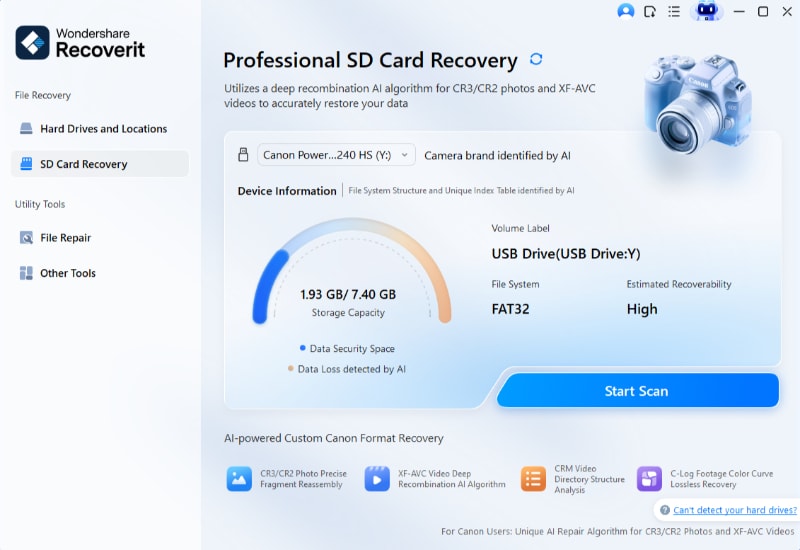
- Scan the card: Start the scan and allow it to search for deleted and lost files.
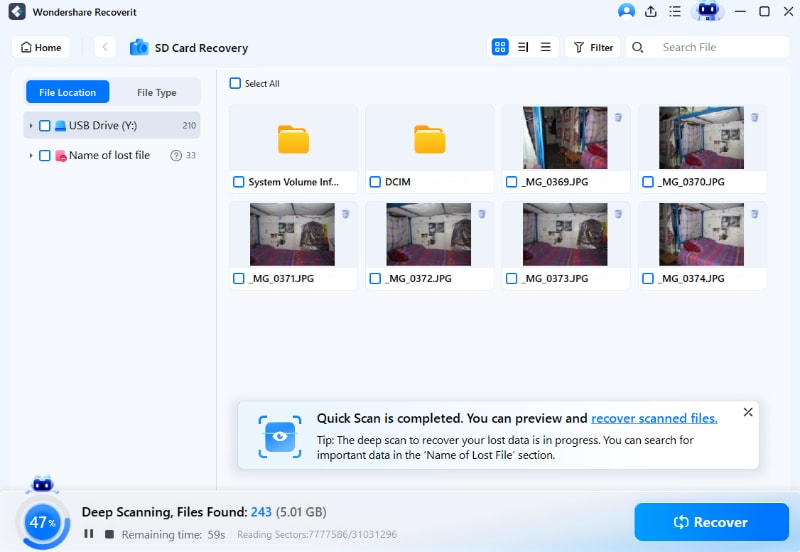
- Filter by image type: Look for JPEG files and Canon RAW files such as CR2. Use thumbnails, file size, and preview to identify the photos.
- Use a deeper scan if needed: Continue with the available deep or signature scan when the card was formatted or the folder structure is damaged.
- Recover elsewhere: Select the photos, click Recover, and save them to the computer or another healthy drive, not the SD card.
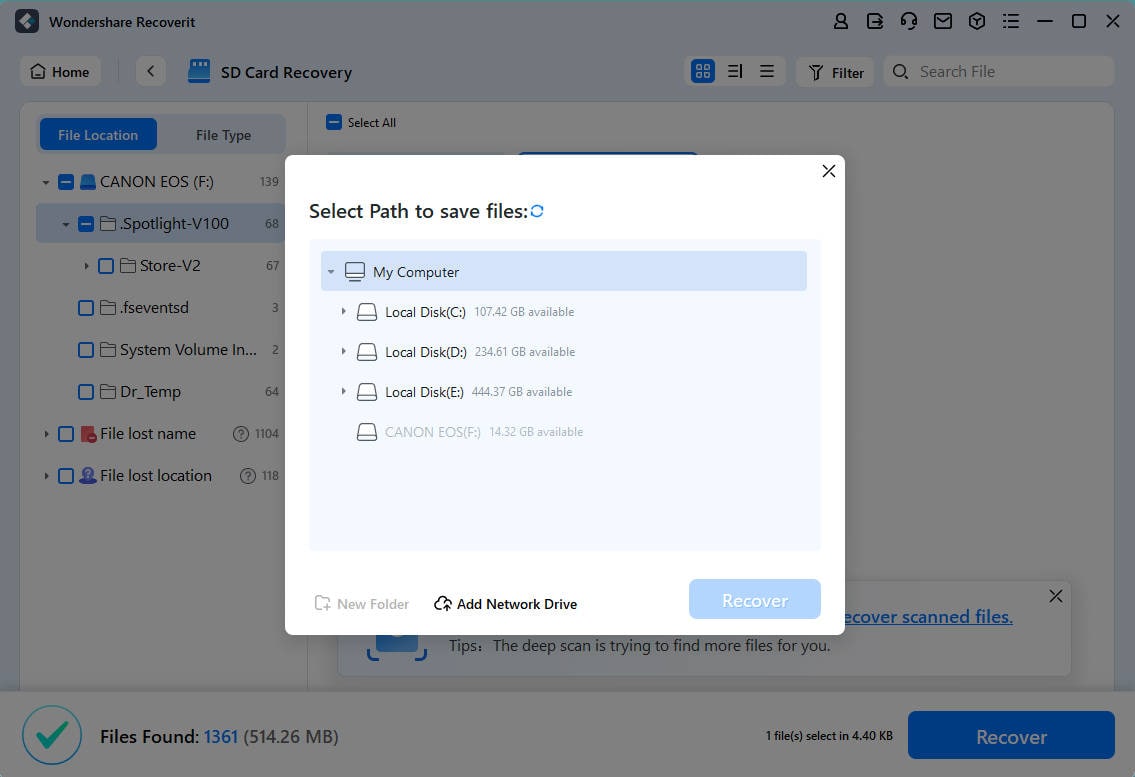
- Verify the result: Open several recovered photos and check their dimensions, thumbnails, and image quality.
Video Tutorial on How to Recover Deleted Camera & Drone Footage From a Formatted SD Card
2. Disk Drill
Disk Drill offers standard and deep scanning for supported storage devices and can preview some recoverable files before export. It may suit users comparing a cross-platform recovery workflow for a detectable Canon SD card.
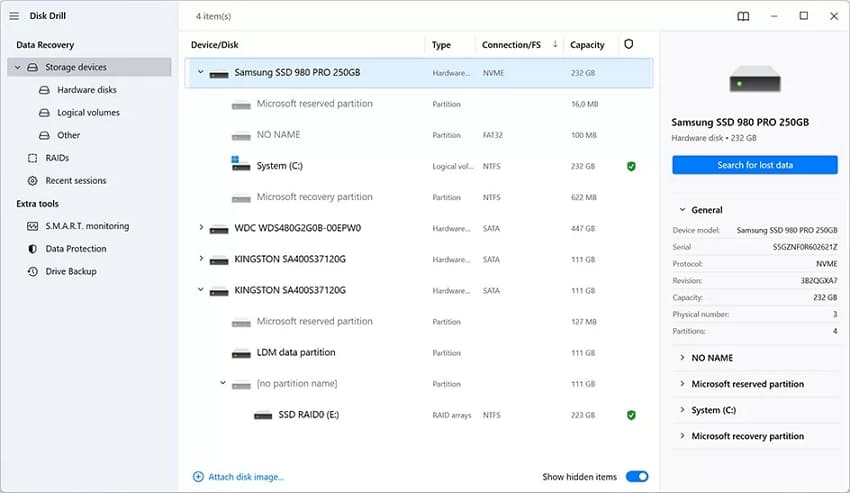
Limitations
- Free recovery limits depend on the current edition and operating system.
- Large or severely damaged cards may take longer to scan or return incomplete results.
3. Tenorshare 4DDiG
Tenorshare 4DDiG provides guided scans for deleted, formatted, or inaccessible photos on supported Windows and macOS systems. Check the current license and export limits before using it for a large camera card.
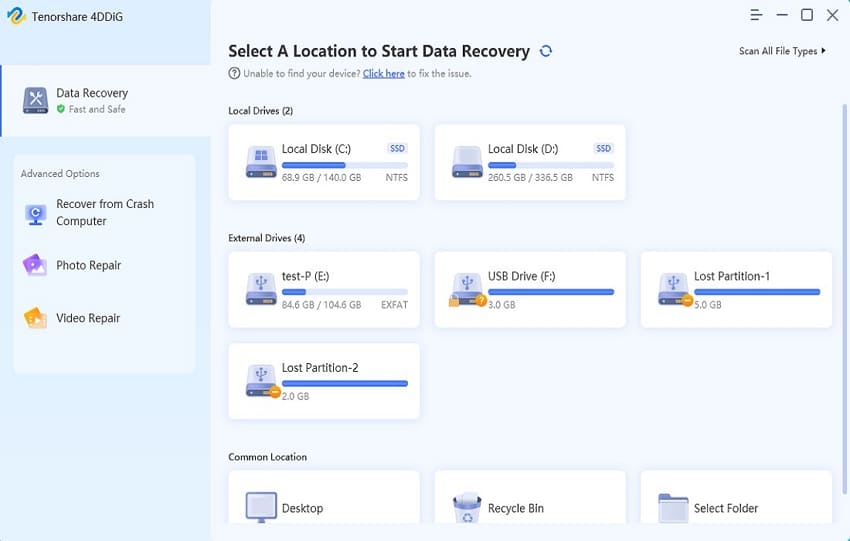
Limitations
- License terms and device limits vary by edition.
- Fragmented or overwritten image data may not be recoverable.
4. EaseUS Data Recovery Wizard
EaseUS Data Recovery Wizard offers quick and deep scan modes, filtering, and preview features on supported systems. It can be compared for Canon SD card recovery when the card is detectable.
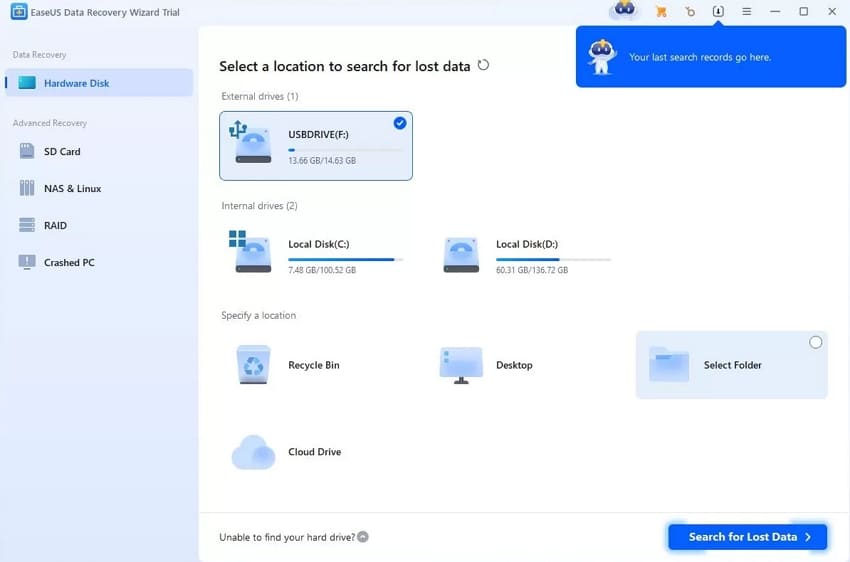
Limitations
- The current free quota may be smaller than the size of a camera card's photo collection.
- Severely damaged or unreadable media may require professional recovery.
5. Yodot Photo Recovery
Yodot Photo Recovery is designed for photo and video recovery from cameras and removable cards. It may help users compare a photo-focused workflow, but preview and export capabilities should be checked in the current edition.
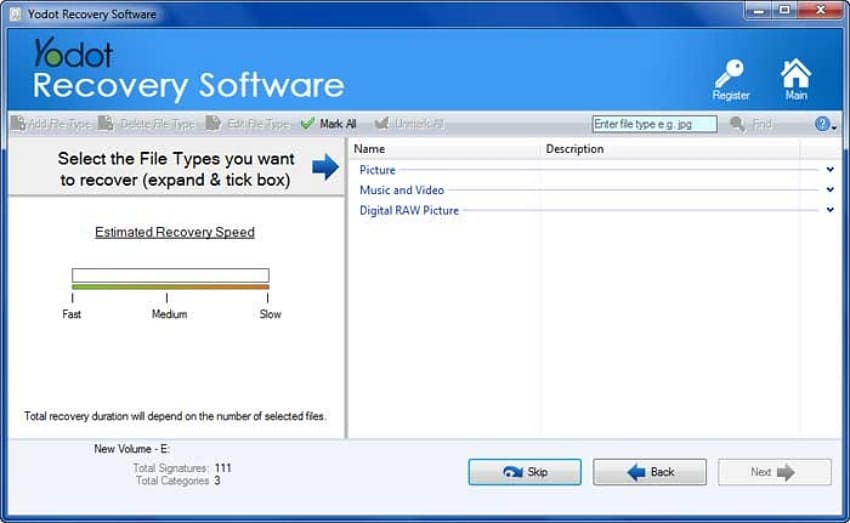
Limitations
- Scan time can increase for large or damaged cards.
- Results may require manual sorting by file type, size, and preview.
Canon T3i File Types and Card Detection Checks
Canon Rebel T3i photos may include JPEG images and Canon RAW files with a .CR2 extension. A recovery scan may also find thumbnails, video files, or fragments with generic names.
- Card opens normally: Copy or recover photos before taking new pictures.
- Card asks to be formatted: Cancel the prompt and recover data first.
- Card appears in Disk Management or Disk Utility only: Do not initialize or erase it.
- Card is not detected by any reader: Stop repeated attempts and consider professional recovery.
- Recovered files have generic names: Use preview, file size, extension, and image dimensions to identify usable photos.
Other Practical Ways to Recover Canon Rebel T3i Photos
Method 1: Use Windows File Recovery
Windows File Recovery is a command-line option for supported Windows versions. It may help recover deleted files from a detectable SD card, but it requires the source and destination drives to be different and is less visual than a dedicated recovery app.
- Connect the SD card and confirm its drive letter, such as
E:. - Prepare a different destination drive, such as
C:, with enough free space. - Open Windows Terminal or Command Prompt as administrator.
- Run a command such as
winfr E: C: /n *.jpg /n *.cr2, replacing the drive letters with the actual source and destination.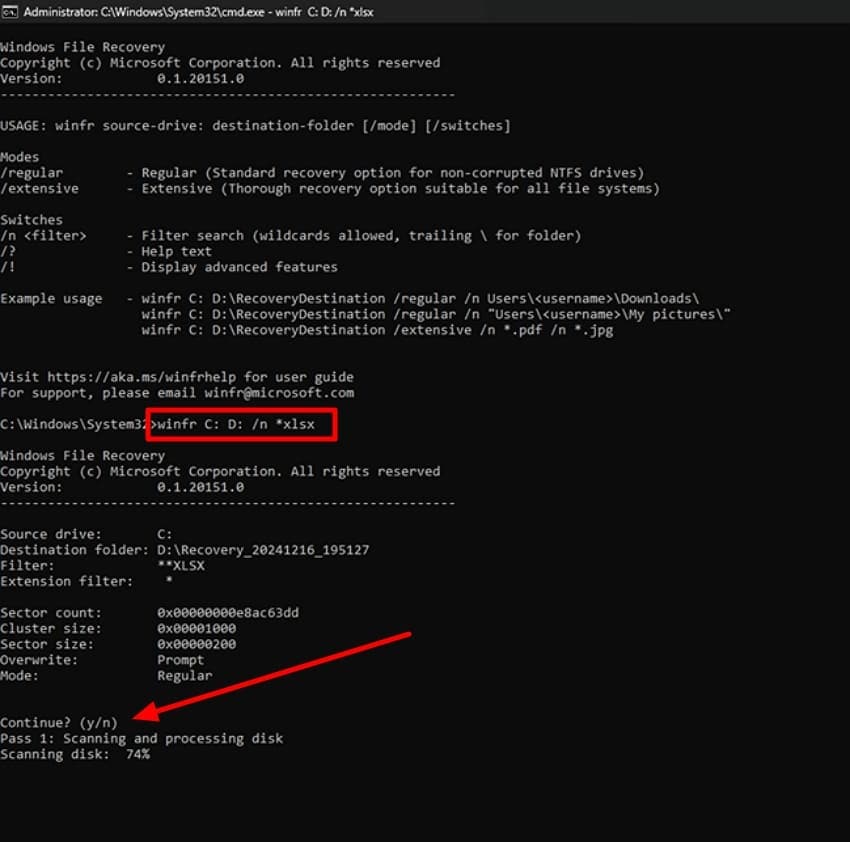
- Follow the prompts and inspect the recovery folder on the destination drive.
Method 2: Check for Hidden Files
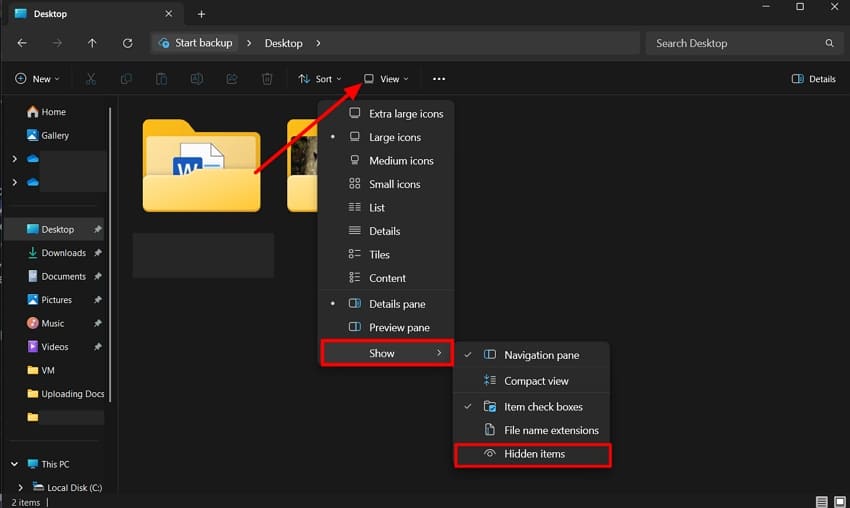
Hidden files are not deleted files. This check is useful when the SD card opens normally but the DCIM folder or photos are not visible.
- Open File Explorer and navigate to the SD card.
- Choose View > Show > Hidden items.
- Inspect the DCIM folder and copy any visible photos to another drive.
- If the card asks to be formatted or remains empty, stop writing to it and use recovery software.
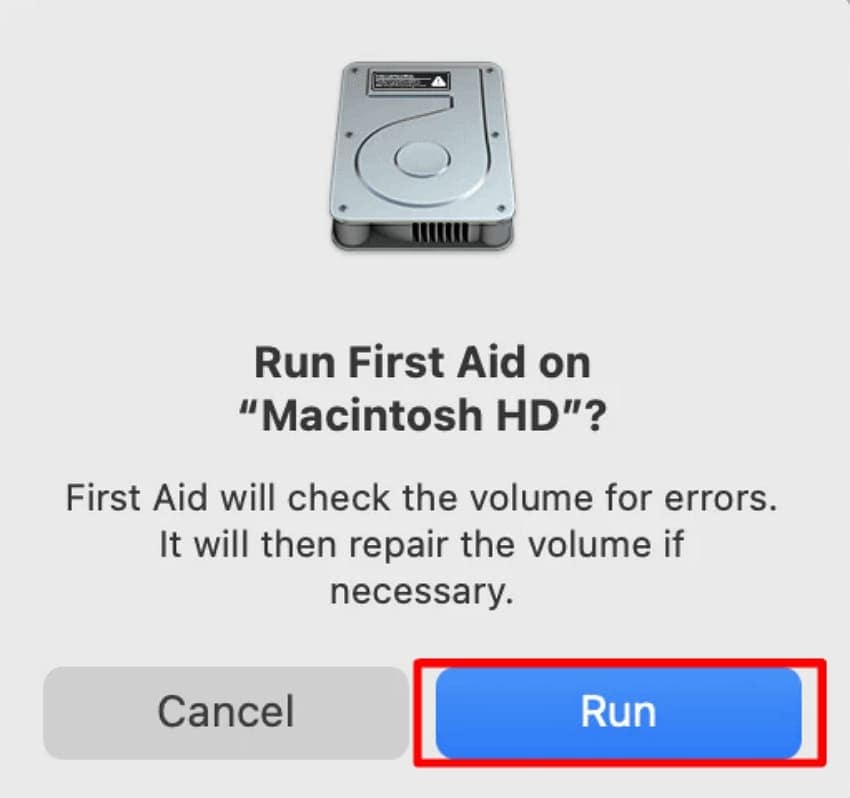
Method 3: Use Disk Utility First Aid on Mac
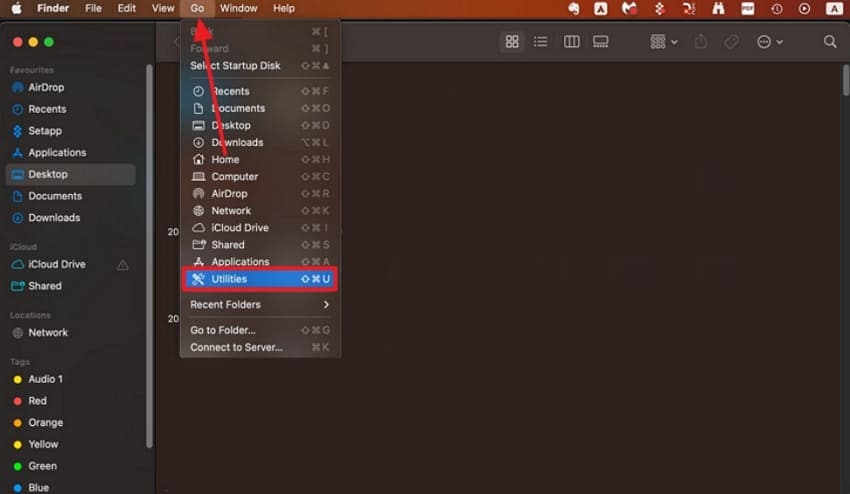
Disk Utility First Aid can check some logical file-system problems on a card detected by macOS. It is a repair tool, not a deleted-photo recovery method, so use it only after important photos are recovered or backed up.
- Open Disk Utility from Finder > Go > Utilities.
- Select the Canon SD card or its volume in the sidebar.
- Click First Aid and review the warning before choosing Run.
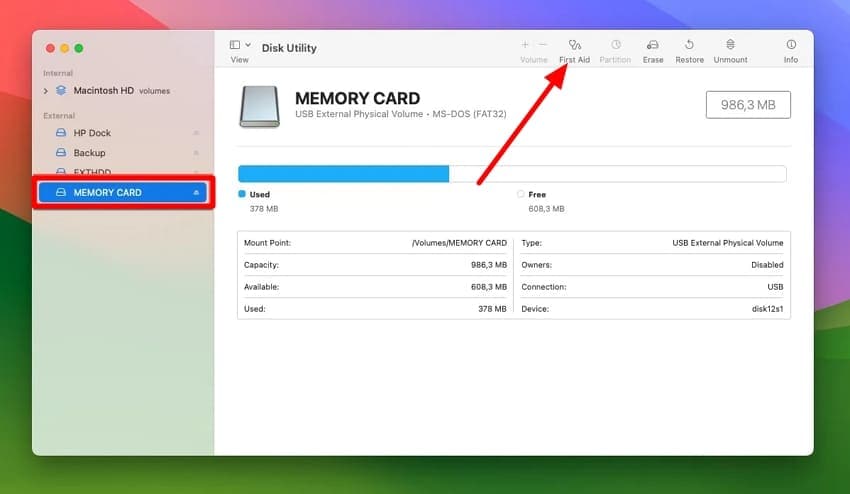
- Wait for the check to finish and verify whether the volume becomes accessible.
Conclusion
Canon Rebel T3i photos are usually recovered from the camera's SD card, not from the camera body. Stop using the card first, then choose a method based on its state: scan a detectable card with recovery software, restore from a backup, or check hidden files when the card opens normally.
Use Windows File Recovery only with a separate destination drive, and treat macOS First Aid as a repair tool rather than a deleted-photo recovery method. Do not format or initialize the card while important photos are unrecovered. For a card that is hot, damaged, repeatedly disconnecting, or invisible to every reader, professional recovery is safer.
FAQ About Canon Rebel T3i Photo Recovery
-
Can I recover deleted photos from a Canon Rebel T3i?
Often, yes, when the SD card is readable and the deleted photo data has not been overwritten. Stop using the camera and card before attempting recovery. -
Can Recoverit scan the Canon Rebel T3i camera directly?
Recovery usually targets the camera's SD card rather than the camera body. Remove the card from the powered-off camera and connect it with a reliable reader. -
Can I recover Canon CR2 files from the SD card?
Many recovery tools can search for Canon RAW files such as CR2, but results depend on the card condition and whether the data was overwritten. Preview recovered files before saving. -
Should I format the Canon SD card if the camera asks me to?
Cancel the prompt while important photos are unrecovered. Formatting changes the file system and may make later recovery more difficult. -
Can macOS First Aid recover deleted Canon photos?
No. First Aid can repair some logical file-system issues on a detected card, but it is not a deleted-photo recovery tool. Recover or back up photos first. -
Where should I save recovered Canon Rebel T3i photos?
Save them to the computer's internal drive or another healthy storage device, never to the original SD card.


