

 TL;DR:
To safely retrieve missing pictures from an SD card, immediately stop using the card to prevent overwriting, cancel any format prompts, and either locate hidden files manually or extract them to a separate drive using read-only recovery software.
● Rule out connection or directory errors first by testing the card in a known-good reader, enabling the OS setting to show hidden items, and searching the drive by specific camera extensions like *.jpg, *.heic, or *.cr3.
● If the card is recognized by the OS but remains inaccessible or shows as RAW, use a recovery tool like Recoverit Memory Card Recovery, but you must save all restored photos to a different healthy drive rather than the affected SD card.
● DIY software cannot recover data from physically failing media; immediately disconnect the card and consult a professional lab if it is cracked, overheats, disconnects repeatedly, or remains completely undetected on multiple devices.
Ask AI for a summary
 ChatGPT
 Perplexity
 Gemini
 Claude
 Grok
Grok
When pictures disappear from an SD card, do not take more photos, move files onto the card, accept a format prompt, or run a repair tool first. The photos may be hidden, stored in another folder, previously imported, deleted, or inaccessible because the file system is damaged. New writes and premature repairs can make recoverable data harder to restore.
Start with the symptom table below. It tells you whether to check the reader, search for hidden images, look for imported copies, run a recovery scan, or stop and use a professional recovery service.
⚡ TL;DR: Recover Missing SD Card Photos Safely
● Stop using the card: Remove it from the camera, phone, drone, or other device and do not format it.
● Check visibility first: Test a stable reader, inspect every DCIM subfolder, search by image extension, and show hidden items.
● Recover before repair: If the card is detected but the pictures remain missing, scan it and save recovered files to another healthy drive.
● Stop DIY attempts for physical failure: A cracked card, repeated disconnects, heat, liquid damage, or no detection on any device calls for a recovery lab.
In This Article
Part 1. What to Do First When Pictures Disappear From an SD Card
Your first goal is to preserve the card in its current state. Turn off the camera or device, remove the card only after activity lights and write operations stop, and keep it unused until you know whether the pictures are merely hidden or actually lost.
- Do not take more pictures: New photos can reuse storage that previously held missing files.
- Do not format the card: A format prompt means the device cannot read the current file system reliably; it does not prove the card is empty.
- Do not run CHKDSK or another repair tool yet: A repair utility changes file-system structures. Recover or copy important files before allowing a tool to modify the card.
- Do not recover files back to the same card: Use the computer's internal drive or a separate external drive.
If you intentionally deleted the pictures and the card is still detected, use the dedicated guide for recovering deleted photos from an SD or microSD card. This page focuses on the broader problem of pictures disappearing without a clear cause.
Read the Symptom Before Choosing a Fix
| What You See | What It May Mean | Safest Next Step |
| The camera shows the pictures, but the computer does not | Reader, adapter, USB port, folder-view, or file-format visibility issue | Keep the card unchanged, try a stable reader, and search the card by image type |
| The card shows used space, but DCIM looks empty | Hidden files, an unexpected subfolder, directory damage, or deleted directory entries | Show hidden items and search by extension; scan for recovery if nothing appears |
| The free space increased after the pictures vanished | Deletion or formatting is more likely | Stop using the card and run a read-only recovery scan |
| Windows or the camera asks to format the card, or the card appears RAW | The file system is unreadable or damaged | Cancel the prompt and recover data before any format or repair |
| The card appears briefly, disconnects, or reads extremely slowly | Reader instability or degrading media | Try one known-good reader; stop repeated scans if the behavior continues |
| The card is not detected on the camera, Windows, macOS, or another reader | Severe controller, connector, or physical failure is possible | Follow the SD card not recognized guide; use a lab for irreplaceable data |
Part 2. Check Whether the Pictures Are Hidden or Stored Elsewhere
These checks do not write new data to the SD card when you only view and copy existing files. Work from the least invasive check to the next one, and stop as soon as you locate the missing pictures.
Check the Original Device, Reader, Port, and Card Slot
Step 1. Recheck the Original Camera or Device
Insert the card only after the device is powered off, then turn it on and browse the full gallery. If the pictures appear in the camera, do not delete or edit them there. Connect the card to a computer and copy the files to another drive.
Step 2. Test One Known-Good Reader and USB Port
Remove loose hubs and adapters from the path. Try a different card reader or built-in slot, then a different USB port or computer. Match the card carefully by capacity and label so you do not scan or format the wrong drive.
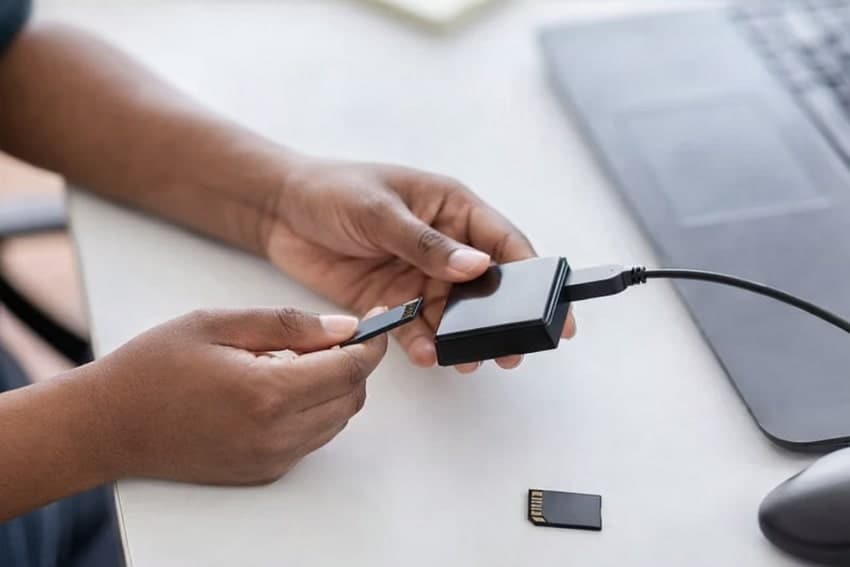
If the card works on one device but not another, copy the accessible pictures immediately. If it fails everywhere or disconnects repeatedly, skip further DIY repair and see why an SD card may not be recognized.
Search the SD Card and Show Hidden Pictures in Windows
Step 1. Inspect Every Camera Folder
Open the SD card in File Explorer and check DCIM, all numbered folders inside DCIM, and any folders created by the camera, phone, drone, trail camera, or editing device. Do not assume every image is stored in the first folder you see.
Step 2. Search by Image Extension
Select the SD card in File Explorer so the search is limited to that drive. Search for common formats one at a time, such as *.jpg, *.jpeg, *.heic, *.png, *.tif, and the RAW extension used by your camera, such as *.cr3, *.nef, *.arw, *.raf, or *.dng. Microsoft also documents using File Explorer search and wildcard file types to locate files. See the official Windows file-search guidance.
Step 3. Show Hidden Items
In Windows 11, open View > Show > Hidden items. On Windows 10, open the View tab and enable Hidden items. If the photos appear, copy them to a folder on the computer without moving or renaming the originals on the card.
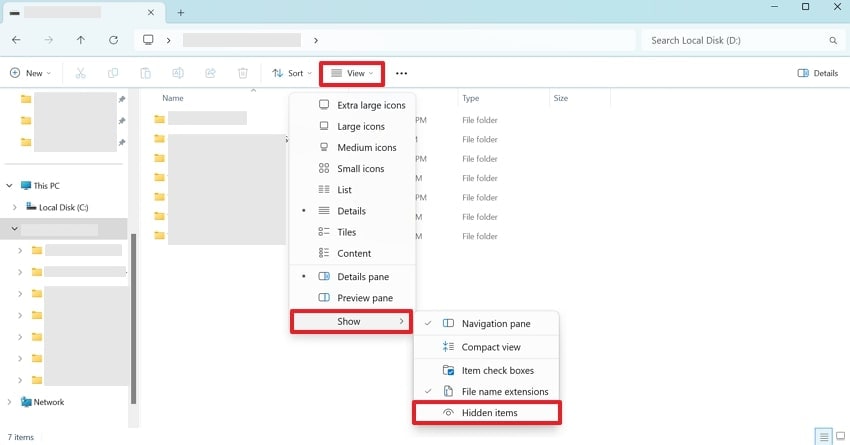
If files remain hidden after the basic view setting, use the separate SD card hidden-files guide. Avoid running a broad attribute-changing command on the whole card until important files have been copied or recovered.
Mac Check. In Finder, select the SD card before searching, then add a search criterion such as Kind is Image. Apple explains how to set the search scope and narrow results in its official Finder search guide.
Check Imports, Trash, and Backups
The missing pictures may already have left the SD card. Search the places where your camera or phone normally imports, syncs, or backs up media:
- Computer import folders: Check Pictures, Photos libraries, camera-import folders, Lightroom catalog locations, and project folders. Search by shooting date as well as filename.
- Photo applications: Look in Recently Deleted, Trash, or Recycle Bin only if the pictures were previously imported into that app or computer.
- Cloud services: Check the main library, deleted-items area, and any camera-upload folder in the service you actually used.
- Backups: Check File History, Time Machine, NAS snapshots, external backup drives, and earlier project archives.
- Original device storage: A phone or camera app may have saved some pictures internally instead of to the card.
Restore any copy to a new folder, open several files at full size, and keep the SD card unchanged until you confirm the set is complete.
Part 3. Recover Pictures That Are Deleted, Formatted, or Inaccessible
Use recovery software when the SD card is detected by Windows or macOS but the pictures do not appear after the visibility and backup checks. This includes accidental deletion, a quick format, an empty or damaged folder, a RAW file system, or a format prompt. For a card that was definitely formatted, use the focused guide to recover files from a formatted SD card. If the card appears RAW, see the RAW SD card recovery workflow.
Recover Missing SD Card Photos With Recoverit
Recoverit Memory Card Recovery can scan a detectable SD or microSD card for deleted, formatted, RAW, hidden, or inaccessible files. No recovery tool can guarantee results after data has been overwritten, so keep the card unused and save recovered photos elsewhere.
Step 1. Connect and Select the SD Card
Connect the card through a stable reader. Open Recoverit, choose SD Card Recovery, identify the card by capacity and device name, and start the scan. If the card is absent from both Recoverit and the operating system, software recovery is not the correct next step.
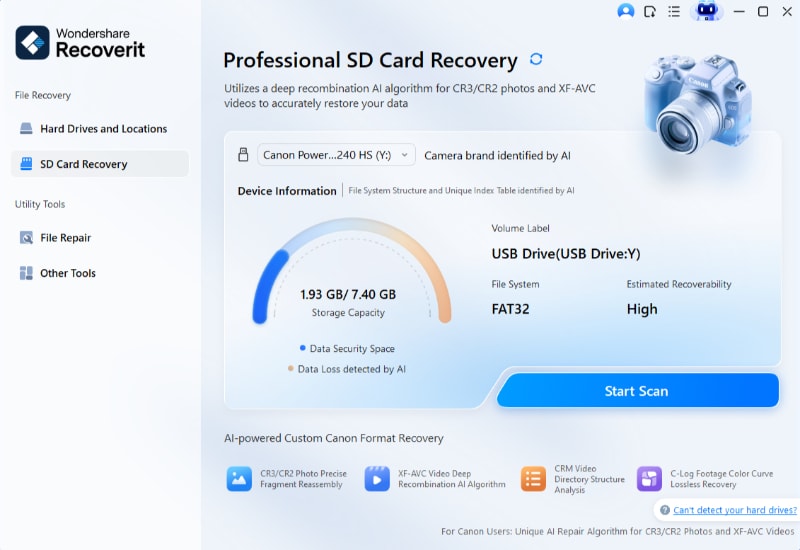
Step 2. Scan Without Writing to the Card
Let the scan search the card. You can review results as they appear, but avoid opening another program that writes files to the source. If the card begins disconnecting, becomes unusually hot, or slows to repeated read errors, stop the scan rather than forcing more passes.
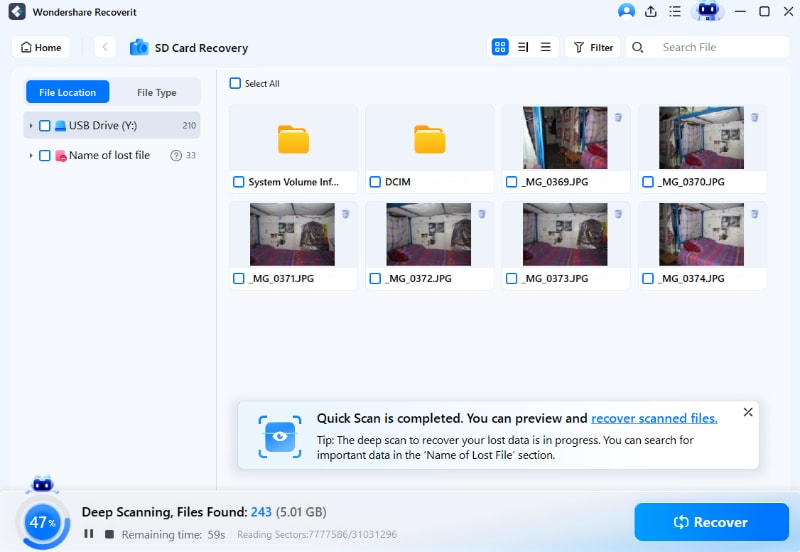
Step 3. Filter and Preview the Pictures
Choose the picture category and narrow results by file type, date, size, or filename. Preview supported images to check whether the content is intact. For RAW files that do not preview on the current computer, recover a small sample and open it with software that supports that camera format.
Step 4. Recover to a Different Healthy Drive
Select the pictures you need, click Recover, and choose the computer's internal drive or another external drive. Do not select the affected SD card as the destination because writing to it can overwrite other missing files.
Recover Pictures That Are Deleted, Formatted, or Inaccessible
 Security Verified. Over 7,302,189 people have downloaded it.
Recovery Limit: A successful scan result is not the same as a verified recovery. Open the restored files from the destination drive and check full-resolution content before you reuse, repair, or format the card.
Know When Software Recovery Is Not the Right Next Step
Stop home recovery and consider a professional data recovery lab when the SD card:
- Is cracked, bent, burned, corroded, or affected by liquid.
- Is not detected by any camera, reader, Windows PC, or Mac.
- Disconnects repeatedly during reads or causes the reader to reset.
- Becomes unusually hot.
- Contains the only copy of high-value client work, legal evidence, or irreplaceable family pictures and you cannot accept DIY risk.
Do not open, bend, sand, solder, or repeatedly reconnect a physically failing card. Software cannot repair damaged flash memory, a failed controller, or broken contacts.
Part 4. What to Do After Recovering the Pictures
Verify the Recovered Photos Before Reusing the Card
Do not judge recovery by filenames or thumbnails alone. Verify the files from the destination drive:
- Compare the recovered file count with the expected shoot, folder, or date range.
- Open samples from the beginning, middle, and end of the recovered set at full resolution.
- Check important JPEG, HEIC, and RAW files in an application that supports the format.
- Confirm that the recovered files are stored outside the original SD card.
- Create a second copy on another drive or approved cloud location before changing the card.
If a recovered photo exists but will not open, recovery and file repair are separate tasks. Preserve the recovered original before attempting any repair workflow.
Repair, Format, Test, or Replace the SD Card
Only after the pictures are safe should you decide what to do with the card:
- Card is readable and stable: Back up everything, format it in the device that will use it, and test it before an important shoot.
- Card is RAW or has directory errors: Follow the dedicated corrupted SD card recovery guide after recovery, not before it.
- You need a standards-based computer formatter: The SD Association recommends its SD Memory Card Formatter over generic operating-system format tools for SD cards. Formatting still erases accessible data, so use it only after verification and backup.
- The card loses files again, reports the wrong capacity, or fails write/read checks: Use the SD card health-check guide and replace the card if instability repeats.
Do not trust a card for another important shoot merely because one format completed. Repeated disappearance is a reason to retire the card, reader, or adapter after isolating which component is failing.
Part 5. Why Pictures Disappear From SD Cards
| Cause | Typical Clue | Best Response |
| Hidden attribute or unfamiliar folder structure | Used space remains, but the expected folder looks empty | Show hidden items and search the whole card by extension |
| Reader, adapter, port, or device issue | Pictures appear on one device but not another | Use a known-good reader and copy accessible photos immediately |
| Accidental deletion | Free space increased and recent pictures vanished | Stop using the card and scan it for recoverable photos |
| Accidental or required formatting | The folder structure reset or the card appears empty after setup | Do not reuse it; scan before further formatting |
| Interrupted capture or transfer | Only the newest pictures are missing, incomplete, or unreadable | Preserve the card, search other import locations, then recover |
| File-system damage | RAW status, a format prompt, inaccessible folders, or incorrect names | Recover first; repair or format only after the files are safe |
| Malware or changed attributes | Shortcuts, unexpected hidden folders, or altered names appear | Copy or recover the data, then scan the computer and card after preservation |
| Counterfeit or failing flash memory | Older files vanish as new data is written, capacity looks wrong, or errors repeat | Recover what remains, verify capacity and health, then replace the card |
Part 6. How to Prevent SD Card Photo Loss
- Use the SD card as capture media, not the only archive: Import important pictures promptly and keep at least one additional copy.
- Wait for writes to finish: Do not power off a camera, remove the card, or disconnect a reader while an activity light or transfer is active.
- Eject the card correctly: Use the operating system's eject control before removing it from a computer.
- Format only after backup: After verifying the files, format the card in the camera or target device instead of deleting folders piecemeal.
- Use reliable cards, adapters, and readers: Buy from trusted sellers and retire components that disconnect, misreport capacity, or corrupt more than once.
- Separate important shoots: Do not keep weeks of irreplaceable work on one card when a failed card could affect the entire set.
- Verify transfers before erasing: Open representative files from the destination and confirm a second copy exists before clearing the card.
Conclusion
When pictures disappear from an SD card, the safest order is simple: stop using the card, identify whether the issue is visibility, connection, backup, deletion, formatting, or failure, then recover the photos to another drive before repair or formatting. A card that is detected but missing files can often be scanned. A card that is physically damaged or unstable needs more caution and may require a professional lab.
After recovery, verify the full-resolution files, make a second copy, and replace any card or reader that continues to lose data. This protects the recovered pictures and prevents the same failure from becoming the next shoot's problem.
FAQ
-
Why Did My Pictures Disappear From the SD Card but It Still Shows Used Space?
The files may be hidden, stored in an unexpected camera folder, or disconnected from the visible directory because of file-system damage. Search the full card by image extension and show hidden items. If nothing appears, recover the files before running a repair tool. -
Can I Recover Photos From an SD Card Without Formatting It?
Yes. Cancel any format prompt and use visibility checks, backups, or recovery software first. Formatting changes the card and can reduce what remains recoverable if the card is reused afterward. -
Should I Run CHKDSK When Images Disappear From an SD Card?
Not before protecting the data. CHKDSK can modify file-system structures. Copy accessible files or recover missing photos to another drive first, then consider repair only after the important data is verified. -
Why Are the Photos Visible in My Camera but Not on My Computer?
The card may be fine while the reader, adapter, USB port, folder view, or file-format support is causing the difference. Try a known-good reader, inspect all camera folders, and search by the camera's image extension. -
Can Recoverit Recover Pictures That Disappeared From an SD Card?
Recoverit can scan a card that is detected by the operating system for deleted, formatted, RAW, hidden, or inaccessible pictures. Results depend on the card's condition and whether the missing data has been overwritten. Save recovered files to another healthy drive. -
What Should I Do if the SD Card Is Not Detected Anywhere?
Try one known-good reader, port, and computer. If the card remains undetected, is cracked, gets hot, or repeatedly disconnects, stop repeated DIY attempts. Software recovery generally requires a detectable device, so irreplaceable data may need a professional recovery lab.


