 TL;DR:
To resolve Windows video playback error 0xC1010103, immediately test the file in VLC Media Player to determine whether Windows is missing a codec or if the media file itself is actually damaged.
● If the video plays successfully in VLC, the file is intact; fix the Windows compatibility issue by installing the specific official codec your media requires (such as HEVC/H.265) or by utilizing the "Repair" function under Windows Settings > Apps for the affected player.
● If the video fails across multiple players, the file structure may be incomplete; attempt to obtain a fresh copy from the original source before using software like Recoverit File Repair, and strictly perform any repair attempts on a duplicate file to protect the original.
● Never attempt to bypass this error by simply renaming file extensions like .mov to .mp4, and do not apply desktop file-repair workflows to browser streaming failures, as 0xC1010103 specifically indicates a local Windows decoding problem.
Ask AI for a summary
 ChatGPT
 Perplexity
 Gemini
 Claude
 Grok
Windows says "Can't play" and shows 0xC1010103, but that doesn't tell you whether the recording is ruined. Sometimes the video opens in another player immediately; other times Windows is missing a decoder, or the file was only partially copied. The fastest useful test is to open the same file in VLC before changing Windows settings or trying to repair the video.
Start here: Keep the original file untouched, especially if it is the only copy of a camera recording. Test a duplicate in another player. If the entire video plays with picture and sound, concentrate on Windows playback compatibility. If it fails across players, compare it with a fresh copy from the source before considering file repair.
In This Article
Part 1. What Does 0xC1010103 Mean?
Error 0xC1010103 appears in Windows video playback when the app cannot open or decode the selected media. It is a symptom, not a reliable test for corruption. The file's container (such as MP4 or MOV), the video codec inside it (such as H.264 or HEVC/H.265), the Windows player, and the condition of the recording can all matter. An .mp4 filename alone does not tell you which codec the video contains.
The following comparisons help you choose a fix without making unnecessary changes.
| What you observe | Most useful first action | What the result tells you |
| The video plays from start to finish in VLC but shows 0xC1010103 in the Windows player | Check the codec and the affected Windows app | Windows playback support is the stronger suspect; don't repair a file that already plays properly |
| Only clips from one camera, phone, or export preset fail | Inspect the file's codec and try a known compatible player | The recording may use HEVC or another codec that the original app cannot decode |
| Several unrelated videos fail or show green screens, stuttering, or rendering problems | Check the player, Windows updates, and display driver | A shared software or graphics problem is more plausible than several files all being broken |
| The video also fails in VLC, is abnormally small, or was interrupted during download or transfer | Obtain another intact copy before attempting repair | The source or file structure may be incomplete; the error alone still doesn't prove damage |
| A video is missing rather than merely unplayable | Stop writing to its original storage and use a file recovery workflow | Missing-file recovery is different from fixing a playback error |
Important distinction: 0xC1010103 is usually discussed in connection with local media playback on Windows. A browser stream that says "video unavailable" or fails because of an account or network problem needs the service's own troubleshooting, not a desktop file-repair program. For broader symptoms, see how to troubleshoot other video playback errors.
Part 2. Fix 0xC1010103 When Windows Cannot Play an Intact Video
Begin with the comparison that changes the least: try a second player. If that works, leave the recording alone and address the specific Windows compatibility issue. The following methods move from a quick test toward more involved software changes.
Method 1. Test the Video in VLC Before Changing Anything
Use this when: Movies & TV, Media Player, or Windows Media Player shows 0xC1010103 for one local video, and you have not yet checked whether another player can read it.
Step 1. If needed, obtain VLC from the official VideoLAN Windows download page. Open VLC and select "Media > Open File". Choose a copy of the affected video, not your only original.

Step 2. Watch the beginning, a scene in the middle, and the final part of the clip. Check both picture and audio. Then open a video you know works in the Windows app that displayed the error.
Success check: The entire affected clip plays correctly in VLC. You can use VLC for that file and move to the codec or Windows-player checks if you want to fix playback in the built-in app. If it still fails: Inspect the source copy in Part 3. A failure in two players raises the possibility of an incomplete file, but doesn't establish corruption by itself.
Method 2. Check the Codec and Install Only the Support You Need
Use this when: VLC plays the recording, but the Windows app fails, particularly for HEVC/H.265 camera or phone video, MKV containers, or files exported with less common encoding settings.
Step 1. Right-click the copied video in File Explorer and select "Properties > Details". Note the available video information. A file extension tells you the container, not necessarily its codec; if Windows doesn't show the codec, use the media-information view of a compatible player. Do not rename .mov to .mp4 expecting the encoding to change.
Step 2. Check Microsoft's Windows Media Player codec guidance. Install the specific official codec extension or other supported decoder that your file requires, then reopen the same clip. Avoid installing several codec packs to guess at the problem.
Step 3. If you maintain a legacy playback setup that genuinely requires a third-party codec pack, obtain it from its official publisher and inspect the installer choices. The original article's example below illustrates a codec-pack setup screen; it is an optional advanced route, not a required fix for 0xC1010103.

Success check: The original video now plays in the Windows app without changing its contents. If not: Try the app-repair branch next. If no available Windows decoder supports the file, continue using a compatible player; conversion of a healthy copy is an option, but conversion cannot reconstruct missing footage.
Method 3. Repair the Windows Player Before Reinstalling It
Use this when: Affected videos work in VLC or on another computer, but one Windows video app repeatedly fails, including on otherwise playable files.
Step 1. Check Windows Update and the app's available updates. On Windows 11, open "Settings > Apps > Installed apps", find the affected app, select its three-dot menu, and open "Advanced options" if present. Choose "Repair" before trying "Reset". Microsoft notes that not every app offers these controls.
Step 2. Reopen the video. If you need to use Reset, check its warning first; app settings or data may be removed, although the stored video file is not itself a player preference. Windows 10 uses "Settings > Apps > Apps & features" for the corresponding controls.
Step 3. If your affected program is specifically Windows Media Player Legacy, its optional Windows-feature controls are different from those of the newer Media Player app. The existing image below shows the legacy Windows Features route; only consider disabling and re-enabling that optional component after the lower-impact checks have failed and you have confirmed that your Windows edition offers it.

Success check: The same video opens in the affected Windows player and another known-good file still works. If not: A missing codec remains possible; if several players render badly, investigate graphics drivers. Microsoft's app repair instructions describe the available Windows 10 and Windows 11 paths.
Method 4. Check the Display Driver If Playback Fails More Broadly
Use this when: Several unrelated videos fail, the picture goes green or black, or playback started malfunctioning after a Windows or graphics update. A missing codec for one file is not, by itself, evidence that the graphics driver is faulty.
Step 1. Check "Settings > Windows Update" for relevant driver updates. If the issue began just after a driver change, record the driver version and investigate the manufacturer's recommended version rather than blindly installing a newer one.
Step 2. Right-click "Start" and open "Device Manager". Expand "Display adapters", right-click your graphics adapter, and choose "Update driver" or review its "Properties". Follow Microsoft's driver update instructions or the GPU manufacturer's support page.

Step 3. Restart if the update requires it. Retest a known-good video and the affected one in the same two players.
Success check: Multiple previously failing videos now render and play normally. If not: Stop changing drivers just to chase this one code. Return to the codec result or compare another copy of the affected file.
Part 3. What to Do If the Video File Itself Is Damaged
If the same copied video fails in more than one compatible player, investigate its source before repairing anything. Check whether a download finished, whether a camera can still play the original, and whether a fresh export has a normal file size and duration. Copy an intact version to a healthy drive if one exists. When the clip lives on a failing SD card or USB drive, avoid writing fixes to that source and prioritize protecting readable files.
One file that cannot be opened isn't proof of missing media data. But if a substantial video is present, transfer was interrupted, and independent players fail to decode it, its file structure may be damaged. That is when file repair becomes a reasonable separate option.
Repair a Damaged Local Video With Recoverit File Repair
Use this when: You own a local MP4, MOV, or another supported video file with meaningful data remaining, and it still fails after comparing other players and intact source copies. Recoverit File Repair handles a different problem from finding deleted files: it attempts to repair a damaged video that you can already locate. It does not add a missing Windows codec, restore a cloud stream, or guarantee that overwritten frames can be recreated.
Step 1. Make a duplicate of the damaged video on a healthy drive. Open Recoverit and go to "File Repair". Choose video repair and use "Add Video" or "Add Files" as offered by your interface to select the duplicate. The official Recoverit Guide describes the current repair sequence.
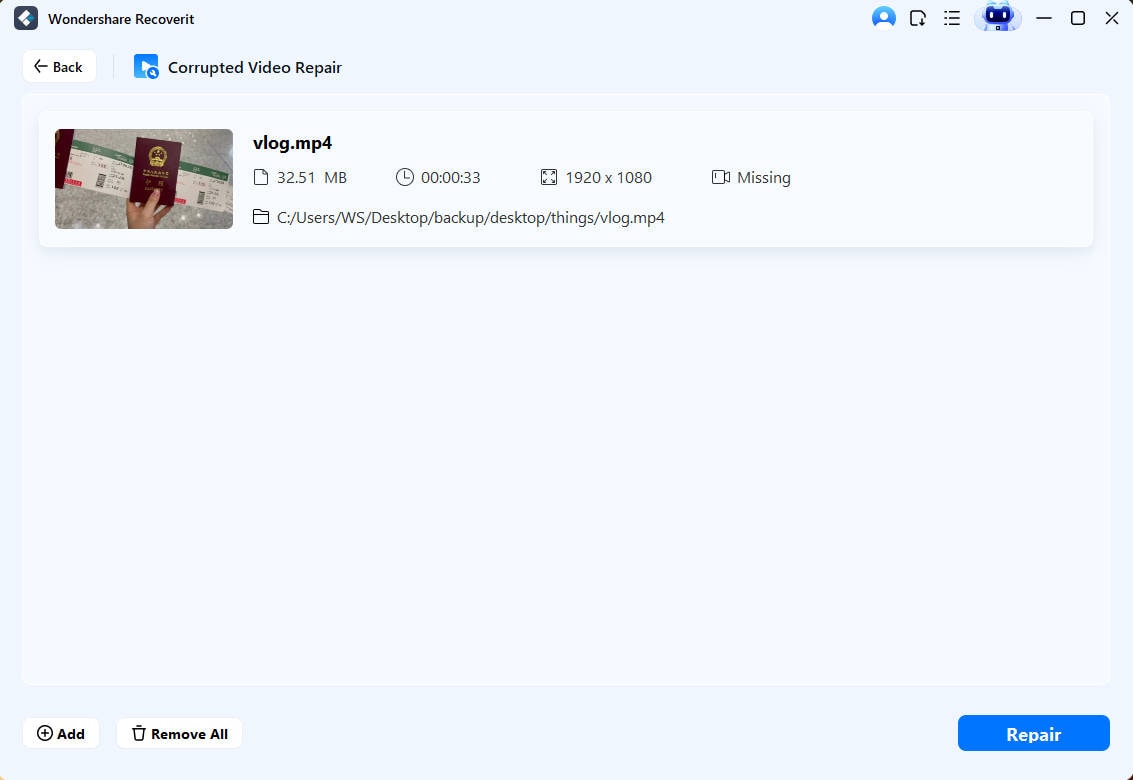
Step 2. Choose "Repair" and let the operation finish. Check whether a playable preview becomes available. If normal repair is unsuccessful and your interface offers Advanced Repair, it may ask for a healthy sample made by the same camera using comparable settings.
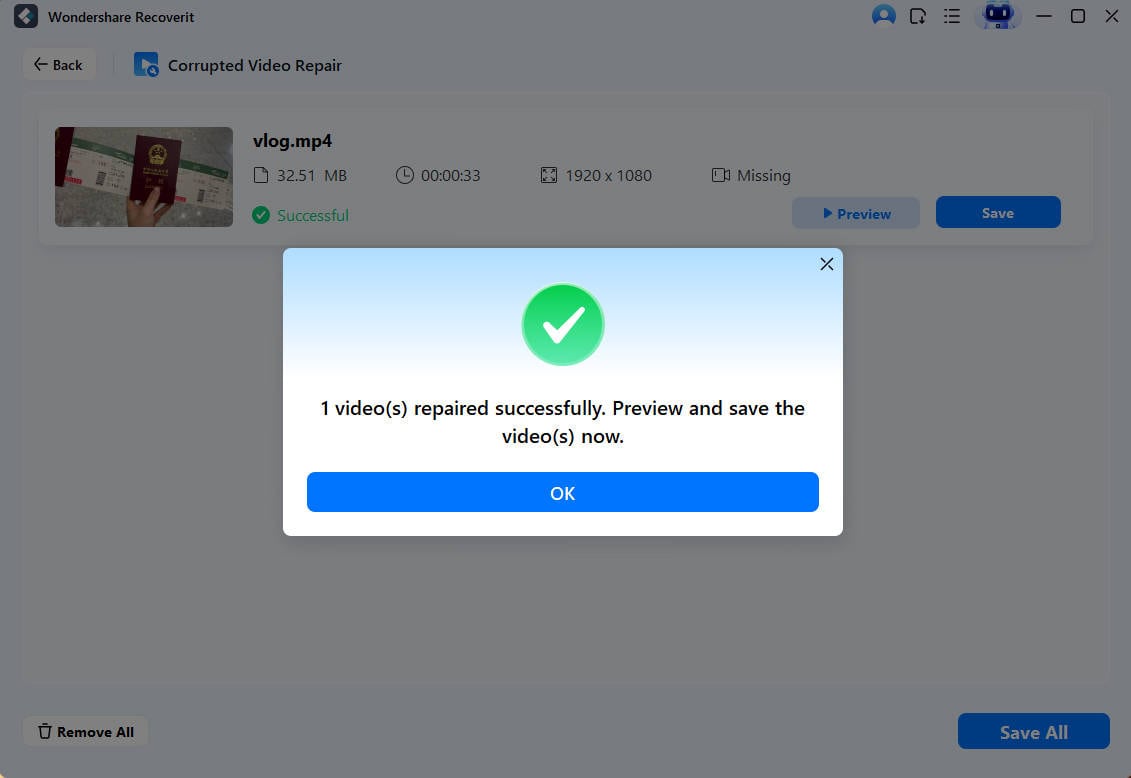
Step 3. Select "Preview" and check the beginning, middle, and end, including audio. Save an acceptable repaired result to a different location from your preserved original.
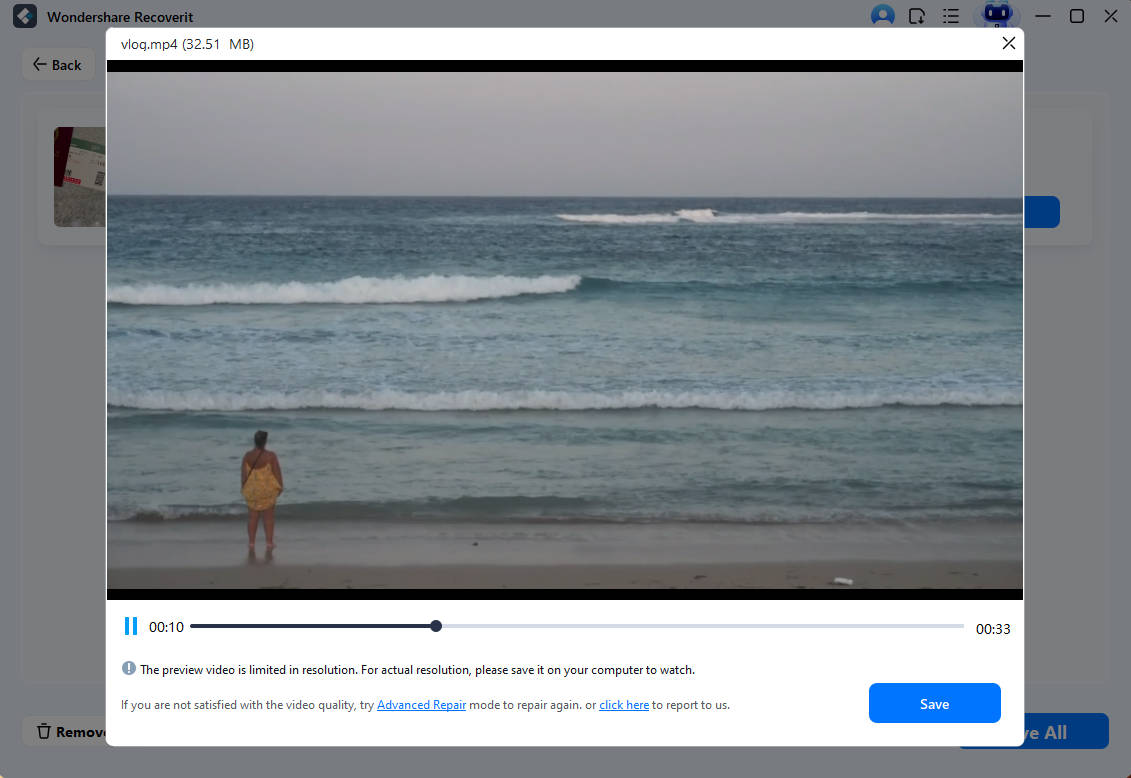
Success check: The saved file plays the needed footage with usable sound and duration in a player outside the repair tool. If not: Retain the original, check for a complete source copy, and consider professional help for high-value evidence or storage showing physical faults. A repair process cannot invent footage that was never recorded or has been overwritten.
When the video was deleted or lost rather than merely unplayable, use the separate Recoverit File Recovery workflow for a detectable computer or removable drive. Avoid saving new data to the original source before scanning; always save recovered files elsewhere.
If your problem matches the damaged-local-file case, review the Recoverit File Repair instructions and download options below. A successful scan, repair attempt, or product download does not prove that a specific recording can be recovered.
Part 4. Prevent the Same Error on Your Next Video
A future 0xC1010103 message is easier to diagnose when you know what the original recording should look like. A few practical checks help you separate a playback problem from a damaged file:
- Keep the original camera or phone recording until the copied and exported version has been played from beginning to end.
- Note which codec your editing or camera preset uses, especially for HEVC video. Choose the export format based on the software and devices your viewers actually use.
- Maintain a second verified copy of important footage on another storage device. Test that copy rather than repeatedly modifying the only original.
- Use Windows Update, official player updates, and manufacturer driver packages. Install codecs only when the file's requirements justify them.
Conclusion
For 0xC1010103, the most useful fix depends on what happens when the same video is played elsewhere. If VLC plays the whole recording, investigate Windows codec support and the affected player instead of treating the file as damaged. If several unrelated clips fail, check the player and graphics path. If an important local video remains unreadable after you have verified the source and tried compatible players, consider file repair on a copy. This sequence avoids unnecessary changes while giving each possible cause a clear next step.
FAQ
-
What does error code 0xC1010103 mean?
It means a Windows player cannot open or play the selected video. The code alone does not identify a single cause: unsupported decoding, a player problem, an incomplete transfer, or damaged media data may be involved. Testing the same file in another player is the quickest way to narrow it down. -
Can VLC fix 0xC1010103 permanently?
VLC may play the video successfully because it supports many media formats. That is a useful workaround and diagnostic result, but it does not install every decoder into the built-in Windows player or repair the original video. -
Why does an MP4 file still show 0xC1010103?
MP4 is a container, not a guarantee that every app supports the codec inside. The file may use HEVC or another compression method that needs additional playback support. It may also be incomplete, so compare it with a known-good source copy. -
Should I delete temporary files or uninstall Windows Media Player?
Not as a first response. Start with an alternate player and codec check. If a particular app is failing, try its supported Repair option before considering a reset or reinstall. Clearing all temporary files does not diagnose the video codec or prove the recording is intact. -
When should I use Recoverit File Repair?
Use it for an accessible local video with suspected structural damage after comparing players and a fresh copy. Work on a duplicate, inspect the preview, and save any repaired output separately. If the video was deleted instead, that calls for file recovery, not file repair.


