 TL;DR:
macOS can read NTFS drives but can't write to them without third-party software. Best free options for 2026: NTFS-3G + macFUSE (open source, terminal setup: xcode-select --install, brew install --cask macfuse, brew install ntfs-3g), Mounty for NTFS (lightweight, free, easiest for read-write remount), or SL-NTFS (free standalone app). Paid and most reliable: Paragon NTFS ($49.95) and Tuxera NTFS ($15). If NTFS tools cause data loss, recover files with Wondershare Recoverit.
Ask AI for a summary
 ChatGPT
 Perplexity
 Gemini
 Claude
 Grok
macOS can't write to NTFS drives natively because Microsoft doesn't license the format — you need a third-party driver. This guide explains why, then compares 7 free NTFS software for Mac in 2026 with setup steps, features, limitations, and a full comparison table — plus how to decide between NTFS drivers and exFAT.
Part 1. What Are the Free NTFS Drivers for Mac? Why Mac Doesn't Support NTFS Natively!
The best free Microsoft ntfs for mac options are NTFS-3G, Mounty for NTFS, and SL-NTFS. These drivers manage files between Windows and Mac without reformatting drives. They're compatible with Intel and Apple Silicon Macs and usually require helper software — a more technical setup than paid options, best for users who need occasional write access to NTFS.
macOS doesn't support NTFS natively for these reasons:
| Reason | Explanation |
| Security concerns | Full write access could introduce bugs needing more resources to secure |
| Read-only design | macOS mounts NTFS read-only — no add, change, or delete without software |
| File system options | Apple would have to maintain NTFS code without full control, risking stability |
| Technology control | Apple focuses on its own systems; Microsoft technology isn't fully licensed |
| Better alternative | Apple recommends exFAT/FAT32, fully supported read/write on both systems |

Part 2. 7 Free NTFS Software for Mac For You to Find the Best One
Seven options ranked below, with setup steps, features, and limitations for each:
1. NTFS-3G
This open-source driver lets Mac users create, modify, rename, and delete files on NTFS drives without touching the macOS core. It's GPL-licensed, handles large files, and supports Intel and Apple Silicon Macs — though the project is maintained slowly, so on Apple silicon you need the Homebrew macFUSE build and results vary by macOS version.
Stepwise Guide on How to Use NTFS-3G on Your Mac
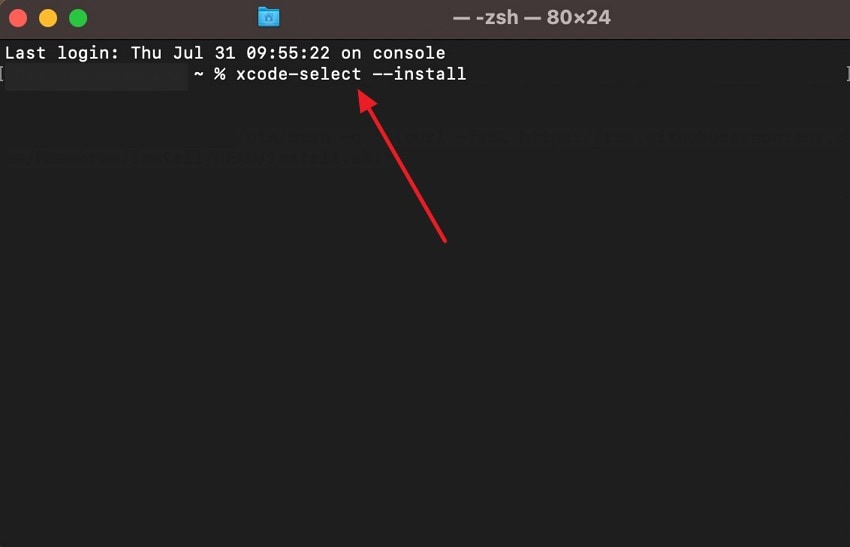
Step 1. Open Terminal from Applications > Utilities. Run xcode-select --install and press Enter to install command-line tools.
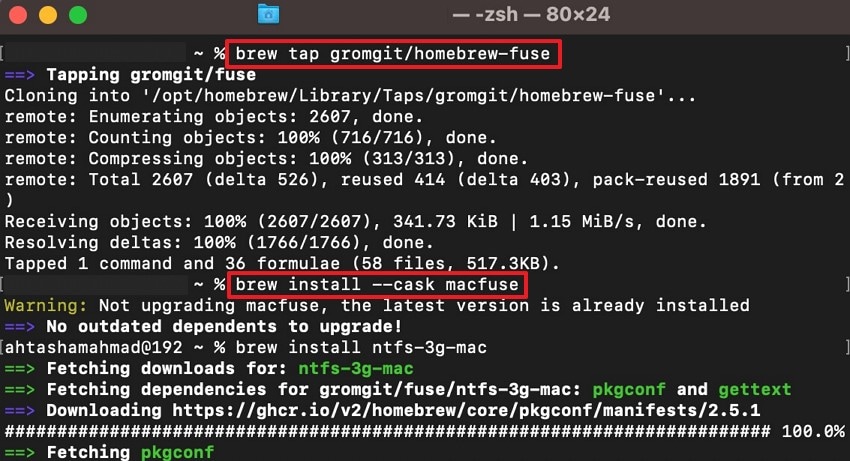
Step 2. On Apple silicon, install the compatible Homebrew build: run brew tap gromgit/homebrew-fuse, then brew install --cask macfuse and press Enter.
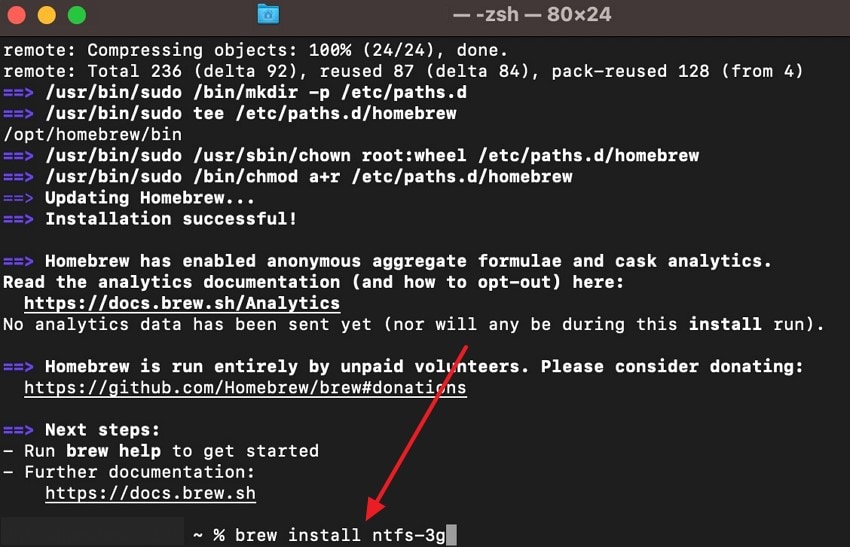
Step 3. Run brew install ntfs-3g and press Enter. Then list your disks with diskutil list to find the NTFS volume and mount it for writing.
Key Features
- Supports hard links, symbolic links, and junction points.
- Operates without kernel-level changes, which enhances portability.
- Can recover and mount NTFS volumes after unexpected system failures.
Limitations
- Requires a complicated macFUSE installation.
- Command-line based — not seamless for beginners.
2. SL-NTFS
SL-NTFS offers straightforward mounting and writing for external NTFS volumes, designed for macOS Snow Leopard 10.6 and later. It lets you enable or disable write permissions per volume and notifies you when writing can begin. Note: SL-NTFS is an old, lightly maintained tool — its compatibility with recent macOS and Apple silicon is limited, so treat it as a legacy option rather than a first choice.
Walkthrough Steps on How to Utilize SL-NTFS on macOS
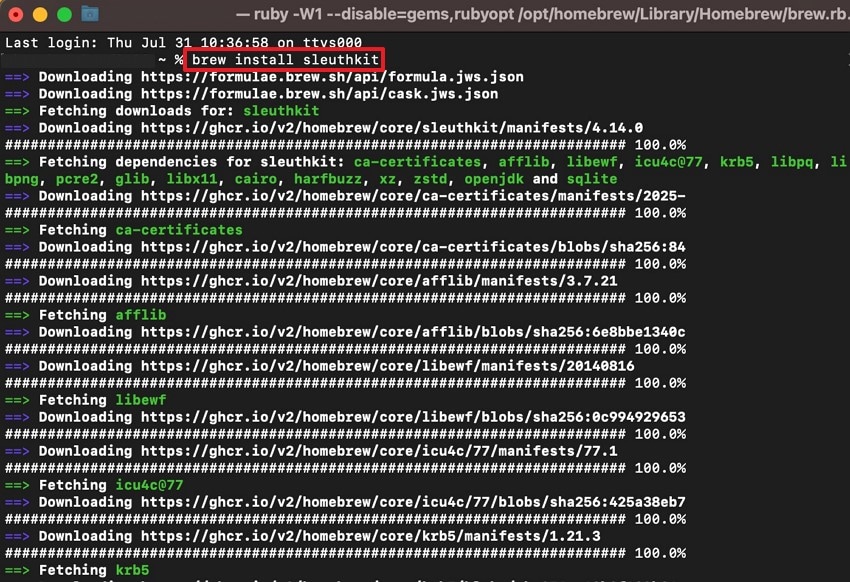
Step 1. Download SL-NTFS from its official page, mount the .dmg, and drag the app to Applications. Note: brew install sleuthkit installs a forensic tool — not SL-NTFS; don't use it.
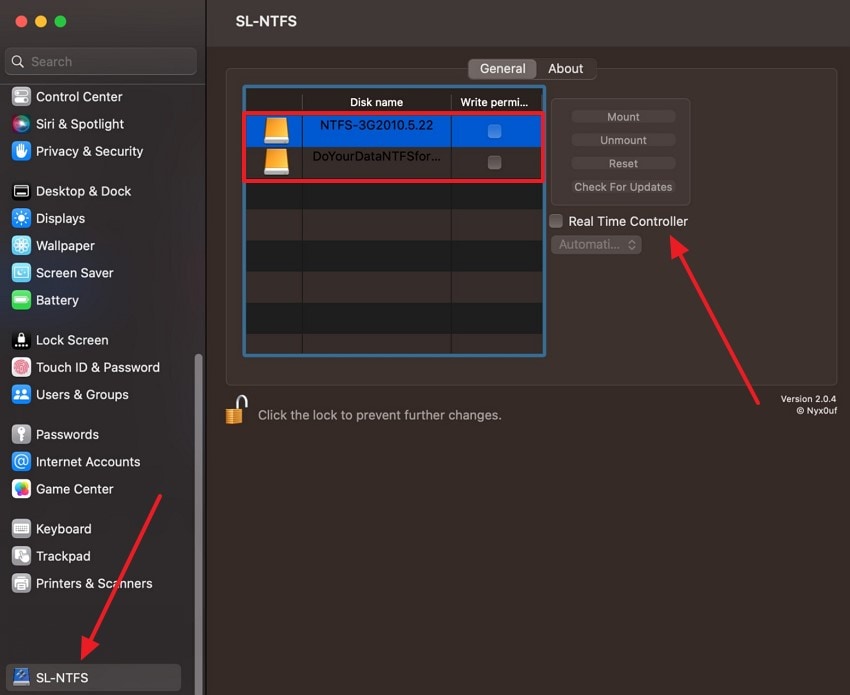
Step 2. Open System Settings and launch the SL-NTFS option at the end. Now you can choose and mount different available drives under the "General" tab.
Key Features
- Displays all mounted NTFS volumes with their writing statuses.
- Auto-prompt can enable writing during the mounting process.
- Small standalone app (~1.4MB) with a simple interface.
Limitations
- Does not support large files and volumes.
- Not updated for years; lacks modern features and is unreliable on recent macOS.
3. Tuxera NTFS
Tuxera NTFS simplifies sharing data between Windows and Mac with smart caching for speedy transfers. It auto-translates file names, lets you create NTFS volumes and disk images, and works during dual-booting of Windows and Mac. It's a paid driver with a free trial — listed here because the trial covers basic read/write needs.
Easy Steps on How to Try the Tuxera NTFS Software on Mac
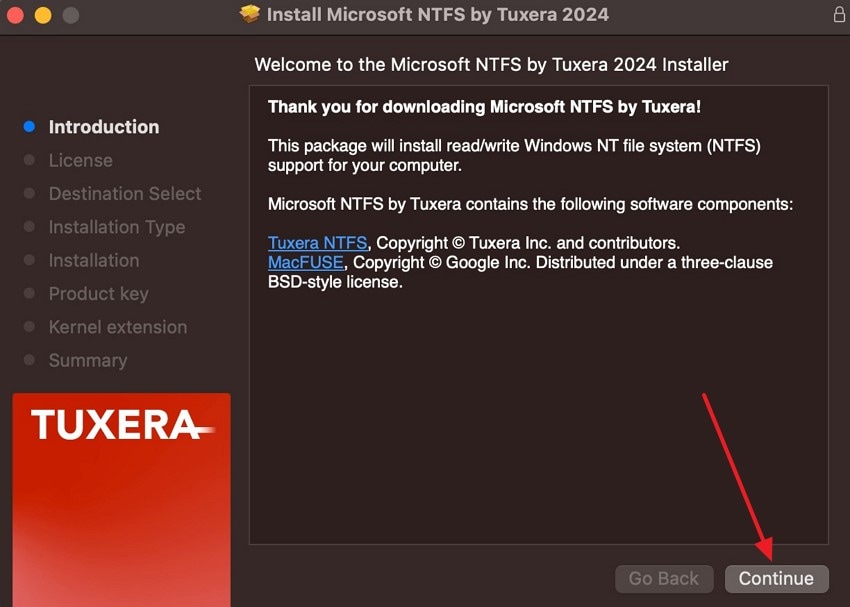
Step 1. Open the "Install Microsoft NTFS by Tuxera" installation window, complete the steps in the left panel, and press Continue.
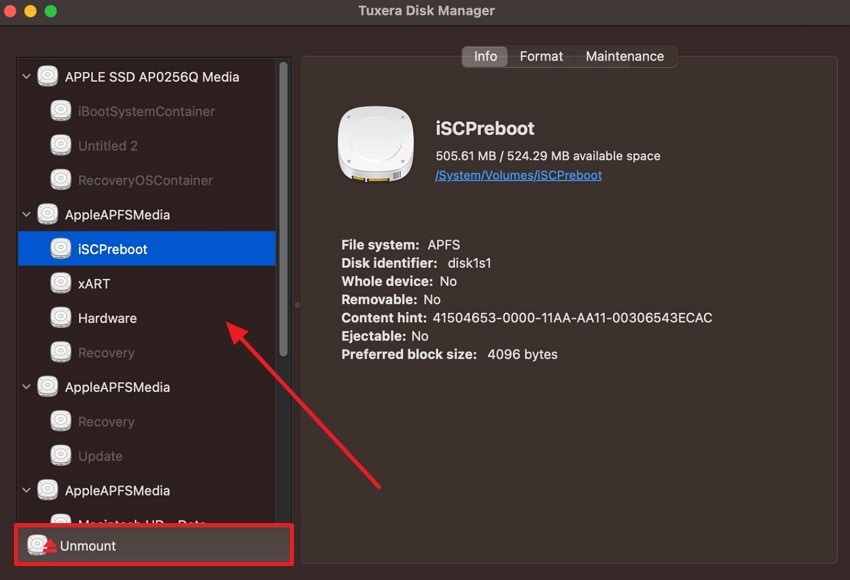
Step 2. Double-click the Tuxera Disk Manager from the "Applications" tab to access all disks and drivers of your macOS.
Key Features
- Stores and preserves videos, pictures, and important documents.
- Tuxera Disk Manager can check, format, and repair NTFS drives.
- Handles different file sizes when running Windows through a virtual machine.
Limitations
- Personal license covers only 3 Macs for 15 days (trial).
- Slower data transfer and slower NTFS driver updates.
4. FUSE for macOS
FUSE for macOS (now macFUSE) extends OS X's native file-handling abilities so you can access NTFS and SSHFS file systems macOS doesn't support by default. It provides kernel extension and user-space libraries as a bridge between file systems. Note: macFUSE alone doesn't add NTFS write support — it's the foundation that NTFS-3G and Mounty build on.
Comprehensive Steps on How to Utilize FUSE for macOS
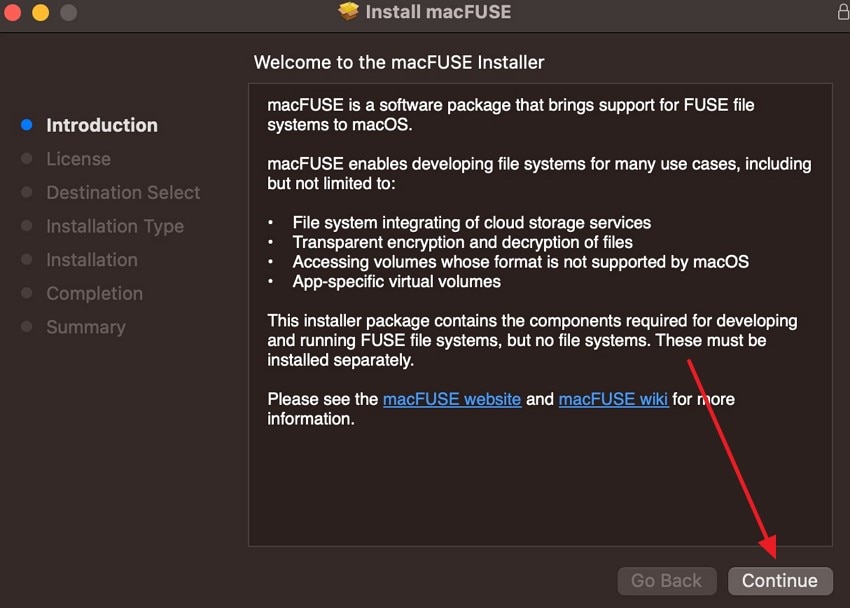
Step 1. Download macFUSE from macfuse.io, open the "Install macFUSE" window, execute the installation steps, and hit Continue.
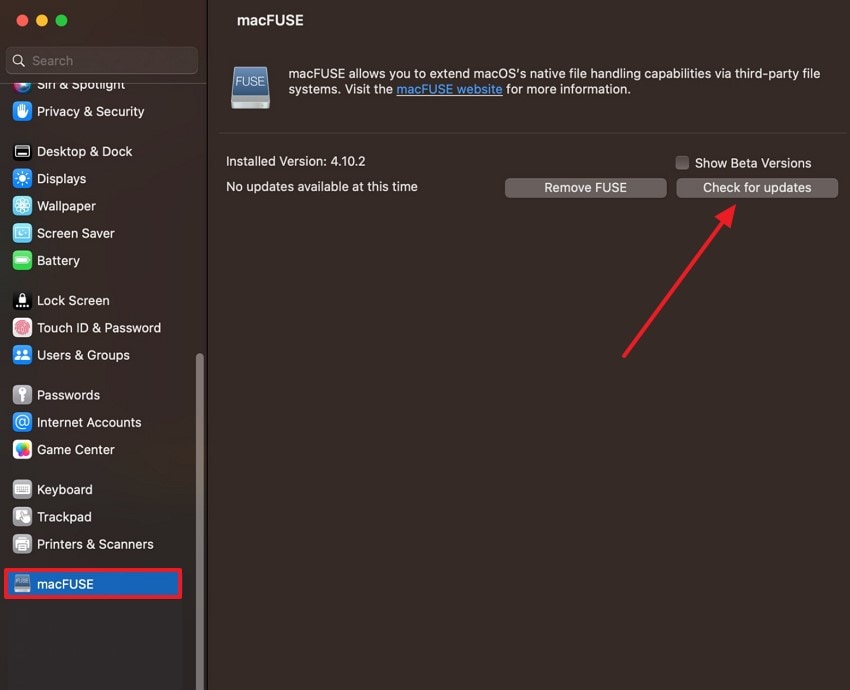
Step 2. Open "Settings", head to the bottom macFUSE tab, and press Check for Updates before mounting or reading different disks.
Key Features
- Kernel extension and user-space libraries act as a bridge between file systems.
- User-space code avoids kernel instability risks — a quicker, safer implementation.
- Accesses local disks, network sources, and cloud storage by running file systems in user space.
Limitations
- Cannot safely mount NTFS partitions in read-write mode on its own.
- No auto-mount of NTFS partitions.
5. Paragon NTFS for Mac
Paragon NTFS for Mac offers seamless, unlimited read/write with operations like mount, unmount, and verify. You can control advanced mounting options — like accessing sensitive data in read-only mode or manually controlling volume accessibility. It handles all alphabets for easy file naming, making it the most polished (and priciest) option here.
Understanding the Simple Steps of Paragon NTFS for Mac
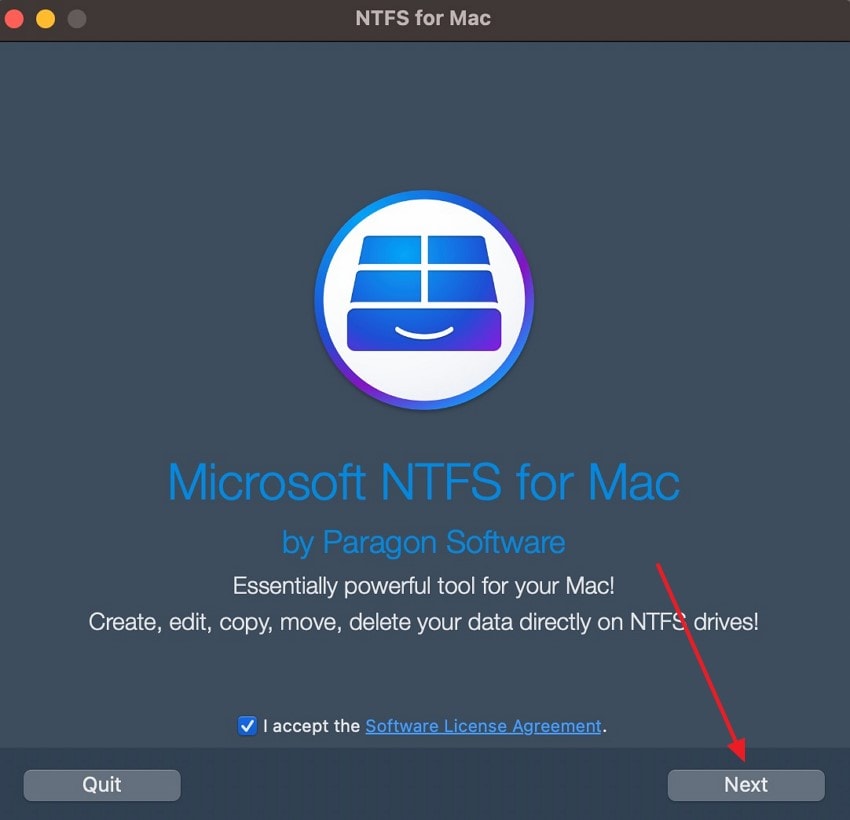
Step 1. Open the Paragon Software installation screen, tick the "I Accept the…" option, and hit Next.
Step 2. Follow the on-screen steps and press Open Settings to permit this tool's kernel extensions.
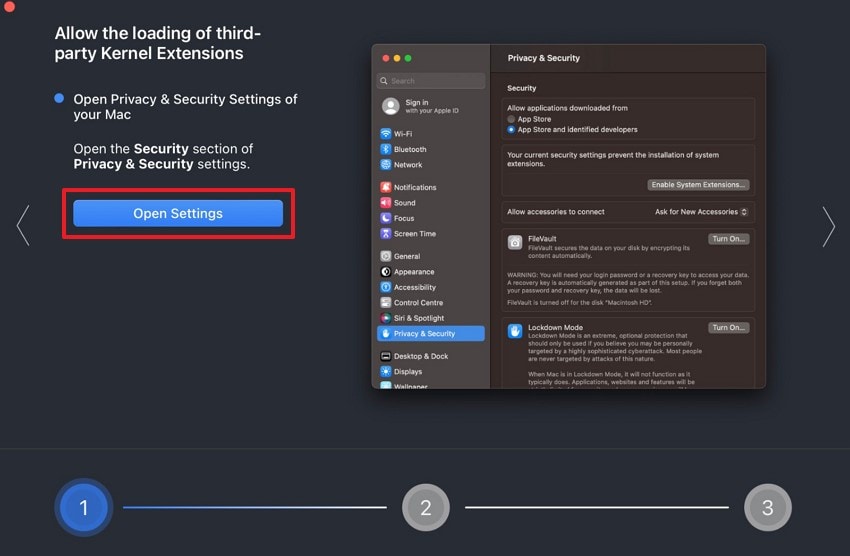
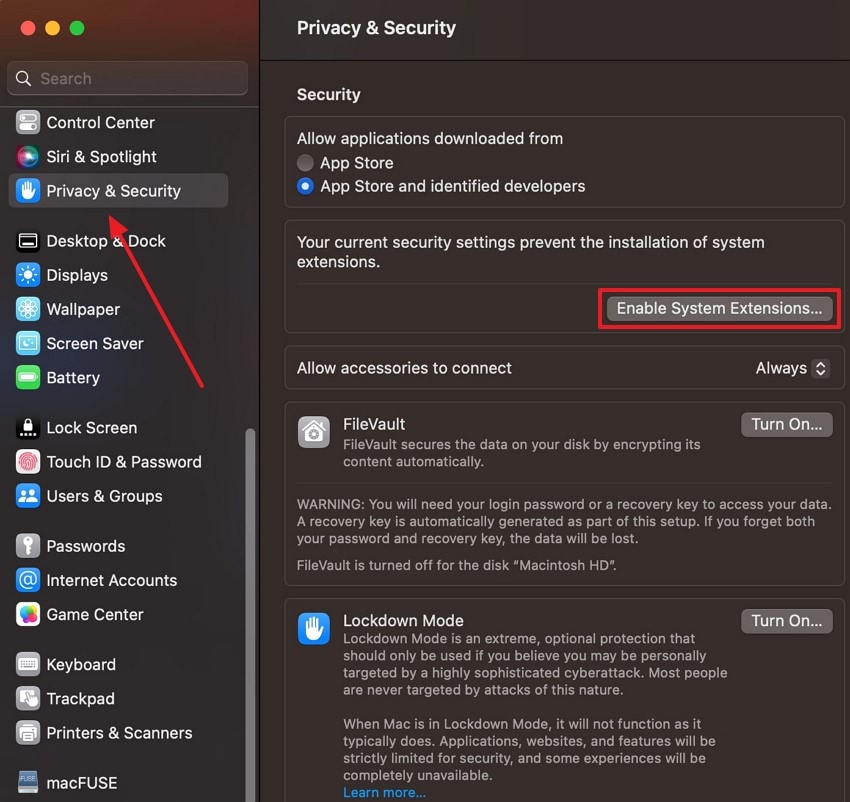
Step 3. In the Privacy & Security tab, hit Enable System Extensions, click Shut Down, then start the device again to access the software and drives.
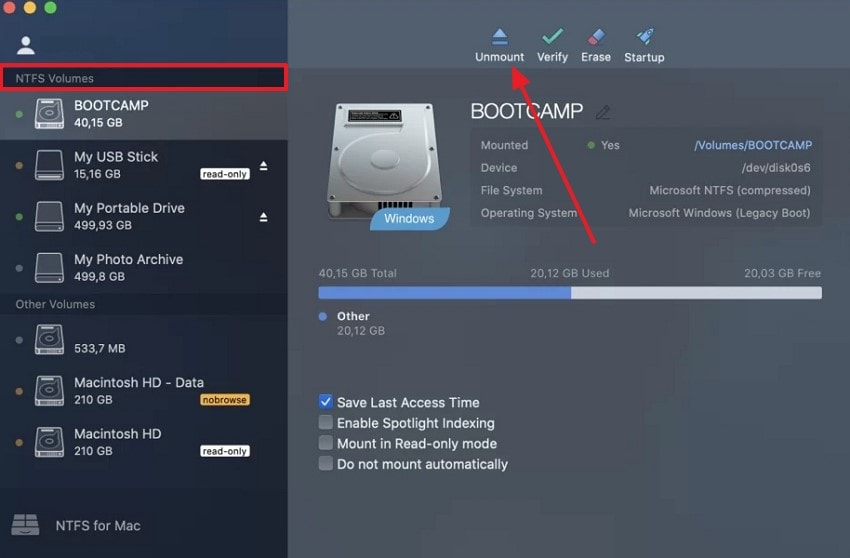
Step 4. After the Mac starts, find the Paragon software and choose any NTFS Volume from its main interface to begin mounting, erasing, and more.
Key Features
- Full modifications — deleting, renaming, and more — once a volume is mounted.
- Mounts supported volumes automatically at startup.
- Safeguards data integrity and security during transfer or mounting.
Limitations
- Expensive compared to other NTFS tools.
- Closed-source code, less flexible for advanced users.
6. Mounty for NTFS
Mounty is a lightweight free ntfs software for mac that remounts NTFS volumes in read-write mode. It leverages Apple's hidden native NTFS support and integrates with open-source tools like NTFS-3G and macFUSE without altering system files. It supports Intel and Apple Silicon Macs on macOS 10.9 and later.
Easy Instructions on Initiating Mounty for NTFS Software
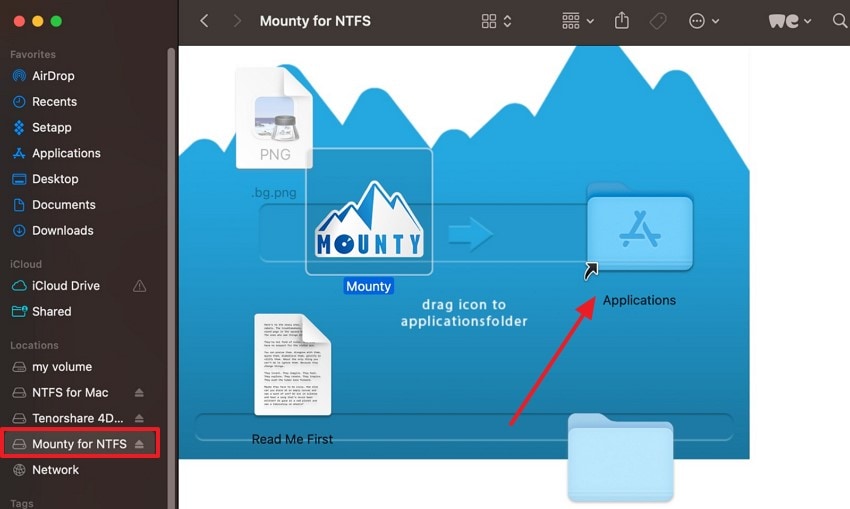
Instructions. Install Mounty, open the "Finder" app, and access it under the Locations section. Choose and drag the NTFS tool over to the Applications folder to access its functionality.
Key Features
- Auto-mounting, eliminating the need for an extra third-party installation.
- Shares files and important data between Windows and Mac without hassle.
- Drag-and-drop lets you perform normal file operations on NTFS drives.
Limitations
- Unstable — can turn NTFS drives back into read-only mode.
- Risk of data corruption and file loss with heavy use during transfer.
7. UUBYTE NTFSGeeker
UUBYTE NTFSGeeker reads and writes on Intel and Apple Silicon M1 Macs, detects external NTFS drives, and copies files from NTFS drives to the Mac. It supports multiple drive types — USB flash drives, SSDs, and memory sticks — with a focus on fast, safe transfers.
Instructional Manual on How to Use the UUBYTE NTFSGeeker on macOS
Step 1. Install NTFSGeeker, go to the Applications tab, and press the NTFS Geeker option to open the main interface.
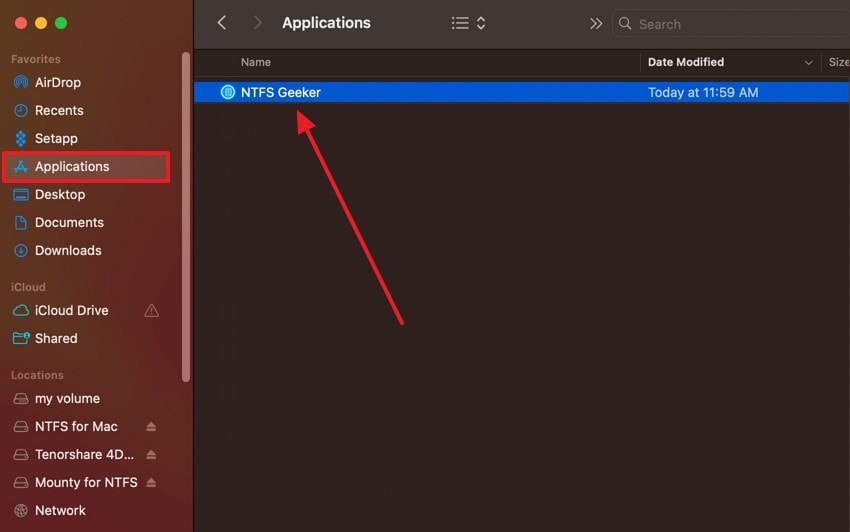
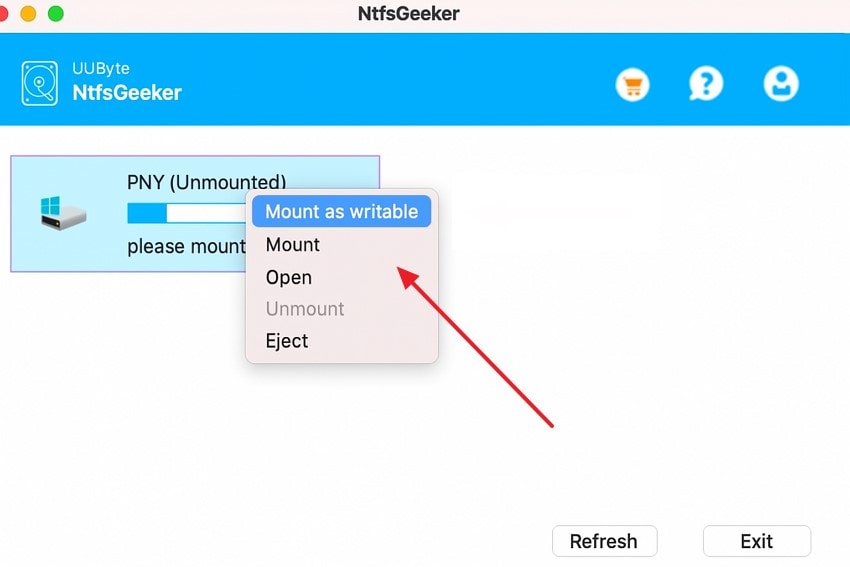
Step 2. The software displays available drives — right-click one and choose to mount, write, eject, and more.
Key Features
- Advanced safe mechanism for data transfer powered by a reinforced algorithm.
- Smart AI engine makes file transfer 3x faster with a caching mechanism.
- Grants permissions to access, write, and manage files on Mac and external drives.
Limitations
- Runs background processes, using extra system resources.
- Random system conflicts with drive accessibility if not installed properly.
Part 3. A Detailed Comparison Table of All 7 Microsoft NTFS Software for Mac
Compare all seven ntfs software for mac free download options to decide which fits your needs:
| Tools | Mac Compatibility | Auto-Mount | Transferring Speeds | Easy to Use | Data Security | Pricing Plans |
| NTFS-3G | macOS 15 Sequoia to OS X 10.9 Mavericks (Apple silicon via Homebrew) | No | Slow | Complex | Basic security | Free |
| SL-NTFS | Designed for OS X 10.5-10.11; limited on recent macOS | Yes | Moderate | Moderate | Moderate | Free |
| Tuxera NTFS | macOS 15 Sequoia to macOS X 10.4 Tiger | Yes | Fast | Easy | Strong data integrity and security | Personal License: $15 per license Business: Varies according to users Education: Varies according to users |
| FUSE for macOS | macOS 15 Sequoia - OS X 10.9 Mavericks | No | Slow | Complex | Basic relies on the underlying NTFS-3G | Free |
| Paragon NTFS for Mac | macOS 15 Sequoia - 10.12 Sierra | Yes | Very Fast | Very easy | High security and stable driver | For Business Use: $49.95 |
| Mounty for NTFS | macOS 15 Sequoia - OS X 10.9 Mavericks | Yes | Moderate | Easy | Basic | Free |
| UUBYTE NTFSGeeker | macOS latest, including macOS Sonoma, Intel & Apple Silicon | Yes | Fast | Very easy | Good security with system extension approval | 1-Year Plan: $19.95 Lifetime Plan: $29.95 Family Plan: $59.95 |
Should You Use a Driver or Just Switch to exFAT?
Before installing any NTFS driver, consider the simpler alternative — reformatting the drive to exFAT:
| Situation | Recommendation |
| Drive used only with Mac and Windows, no boot needs | Reformat to exFAT — no driver, no risk, native read/write on both |
| Drive must stay NTFS (e.g. dual-boot Windows volume, or Windows software depends on NTFS features) | Use a driver — Mounty (free/easy) or Paragon/Tuxera (most reliable) |
| One-time file transfer | Copy files to exFAT or use a driver for the session; avoid permanent NTFS-write setup |
| NTFS drive holds irreplaceable data | Don't write with a free driver — back up first, then decide (see safety note above) |
Part 4. Bonus Part: How To Recover Lost Data on Your Mac With Ease: Recoverit
Moving files between Windows and Mac can cost you data. Wondershare Recoverit recovers 99.5% of deleted or lost files — 1000+ file types across multiple storage media in 3 clicks, with 35+ patented technologies and macOS 10.13 - 15 (Sequoia) support.
Key Features
- Advanced Recovery Process: The advanced recovery and scanning process quickly searches every corner of your selected drive and retrieves lost data within seconds.
- Filter Options: You can narrow down the search by adding data filters, like file name, file type, status, and more, to get quick search results.
- Review Mode: Users can preview all the recovered files in the preview window and download them on their Mac device.
Comprehensive Step Guide on How to Recover Lost Data on Your Mac
Follow this guide to retrieve files with Recoverit:
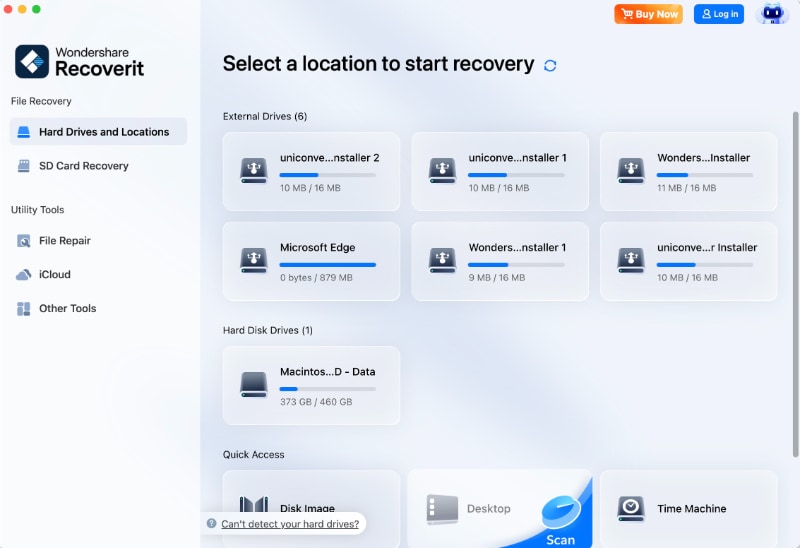
Step 1. Launch Software and Select a Location to Begin the Scanning Process
Once the main interface opens, press the Hard Drives and Locations tab on the left panel, and choose one of the drives to get started.
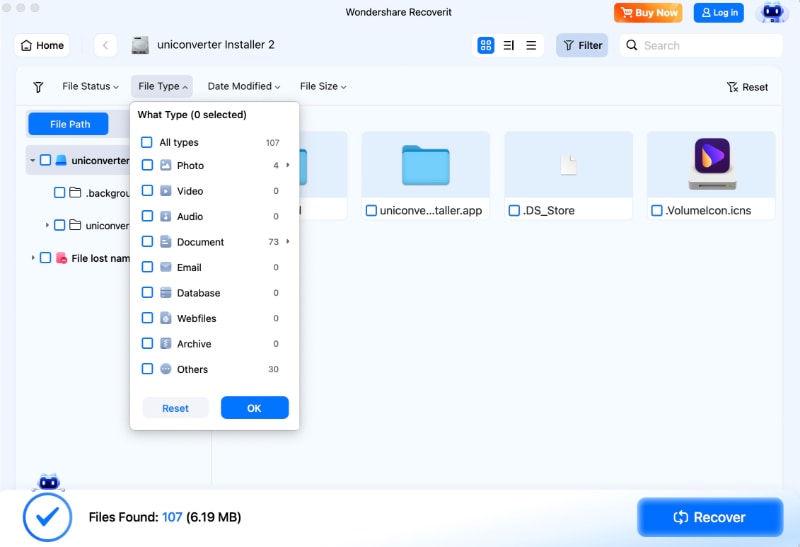
Step 2. Add Filters During the Deep Scanning Procedure
Next, during the scanning, click the Filter option at the top, and change the File Type, File Size, and more to quicken the scanning.
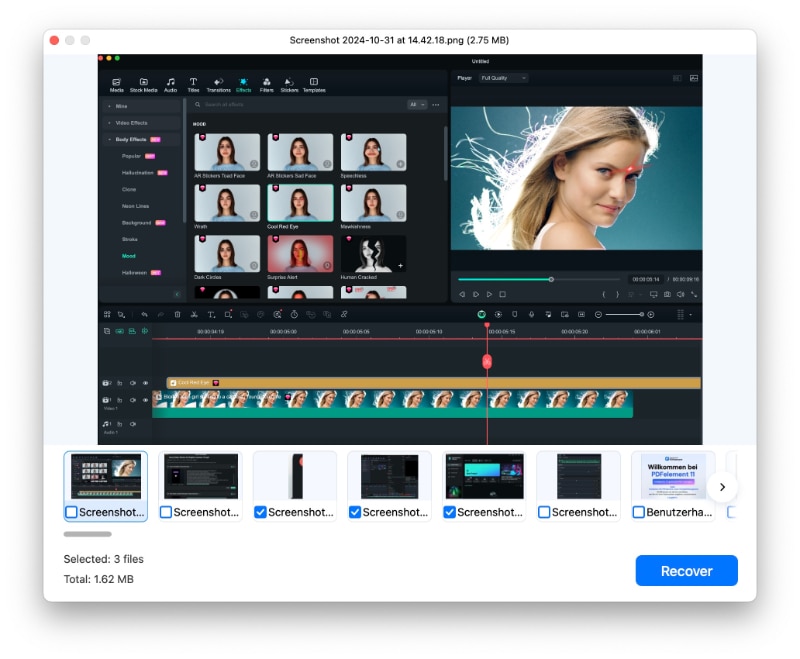
Step 3. Preview the Recovered Files before Downloading
Afterward, Preview the desired recovered files on the opened data and hit Recover once satisfied with the contents.
Conclusion
Free NTFS drivers for Mac in 2026: NTFS-3G (open source, terminal), Mounty (easiest free remount), SL-NTFS (legacy standalone app), with Paragon and Tuxera as paid, most-stable options. If a drive is only used for file sharing between Mac and Windows, reformatting to exFAT often beats installing a driver. If a driver fails and costs you data, recover it with Wondershare Recoverit.
- Recovers data from 1000+ file formats across HDDs, SSDs, USB drives, SD cards and more.
- Handles 10000+ data loss scenarios, including deletion, formatting, corruption, and virus attacks.
- Recovers lost or deleted files like documents, photos, videos, music, and emails safely and completely.
- Restores full HD, Ultra HD, 4K and 8K videos without corruption.

FAQ
-
1. How safe is it to use free NTFS drivers?
Most of the free ntfs software for mac drivers provides basic data security, but you might encounter risks, like slower speeds, potential instabilities, and more. Moreover, in rare cases, it can lead to data corruption because these tools rely on open-source and have no official implementations. Always back up the drive before writing. -
2. Do free NTFS drivers support all Mac versions and hardware?
The free NTFS software, like NTFS-3G, works on macOS 10.9 up to macOS 15, but can be slower and less stable on Apple Silicon Macs. Therefore, you should always check the specific driver's compatibility before you install and use it on your macOS. -
3. Can I use macOS Terminal tricks to enable NTFS write without drivers?
While it is possible for users to perform or enable NTFS write support on macOS using Terminal commands, it is not recommended. You can write on the device via editing /etc/fstab, but it is quite unstable and might corrupt your data. -
4. Does using a free NTFS driver require disabling Mac security features?
Most free drivers need you to approve their system extension in System Settings > Privacy & Security — this is not the same as disabling SIP entirely, and it's the recommended path. Only legacy guides tell you to disable SIP; on modern macOS you should approve the extension and reboot instead. -
5. Which free NTFS driver is easiest for beginners in 2026?
Mounty for NTFS is the easiest free option — install it, and it remounts NTFS volumes in read-write mode with a drag-and-drop interface, no Terminal needed. NTFS-3G is more powerful but requires macFUSE and command-line setup. -
6. Do free NTFS drivers work on Apple silicon Macs (M1-M4)?
Most work with caveats: NTFS-3G needs the Homebrew macFUSE build for Apple silicon, Mounty and SL-NTFS support M-series chips, and Paragon/Tuxera fully support Apple silicon. Check each driver's compatibility before installing, and always approve its system extension in Privacy & Security. -
7. Should I use an NTFS driver or reformat the drive to exFAT?
If the drive is only shared between Mac and Windows, reformat to exFAT — both systems read and write it natively with no driver, no SIP approvals, and no corruption risk. Keep NTFS (and a driver) only when you must, such as for a Windows dual-boot volume or when Windows software requires NTFS features. Formatting erases data, so back up first. -
8. I installed a driver but the NTFS drive is still read-only — what now?
First, eject and reconnect the drive, then check System Settings > Privacy & Security and confirm the driver's system extension is approved (reboot if needed). On Apple silicon, approve the kernel extension in a Recovery Mode prompt if asked. If it's still read-only, the volume may have been mounted read-only by macOS before the driver loaded — unmount it in Disk Utility, then remount with the driver's app. As a last resort, try a different driver (e.g. Mounty instead of NTFS-3G).


