


 TL;DR:
Active@ Partition Recovery (updated to Version 26) is a highly technical Windows utility best suited for advanced users needing to repair structural disk damage or restore entire deleted partitions, whereas users simply recovering lost files across Windows or Mac should choose a guided alternative like Wondershare Recoverit.
● Stop writing data to the affected disk immediately and save recovered files or create a disk image on a separate drive before attempting any low-level partition structure repairs to prevent permanent data loss.
● The software lacks a native macOS application and restricts the freeware version to recovering files up to 64 KB, requiring paid upgrades like the Ultimate edition to unlock WinPE and Linux bootable media for unbootable PCs.
● Recovery workflows rely on manual scan selection, including a Last Chance mode that salvages severely damaged files by file signature but cannot retain original filenames, metadata, or folder structures.
Ask AI for a summary
 ChatGPT
 Perplexity
 Gemini
 Claude
 Grok
Grok
Active@ Partition Recovery is a specialized partition recovery toolkit for users who need to restore deleted partitions, repair damaged partition records, recover files from severely damaged volumes, or work from a Windows, WinPE, or Linux recovery environment. It is powerful, but it is not the simplest recovery app for beginners.
In this updated Active@ Partition Recovery review, we evaluate its core features, user interface, scan modes, performance, system requirements, pricing, pros and cons, and real-world fit. We also compare it with Wondershare Recoverit, a more guided data recovery alternative for users who need broader file recovery, Mac support, clearer previews, and a simpler workflow.
Before you scan or repair a partition: stop writing new data to the affected disk. If the drive is clicking, disconnecting, overheating, or not detected reliably, avoid repeated DIY scans and consider a professional data recovery service. Recovery depends on disk health, overwriting, file system damage, encryption, and whether the storage is still readable.
In this article

Part 1. Active@ Partition Recovery Review Verdict
Quick verdict: Active@ Partition Recovery is worth considering if your main problem is a lost, deleted, damaged, or unbootable partition and you are comfortable with technical recovery tools. It is stronger as a partition repair and recovery toolkit than as a beginner-friendly file recovery app.
| Review Area | Verdict | What It Means |
| Overall rating | 4.1/5 for technical partition recovery | Excellent tool depth, but the interface and learning curve make it less ideal for casual users. |
| Best for | Deleted partitions, damaged volumes, MBR/GPT issues, and bootable recovery cases | It is most useful when the problem is partition-level, not just a few deleted files. |
| Not ideal for | Beginners, Mac-only users, and quick consumer file recovery | Users who need a cleaner interface or macOS workflow may prefer an alternative. |
| Strongest feature | QuickScan, SuperScan, Last Chance, disk image, and boot disk options | It gives advanced users several recovery paths depending on damage severity. |
| Main drawback | Dated interface and technical workflow | Some users may need official guides before making partition-level changes. |
| Best alternative | Wondershare Recoverit | Recoverit is better when users need a more guided file recovery workflow across Windows and Mac. |
Review Scorecard
| Category | Score | Review Notes |
| Partition recovery capability | 4.6/5 | The official feature set covers deleted partitions, damaged volumes, MBR/GPT issues, disk images, and boot disk recovery. |
| Scan modes | 4.5/5 | QuickScan is useful for recently deleted partitions, SuperScan is deeper, and Last Chance is available for severely damaged file systems. |
| Ease of use | 3.4/5 | The workflow is powerful but technical. Beginners may find the interface crowded. |
| Performance | 4.0/5 | QuickScan can be fast, while SuperScan and Last Chance can take significant time on large disks. |
| Compatibility | 4.2/5 | Strong Windows, WinPE, Linux LiveCD, disk, SSD, NVMe, RAID, USB, and memory card support, but no native macOS app. |
| Pricing value | 4.0/5 | Reasonable for users who specifically need partition recovery, boot disk tools, or low-level disk utilities. |
| Beginner fit | 3.2/5 | Recovering the wrong partition or writing changes too early can create more risk, so novice users should proceed carefully. |
Who Should Use It
| User Situation | Use Active@ Partition Recovery? | Why |
| You deleted a partition by mistake | Yes | QuickScan is designed for recently deleted partitions, especially before new partitions are created in the same space. |
| Your partition table, boot sector, MBR, or GPT is damaged | Yes, with caution | The tool includes partition structure recovery features, but users should avoid writing changes until they preview and verify results. |
| Your PC cannot boot and you need recovery media | Yes, Ultimate edition is relevant | The Ultimate package includes WinPE and Linux recovery media options. |
| You only need to recover deleted photos or documents | Maybe | It can help, but a file recovery tool with easier preview and filters may be more efficient. |
| You use a Mac as the recovery computer | No native Mac app | Use a Mac-compatible recovery tool such as Recoverit for Mac. |
Part 2. What Is Active@ Partition Recovery?

Active@ Partition Recovery is a partition recovery toolkit from LSoft Technologies. According to the official Active@ Partition Recovery page, it helps recover deleted and damaged logical drives and partitions in Windows, WinPE, and Linux LiveCD environments.
The product is more specialized than ordinary undelete software. Its focus is partition-level recovery: detecting deleted partitions, restoring damaged volumes, working with MBR/GPT records, creating disk images, previewing recoverability, and using bootable recovery environments when Windows cannot start normally.
That specialization is useful, but it also means the tool is not always the easiest first choice for everyday file recovery. If the drive is still readable and you only need lost photos, documents, videos, or project files, a guided data recovery tool may be faster and safer for non-technical users.
Part 3. Key Features Reviewed
Active@ Partition Recovery has a strong feature set for partition-level problems. The official features page highlights deleted and damaged partition recovery, disk images, MBR/GPT handling, bootable media, and support for many file systems and disk types.
| Feature | What It Does | Review Verdict |
| QuickScan | Detects recently deleted partitions in unallocated space. | Best first step when the partition was just deleted and no new partition has overwritten the area. |
| SuperScan | Performs a deeper low-level scan for older deleted, reformatted, or damaged partitions. | More thorough, but slower on large HDDs, SSDs, external drives, and RAID volumes. |
| Last Chance recovery | Detects files by signatures when partition recovery is not possible because the file system is severely damaged. | Valuable fallback, but file names and folder structure may be incomplete in signature-based recovery. |
| Disk image support | Creates and opens raw, compressed, and VMware disk images. | Important because advanced users should image unstable media before deeper recovery attempts. |
| MBR/GPT and boot sector tools | Helps inspect and recover damaged disk structures. | Powerful, but users should understand the risk before writing changes to partition tables. |
| Bootable recovery media | Ultimate includes WinPE-based Active@ Boot Disk Lite and Linux-based Active@ LiveCD. | Useful when Windows cannot boot or the system partition needs recovery outside the running OS. |
| Supported storage | Supports SATA, eSATA, external USB, SSD, NVMe, SAS, SCSI, memory cards, and USB flash disks. | Broad storage support for Windows-centered recovery environments. |
The strongest point is flexibility. You can start with a fast scan, move to a deeper scan, preview detected volumes, and use bootable media if the installed operating system is not usable. The weakness is that this flexibility can feel technical for users who just want a simple scan, preview, and recover button.
Part 4. User Interface and Usability
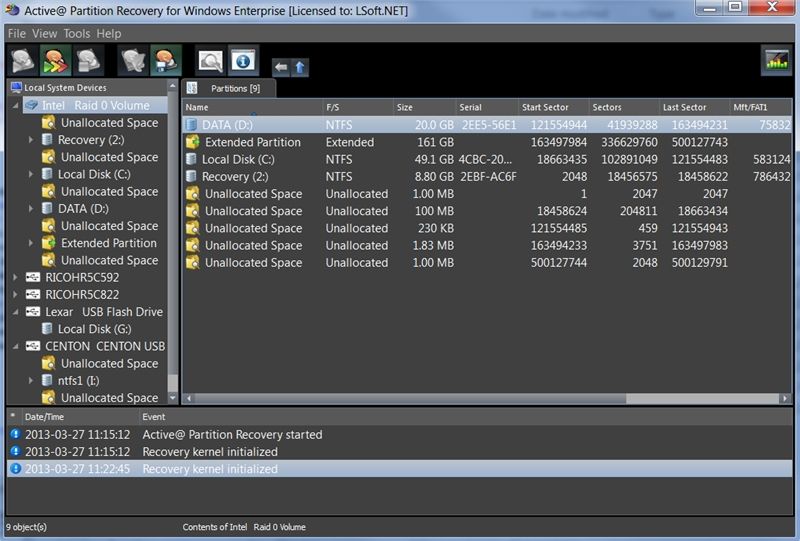
The interface is functional rather than modern. Active@ Partition Recovery exposes many disk, partition, and scan options in one workspace. That is useful for technicians, but it can overwhelm first-time users who are not familiar with unallocated space, boot sectors, SuperScan results, file signatures, or partition recoverability status.
Compared with consumer recovery tools, the workflow asks for more judgment. You need to choose the correct disk, understand which partition result looks valid, preview files where possible, and decide whether to restore a partition or recover files elsewhere. That is why this tool fits advanced users better than beginners.
Usability improves if you follow the official user guide and avoid making immediate changes. For safer recovery, preview detected files first, create a disk image when possible, and save files to another storage device before attempting partition structure repairs.
Part 5. System Requirements and Performance
Active@ Partition Recovery is lightweight by modern standards. The official requirements page lists modest minimums for Windows, DOS, Windows-based boot disks, and Linux-based boot disks.
| Requirement Area | Official Minimum | Review Notes |
| Windows CPU | Intel Pentium processor or higher | Most modern PCs easily exceed this requirement. |
| Windows RAM | 128 MB RAM | The original article mentioned 218 MB, but the current official page lists 128 MB for Windows. |
| Display | VGA or better, 800 x 600 | Very low requirement; not a barrier on current PCs. |
| Windows boot disk RAM | 512 MB RAM | Relevant if you create bootable media for an unbootable PC. |
| Linux LiveCD RAM | 1 GB RAM | Useful when running recovery outside Windows. |
| Supported storage | SATA, eSATA, external USB, SSD, NVMe, SAS, SCSI, memory cards, and USB flash disks | Good range for partition recovery and external media recovery. |
Performance depends heavily on scan mode and disk condition. QuickScan can finish quickly because it targets recently deleted partitions. SuperScan is slower because it processes the disk more deeply. Last Chance recovery may take longer and may return signature-based files without original names or folder paths.
Active@ Partition Recovery does not provide a native macOS application. If you need to recover a Mac partition or run recovery from a Mac, use a dedicated partition recovery software for Mac instead.
Part 6. Pricing Information
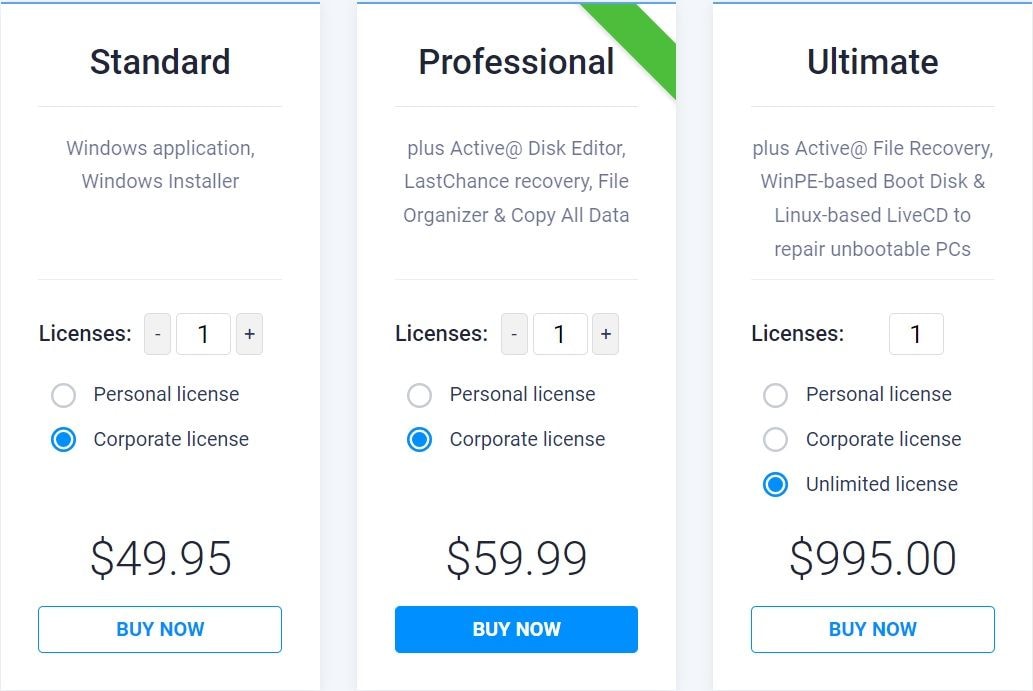
Active@ Partition Recovery offers a freeware build and paid editions. The free version is useful for evaluation and basic recovery checks, but the original article notes a recovery limitation of files up to 64 KB. Paid versions unlock broader partition recovery and advanced utilities.
| Edition | Price Listed in Source Article | Best For |
| Freeware | Free, with limitations | Testing the interface and checking whether a partition can be detected. |
| Standard | $39.95 personal, $49.95 corporate | Windows users who need a basic partition recovery application and installer. |
| Professional | $49.99 personal, $59.99 corporate | Users who need Active@ Disk Editor, Last Chance recovery, a file organizer, and copy-all-data options. |
| Ultimate | $69.99 personal, $89.99 corporate, $995 lifetime | Users who need bootable WinPE media, Linux LiveCD recovery, and Active@ File Recovery in one package. |
Pricing can change, so confirm the current checkout price on the official website before buying. The best value depends on the scenario: Standard is enough for basic Windows partition recovery, Professional adds deeper tools, and Ultimate is the practical choice when you need recovery media for an unbootable computer.
Part 7. Pros and Cons
Active@ Partition Recovery has a stronger technical feature set than many general recovery tools, but it also requires more care. The table below summarizes the practical tradeoffs.
| Pros | Cons | Best Fit |
| Strong partition recovery modes, including QuickScan, SuperScan, and Last Chance | Workflow is more technical than beginner-focused recovery apps | Users recovering deleted or damaged partitions |
| Supports MBR, GPT, disk images, boot sector handling, and many file systems | Wrong partition-level changes can increase recovery risk | Technicians and advanced Windows users |
| Ultimate edition includes WinPE and Linux bootable recovery environments | No native macOS version | Unbootable PC and system partition recovery |
| Reasonable pricing for the depth of partition recovery tools | Free version is limited for practical file recovery | Users who know they need partition recovery, not just undelete |
| Can preview files and evaluate partition recoverability | Dated interface may slow down casual users | Users comfortable reading disk and partition details |
Its main advantage is control. Its main drawback is also control. If you know what you are doing, Active@ Partition Recovery gives you a detailed toolkit. If you are uncertain, start with read-only scans, preview results, and recover files to another drive before attempting structural repairs.
Part 8. Recovery Methods of Active@ Partition Recovery
To use the software, visit the official LSoft Technologies Active@ Partition Recovery page and download the appropriate version. Install or run recovery software from a different drive when possible. Do not install it on the same partition where files or partitions were lost.
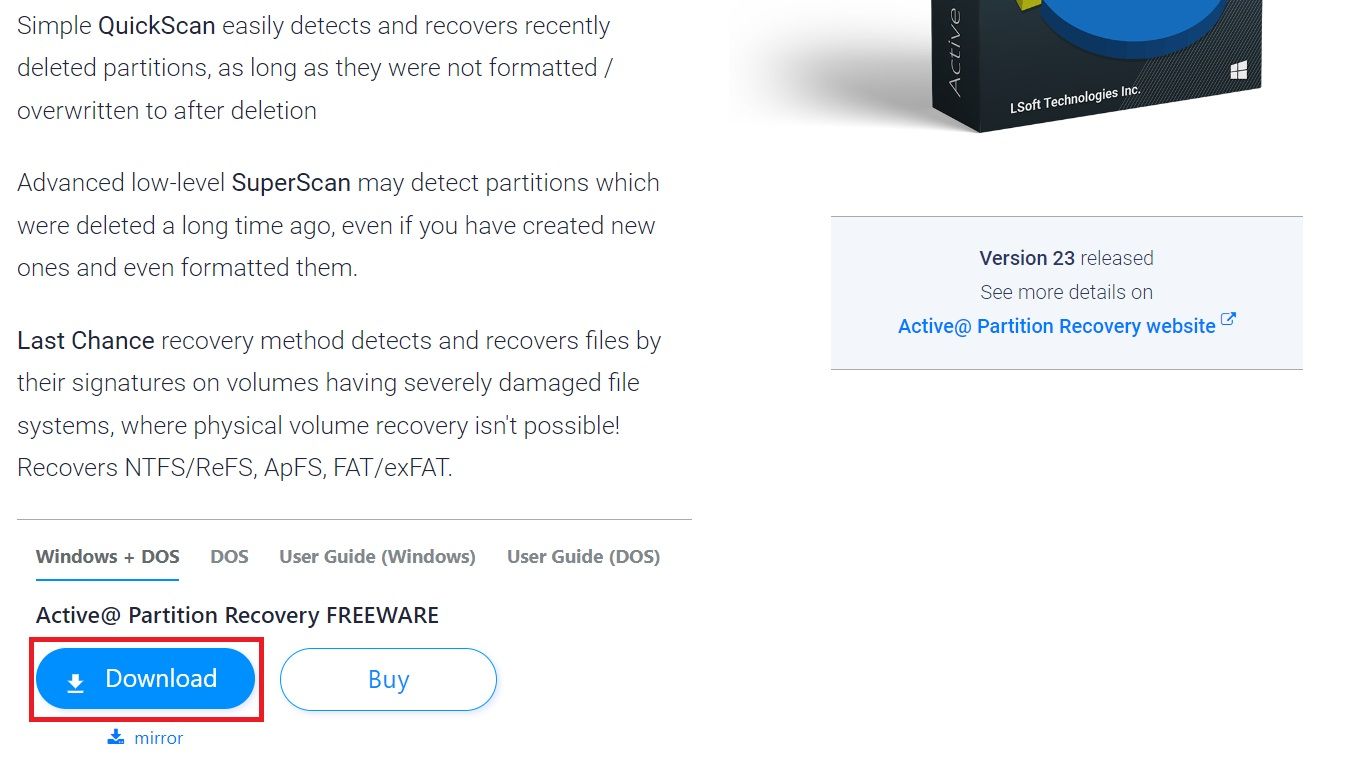
Active@ Partition Recovery gives users three main recovery paths: QuickScan, SuperScan, and Last Chance. Start with the lowest-risk scan that fits your case.
QuickScan Mode
QuickScan is the best first scan when a partition was recently deleted and the unallocated space has not been reused. It is fast, but it is not meant for every damaged or overwritten case.
- Open Active@ Partition Recovery and click the QuickScan icon.

- Let the tool scan available disks and unallocated areas for recently deleted partitions.
- Review detected partitions, file previews, and recoverability status before restoring anything.
- Recover important files to another drive first if you are not fully sure the partition result is correct.
SuperScan Mode
SuperScan is a deeper low-level scan for cases where QuickScan does not find the correct partition, the partition was deleted long ago, or the disk was reformatted. It can take longer because it scans the drive more thoroughly.
- Open Active@ Partition Recovery and select the disk or location you want to scan.
- Click SuperScan from the toolbar.

- Click Scan to start the deeper scan.

- Review detected results carefully and prioritize recovering important files to another disk before making partition changes.
Last Chance Mode
Last Chance recovery is a fallback for severely damaged file systems where normal partition recovery is not possible. It detects files by signatures, so recovered files may lose original names, folders, or metadata.
- Open Active@ Partition Recovery and click Last Chance.
- Select the disks you want to analyze and click Next.
- Confirm file signatures and click Start.

- Save recovered files to a different drive and verify a sample before reusing the original disk.

Part 9. Best Alternative to Active@ Partition Recovery
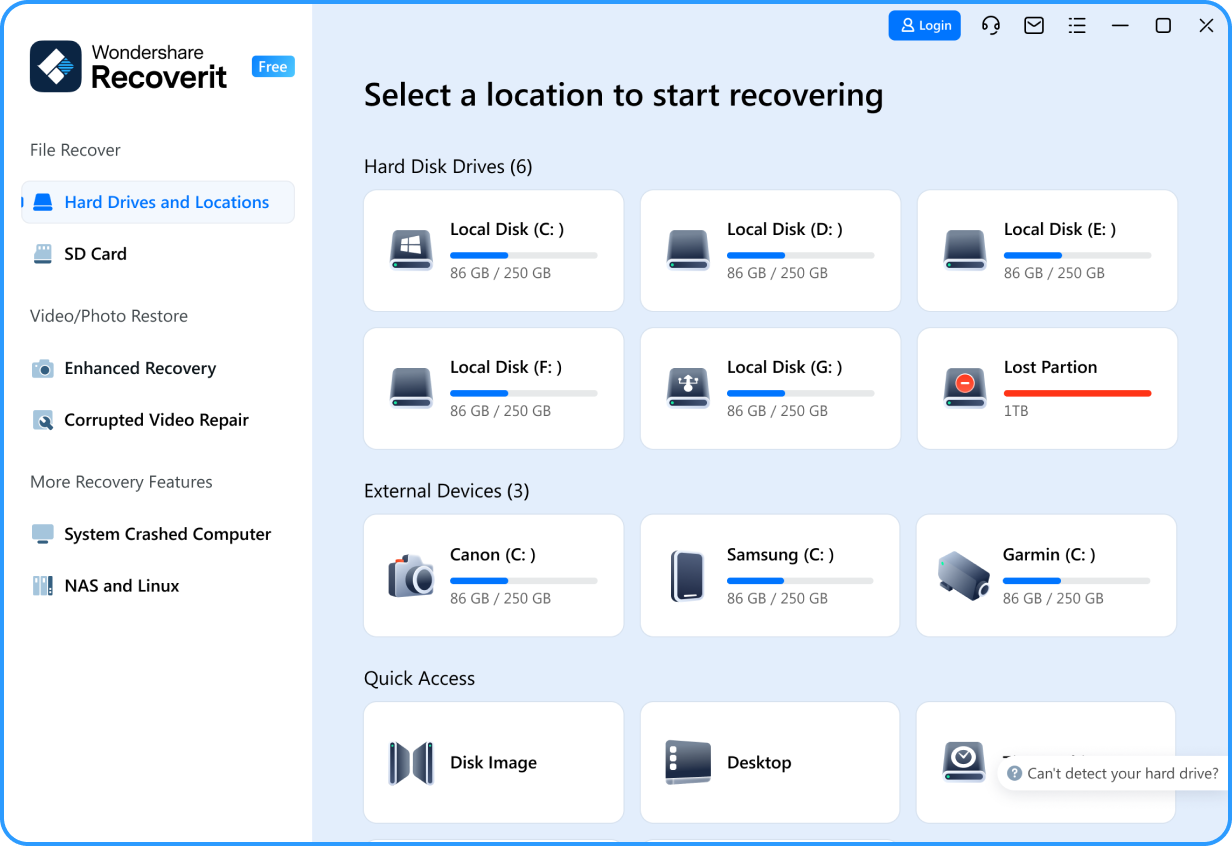
Active@ Partition Recovery is a strong partition-level toolkit, but it is not the best fit for every user. If you want a more modern interface, simpler file preview, Windows and Mac support, broader data recovery workflows, or recovery from common devices such as external drives, USB drives, SD cards, cameras, and readable local disks, Wondershare Recoverit is a practical alternative.
Recoverit can help recover files from readable storage, crashed computers where bootable recovery applies, and many common data loss scenarios. It does not repair the underlying hardware problem, cannot guarantee recovery, and cannot bypass encryption without the legitimate key.
Recoverit vs Active@ Partition Recovery
| Comparison Area | Active@ Partition Recovery | Wondershare Recoverit |
| Best use case | Partition recovery, deleted partition detection, damaged volume handling, MBR/GPT work, and boot disk recovery | Guided file recovery from readable storage, external drives, SD cards, USB drives, crashed computers, and broad file loss scenarios |
| OS compatibility | Windows, WinPE, DOS, and Linux LiveCD environments; no native macOS application | Windows and macOS recovery workflows |
| Interface | Technical and dated, with many disk-level controls | Modern, guided, and easier for non-technical users |
| Partition repair focus | Yes, includes partition structure and disk-level recovery tools | No, Recoverit is a data recovery product, not a partition repair utility |
| Preview and filtering | Available, but more technical | Cleaner preview, filter, and search workflow for file recovery |
| File systems | Supports FAT, exFAT, NTFS, HFS+, APFS, Ext2/Ext3/Ext4, UFS, BtrFS, RAID, and RAW according to the original comparison | Supports broad file recovery workflows across common Windows and Mac storage scenarios |
| Unbootable computer recovery | Ultimate edition includes WinPE and Linux recovery media | Supports crashed computer data recovery workflows where applicable |
| Best buyer | Technicians and advanced users dealing with partition structure problems | Users who want easier file recovery and broader platform coverage |
Choose Active@ Partition Recovery when your goal is to restore or inspect a partition. Choose Recoverit when your goal is to recover files safely from a readable drive or storage device with a more straightforward workflow.
How to Recover Files With Recoverit
- Open Wondershare Recoverit and choose the recovery method. For a standard local recovery case, select Hard Drives and Locations.
- Select the storage unit where the files were lost.

- Let the program scan the selected storage. You can pause or stop the scan if needed.

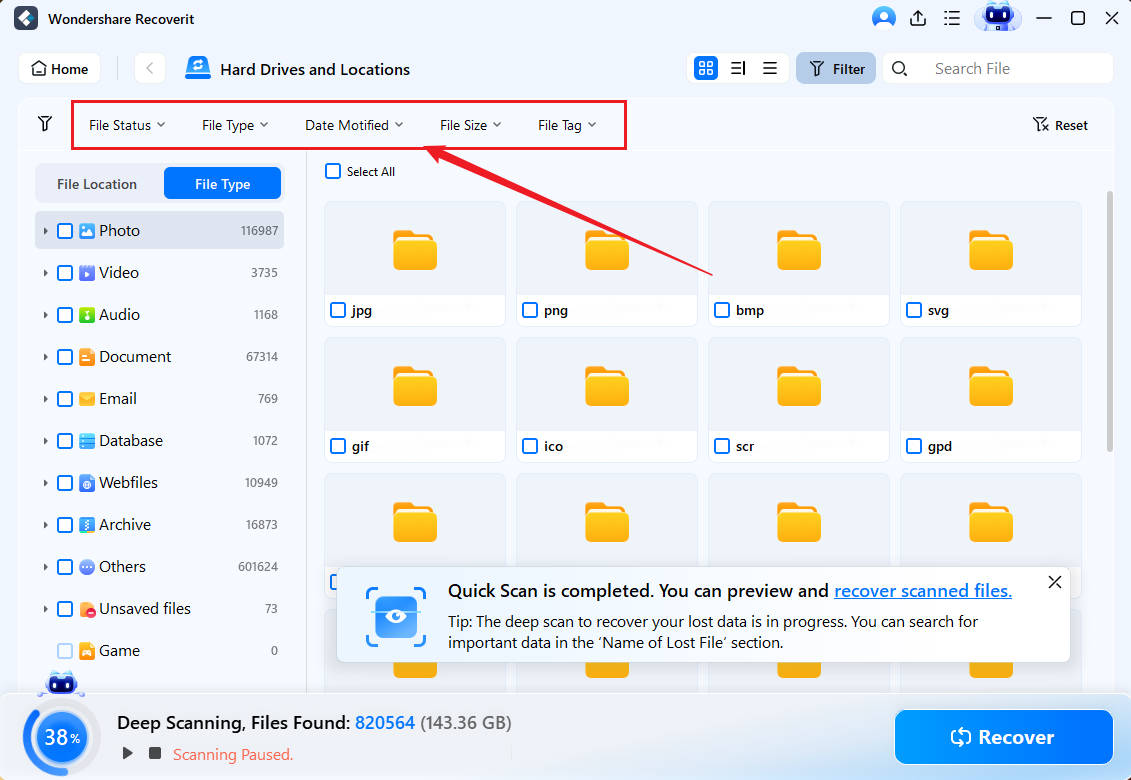
- Filter files by type or size during the scan.
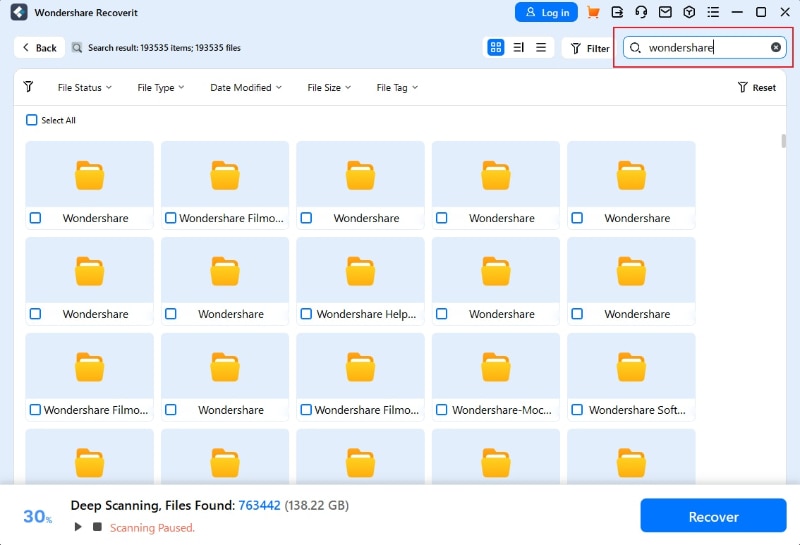
- Search for missing files by name when you know what you are looking for.
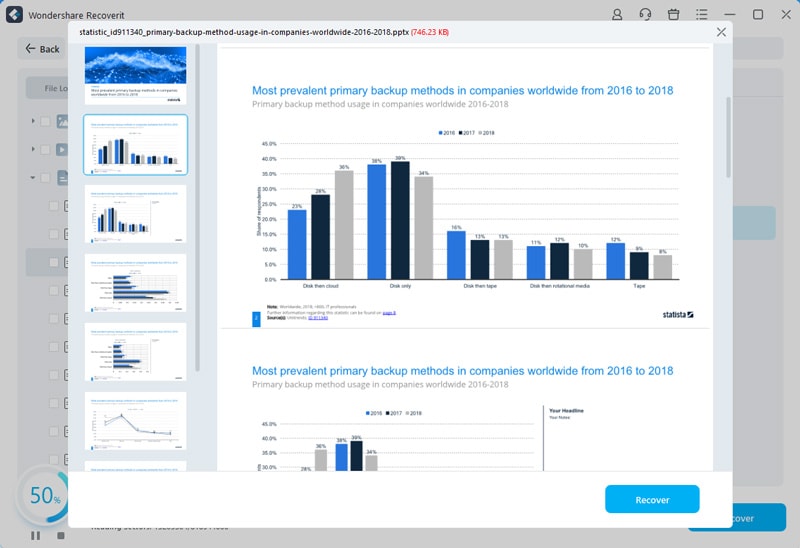
- Preview recoverable files, select what you need, and click Recover.
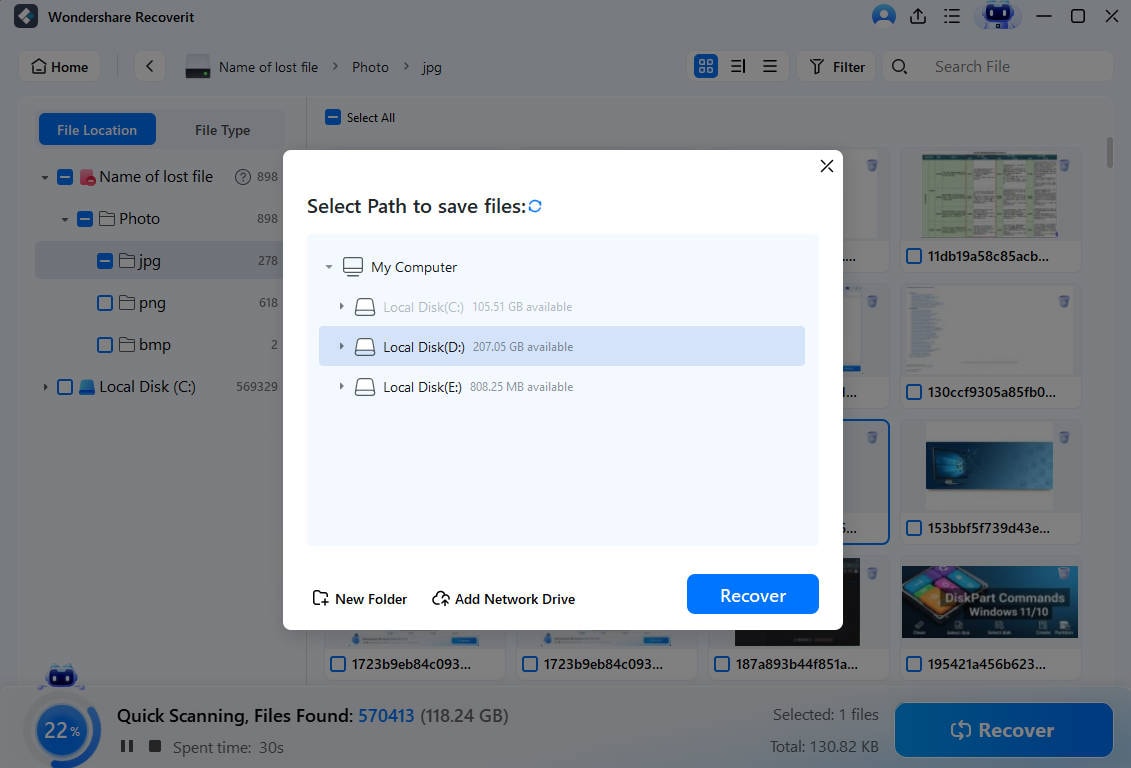
- Select a safe file path on another drive to save the recovered files.
You can also follow the video guide below to recover lost files from your computer.
Part 10. Final Verdict
Active@ Partition Recovery is a capable and legitimate partition recovery toolkit for technical Windows users. It is especially useful for deleted partitions, damaged volumes, MBR/GPT problems, disk images, and bootable recovery environments. Its latest official version history also shows ongoing updates, including Version 26 on Jan 16, 2026.
The tool is less ideal for beginners who simply need to restore common files. The interface is dated, the workflow requires disk-level decisions, and partition recovery can become risky if users restore the wrong structure or save data back to the affected drive.
Use Active@ Partition Recovery when the problem is truly partition-level. Use Wondershare Recoverit when you want a more guided data recovery workflow for readable storage, Windows or Mac recovery, external devices, and common file loss scenarios. In either case, stop using the affected disk immediately and save recovered files to another storage device.
FAQ
-
Is Active@ Partition Recovery safe to use?
It can be safe when downloaded from the official LSoft Technologies website and used carefully. Because it works at the partition and disk-structure level, users should preview results, recover important files to another drive first, and avoid writing changes unless they understand the selected partition result. -
Is Active@ Partition Recovery free?
Active@ Partition Recovery offers a freeware version, but practical recovery features can be limited. Paid Standard, Professional, and Ultimate editions are better suited for full partition recovery, Last Chance recovery, and bootable recovery media. -
Does Active@ Partition Recovery work on Windows 11?
Yes. The official feature information lists support for Windows XP through Windows 11 and Windows Server versions, and the latest boot disk updates are based on recent Windows 11 code. -
Can Active@ Partition Recovery recover files from an unbootable PC?
Yes, the Ultimate edition includes WinPE-based and Linux-based bootable recovery media for unbootable recovery scenarios. If the drive is physically failing, avoid repeated scans and consider professional recovery. -
Is Active@ Partition Recovery available for Mac?
No native macOS application is listed for Active@ Partition Recovery. Mac users should choose a Mac-compatible partition or data recovery tool instead. -
Is Recoverit a good alternative to Active@ Partition Recovery?
Yes, Recoverit is a good data recovery alternative when users need a simpler interface, Windows and Mac workflows, broader file recovery, external device recovery, and clearer previews. It is not a partition repair utility and cannot guarantee recovery from overwritten, encrypted, or physically failed storage.


