

 TL;DR:
Fix a stretched Windows 10 screen by navigating to Settings > System > Display and selecting the "Recommended" values for both Display resolution and Scale to match your monitor's native proportions.
● If Windows settings are correct, use the monitor's physical OSD menu to change the aspect ratio to Auto, Original, or 1:1, or press Windows + Ctrl + Shift + B to instantly restart the graphics driver.
● Roll back or reinstall the display adapter driver via Device Manager if the distortion started after a system update, keeping in mind that Windows 10 support ends on October 14, 2025.
● Recoverit Windows Data Recovery cannot fix display stretching or repair hardware, but it can extract files to an external drive if advanced troubleshooting like System Restore makes the PC unbootable.
Ask AI for a summary
 ChatGPT
 Perplexity
 Gemini
 Claude
 Grok
Grok
When the screen is stretched on Windows 10, the image usually does not match the monitor's native resolution or aspect ratio. Icons may look too wide, photos may look flattened, text may look blurry, and the desktop may not fit the monitor correctly.
In most cases, a Windows 10 stretched screen is caused by display resolution, scaling, monitor aspect ratio, graphics driver, GPU scaling, cable, or external display settings. It is usually not a data loss problem. Still, if you plan to use System Restore, uninstall major updates, reset Windows, or repair a PC that has become unstable after display driver changes, protect important files first.
This guide explains how to diagnose and fix a stretched screen in Windows 10 safely. If advanced repair causes Windows to stop booting or files become inaccessible, Recoverit Windows Data Recovery can help recover files from readable Windows drives. Recoverit cannot fix screen stretching, change display settings, repair a monitor, update drivers, or repair a damaged cable.
In this article
-
- Fix 1. Set the Recommended Display Resolution
- Fix 2. Adjust Scale and Layout
- Fix 3. Check Display Orientation and Multiple Displays
- Fix 4. Change the Monitor Aspect Ratio or Picture Size
- Fix 5. Use Monitor Auto Adjust for VGA or Older Displays
- Fix 6. Adjust GPU Scaling in Intel, NVIDIA, or AMD Settings
- Fix 7. Restart the Graphics Driver Instantly
- Fix 8. Update the Graphics Driver
- Fix 9. Roll Back or Reinstall the Graphics Driver
- Fix 10. Try Another Cable, Port, or Adapter
- Fix 11. Reset Game or App Display Settings
- Fix 12. Remove a Recent Windows Update
- Fix 13. Use System Restore If the Issue Started Recently
Part 1. What Does a Stretched Screen on Windows 10 Really Mean?
A stretched screen means the image is being displayed with the wrong proportions. The desktop may look too wide, too tall, zoomed, blurry, cropped, or forced to fill the monitor in a way that does not match the original aspect ratio.
This problem is different from a blurry screen or a zoomed screen. A blurry screen often means Windows is using a lower-than-native resolution. A zoomed screen usually means scaling or Magnifier is making items larger. A stretched display means circles may look oval, photos may look widened, and text may be distorted.
| Display Symptom | What It Usually Means | First Check |
| Everything looks too wide | Wrong resolution, wrong aspect ratio, or full-screen GPU scaling | Recommended resolution and monitor aspect ratio |
| Everything looks too tall | Wrong resolution or orientation | Resolution and display orientation |
| Icons and text are huge but not distorted | Scale is too high or Magnifier is active | Scale and layout settings |
| Text looks blurry after changing resolution | Non-native resolution is selected | Monitor's recommended resolution |
| Only one monitor is stretched | That monitor has different resolution, scaling, cable, or aspect settings | Select the affected monitor in Display settings |
| BIOS or startup logo is also stretched | Monitor, cable, graphics hardware, or firmware-level scaling may be involved | Monitor OSD, cable, port, and external display test |
Microsoft recommends using the display resolution marked Recommended because lower resolutions may make the image look stretched, edged with black, centered, or less sharp. That makes resolution the first fix to try.
Part 2. Quick Diagnosis: Which Windows 10 Stretched Screen Problem Do You Have?
Use this quick diagnosis before changing multiple settings. It helps you choose the right fix for a stretched display in Windows 10.
| Case | Likely Cause | Best First Fix |
| Windows 10 screen stretched after installation | Generic display driver or wrong default resolution | Set recommended resolution and update graphics driver |
| Monitor display is stretched after plugging into a TV | TV aspect ratio, overscan, or GPU scaling | Change TV picture size and GPU scaling |
| Computer screen looks stretched after Windows Update | Resolution, scaling, or graphics driver changed | Reapply recommended settings, then update or roll back driver |
| Only games are stretched | In-game resolution, full-screen mode, or GPU scaling | Reset game resolution and aspect ratio |
| Only one of two monitors is stretched | Per-monitor resolution or scaling is wrong | Select that monitor and set its recommended settings |
| Black bars, cut edges, or overscan | Aspect ratio, overscan, TV mode, or GPU scaling issue | Monitor OSD and GPU scaling settings |
| Screen stretches only through VGA | Analog signal alignment or monitor auto adjustment issue | Use Auto Adjust or switch to HDMI/DisplayPort |
| Stretched even before Windows loads | Monitor, cable, firmware, GPU, or hardware problem | Try another cable, port, or monitor |
Part 3. Why Your Windows 10 Screen or Monitor Is Stretched
A Windows 10 stretched screen usually comes from one of these causes:
| Cause | What It Means |
| Wrong display resolution | The selected resolution does not match the monitor's native resolution, so Windows or the monitor stretches the image. |
| Wrong scaling | Text, apps, and icons are scaled too large or too small for the screen. |
| Monitor aspect ratio is forced | The monitor is set to Wide, Zoom, Full, or Stretch instead of Auto, Original, 1:1, or Maintain Aspect Ratio. |
| GPU scaling override | Intel, NVIDIA, or AMD settings may force the image to stretch to full panel size. |
| Incorrect display orientation | Landscape, portrait, or flipped layout is selected incorrectly. |
| Multi-monitor mismatch | Each display needs its own resolution, scaling, and arrangement. |
| Outdated or corrupted graphics driver | Windows may not recognize the monitor's native resolution or available display modes correctly. |
| Faulty cable, port, or adapter | A bad HDMI, DisplayPort, VGA, USB-C adapter, or dock can limit resolution or send an unstable signal. |
| Game or app display mode | Full-screen games and older apps can force a low resolution or stretched aspect ratio. |
| Recent Windows or driver update | Updates may reset display settings or install a driver that changes scaling behavior. |
Part 4. Things to Check Before Fixing a Stretched Screen
These checks prevent unnecessary driver or system changes:
- Check whether it appears outside Windows: If the BIOS, boot logo, or monitor menu also looks stretched, the issue may be monitor, cable, or hardware-related.
- Select the affected monitor: In a multi-monitor setup, click the monitor that looks stretched before changing resolution or scaling.
- Write down current settings: Note display resolution, scale percentage, refresh rate, and orientation before making changes.
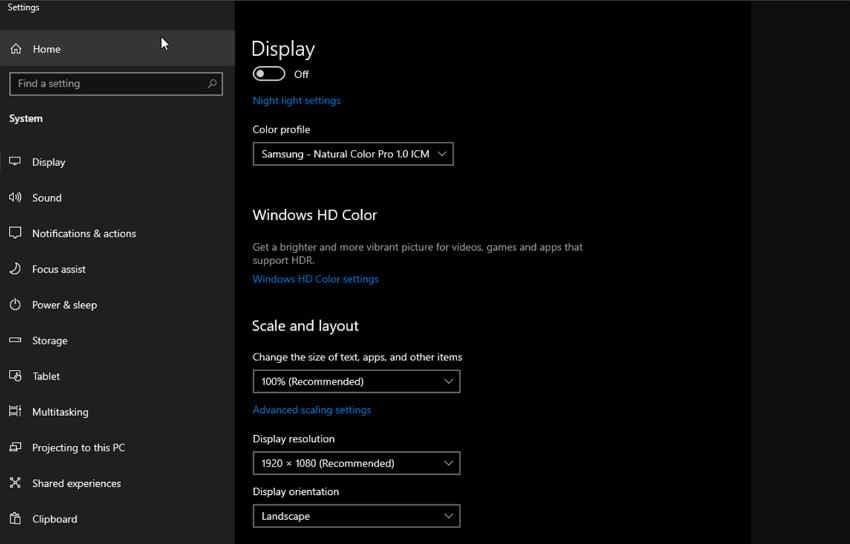
- Check the monitor menu: Use the monitor's buttons to open the OSD menu and review aspect ratio, picture size, overscan, and display mode.
- Try another cable or port: Test another HDMI, DisplayPort, VGA, USB-C adapter, dock port, or monitor input.
- Recall what changed: Note whether the issue started after Windows Update, driver update, a new monitor, a projector, a TV, or a game.
- Change one setting at a time: Apply one fix, test it, then move to the next.
- Back up files before advanced repairs: Display settings are low risk, but System Restore, update removal, reset, and failed driver repairs can create access problems on unstable systems.
Part 5. How to Fix a Stretched Screen on Windows 10
Start with resolution and scaling. Most Windows 10 stretched screen problems are fixed before you reach advanced repairs.
Fix 1. Set the Recommended Display Resolution
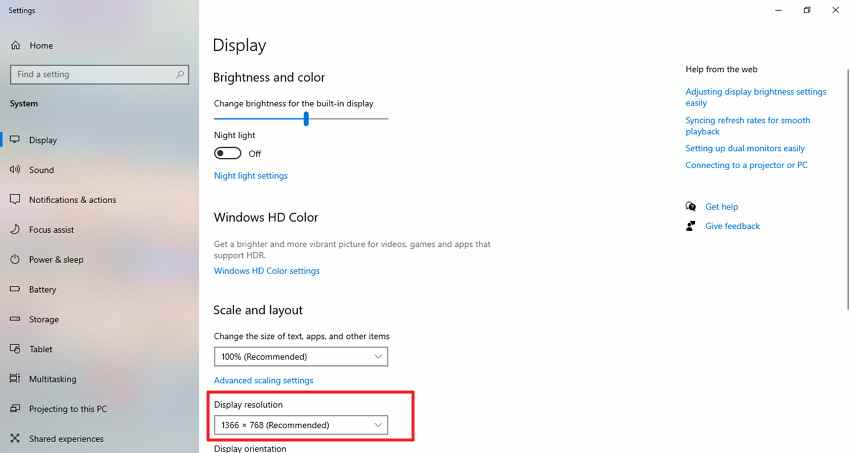
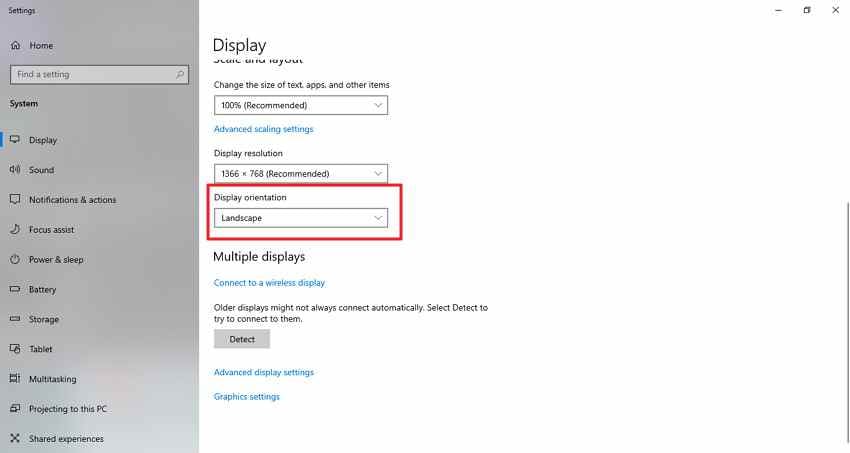
Incorrect resolution is the most common reason a computer screen is stretched. Use the resolution marked Recommended, which usually matches the monitor's native resolution.
Instructions: Right-click the desktop, choose Display settings, select the affected monitor, open Display resolution, and choose the value marked Recommended. Keep the change if the image looks normal.
Fix 2. Adjust Scale and Layout
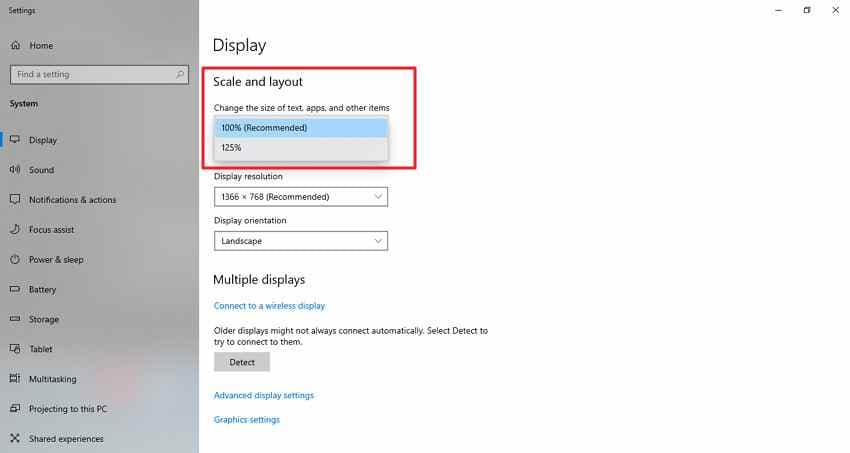
Scaling changes the size of text, apps, and icons. It should not stretch the image by itself, but a wrong scale can make the screen feel zoomed or crowded.
Instructions: Open Settings > System > Display. Under Scale and layout, choose the scale marked Recommended, often 100% or 125% depending on the display.
Fix 3. Check Display Orientation and Multiple Displays
A wrong orientation or multi-monitor arrangement can make one screen look odd, especially after using a projector or rotating a monitor.
Instructions: In Display settings, select the affected monitor. Set Display orientation to Landscape for a normal horizontal monitor. Drag monitor boxes to match their real desk positions if multiple displays are connected.
Fix 4. Change the Monitor Aspect Ratio or Picture Size
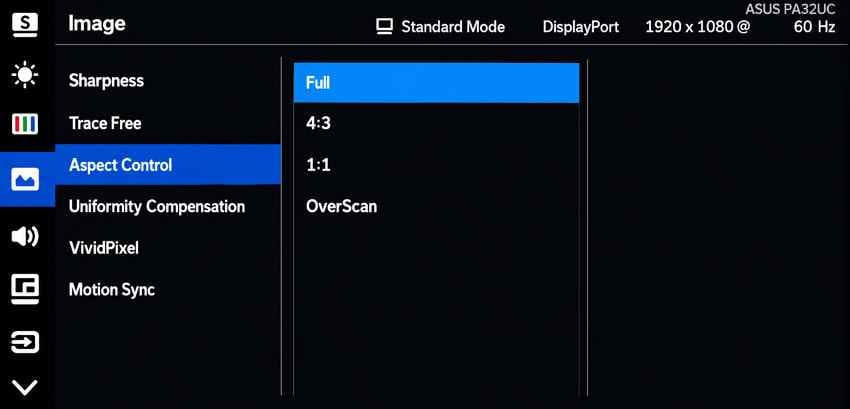
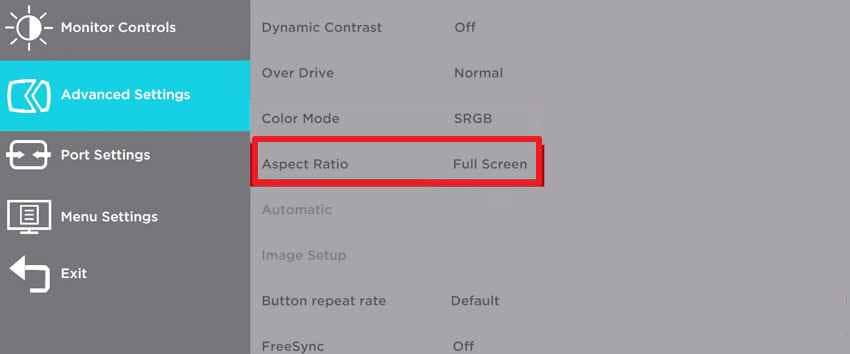
Many monitors and TVs can stretch the image even when Windows settings are correct. Look for options such as Aspect Ratio, Picture Size, Overscan, Scaling, Wide, Zoom, Full, Original, or 1:1.
Instructions: Use the buttons on the monitor to open the OSD menu. Set the aspect ratio to Auto, Original, 1:1, or Maintain Aspect Ratio if available. Avoid Wide, Zoom, or Stretch modes unless required.
Fix 5. Use Monitor Auto Adjust for VGA or Older Displays
Older VGA connections can show stretched, shifted, or poorly aligned images because VGA is analog. If your monitor has an Auto or Auto Adjust button, press it once and wait while the monitor centers and resizes the image.
If possible, switch from VGA to HDMI, DisplayPort, DVI, or USB-C video for a sharper and more reliable signal.
Fix 6. Adjust GPU Scaling in Intel, NVIDIA, or AMD Settings
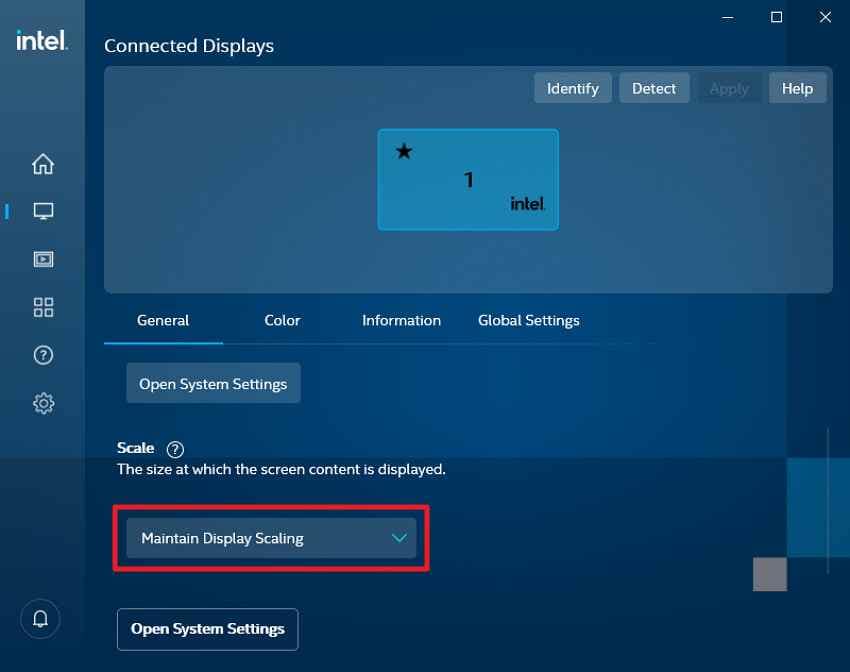
GPU scaling can force a lower resolution to fill the entire screen. This is useful for some games, but it can stretch normal desktop output if configured incorrectly.
Instructions: Open your graphics control panel, such as Intel Graphics Command Center, NVIDIA Control Panel, or AMD Software. Find display or scaling settings. Choose Maintain aspect ratio, No scaling, or the equivalent option. Avoid forced full-screen scaling for normal desktop use.
Fix 7. Restart the Graphics Driver Instantly
If the screen suddenly stretches after waking from sleep, switching monitors, or changing graphics modes, restart the graphics driver without rebooting the PC.
Instructions: Press Windows + Ctrl + Shift + B. The screen may flicker, and you may hear a beep. Wait a few seconds, then check whether the display returns to normal.
Fix 8. Update the Graphics Driver
If Windows 10 cannot detect the correct resolution, the graphics driver may be outdated, corrupted, or using a generic driver.
Step 1. Right-click Start, open Device Manager, expand Display adapters, right-click the graphics device, and choose Update driver.
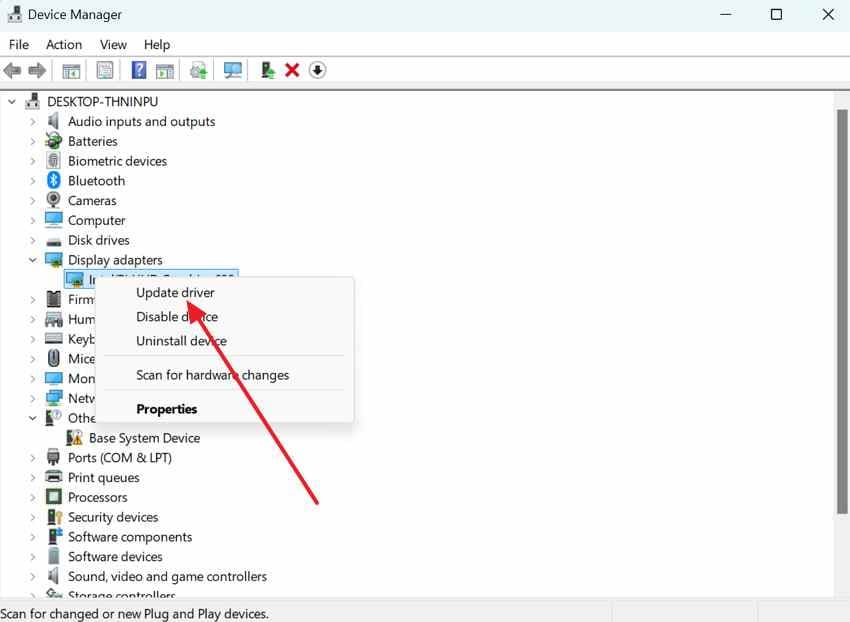
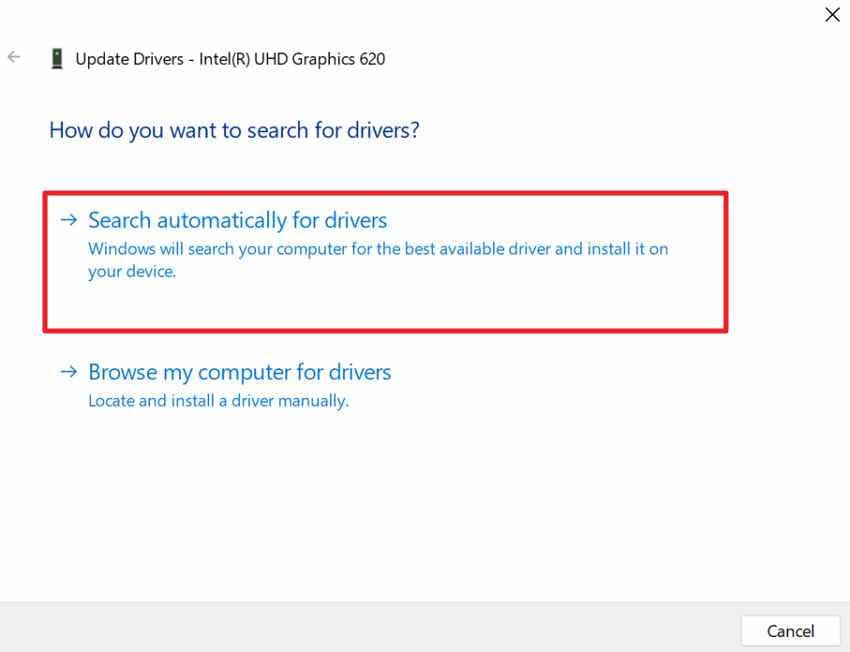
Step 2. Choose Search automatically for drivers. You can also check Windows Update or download the correct driver from the PC or GPU manufacturer's official website.
Fix 9. Roll Back or Reinstall the Graphics Driver
If the stretched display started immediately after a graphics driver update, the new driver may be incompatible with your monitor or GPU.
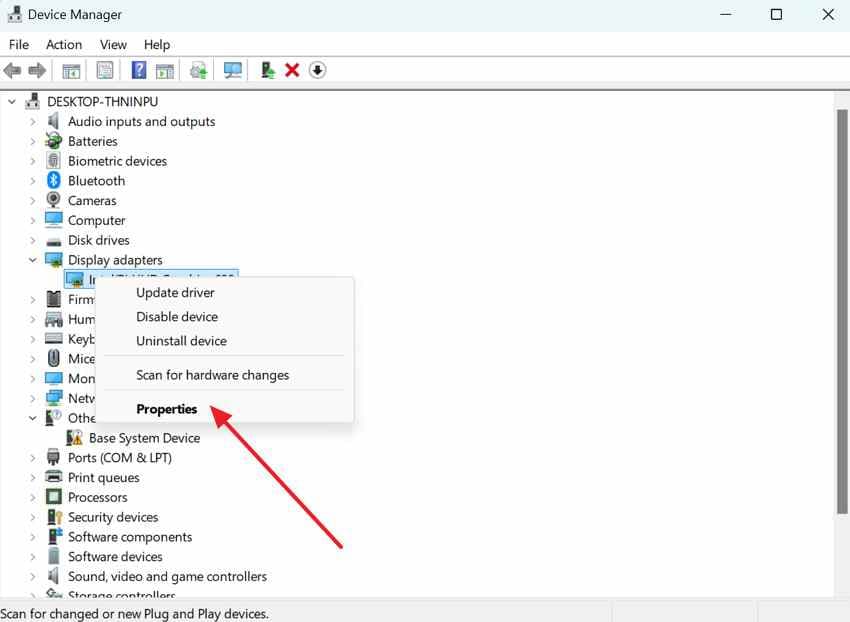
Step 1. Open Device Manager, expand Display adapters, right-click the graphics driver, and choose Properties.
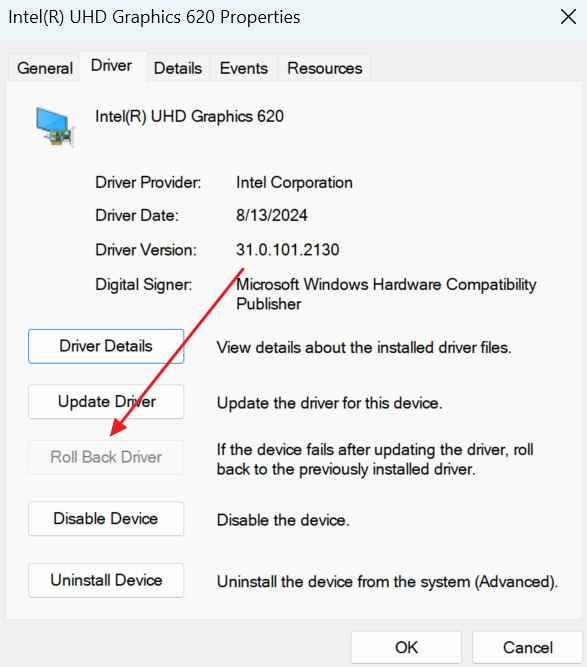
Step 2. Open the Driver tab and click Roll Back Driver if available. If rollback is unavailable, uninstall the device, restart Windows, and install the correct driver from Windows Update or the manufacturer's website.
Fix 10. Try Another Cable, Port, or Adapter
A cable or adapter can limit resolution or force an incorrect signal. Turn off the PC and monitor, then try another HDMI, DisplayPort, VGA, USB-C adapter, dock port, or monitor input. After reconnecting, set the recommended resolution again.
If a TV is used as a monitor, check its PC mode, Game mode, Just Scan, 1:1, or overscan settings.
Fix 11. Reset Game or App Display Settings
If only a game or full-screen app looks stretched, Windows may be fine. The app may be using a lower resolution or a forced aspect ratio.
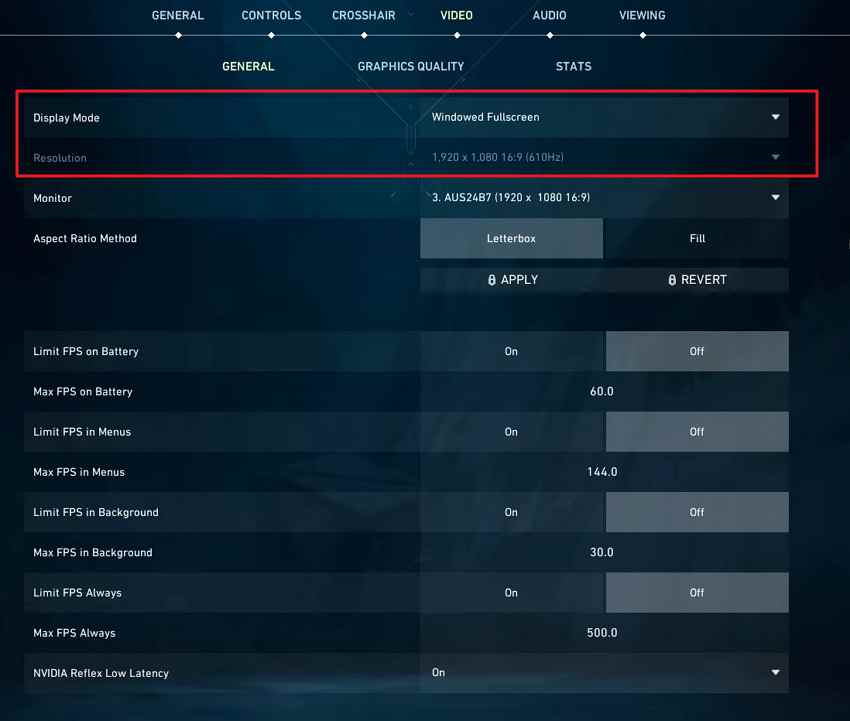
Instructions: Open the game or app's display settings. Set resolution to match your monitor, choose the correct aspect ratio, and use borderless windowed mode if full-screen mode keeps stretching the image.
Fix 12. Remove a Recent Windows Update
If the monitor screen stretched right after a Windows update and display settings or driver rollback did not help, remove the latest update. Back up important files first if the PC is unstable.
Step 1. Open Settings > Update & Security > Windows Update > View update history.
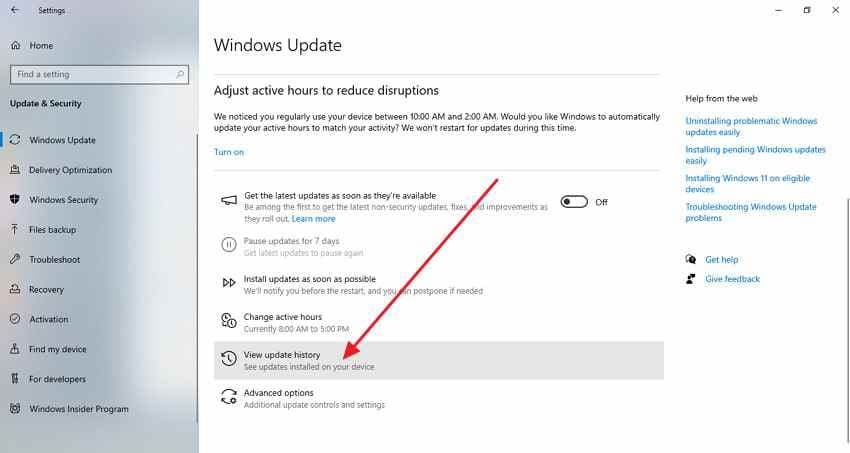
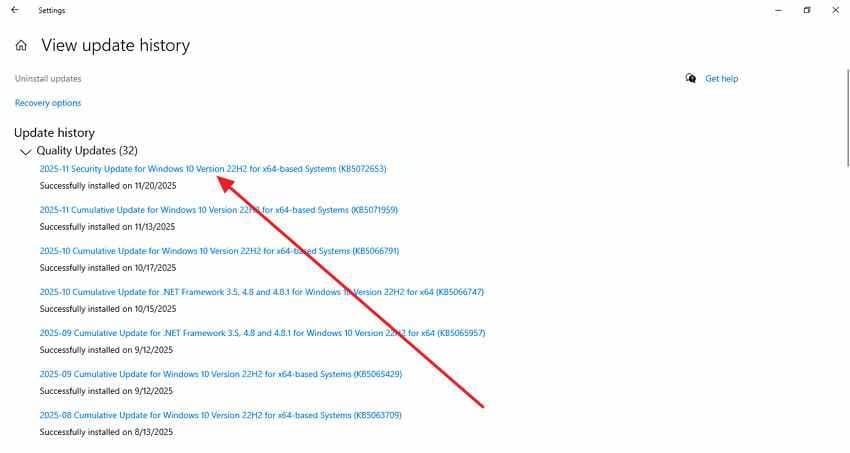
Step 2. Choose Uninstall updates, select the most recent relevant update, uninstall it, restart Windows, and check the display.
Fix 13. Use System Restore If the Issue Started Recently
System Restore can return Windows system files, drivers, registry settings, and system configuration to an earlier point. It is useful when the stretched screen started after a driver, update, or system change. It is not a substitute for a file backup, so protect important files first.
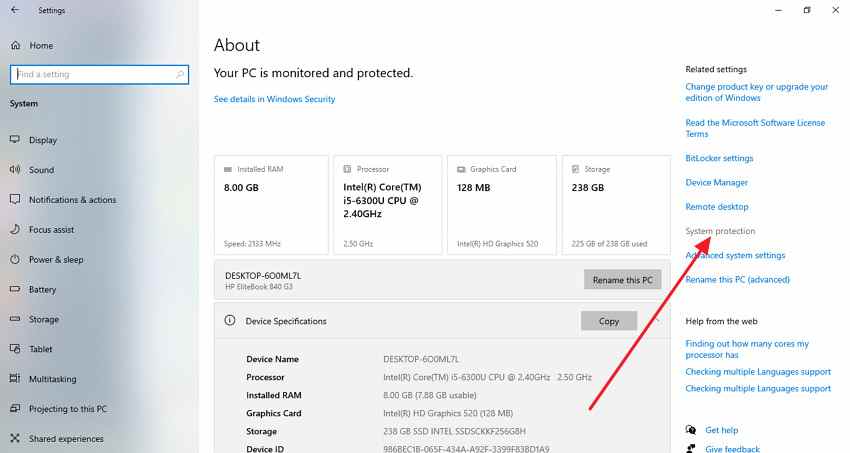
Step 1. Open Settings > System > About, then open System protection.
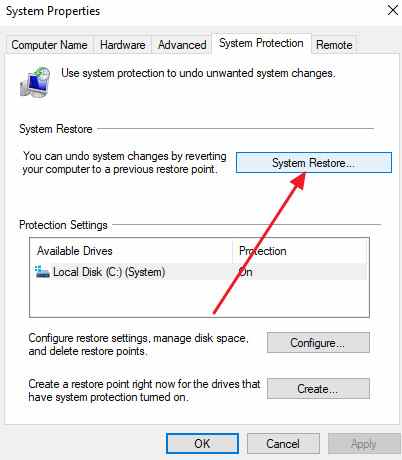
Step 2. Click System Restore, choose a restore point from before the display issue began, and let Windows restart.
Part 6. Why Windows 10 Updates or Driver Updates Can Stretch the Screen
A stretched screen can appear after Windows Update, graphics driver updates, monitor changes, or GPU control panel changes. The common reasons are:
- Resolution reset: Windows may switch to a lower resolution after a driver change or failed monitor detection.
- Scale reset: Windows may apply a different scale value, especially in multi-monitor setups.
- Generic driver fallback: Windows may use Microsoft Basic Display Adapter until the correct driver is installed.
- GPU scaling changed: Intel, NVIDIA, or AMD software may switch to full-screen scaling.
- Monitor detection changed: A dock, adapter, TV, or cable may report the wrong supported modes.
- Windows 10 support status: Windows 10 support ended on October 14, 2025. Your PC may still work, but Microsoft recommends moving to Windows 11 or using supported update options where available.
After any major update, check the affected monitor's recommended resolution, scale, orientation, refresh rate, and GPU scaling before assuming the monitor is broken.
Part 7. Back Up or Recover Files Before Advanced Windows Repairs
Changing resolution and scaling will not delete personal files. Updating a driver usually should not delete files either. However, advanced repair steps can create risk if the PC is already unstable, storage is failing, or Windows stops booting during repair.
Back up or recover important files before using System Restore, uninstalling major updates, resetting Windows, clean installing Windows, repairing partitions, or attempting recovery on a PC that no longer boots normally.
When Recoverit Can Help
- Windows becomes unbootable: The PC cannot reach the desktop after failed updates, driver changes, or repair attempts.
- Files become inaccessible: Documents, photos, videos, archives, and other supported files are on a readable internal or external drive.
- Before reset or reinstall: You need local files before using Reset this PC, reinstalling Windows, or sending the PC for repair.
- External storage recovery: Files need recovery from USB drives, external drives, SD cards, or other Windows-connected storage.
When Recoverit Cannot Help
- It cannot fix a stretched screen, change resolution, update display drivers, adjust GPU scaling, or repair a monitor.
- It cannot repair a broken HDMI cable, DisplayPort cable, VGA cable, dock, adapter, GPU, or display panel.
- It cannot bypass Windows passwords or decrypt BitLocker without the correct recovery key.
- It cannot guarantee recovery from overwritten files, physically failed drives, or storage devices that are no longer detected.
Recover Files If Windows 10 Becomes Unbootable During Repairs
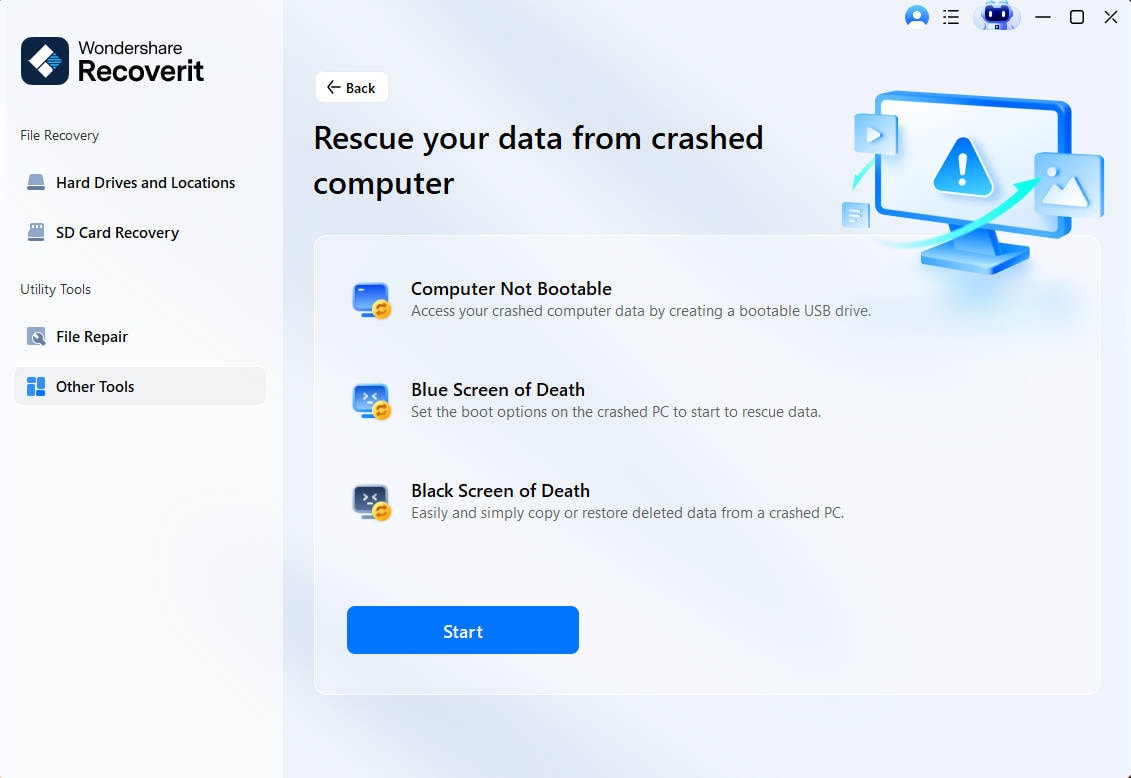
Use another working Windows PC and an empty USB drive to create bootable Recoverit recovery media.
Step 1. Install and open Recoverit on the working PC. Choose System Crashed Computer and click Start.
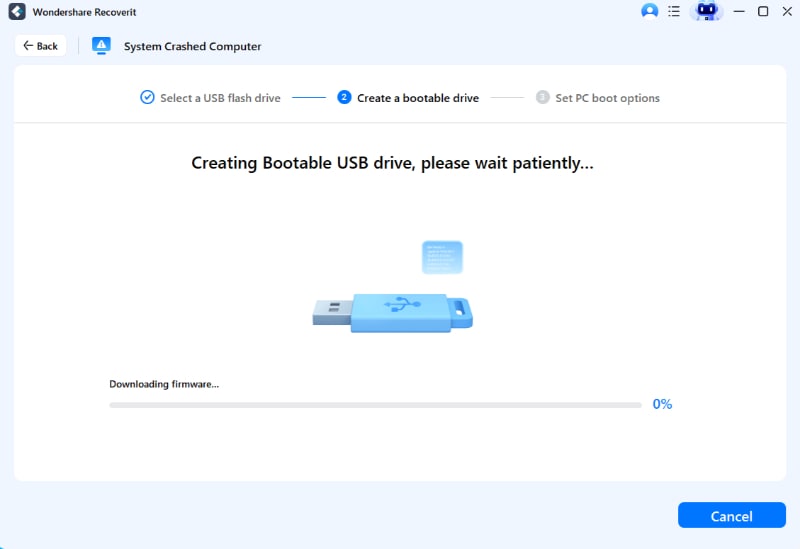
Step 2. Select the USB drive and create bootable recovery media. Back up the USB first because the creation process can erase it.
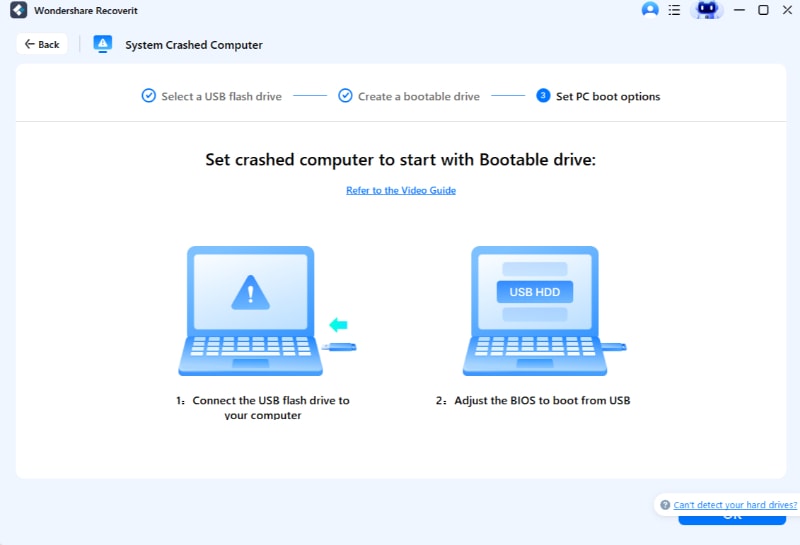
Step 3. Connect the USB to the affected Windows 10 PC, boot from the USB, scan the internal drive, preview recoverable files when available, and save recovered files to a separate external drive.
Part 8. How to Prevent a Stretched Screen on Windows 10
After fixing the display, use these habits to prevent the same issue from returning:
| Prevention Tip | What to Do |
| Use the native resolution | Keep each monitor set to the resolution marked Recommended in Windows. |
| Use sensible scaling | Use the recommended scale or a scale that keeps text readable without distortion. |
| Set monitor aspect ratio correctly | Use Auto, Original, 1:1, or Maintain Aspect Ratio instead of Wide or Zoom. |
| Use good cables and adapters | Prefer reliable HDMI, DisplayPort, USB-C, or certified adapters and avoid damaged cables. |
| Keep graphics drivers stable | Install drivers from Windows Update, your PC maker, Intel, NVIDIA, or AMD. |
| Check settings after using a TV or projector | Reapply recommended resolution and scaling after disconnecting external displays. |
| Create restore points before major driver changes | Make rollback easier if a display driver causes problems. |
| Back up files before major repair | Protect data before reset, reinstall, partition repair, or unstable system recovery. |
Conclusion
A stretched screen on Windows 10 is usually caused by the wrong resolution, scaling, monitor aspect ratio, GPU scaling, driver state, cable, or external display setting. Start with the recommended resolution, then check scaling, monitor OSD settings, GPU scaling, cables, and graphics drivers. Use System Restore or update removal only when the issue started recently and simpler fixes fail. Before advanced repairs on an unstable PC, back up important files or use Recoverit to recover data from accessible drives.
FAQ
-
Why is my Windows 10 screen stretched?
Your Windows 10 screen is usually stretched because the display resolution, scaling, monitor aspect ratio, GPU scaling, cable, or graphics driver is not matching the monitor's native display mode. -
How do I fix a stretched monitor display in Windows 10?
Start by setting Display resolution to the Recommended value in Settings > System > Display. Then check Scale and layout, monitor aspect ratio, GPU scaling, display driver, and cable or port condition. -
Can multiple monitors with different sizes cause screen stretching?
Different monitor sizes do not automatically cause stretching. However, each display must use its own recommended resolution, scale, orientation, and arrangement in Windows Display settings. -
Can Recoverit fix a stretched screen on Windows 10?
No. Recoverit is a data recovery tool. It can help recover files if Windows becomes unbootable or files become inaccessible during advanced repair, but it cannot change resolution, adjust scaling, update drivers, or repair a monitor.


