 TL;DR:
To fix the 0xc00d3e8c error, first test the video in VLC media player to determine whether the issue requires a specific codec extension, a Windows app repair, or file conversion before assuming the footage is corrupted.
● Use VLC to identify the exact video and audio codecs, as resolving the error may require specific Microsoft Store extensions for formats like HEVC or AV1, and be aware that Windows 11 version 24H2 no longer natively includes the AC-3 audio codec.
● If the video plays in VLC but fails in Windows apps like Media Player or Movies & TV, attempt to repair the affected app via Windows Settings or use VLC to convert the readable footage into a broadly compatible H.264 MP4 copy.
● Reserve dedicated video repair software for complete files that show damaged frames or fail repeatedly across multiple compatible players, and always perform troubleshooting or conversion on a duplicate copy to preserve the original metadata and quality.
Ask AI for a summary
 ChatGPT
 Perplexity
 Gemini
 Claude
 Grok
To fix the 0xc00d3e8c error, first test a complete copy of the video in another player. If it plays there, check the audio and video codecs or repair the affected Windows app. If the file is incomplete, copy it again from its source. Consider video repair only after checking compatibility and file completeness.
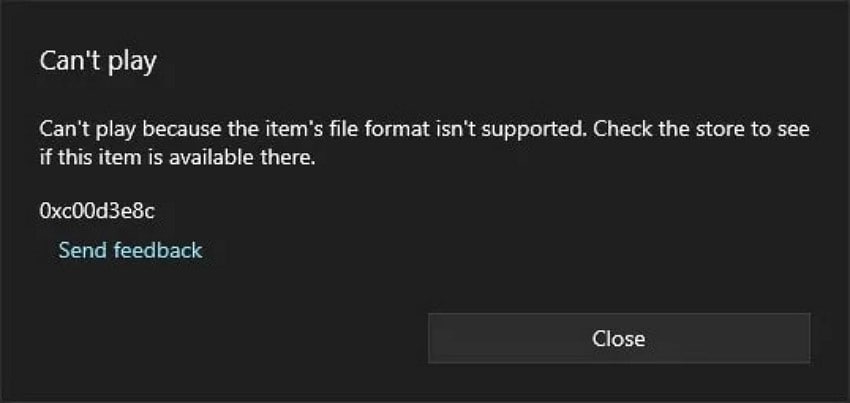
The Windows dialog may say that the item's file format is not supported. Keep the original video unchanged while you work through the checks below.
In This Article
Part 1. What Does 0xc00d3e8c Mean?
Microsoft identifies 0xc00d3e8c as MF_E_INVALID_FORMAT in its Media Foundation error definitions: the media format is recognized but invalid. The code alone does not identify a missing codec, prove that the video is corrupted, or mean that every player will reject it.
An MP4, MKV, or MOV extension describes the container. The video and audio inside it can use different codecs, and their profiles can affect compatibility. Start with the result you can actually observe:
| What you observe | What to check next |
| The same file plays with picture and sound in another player | Check codec support and the affected Windows app. File repair is not the first step. |
| A known-good video also fails in the affected app | Update or repair that app before modifying your videos. |
| The download is unfinished, the copy is smaller than its source, or the file is zero bytes | Get a complete copy from the original source or a backup. |
| Camera footage still fails after installing an HEVC extension | Check its recording profile and audio codec. An extension is not a guarantee of support for every camera mode. |
| A complete file repeatedly stops or shows damaged frames in multiple compatible players | Compare it with the source, then consider the damaged-file repair branch. |
Before you start: Work on a duplicate saved to a healthy local drive. Let downloads and cloud transfers finish. If a storage device disconnects repeatedly or cannot be read reliably, preserve accessible files before further troubleshooting. Renaming an extension does not convert the video's contents.
Part 2. How to Fix the 0xc00d3e8c Video Error
Begin with the player comparison, then follow the branch that matches your result. You can stop as soon as the video plays correctly; you do not need to perform every method.
1. Test the Same File in Another Player
Use this when: You do not yet know whether the problem follows the file or the Windows player.
Step 1. Open the complete local copy with VLC media player. In VLC for Windows, choose "Media > Open File" and select that exact file.
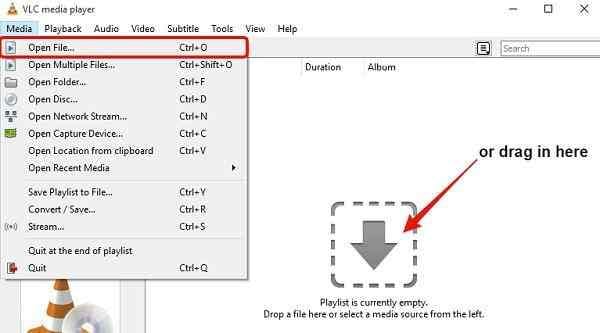
Step 2. Check the beginning, middle, and end, including the audio. Then open a different video that you know works in the Windows app that displayed the error.
Read the result: If the problem file plays normally in VLC, continue with codec or app checks, or use VLC for playback. If multiple known-good files fail only in the Windows app, go to Method 3. Failure in two players still does not prove corruption: both may lack support for the same recording profile.
If the source video plays on its original device but the transferred copy does not, copy it again and compare the file sizes before changing any playback settings.
2. Identify the Codec Before Downloading an Extension
Use this when: The file works in another player, or you need to identify what a camera, editor, or download actually produced.
Step 1. With the file loaded in VLC, choose "Tools > Codec Information". Read the codec entries for both video and audio. In this example, the video is H.264 and the audio is AAC; your file may show different values.
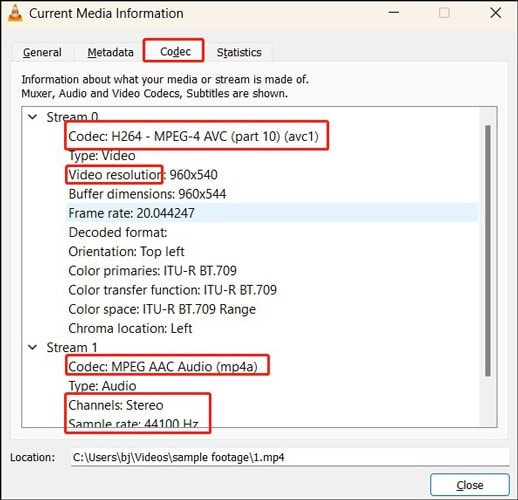
VideoLAN's codec and container examples show why identical extensions can contain differently encoded media. If VLC cannot identify the streams, check the original camera or export settings, or request a fresh copy from the sender.
Step 2. Match the identified codec to Microsoft's supported codecs and Store extensions. HEVC/H.265, AV1, VP9, and MPEG-2 have specific extension options. Use the relevant official listing, check its requirements, then reopen the file after installation.
Check the audio too: Beginning with Windows 11 version 24H2, AC-3 is no longer included with Windows. An upgraded PC may retain it, and a device manufacturer may supply it. This is one reason codec availability can differ between PCs; it does not establish AC-3 as the cause of your error.
HEVC still will not play? A codec name is only part of the specification. Microsoft's documented HEVC decoder constraints list Main/Main10 profiles and 4:2:0 chroma. Do not assume that an HEVC extension covers every 10-bit or 4:2:2 camera recording. Check the recording mode against the intended player's support; use a compatible player or export from software that can decode that source.
Expected result: A matching decoder may restore playback. If the file already uses a supported combination, move to the app check. If it plays elsewhere but remains incompatible with the required app, create a separate playback copy with Method 4.
3. Update or Repair the Affected Windows App
Use this when: The error occurs only in Media Player or Movies & TV, especially if other known-good videos also fail there. Work on the app that actually shows the error; Windows Media Player Legacy is a separate application.
Step 1. Close the player. Open Microsoft Store, go to "Updates & downloads", and select "Check for updates". Install available updates for the affected app and any relevant codec extension. Microsoft documents this Store update check.
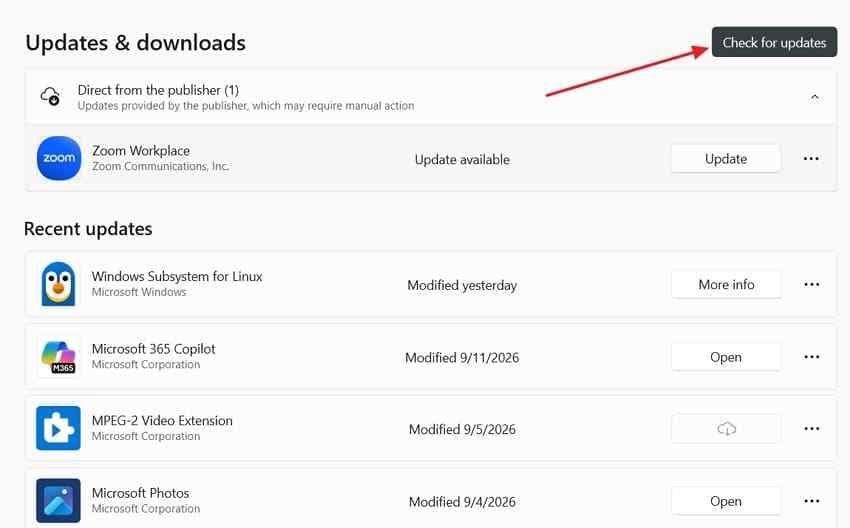
Step 2. If the problem remains, use the applicable Windows app repair options:
- Windows 11: Open "Settings > Apps > Installed apps", select the app's three-dot menu, and open "Advanced options".
- Windows 10: Open "Settings > Apps > Apps & features", select the app, and open "Advanced options".
Select "Repair" if it is available, then reopen the same file. The example below shows the separate Windows app controls; the app name is not shown, and availability varies.

Reset is a separate action: It deletes the app's data and settings. Consider it only after Repair fails or is unavailable, with your videos backed up and the reset prompt understood. App repair cannot reconstruct a damaged video.
If this fails: A file that works elsewhere may still use an unsupported format or profile. Return to the codec findings instead of repeatedly resetting the app. Windows 10's standard free support ended on October 14, 2025.
4. Convert Readable Footage to an H.264 MP4 Copy
Use this when: VLC can decode the video, but you need a copy that works in the target Windows app. Keep the original for editing or archival use because re-encoding can change quality, audio tracks, subtitles, and metadata.
Step 1. Following VideoLAN's media conversion workflow, choose "Media > Convert / Save".
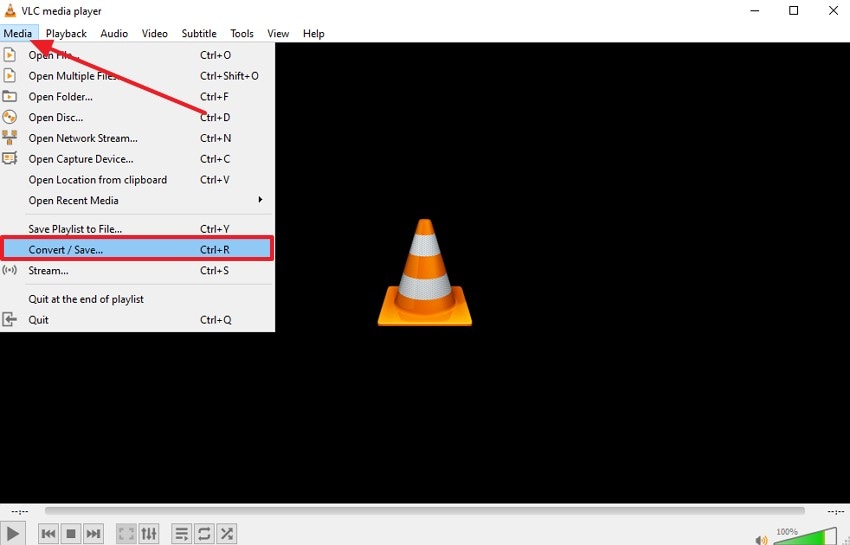
Step 2. Select "Add", choose the readable source, and select "Convert / Save". In "Profile", choose "Video - H.264 + MP3 (MP4)" as shown. This preset creates H.264 video with MP3 audio in an MP4 container.
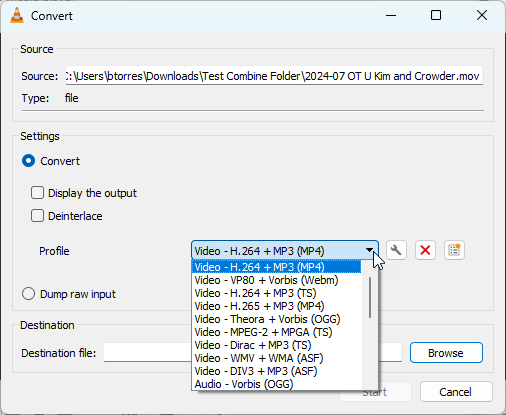
Step 3. Choose "Browse" and save to a different filename, such as clip-playback-copy.mp4. Select "Start" and wait for conversion to finish. Never use the original file as the output destination.
Check the result: Open the new file in the target app and verify its duration, picture, sound, and synchronization. Keep the original even if the playback copy works. Do not convert a video to WMA: Microsoft's file extension guidelines reserve WMA for audio-only files.
If conversion stops early or produces a silent or incomplete file, the attempt has not succeeded. Recheck source compatibility and the transfer. Conversion cannot recreate missing footage, and a source that cannot be decoded needs a different approach.
5. Try File Repair for a Damaged Video
Use this when: A complete video remains unplayable or visibly damaged after the earlier checks, especially after an interrupted recording or transfer. If a fresh source copy exists, use it first. The error code by itself is not enough to justify repair.
Recoverit's File Repair workflow supports attempts to repair damaged videos. Work on a duplicate and inspect the result before relying on it.

0xc00d3e8c? The Problem May Be Inside Your Video File
A codec download won't repair a damaged recording. If your complete video still fails in compatible players or shows broken frames, Recoverit's Corrupted Video Repair can attempt to restore playback. Preview the result before saving a separate copy.
Step 1. Open Recoverit and select "File Repair > Corrupted Video Repair".
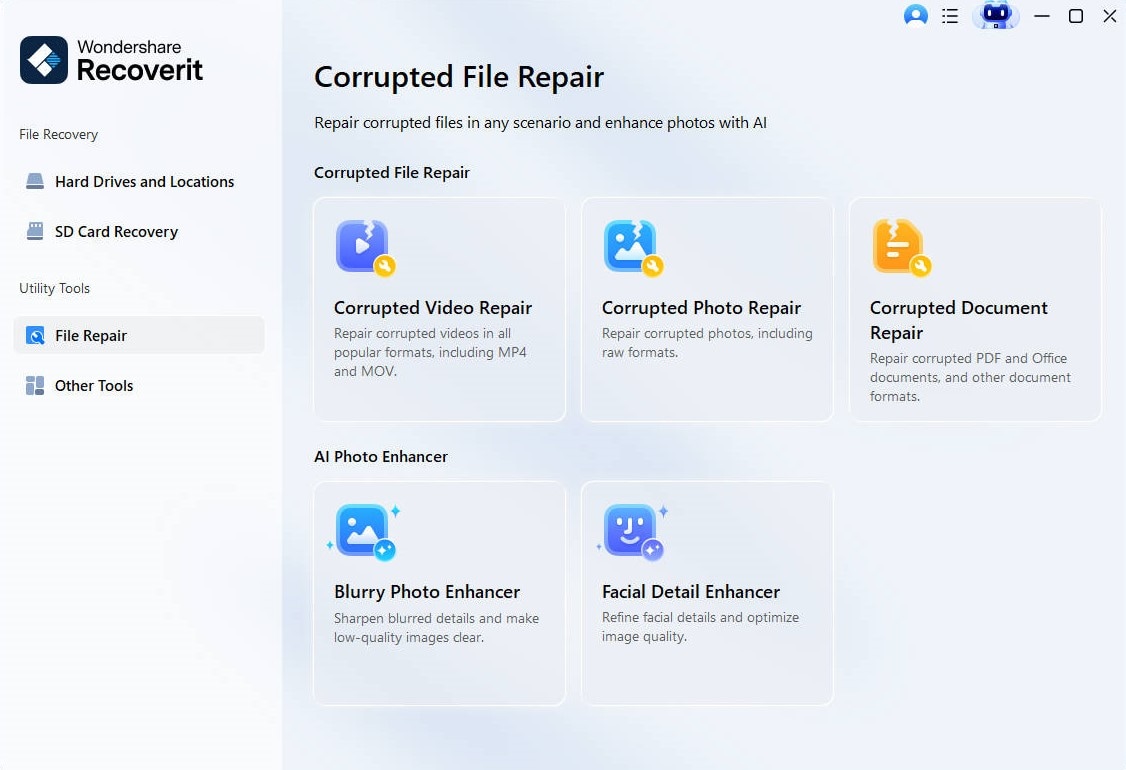
Step 2. Add the damaged copy, then select "Repair".
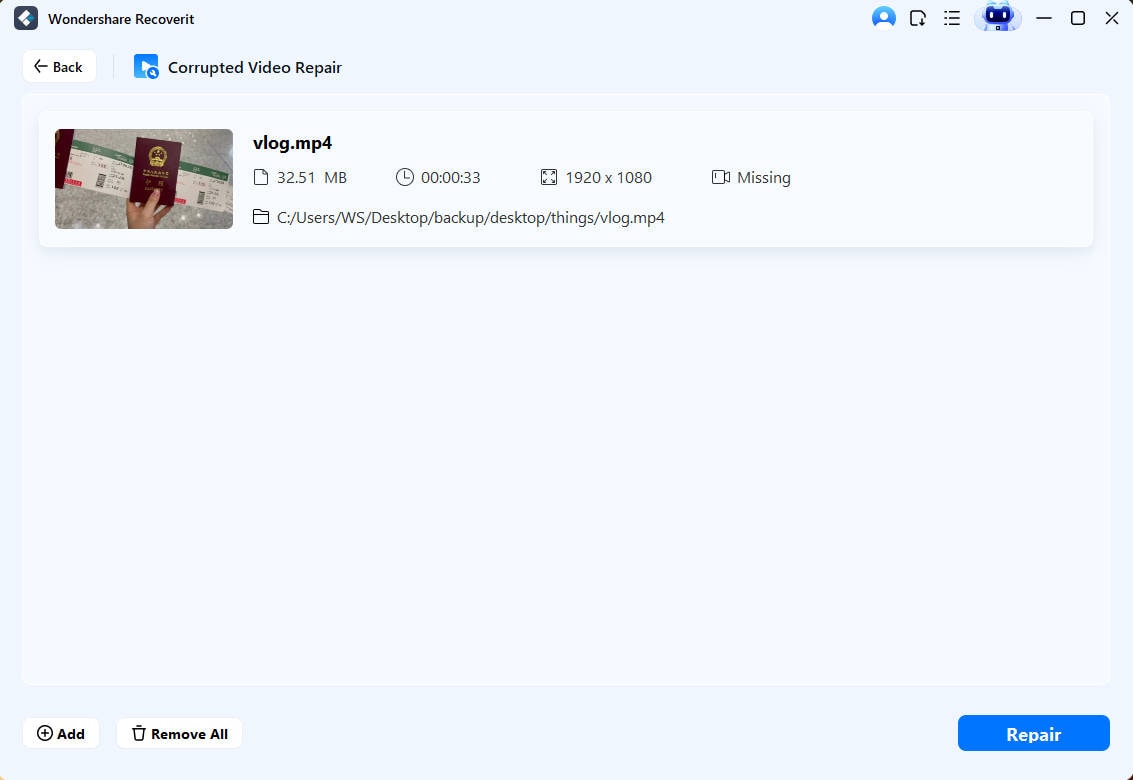
Step 3. Preview the result, select "Save", and choose a different location. Open the saved file independently to check its full duration and audio; the in-app preview has limited resolution.
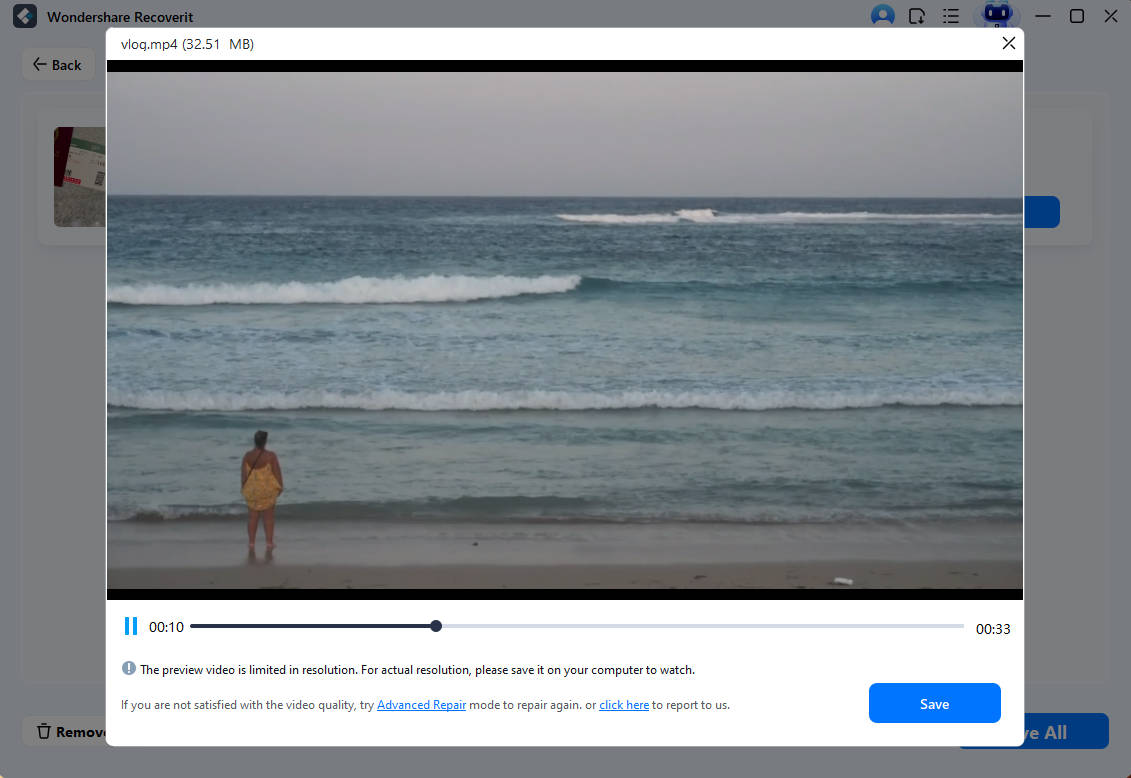
If standard repair is insufficient, "Advanced Repair" requires a healthy sample of the same format, preferably from the same device. Repair is not guaranteed, and missing data may remain unrecoverable. For a file that was already recovered but will not play, follow the checks for unplayable recovered videos.
Conclusion
The useful starting point for a 0xc00d3e8c error fix is a complete file and a controlled player comparison. Identify both codecs, check the affected app, and convert only readable footage. Reserve file repair for a plausible damaged-file case, and confirm the final result by playing the saved video with its audio.
FAQ
-
Is there a specific 0xc00d3e8c codec download?
No. 0xc00d3e8c is an error code, not the name of a codec. Identify the actual video and audio codecs, then use a relevant official extension if one is needed. An installer advertised as a universal error-code fix does not establish compatibility with your file. -
Can I fix playback without converting my original video?
Yes, if a compatible player already opens it or the required decoder can be added to your intended app. These routes let you keep the original encoding. If you need an export, create a separate playback copy and preserve the original recording. -
What if the video is missing rather than showing this error?
That is a video recovery task. Stop writing to the original storage and check backups first. If recovery is needed, save recovered files to another healthy device; overwriting the original data can prevent recovery. A video repair tool needs an existing file to work on. -
What information should I provide if I still need help?
Record the exact error code, Windows version, affected app, file size, video and audio codecs, recording or export settings, and the results in another player. Note whether a known-good file works in the affected app. Share a non-sensitive sample only when you are comfortable doing so.


