Hard Drive Recovery
 Recover deleted, formatted, RAW, corrupted, and inaccessible files from HDDs, SSDs, external hard drives, NAS devices, and crashed computers when the drive is still detectable.
Recoverit is best suited to logical data loss, including accidental deletion, partition loss, file system corruption, formatting, and system crashes.
Recover deleted, formatted, RAW, corrupted, and inaccessible files from HDDs, SSDs, external hard drives, NAS devices, and crashed computers when the drive is still detectable.
Recoverit is best suited to logical data loss, including accidental deletion, partition loss, file system corruption, formatting, and system crashes.

99.5%
recovery rate

5min
average scan time

20+ years
data recovery experience

100%
secure & virus-free
Companies of all sizes trust Recoverit to recover lost/deleted data from hard drives


Seamlessly Recover Lost Data From
Any Hard Drive
Wondershare Recoverit supports file recovery across many common hard drive types, connection standards, and storage brands. It can help recover files from internal and external hard drives, NAS storage, and many encrypted drives when the device remains accessible to the operating system.
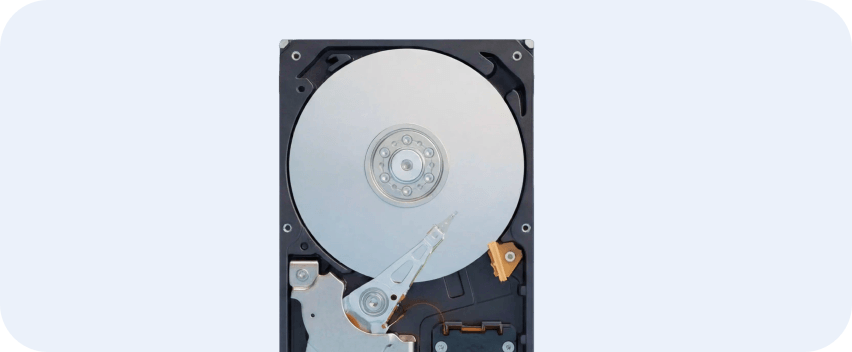
Internal Hard Drives
PATA (IDE, EIDE), SATA, PCIe, M.2, U.2, mSATA, SATA Express, SCSI, SAS, NVMe, and Fibre Channel storage used in desktops, workstations, and servers.
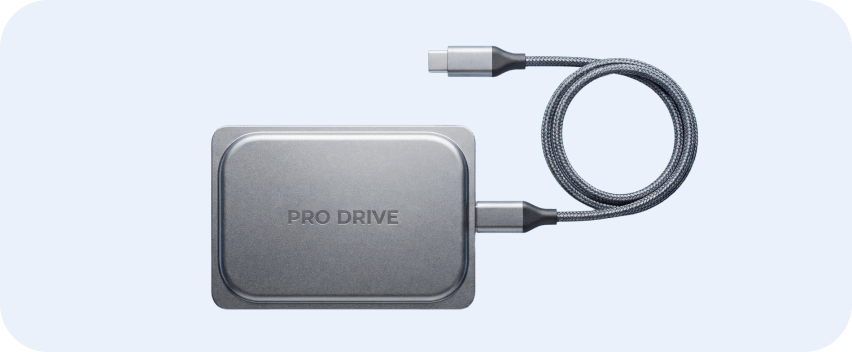
External Hard Drives
USB 2.0, USB 3.0, USB-C, eSATA, FireWire, and Thunderbolt external hard drives and SSDs used for backup, transfer, and portable storage.
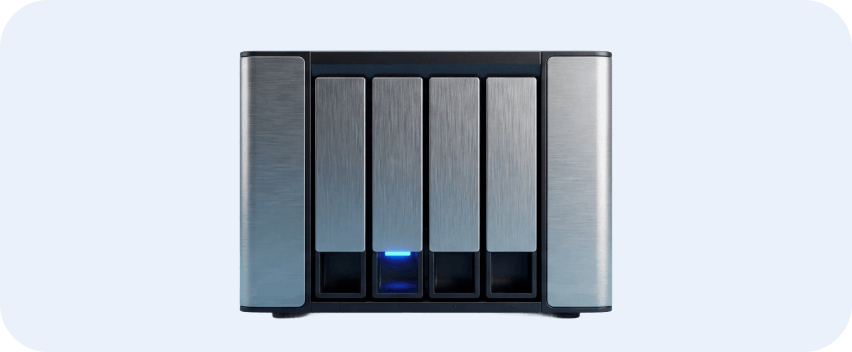
NAS Hard Drives
Recoverit supports recovery workflows for many NAS environments, including Synology, QNAP, Asustor, and TerraMaster devices.

Hard Drive Brands
Supported recovery workflows cover many common drive brands and storage environments, including Western Digital, Seagate, Toshiba, Samsung, Dell, Fujitsu, HP, Synology, QNAP, and LaCie.
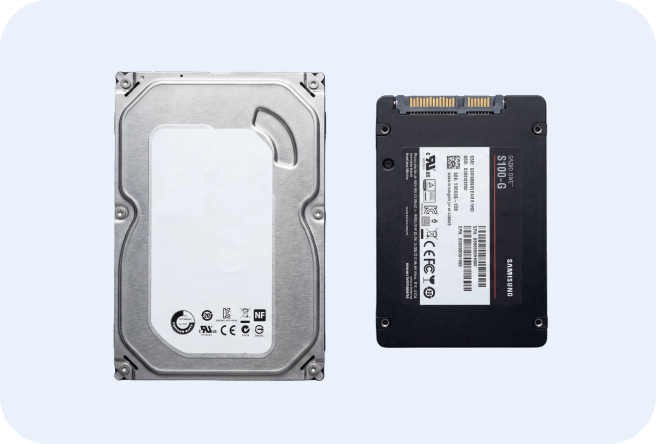
HDD and SSD Recovery
Recoverit can recover files from both HDDs and SSDs in many logical data loss situations, such as deletion, formatting, RAW file systems, or inaccessible partitions. SSD recovery results may vary more because TRIM and wear-leveling can permanently erase recoverable data faster than on HDDs.
Recover Deleted/Lost Data from Hard Drive
Common Data Loss Scenarios
Recover Data From Hard Drives in Common Loss Situations
Recoverit can help recover deleted, formatted, corrupted, RAW, or inaccessible files from hard drives when the device is still readable and the lost data has not been overwritten. It is most effective in logical data loss scenarios such as accidental deletion, partition loss, file system corruption, system crashes, and malware-related file loss.

Accidental Deletion
Recoverit can scan a hard drive for files deleted with Delete, Shift+Delete, or after the Recycle Bin was emptied. Recovery is more likely when you stop using the drive before new data overwrites the deleted files.

Hard Drive Formatting
If a hard drive or partition was formatted by mistake, Recoverit can search for recoverable files before they are overwritten. This is useful after quick formatting, partition reinitialization, or accidental format operations.

Hard Drive Failure
Recoverit is best for logical hard drive problems such as corrupted partitions, inaccessible volumes, file system errors, or readable bad sectors. If the drive is clicking, grinding, or no longer detected, stop using it and consider a professional data recovery service.

Virus / Malware
Malware can delete files, hide folders, damage partitions, or make data inaccessible. Recoverit can help recover files after malware-related data loss once the device is safe to scan.

Liquid Damage
Liquid damage can interrupt access to files stored on a hard drive, especially in laptops and external devices. If the drive is still readable, Recoverit may help recover data, but drives with suspected hardware damage should be handled by a recovery specialist first.

OS Crash
When Windows or macOS cannot boot, Recoverit can create bootable media and help copy important files from the affected computer to another storage device. This is useful for system crashes, boot failure, blue screen errors, and startup issues.

RAW File System
A hard drive may appear as RAW after file system corruption, interrupted formatting, unsafe removal, or power loss. Recoverit can scan RAW drives and recover accessible files before you reformat the device.

Partition Loss
Deleted, lost, or damaged partitions can make files seem missing even though the data still exists on the drive. Recoverit can scan lost partitions and recover files when the drive remains detectable.
Recover Photos, Videos, Documents, and More From Hard Drives
Recoverit supports 1,000+ file types and signatures during quick and deep scans, helping recover documents, photos, videos, audio files, archives, and other data from HDDs and SSDs. Recovery results vary depending on file condition, file system status, and whether the original data has been overwritten.


Images
CRW, JPEG, JPG, PNG, PSD, RAW, RGB, 3DM, 3DMF, 3FR, ABM, AFX, ANI, ART, ARW, BIZ, BLD, etc.

Videos
MP4, MOV, AVI, FLV, M4V, WMV, MXF, AVI, MKV, MPEG, MPEG4, MPG, MTS, AVCHD, BRAW, R3D, etc.

Audios
MP3, AAC, FLAC, OGG, WAV, WMA, AA3, AAC, AC3, ACC, AFC, AIF, AIFC, AIFF, AM, AMR, APE, etc.

Office Files
DOC, DOCX, RTF, DOT, DOTX, DOTM, ODT, WordML, XLS, XLSX, XLTX, PPT, PPTX, PPSX, PDF, PDF/A, etc.

Archives & Outlook
EDB, EML, EMLX, MAIL, MBX, MSG, OEB, PAB, PST, WAB, 7Z, BZ, BZIP, CAB, JAR, WAR, ZIP, ZIPX, etc.

Other Files
BQY, BTR, CAP, HTM, HTML, ASPX, ACM, ACP, ADT, AFM, API, ARX, MHT, MHTML, PHP, etc.
Why Choose Recoverit for Hard
Drive Data Recovery?

AI-Assisted Device and Data Loss Recognition
Recoverit supports recovery workflows for a wide range of devices, including HDDs, SSDs, internal drives, external drives, NAS storage, and Mac devices. Device information and scan context help the software identify suitable recovery paths for common file loss situations.
Supported workflows cover logical data loss scenarios such as accidental deletion, formatting, RAW file systems, partition loss, and inaccessible drives.

Recover Lost Files and Repair Damaged Media Combined
Recoverit combines data recovery with repair support for selected file types, including damaged videos, photos, and office documents. This helps users do more than restore files alone when corruption affects file usability.
Media repair features are especially useful when a recovered file is incomplete, structurally damaged, or not playable after recovery.
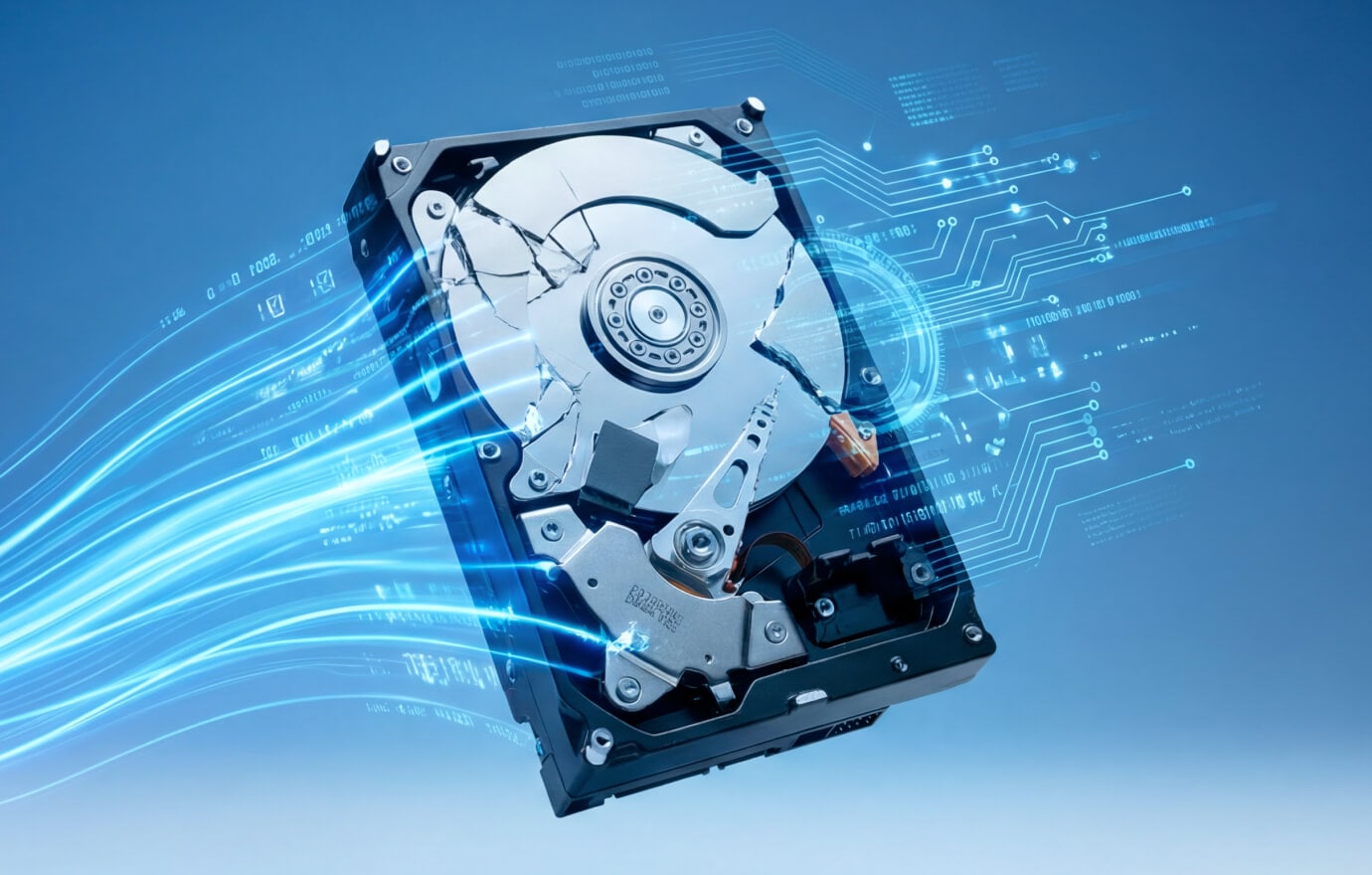
Corrupted Hard Drive Recovery
Recoverit supports file recovery from corrupted or inaccessible hard drives on Windows, macOS, and Linux when the operating system can still detect the drive. This includes common logical issues such as file system corruption, lost partitions, inaccessible volumes, and readable bad sectors.
For severe physical damage or repeated hardware detection failure, a professional recovery service is usually the safer option.

Encrypted Hard Drive Recovery
Recoverit supports recovery workflows for many encrypted drives, including BitLocker-protected Windows volumes and supported Apple storage environments, as long as the required access credentials or permissions are available.
Encryption can affect recoverability, so recovery success depends on whether the drive remains accessible and whether the necessary authentication is available during the scan.

Quick Recovery
Quick and deep scanning help locate recently deleted and deeply hidden files from supported hard drives.

Free Preview
Preview recoverable files before recovery so you can verify file quality and relevance first.

AI + S.M.A.R.T.
Use file recovery together with supported S.M.A.R.T. health monitoring features on Mac to better assess disk condition.

Recover RAW Hard Drive
Recover files from RAW hard drives before reformatting when the device remains readable.

Cloud Drive Recovery
Access supported cloud-related recovery workflows for selected file loss cases involving synchronized or connected storage environments.

Recover Crashed Computer
Use bootable media to recover files from crashed or unbootable computers to another safe storage device.

Advanced Video recovery
Recover large or fragmented video files stored on hard drives, including selected professional recording formats supported by Recoverit.

Recover Formatted Hard Drive
Recover files from formatted hard drives and partitions before new data is written back to the same device.
How to Recover Lost Data from
Hard Drives with Recoverit?
To recover deleted or lost files from a hard drive, install Recoverit on a healthy drive, select the affected disk, scan for recoverable files, preview the results, and save recovered files to a different storage location. Recoverit lets users scan and preview files before recovery, and Recoverit Free supports limited free recovery.

 Win/Mac Internal & External Drive Recovery




 Linux/NAS Hard Drive Recovery
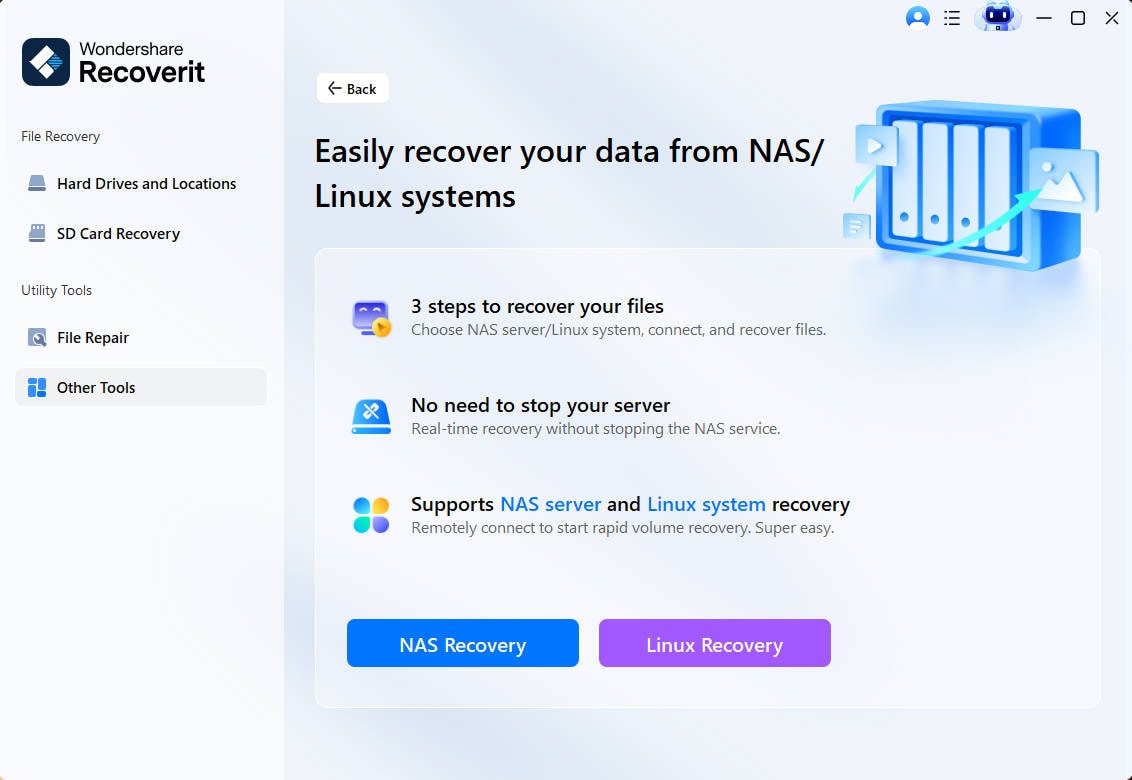
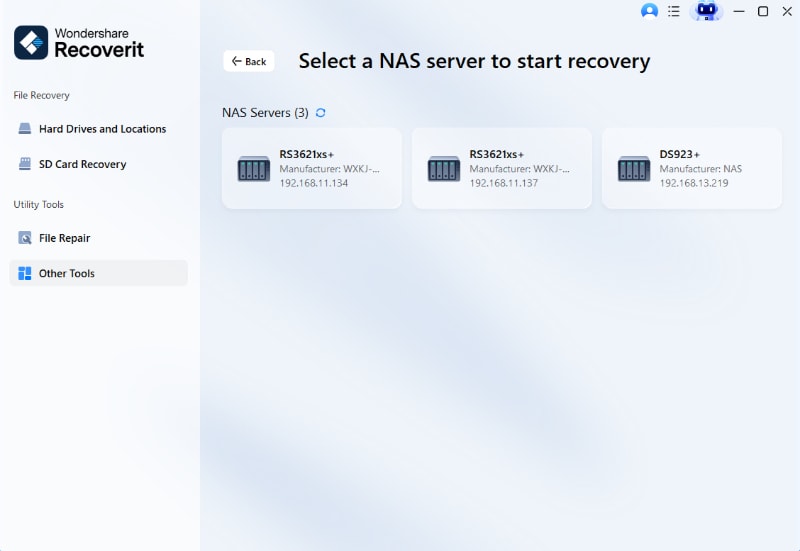
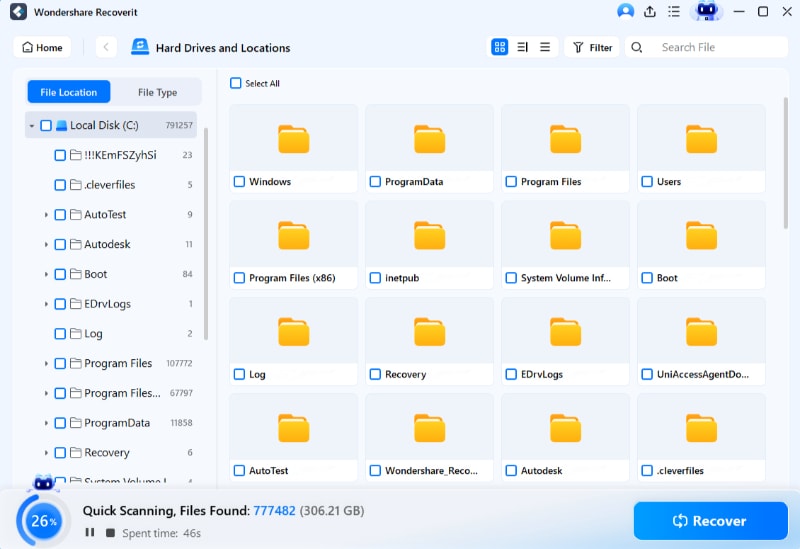

 Crashed Computer Recovery

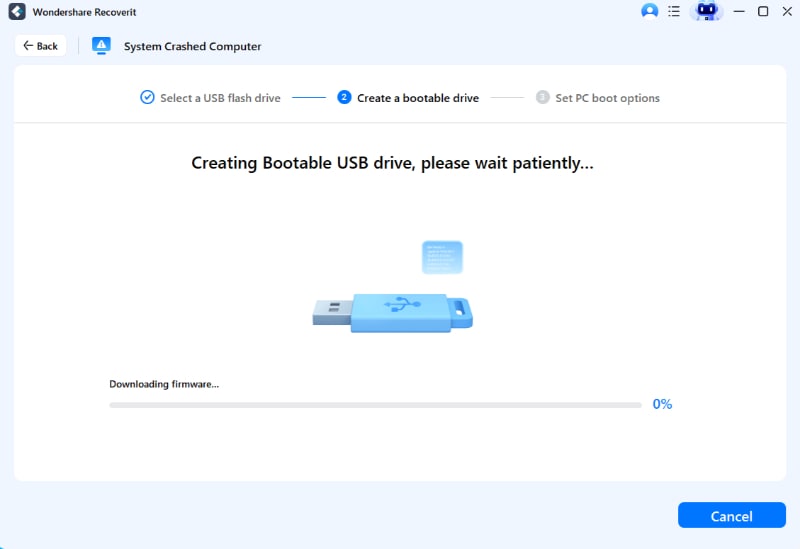
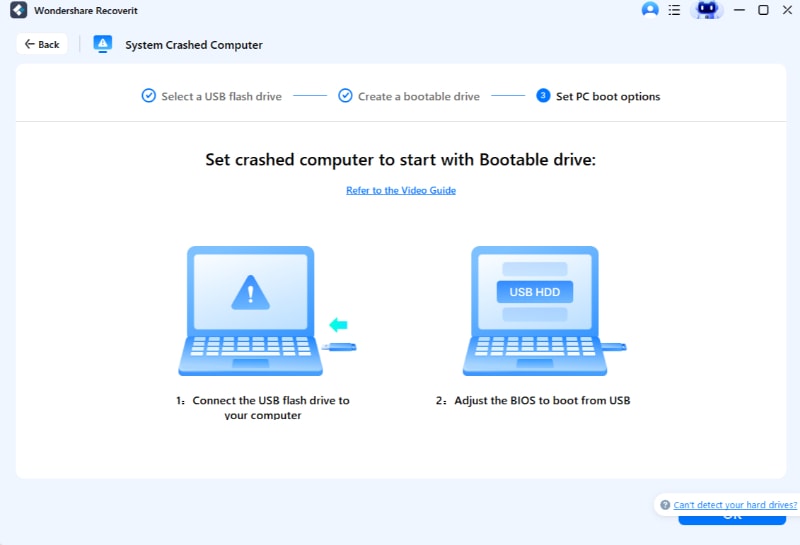

1. Use reliable recovery software as early as possible after data loss to reduce overwrite risk.
2. Recover files from corrupted or inaccessible hard drives before attempting repairs that may rewrite disk data.
3. Do not install Recoverit on the same drive where files were lost, and always save recovered files to a different location.
Comparison Chart for Common
Hard Drive Recovery Needs
Use this chart to compare Recoverit with other hard drive recovery tools across file systems, device support, encrypted drive access, and recovery-related features.
| Recovery Tool |

|
Tool B | Tool C | Tool D |
|---|---|---|---|---|
| Supported Hard Drive File Systems | exFAT, FAT16, FAT32, NTFS, ReFS, HFS+, Encrypted HFS, HFSX, APFS, XFS, BFS, EXT4 | exFAT, FAT16, FAT32, NTFS, HFS+, APFS, EXT2/3/4 | FAT12, FAT16, FAT32, HFS+, ReFS, EXT2/3 | FAT12, FAT16, FAT32, exFAT, VFAT, NTFS, NTFS5 |
| OS Support | Windows, Mac, Linux | Windows, Mac | Windows, Mac | Windows, Mac |
| Supported File Types | 1000+ | 400+ | 1000+ | 100+ |
| IDE/SCSI/PATA/SATA/USB/PCIe Connection Support |

|
 |
|
|
| BitLocker/T2/M1/M2 Encrypted Drive Recovery |
|
Partial support | Partial support | Partial support |
| Disk Image Recovery |
|
|
 |
|
| Unbootable Hard Drive Recovery |
|
|
|
|
| Document/Photo/Video Repair |
|
|
|
|
| File Preview |
|
|
|
Partial support |
| Resume Scanning Process |
|
|
|
|
| Video Fragments Match |
|
|
|
|
| AI-powered Recovery |
|
|
|
|
More Tips for Hard Drive Recovery
Some Other Methods to recover data from Hard Drive
These are some other methods to recover lost data from hard drive. Only for your interests, not guaranteed.
Method 1: Seek Professional Data Recovery Services
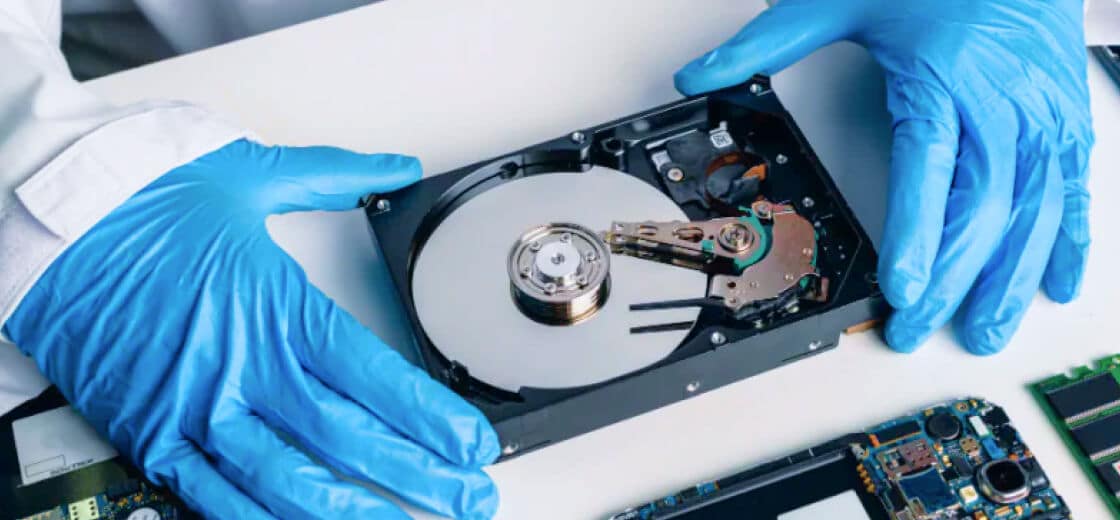
Professional recovery labs are the best option for drives with serious physical damage, repeated clicking sounds, water damage, head failure, or detection issues that software cannot safely handle.
Step 1:
Contact the Hard Drive Recovery Service Provider, providing details about the physical damage sustained by the hard drive.
Step 2:
The hard drive recovery service will perform an initial assessment of the damaged hard drive to determine the extent of the damage and the potential for data recovery. They may provide you with an evaluation report and a quote.
Step 3:
If you agree to proceed, provide authorization and sign any necessary agreements or consent forms. Ship your hard disk to the service provider. They will employ specialized techniques and tools to recover data from the damaged drive.
Pros: Best option for severe physical damage and advanced hardware failure.
Cons: More expensive and usually slower than software-based recovery.
Method 2: Check the Recycle Bin
The quickest way to recover recently deleted files is to check the Recycle Bin before using recovery software.
Step 1:
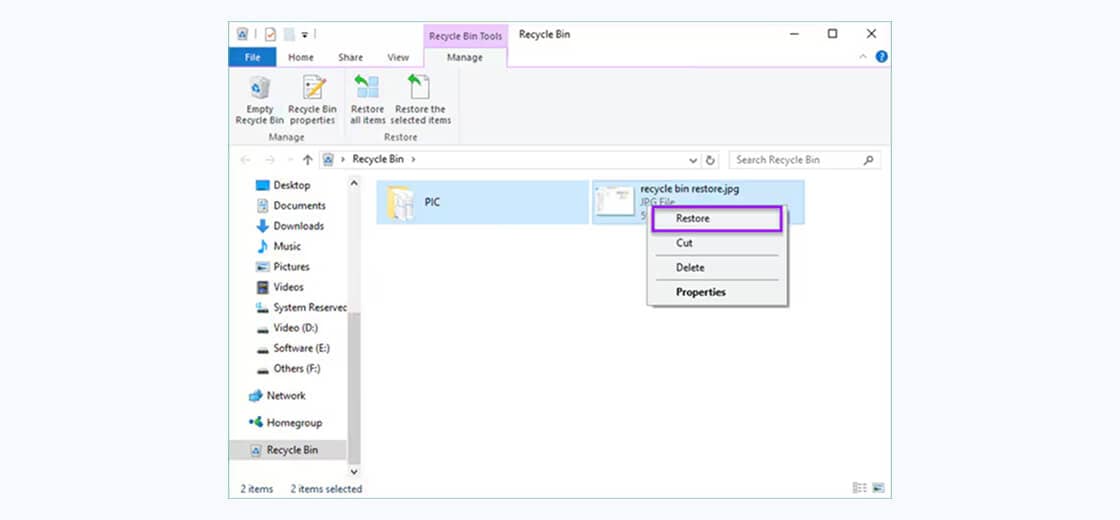
Open the Recycle Bin. Look through the files for your missing video files. Right-click on the videos you want to recover. Select Restore to send them back to their original location.
Step 2:
Alternatively, drag and drop videos to a new location of your choice. Check the original location to confirm the videos are restored properly.
Pros: Fast and free for files that were not permanently deleted.
Cons: Does not help with Shift+Delete, formatted drives, or emptied Recycle Bin data.
Method 3: Use File History
Windows File History can restore earlier versions of files or folders if it was enabled before the data loss occurred.
Step 1:
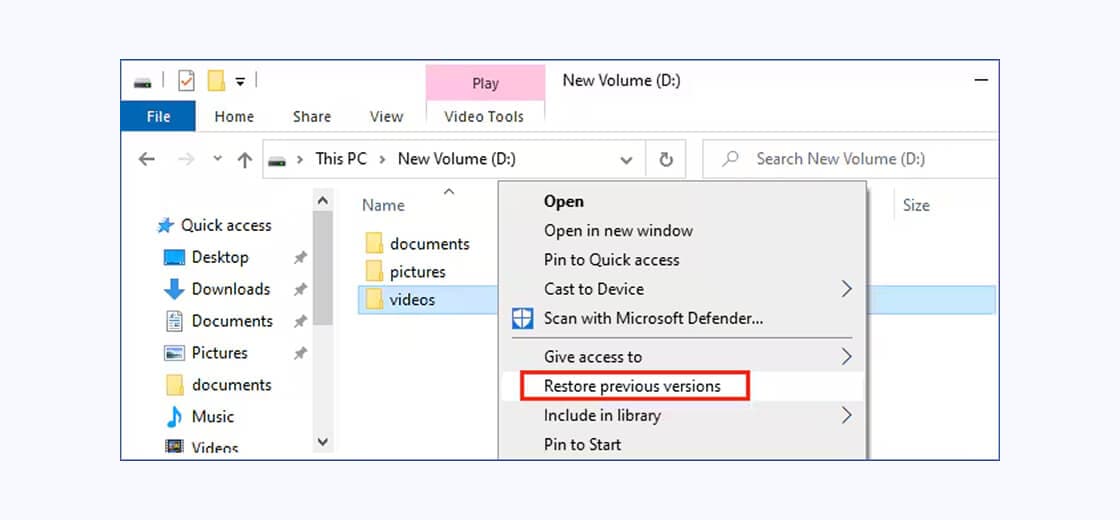
Open File Explorer and navigate to the folder where videos were stored. Right-click in the folder and select Restore Previous Versions.
Step 2:
Look through the available previous versions from different dates. Select a version from before the videos were lost or damaged. Click the Open button to preview the contents without restoring. If you find your videos, click Restore to recover the entire folder.
Pros: Built into Windows and useful for version-based recovery.
Cons: Works only if File History was already configured.
Method 4: Use Windows Backup and Restore
Backup and Restore can recover files from earlier backups when a restore point or backup set is available.
Step 1:
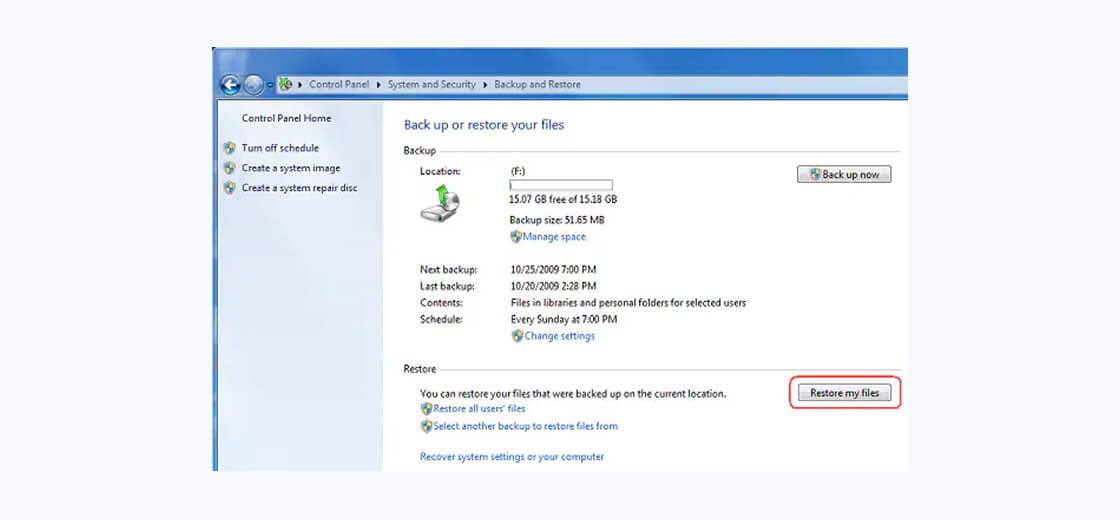
Open Control Panel. Select System and Security then Backup and Restore (Windows 7). Click "Restore my files" if you have a backup available.
Step 2:
Click "Browse for files" or "Browse for folders" depending on what you need. Navigate through the backup to find your video files or folders. Select the videos you want to recover by clicking on them. Click "Add files" to add them to your recovery list. Select "Restore" to begin recovering your videos. Wait for the process to complete.
Pros: Free and effective when a usable backup already exists.
Cons: Not helpful if backup was never enabled before the file loss.
How to Avoid Hard Disk Data Loss
Hard drive data loss is common, but a few maintenance habits can reduce the risk significantly.
Tip 1: Regular backups
Schedule regular backups to another local drive, NAS, or cloud destination.
Tip 2: Disk health monitoring
Monitor disk health so you can respond to warnings before failure becomes severe.
Tip 3: Defragmentation
Keep enough free space and maintain the drive properly. For HDDs, occasional defragmentation may help performance. Do not manually defragment SSDs unless your operating system specifically recommends maintenance.
Tip 4: Virus protection
Keep antivirus and system security tools up to date to reduce malware-related file loss.
Tip 5: Safe shutdowns
Shut down computers properly and avoid unsafe removal of external drives.
Tip 6: Update your software
Keep your operating system, drivers, and firmware updated where appropriate.
Tips to Maximize Hard Drive Recovery Success
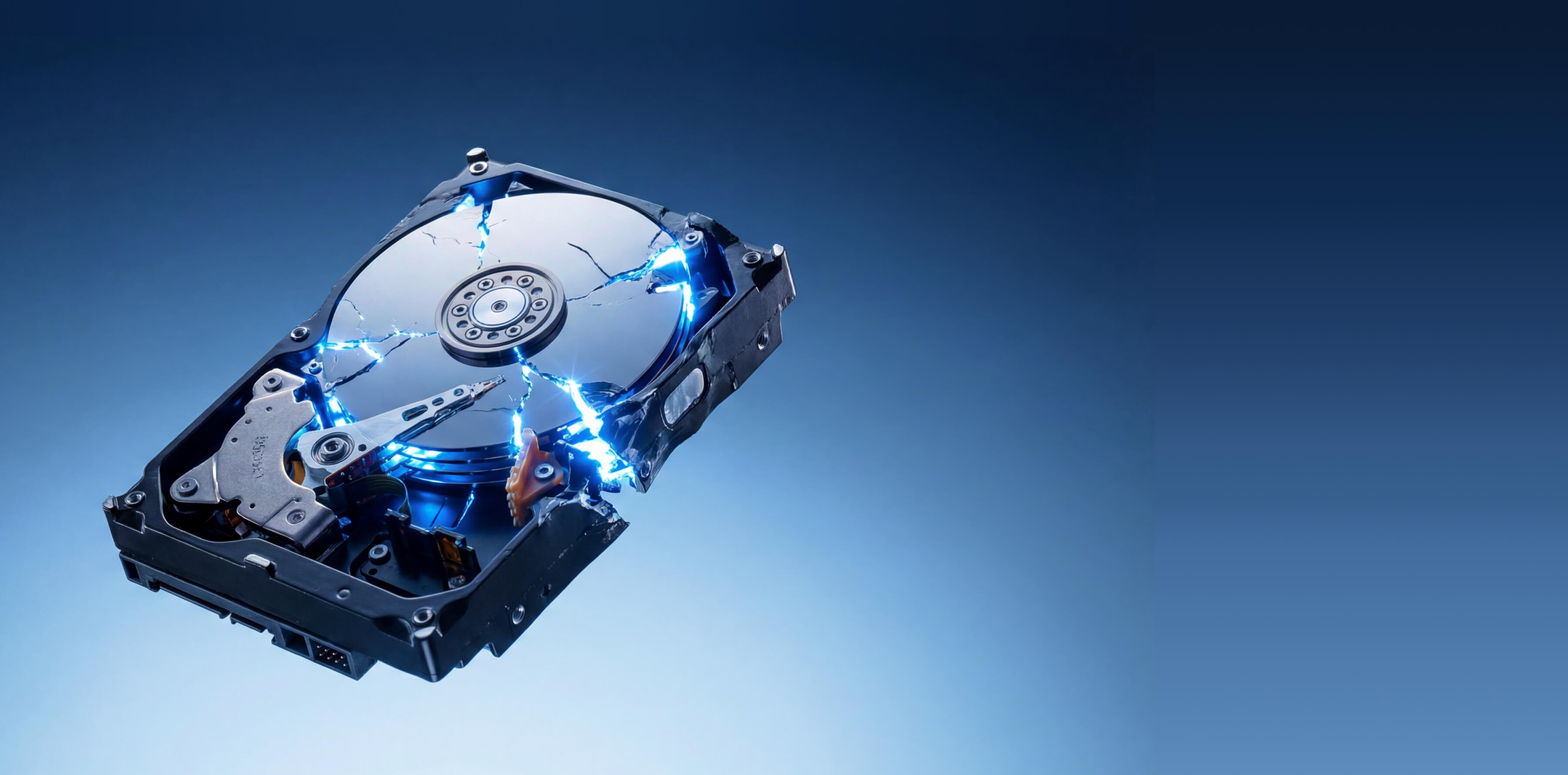
Two of the biggest recovery risks are overwrite activity and worsening disk damage. The following practices improve the chance of successful recovery.
Tip 1: Stop Using the Hard Drive Immediately
Stop using the affected hard drive as soon as you notice data loss.
Tip 2: Take Notice of Unusual Noises
If the drive makes clicking, grinding, or repeated spin-up noises, stop powering it on and seek professional help.
Tip 3: Install the Recovery Software in a Safe Location
Install recovery software on a different drive, not the one that lost data.
Tip 4: Use Reliable Data Recovery Software
Use reliable recovery software only when the drive is still logically accessible.
Tip 5: Recover Files to a New Location
Save recovered files to another healthy storage device.
FAQs about Hard Drive Data Recovery
Can I retrieve files from a corrupted hard drive?
Is it possible to repair a corrupted hard drive?
Is it possible to fix a corrupted hard drive without formatting?
How can I save my data from a corrupted drive?
Can I recover files if my external hard drive makes strange noises?
What should I do if my computer does not detect my external hard drive?
How do I know if my hard drive is failing?
Tips and Video Tutorials for Hard Drive Recovery











One-stop Tool for Hard Drive Data Recovery
With Recoverit, you can easily recover lost/deleted videos, photos and other files from almost all hard drives. Corrupted video repair, photo repair and office documents files repair are also supported.