![How To Factory Reset a Seagate External Hard Drive [2026]](https://images.wondershare.com/recoverit/article/reset-seagate-external-hard-drive-1.jpg)

 TL;DR:
To factory reset a Seagate external hard drive, you must perform a clean data format using your operating system's native tools, as physical reset buttons are exclusive to the legacy Seagate Central series.
● Test the drive on a legacy USB 3.0 or native USB-C port before initiating a reset, as connecting older mechanical drives to modern USB4 or NVMe enclosures can cause firmware mismatches that falsely mimic drive corruption.
● Execute the format via Windows Disk Management or Mac Disk Utility, explicitly selecting the exFAT file system if you require cross-platform read and write compatibility between Windows and macOS systems.
● Immediately run a deep sector scan with data recovery software like Wondershare Recoverit if you accidentally format the drive, ensuring you do not save any new files to the disk to prevent permanent data overwriting.
Ask AI for a summary
 ChatGPT
 Perplexity
 Gemini
 Claude
 Grok
Grok
Knowing how to reset a Seagate external hard drive saves you the trouble of paying for professional services or buying a new HDD because of assuming the existing one is beyond repair. The methods below will help you return it to factory settings in a few steps.
Why use those methods at all? Isn't there a Seagate external hard drive Reset button? Unfortunately, it exists only on Seagate Central HDDs. Try the proven solutions below if you have another HDD.
Before exploring the methods, discover the benefits and issues requiring a Seagate external hard drive reset.
Precautions Before Resetting Your Seagate External Hard Drive to Factory Settings
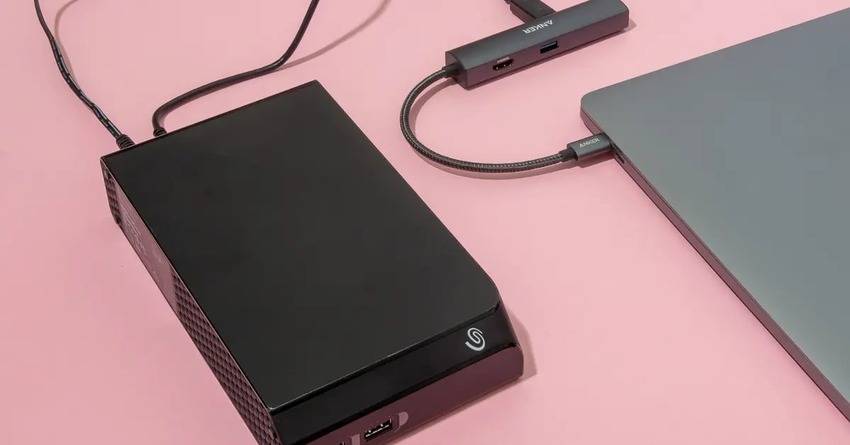
Your most burning question is probably: What happens when you factory reset a Seagate external hard drive?
You guessed it: you wipe all data. That's because you format the drive. However, it stays in the file system, leaving a chance of retrieval if you don't overwrite it with new data.
Still, creating a backup is the safest way to preserve your data. For instance, you can move it to another disk or use a third-party professional backup manager like Wondershare Ubackit.
Here's how straightforward it is:
- Download and install Wondershare UBackit on your computer.
- Connect your Seagate external disk to your PC.
- Launch the program and navigate to Backup > Disk Backup.
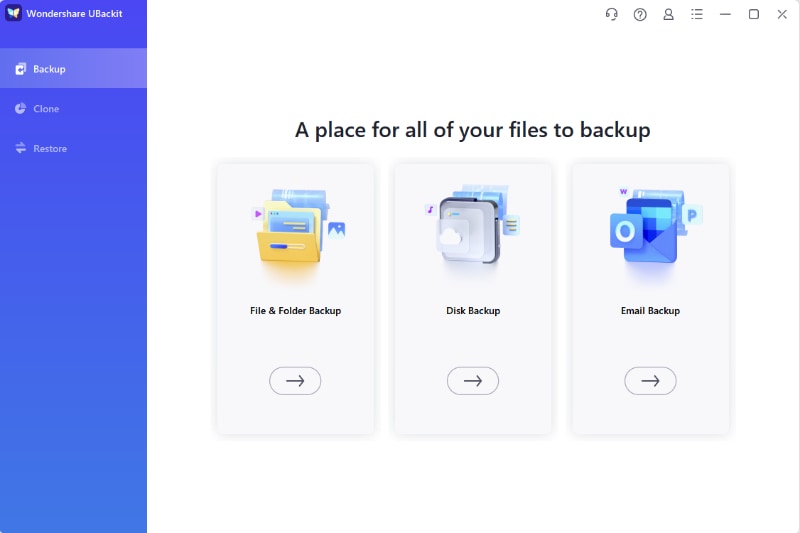
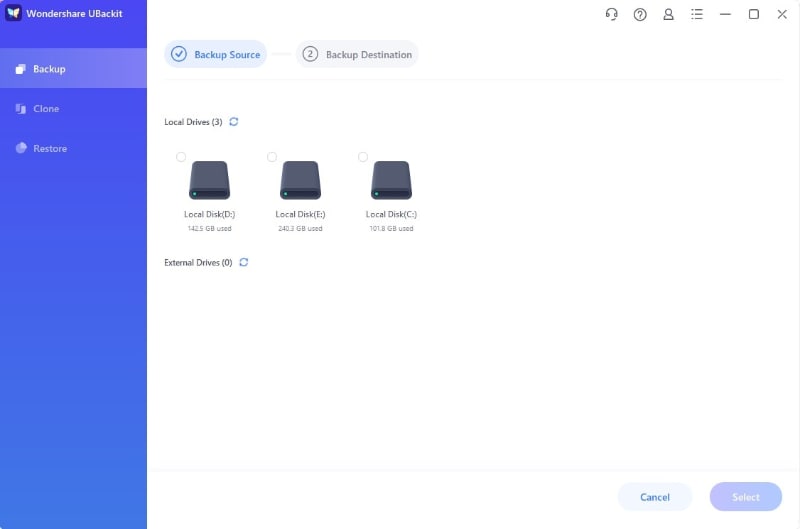
- Choose your Seagate external hard drive under External Drives and click Select.
- Pick your backup destination and click Backup.
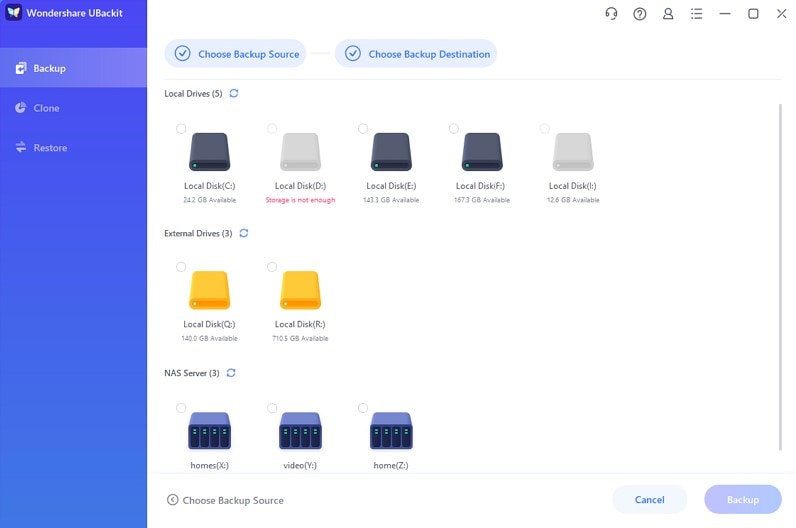
Wondershare UBackit works if you can access your Seagate external hard drive. If it's inaccessible, you'll need data recovery software (more on that in a bit).
Let's see how to factory reset a Seagate external hard drive.

If you are connecting an older mechanical Seagate HDD through a modern USB4 port or an advanced multi-drive NVMe docking enclosure, firmware translation mismatches can sometimes mimic drive corruption or cause random write-protection blocks.
Before initiating a destructive factory reset, safely disconnect the drive, power cycle your host machine, and test the Seagate drive using a native USB-C or legacy USB 3.0 port. If the operating system still marks the device as unreadable, proceed with the system formatting options detailed below.
How To Reset a Seagate External Hard Drive on Windows

Here's how to factory reset a Seagate external hard drive on Windows 10, 11, or older versions and a Mac device.
Way 1. Reset Seagate External Hard Drive Using DiscWizard
DiscWizard is Seagate's integrated software for managing disks and partitions, including cloning your OS, apps, and data. It lets you format new and existing hard drives, setting up your preferred file system.
Here's how to reset a Seagate external hard drive to factory settings using DiscWizard:
- Download DiscWizard from Seagate's official website.
- Install and run the program and navigate to Tools > Add New Disk.
- Choose the one you wish to reset and click Next.

- Click OK if you see a confirmation message regarding wiping the HDD (it will pop up if your HDD has partitions).

- Choose MBR to reset a Seagate 2TB external hard drive or GPT to format a higher-capacity disk. Click Next.

- Right-click the Unallocated section at the bottom, click Create new partition, and hit Next.

- Set the file system, volume letter, and label. Click Accept.

- Click your new drive and hit Next.

- Finally, click Proceed and wait for the confirmation message.

Way 2. Reset Seagate External Hard Drive Using Disk Management
Disk Management is a Windows utility for managing hard drives, including initializing, formatting, and deleting disks and partitions.
Here's how to reset a Seagate external hard drive to factory settings in Disk Management:
- Connect your Seagate external HDD to your PC.
- Use the Windows key + R keyboard shortcut to open the Run command dialog box.
- Type diskmgmt.mse and hit Enter to launch Disk Management.
- Select your Seagate HDD in the upper section, right-click its partition below, and click Format.

- Choose the file system, label the volume, tick the Perform a quick format checkbox, and click OK.

Way 3. Reset Seagate External Hard Drive Using Diskpart
Diskpart is a Windows command-line utility in Command Prompt (CMD) for managing internal and external disks and partitions, including formatting and resetting them. Here's how to use it to restore your Seagate external HDD to factory settings:
- Connect your external drive to your PC.
- Search for Command Prompt in the Windows Taskbar's search bar and click Run as administrator.
- Run the
diskpartandlist diskcommands one by one. - Find your Seagate HDD among the available volumes and run this command:
select disk 6(replace “6” with a corresponding number). - Run this command to wipe and reset the drive:
clean all.
You can now format the drive in DiscWizard, Disk Management, or File Explorer (below). They're more straightforward than Windows Command Prompt.
Way 4. Reset Seagate External Hard Drive Using File Explorer
File Explorer is excellent for formatting local and portable disks. Moreover, it offers the fastest method.
Here's how to factory reset a Seagate external hard drive in File Explorer on any Windows OS version:
- Connect your Seagate HDD to your PC.
- Launch File Explorer, select This PC in the sidebar, right-click your Seagate HDD, and click Format.
- Choose the file system, add the volume label if necessary, tick the Quick Format checkbox, and hit Start.

Way 5. Reset Seagate External Hard Drive Using Settings
If you can't access your Seagate external hard drive in File Explorer, use the Settings app to reset the disk. Here's what to do:
- Go to Settings > System > Storage > Advanced storage settings > Disks & volumes.

- Select your HDD and click Properties.

- Click Format.

- Name the HDD, choose the file system format, untick the Perform a quick format checkbox, and hit Format.

Learn more: Quick Format vs. Full Format
Way 6. Reset Seagate External Hard Drive Using PowerShell
PowerShell is a command-line shell (available on all new Windows OS versions) that lets you run commands (command-lets or cmdlets) with arguments (options to change parameters). It's excellent if you can't access your HDD in File Explorer or Settings.
Here's how to restore a Seagate external hard drive to factory settings in PowerShell:
- Connect your Seagate external hard drive to your PC.
- Find PowerShell in the Start menu and click Run as administrator.
- Run the
Get-Diskcmdlet. - Run this cmdlet:
Get-Disk 3 | Clear-Disk -RemoveData(replace “3” with your HDD number). - Type
Ato confirm you want to erase data and hit Enter. - Run this cmdlet:
Initialize-Disk -Number 3(use a corresponding number). - Format the drive with this cmdlet (using the correct number):
New-Partition -DiskNumber 3 -UseMaximumSize | Format-Volume -FileSystem NTFS -NewFileSystemLabel myDrive. Replace the NTFS value with another (if necessary) and the myDrive label with your preferred name. - Assign a new drive letter with this cmdlet:
Get-Partition -DiskNumber 3 | Set-Partition -NewDriveLetter H(review the number and pick an available letter).
How To Reset a Seagate External Hard Drive on Mac
Way 1. Reset Seagate External Hard Drive on Mac Using Terminal Commands
You can reset a Seagate external hard drive using Terminal on macOS. It's a command-line interface providing root-level system access, letting you modify configurations, disks, and partitions, among other controls.
Here's how to leverage the Mac Terminal for a Seagate external hard drive reset:
- Connect your Seagate HDD to your Mac.
- Go to Applications > Terminal or find the app in the Spotlight search feature.
- Run this command:
diskutil list.
- Once you find your Seagate external HDD, run this command:
diskutil eraseDisk format name /dev/identifier. Replace “format” with the desired file system (e.g., APFS or exFAT), “name” with your chosen label, and “identifier” with your disk ID (e.g., disk1 or disk2).
Way 2. Reset Seagate External Hard Drive on Mac Using Disk Utility
Disk Utility is an integrated Mac app for managing internal and external disks, including adding new and restoring backed-up volumes, creating and deleting partitions, and erasing drives. Here's how to reset your Seagate portable hard drive:
- Find Disk Utility with the Spotlight search feature and launch the app.
- Go to View > Show All Devices.

- Select your Seagate hard drive (the non-indented entry) in the sidebar's External section.
- Click Erase in the top menu.
- Name your disk, choose the desired file system format from the drop-down list, and hit Erase.

What To Do if the Reset Doesn't Work
If your Seagate external hard drive reset doesn't work, contact Seagate support for further assistance. Unfortunately, there's no live chat support, although the website claims there is, saying it's available from 8 p.m. Sunday through 8 p.m. Friday.
The only way to contact Seagate support is to call the helpline at 800-732-4283. Once you explain your case to a support representative, they'll help resolve it quickly, even if that means visiting one of the company's locations for in-depth problem diagnostics for your HDD.
What To Do if You Lost Important Files After Resetting the Seagate Hard Drive
Resetting your Seagate hard drive wipes all data, but that doesn't mean it's lost forever. Do you remember us mentioning that formatted disks keep data in their file systems? That means you can retrieve it if you don't overwrite it with new data.
You can recover lost files with data recovery software if you haven't backed up or couldn't access your external disk before resetting it. Wondershare Recoverit – Hard Drive Recovery is an excellent example, supporting 1,000+ file formats and boasting a 95% success rate.
Here's how to retrieve your lost files after resetting your Seagate hard drive:
- Download and install Wondershare Recoverit on your computer.
- Connect your Seagate HDD.
- Run the program and click Hard Drives and Locations.
- Select your Seagate HDD under External Drives to start the scanning process.

- After the automatic scan, choose the files to restore, click Recover, and pick a location.

Reasons You Should Reset a Seagate External Hard Drive
Here's why you should reset a Seagate external hard drive, from the issues requiring it to the benefits you'll enjoy.
📊 Diagnostic Lookup Matrix: Do You Need a Factory Reset?
When your external drive experiences functional failures, check this system behavior lookup table to match your symptoms with the safest recovery remedy:
| Observed System Error / Symptom | Likely Root Cause | Threat Level to Data | Recommended Action Pathway |
| Drive shows as "RAW" in Disk Management | Corrupted Master Boot Record (MBR) or broken partition tables. | High | Run Wondershare Recoverit first, then format via Disk Management. |
| "Write-Protected" or "Access Denied" | Security identifier permission mismatch or active hardware lock. | Low | Clear attributes via Diskpart or modify local account file ownership. |
| Drive drops connection during transfers | Insufficient port power supply or out-of-date USB root hub drivers. | Medium | Update Windows device drivers or switch to a powered USB hub. |
| Persistent read/write slowdowns | High concentration of logical bad sectors or internal storage index wear. | Low | Execute a full, deep format via Windows Settings or Mac Disk Utility. |
| Drive invisible to File Explorer | Missing or conflicting drive letter assignment on the local network. | Zero | Remap the storage volume letter using Disk Management (Fix 2). |
Benefits of Resetting the Hard Drive
Resetting your Seagate external hard drive (or another HDD) will fix any issue preventing you from accessing your data. It will remove malware, eliminate corruption, and resolve other problems, enhancing the disk's performance and health.
However, you don't have to wait for a problem to reset your HDD. Returning it to factory settings after prolonged use will refresh the disk, helping it work more efficiently.
Another benefit of resetting your external hard drive is changing its file system to make it compatible with your OS.
Choosing the correct file system structure during your factory reset guarantees seamless read/write speeds and multi-platform access across your devices. Use this reference layout to choose your destination formatting standard:
| File System Standard | Target Operating System | Maximum File Size Limit | Key Use Case & Cross-Platform Behavior |
| NTFS | Windows 10 / 11 Native | 16 TB (Theoretical max) | Best for Windows-exclusive environments. Read-only on macOS without installing third-party drivers like Paragon. |
| APFS | macOS High Sierra or later | 8 EB | Best for Apple-exclusive environments. Optimized for modern Mac solid-state and fusion drive systems; invisible to Windows. |
| Mac OS Extended (HFS+) | Legacy macOS versions | 8 EB | Best for older Mac systems. Ideal for mechanical backup drives, but requires special drivers to mount on Windows. |
| exFAT | Universal (Windows & Mac) | 16 EB | Best for cross-platform workflows. Fully compatible with both Windows and Mac operating systems out of the box with no extra drivers required. |
| FAT32 | Universal (Legacy & Mobile) | 4 GB | Best for older hardware. Supported universally, but cannot hold individual files larger than 4 gigabytes. |
However, if you regularly switch between Windows and Mac devices, your HDD should have an exFAT or FAT32 format because both operating systems support them. Still, the Paragon Driver should be in your toolbox because it gives both your computers read and write access.
Conclusion
Now that you know how to reset a Seagate external hard drive, it's time to pick a suitable method and refresh your disk. The best part is these solutions (except DiscWizard) work for other manufacturers' HDDs. Therefore, you can rely on them regardless of your storage medium.
🏁 Post-Reset Data Safety Verification Checklist
Now that you know how to factory reset a Seagate external hard drive, follow this verification checklist to ensure optimal device health moving forward:
- Partition Status Checked: Is the newly formatted drive fully initialized and recognized with a healthy partition tag inside Disk Management or Disk Utility?
- Cross-Platform Verification: If you configured your hard drive to exFAT, have you verified that it mounts with unhindered read and write permissions on both your Windows and Mac systems?
- Eject Habit Configured: Have you committed to safely removing hardware via your desktop taskbar every time you disconnect the drive to protect your new file index allocation table?
- Security Sandbox Clearance: Have you run a baseline automated malware scan over the clean volume to shield it from local system cross-contamination?
- Emergency Toolkit Ready: Is Wondershare Recoverit pinned to your storage desktop toolkit so you can handle unexpected partition crashes or accidental file deletions instantly?
FAQ
-
Can you reset a Seagate external hard drive?
Yes, you can reset a Seagate external hard drive. Whether you wish to boost its performance, switch to another file system format, or fix a software issue, a factory reset is the best way to give it a fresh start. -
How do I reset my Seagate external hard drive?
If you're a Windows user, you can use DiscWizard, Disk Management, CMD's diskpart command, File Explorer, the Settings app, and PowerShell to reset your Seagate external hard drive. The Terminal and Disk Utility are your available options on macOS. -
How do I fix a Seagate hard drive failure?
Before fixing Seagate hard drive failure, use data recovery software like Wondershare Recoverit to retrieve files and avoid data loss. Then, scan the HDD to check for errors and potentially eliminate them. You can also format it, but if that doesn't resolve the issue, contact Seagate support at 800-732-4283 for further assistance.