
 TL;DR:
macOS Sonoma vs Ventura comes down to your hardware: Ventura (2022) supports Macs from 2017 onward (MacBook Pro/Air 2017+, Mac mini 2018+, Mac Pro 2019+) and is the stable, power-efficient pick for older machines; Sonoma (2023) requires 2018 or newer Macs and adds interactive desktop widgets, Game Mode, Presenter Overlay, Reactions, Safari profiles, and improved accessibility. On a 2017 Mac, stay on Ventura; on 2018+ hardware, Sonoma is the richer upgrade. Back up with Time Machine before upgrading — if an interrupted upgrade loses data, recover it with Wondershare Recoverit.
Ask AI for a summary
 ChatGPT
 Perplexity
 Gemini
 Claude
 Grok
If you're a Mac user deciding between staying on Ventura or upgrading to Sonoma, this choice affects performance, compatibility, and daily experience. This article compares the two — features, compatibility, security, and which one fits your hardware — and covers data recovery if an upgrade goes wrong.
In this article
Part 1. What is macOS Ventura?
macOS Ventura 13, officially released in October 2022, focused on productivity and multitasking. Its headline feature is Stage Manager, which arranges windows and apps so you can switch between tasks and manage your workflow easily. Ventura also introduced Continuity Camera, Passkeys, and a redesigned System Settings — a solid, stable base that runs on Macs from 2017 onward.
Part 2. What is The New macOS Sonoma?
Released in September 2023, macOS Sonoma is the 14th version of macOS, built on Ventura's foundation. Sonoma brings interactive desktop widgets that you can place and control directly on the desktop, plus a new Game Mode that boosts gaming performance by prioritizing CPU and GPU resources. It also adds Presenter Overlay and Reactions for video calls, Safari profiles, and more natural VoiceOver speech.

Part 3. Sonoma vs. Ventura - Compatibility Differences
Before deciding which macOS to install, check device compatibility — this is the single biggest factor. Below is the supported Mac model list for each system:
| Supported Mac Model | macOS Ventura | macOS Sonoma |
| iMac Pro | 2017 (all models) | 2017 (all models) |
| MacBook Pro | 2017 and later | 2018 and later |
| MacBook Air | 2017 and later | 2018 and later |
| MacBook | 2017 and later | 2018 and later |
| Mac Mini | 2018 and later | 2018 and later |
| Mac Pro | 2019 and later | 2019 and later |
The pattern is simple: if your Mac is from 2017, Ventura is the latest macOS you can run; 2018 and newer Macs can run either — so the choice comes down to features, not just compatibility.
Part 4. Sonoma vs. Ventura – Key Differences at a Glance
Beyond compatibility, the two systems differ in daily experience:
1. Performance
macOS Ventura is a stable platform with good performance on supported Macs, broad device support, and efficient power use — though it has no gaming optimizations, so it's not ideal for graphics-intensive work. macOS Sonoma works best on modern hardware, adds Game Mode (which prioritizes CPU/GPU for the game in focus), and improves graphics control and power management for smoother frame rates.
2. Widgets
In Ventura, widgets live in the Notification Center — you can see information, but not place or combine widgets on the desktop. Sonoma lets you put interactive widgets directly on the desktop and inside apps, with real-time data and controls, making the interface more dynamic and customizable.


3. Screensavers
Ventura keeps traditional, mostly static screensavers with clean, simple designs and little customization. Sonoma refreshes them with dynamic, customizable screensavers — including aerial-style scenes of cities and landscapes — that can be tailored to your device's look.


4. Video Conferencing
Ventura introduced Continuity Camera, using an iPhone as a Mac webcam, but its conferencing tools stay basic. Sonoma steps up with Presenter Overlay (showing the presenter over shared content), Reactions (on-screen emoji and visual feedback), and better camera controls for polished meetings.


5. Improved Meetings
Ventura supports essential collaboration like screen sharing and note-taking, but its meeting tools remain standard. Sonoma adds Live Speech (converting typed words into spoken audio during calls) and spatial audio that helps distinguish multiple voices naturally, improving clarity in virtual meetings.
6. Security Features
Both systems prioritize privacy and security with regular patches. Here's how their security features compare:
| Security Feature | macOS Ventura | macOS Sonoma |
| Communication Safety | Warns before sending/receiving sensitive content in Messages | Auto-blurs sensitive content in Messages |
| Lockdown Mode | Introduced — basic lockdown protection | Enhanced lockdown mode with stronger protections |
| Password Management | Standard password manager (Passwords) | Standard password manager with shared groups |
| Encryption | FileVault full-disk encryption | Continued encryption with network-level improvements |
7. Web Apps and Safari
Ventura's Safari includes tab groups and private browsing with shared passwords, but lacks per-context organization. Sonoma adds Safari Profiles — separate profiles for work, personal, and other contexts — plus faster private browsing and better support for web apps (any site can be saved to the Dock like an app).

8. Accessibility Differences
Ventura provides a solid accessibility foundation — VoiceOver, text-to-speech, display accommodations, hearing support, and background sounds. Sonoma refines this with more natural VoiceOver speech and additional display accommodations for easier text customization, making it a more inclusive system.

Part 5. Sonoma vs Ventura – Which Version Should You Choose and Why?
Use this decision guide to pick:
| Situation | Recommendation | Why |
| Mac from 2017 (MBP/Air/MacBook) | Stay on Ventura | Sonoma requires 2018+ hardware — Ventura is the newest you can install |
| Mac from 2018 or newer, want latest features | Upgrade to Sonoma | Interactive widgets, Game Mode, Presenter Overlay, Safari profiles |
| Priority is stability and battery life | Ventura | Mature, efficient; Sonoma's new features use more resources on some Macs |
| Priority is gaming or video calls | Sonoma | Game Mode boosts frames; Presenter Overlay/Reactions improve calls |
| Upgrade already failed / lost files | Recover data first | Recoverit restores files before you reinstall |
Bonus Tip: Sonoma vs Ventura – Fix Data Loss from Failed Upgrade
Upgrading to macOS Sonoma can occasionally cause data loss — usually when the installation is interrupted by power loss or a crash. Wondershare Recoverit can get your files back even after a failed upgrade, on both Mac and Windows, with an intuitive interface, a search bar for specific files, and pause/resume scanning.
Key Features
- Batch File Recovery: Recover more than one file at a time, saving time and effort.
- Multiple Formats Support: Support for more than 1000 file formats — images, videos, and other lost or damaged data.
- Preview Before Saving: Preview files inside the tool before saving them to your device.
Comprehensive Guide to Recover Files on macOS with Recoverit
Follow these steps to recover files from a macOS system:
- Select the Device Location. Launch Recoverit, then choose the location on the homepage — the scan starts immediately.
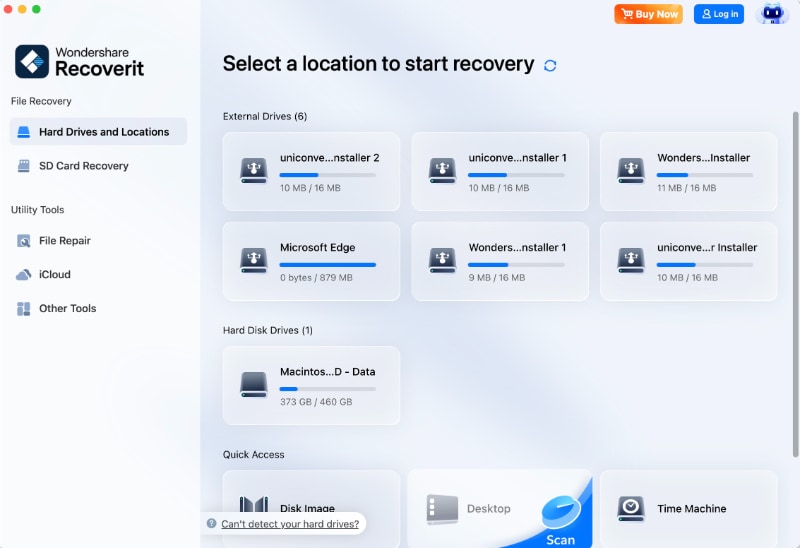
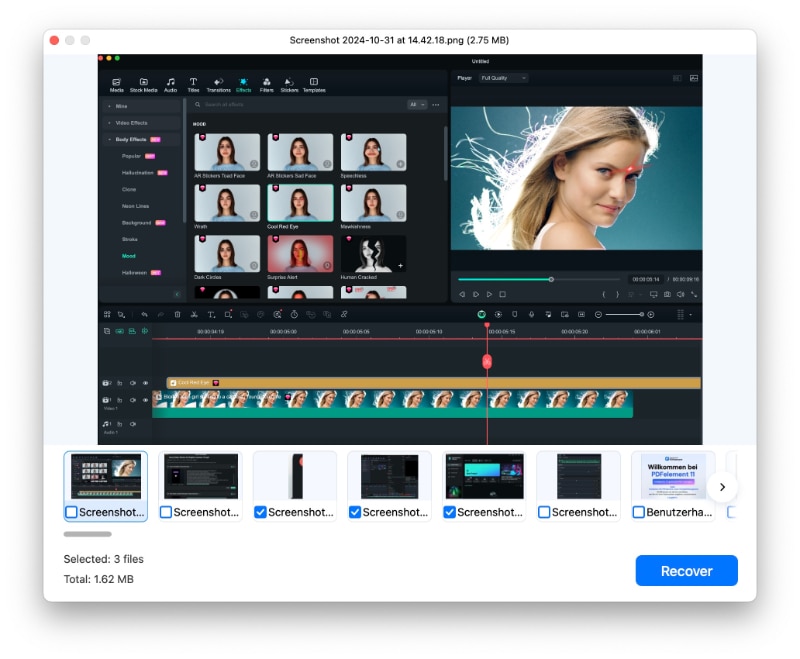
- Choose the Files for Recovery. Recoverit lists all recoverable files; select the ones you need and press the "Recover" button.

- Preview the Recovered Files and Export. Preview your selected files, then press the "Recover" button to save them to your device.
Conclusion
Sonoma vs Ventura is mainly a hardware question: 2017 Macs stay on Ventura, 2018+ Macs can enjoy Sonoma's widgets, Game Mode, Safari profiles, and conferencing tools. Back up before upgrading, and if a failed upgrade costs you data, recover it with Wondershare Recoverit.
- Recovers data from 1000+ file formats across HDDs, SSDs, USB drives, SD cards and more.
- Handles 10000+ data loss scenarios, including deletion, formatting, corruption, and virus attacks.
- Recovers lost or deleted files like documents, photos, videos, music, and emails safely and completely.
- Restores full HD, Ultra HD, 4K and 8K videos without corruption.

FAQ
-
1. Can I upgrade from macOS Ventura to Sonoma without losing data?
Yes, if you prepare properly — back up with Time Machine (or another reliable method) and ensure enough free disk space before upgrading. -
2. Will macOS Sonoma run on my 2017 MacBook Pro?
No — Sonoma requires MacBook Pro models from 2018 onward, so the 2017 model stays on Ventura or an earlier macOS version. -
3. How can I recover data if the upgrade to Sonoma fails or causes data loss?
Use a trusted recovery tool like Recoverit to restore lost files safely — it supports multiple file types and offers guided recovery for macOS devices. -
4. Can I recover damaged data as well using Recoverit?
Yes — Recoverit recovers damaged or corrupted files too, and its advanced scanning algorithms improve the odds of retrieving files from failed upgrades or system errors. -
5. How long will Apple support Ventura with security updates?
Apple typically supports the last three macOS releases. With Sonoma, Sequoia, and Tahoe shipping, Ventura is near the end of its window — check Software Update regularly and move to a supported version when your hardware allows.


