

 TL;DR:
You can recover lost or unsaved Adobe InDesign (INDD, IDML, INX) files by utilizing built-in application safeguards for software crashes, OS-level history tools for overwritten data, or third-party recovery software like Recoverit for emptied trash and severe drive failures.
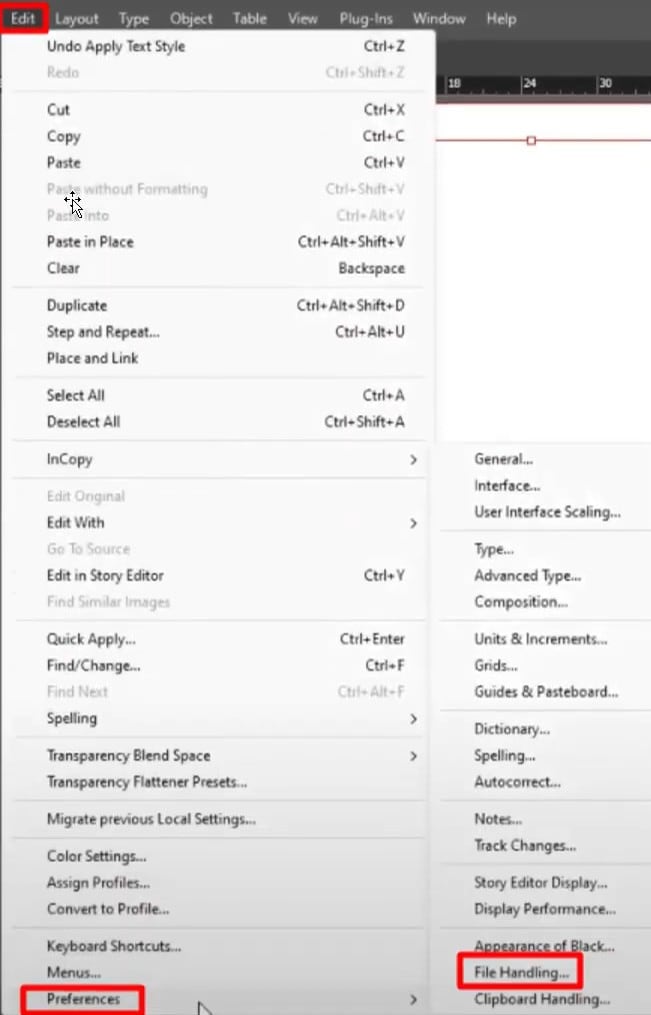
● For unsaved progress lost to sudden crashes, relaunching InDesign will automatically prompt the built-in Auto-Recovery feature, or you can manually trace the temporary files using the folder path located in Edit > Preferences > File Handling.
● To restore previously saved project states or mistakenly deleted layouts, use Time Machine on Mac or the Previous Versions tab within the file properties on Windows, provided these continuous backup systems were active before the data loss occurred.
● To prevent future file corruption and save errors, always copy your project files to a local drive before editing, as working directly from USBs or external storage increases the risk of damage from sudden disconnections.
Ask AI for a summary
 ChatGPT
 Perplexity
 Gemini
 Claude
 Grok
Grok
InDesign files are the backbone of creative projects, as they contain hours of work. Losing these files can lead to missed deadlines, wasted effort, and significant financial loss, especially for professional designers or agencies. Recovering an InDesign file ensures that your creative vision is preserved and your projects remain on track.
Understanding the recovery process helps prevent permanent data loss. In this article, we explore effective methods to recover InDesign files safely and efficiently.
Try Recoverit to Perform InDesign File Recovery
 Security Verified. 3,591,664 people have downloaded it.
In this article
-
- Use InDesign Auto‑Recovery (Unsaved Work)
- Use Undo, Revert, And Recent Files
- Recover Deleted INDD Files From Trash/Recycle Bin
- Restore From Time Machine, Previous Versions, Or Cloud Backups
- Find the Unsaved InDesign Files in the InDesign Recovery Folder
- Use File Recovery Software (For Emptied Trash Or Drive Issues)

Part 1. Why InDesign File Recovery Is Crucial
InDesign files are the documents created on Adobe InDesign for digital and print media. These files come in INDD, IDML, and INX extensions. They store layouts, text, images, and design elements for professional publishing. Losing these files means losing access to your creative hard work. Follow the section below to learn about the most common causes of InDesign file loss:
- Accidental Deletion: Files can be mistakenly deleted from folders or the recycle bin. Recovering them quickly is critical to prevent permanent loss.
- Software Crashes: InDesign may crash unexpectedly while working on a project. This can corrupt files and make them unusable if not saved properly.
- Storage Failures: Hard drives, SSDs, or external drives can fail without warning. Important InDesign files may be lost permanently if backups are missing.
- Virus or Malware: Malicious software can infect systems and corrupt INDD, IDML, or INX files. This may result in inaccessible or damaged project files, making you restore indesign file.
- Improper Transfers: Moving files between devices, cloud services, or different formats can cause errors. These errors sometimes make InDesign files disappear or become unreadable.
Part 2. How to Recover InDesign Files on Windows and Mac - 7 Recovery Ways To Try!
Knowing the significance of recovering an InDesign file, it gets easier to execute the recovery. The following section explains the methods of retrieving a design file:
1. Use InDesign Auto‑Recovery (Unsaved Work)
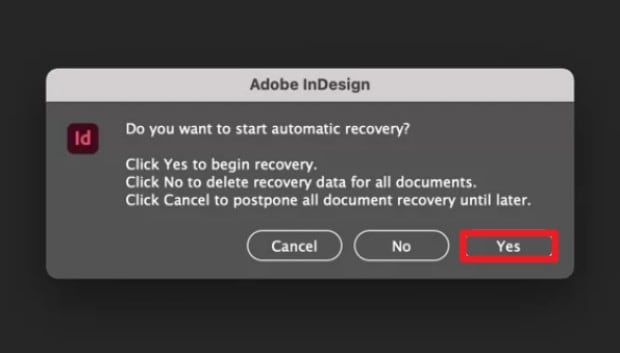
InDesign’s Auto-Recovery automatically saves temporary copies of unsaved projects at regular intervals. Utilizing this feature allows designers to recover work lost from crashes or power failures, preventing hours of effort from being wasted. This feature is available on both Mac and Windows devices and has the same navigation. The following steps explain how you can use the InDesign Auto-Recovery feature for file restoration:
Instructions. On opening the InDesign tool, you will see a dialogue box, which is a permission to begin auto recovery. Here, hit the “Yes” button to enable this built-in feature.
2. Use Undo, Revert, And Recent Files
Undo, Revert, and Recent Files features help correct mistakes or recover previous project states quickly. Using these tools protects against accidental changes or errors, preserving original layouts and content. This approach reduces frustration, maintains workflow continuity, and ensures that design progress is not permanently lost during editing sessions. If you want to learn how to recover indd file using this technique, follow this guide:
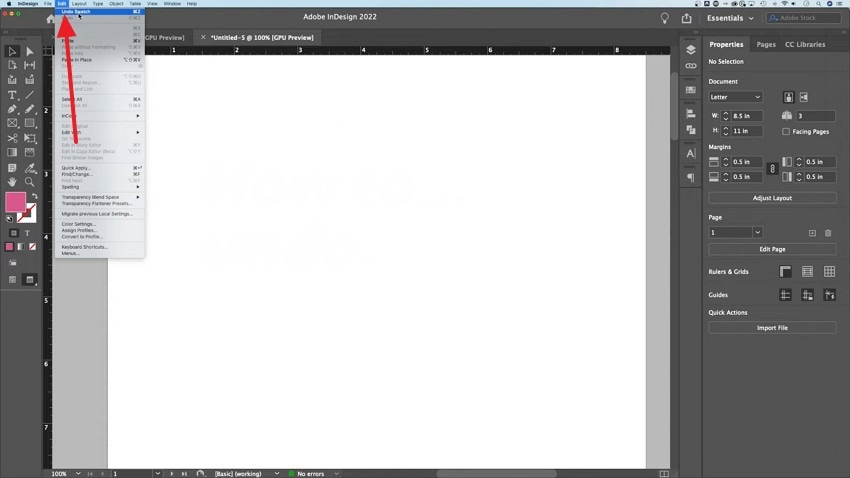
Undo in InDesign
Instructions. To reverse a mistaken action in InDesign, open the “File” menu on the top left and select the “Undo” button.
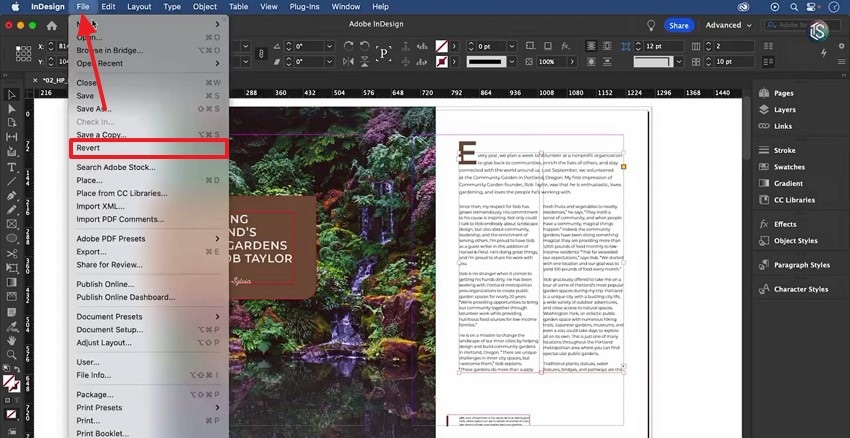
Revert to InDesign
Instructions: In the “File” menu, select the “Revert” button to roll back to the previous version of your file.
Recent Files on InDesign
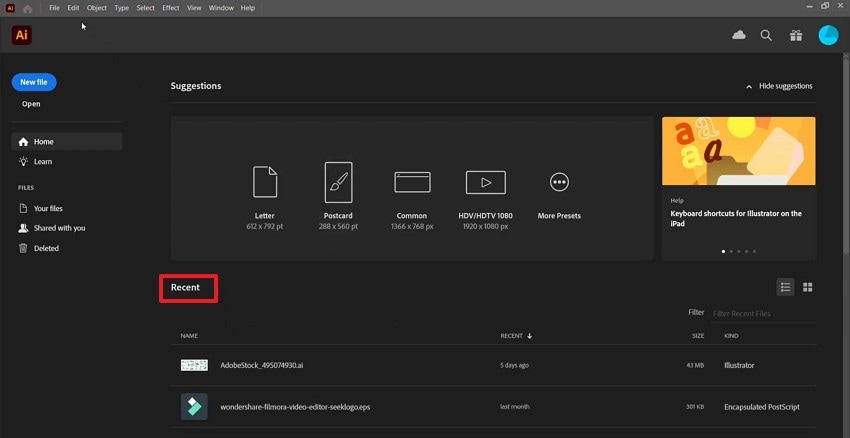
Instructions. From the main page of InDesign, navigate to the “Recent” folder and access the recently created projects.
3. Recover Deleted INDD Files From Trash/Recycle Bin
Recovering files from the Trash or Recycle Bin restores projects mistakenly deleted by users. This method prevents permanent data loss and ensures designers can continue working without redoing complex layouts. The following steps explain how to execute adobe indesign file recovery from the Trash and Recycle Bin:
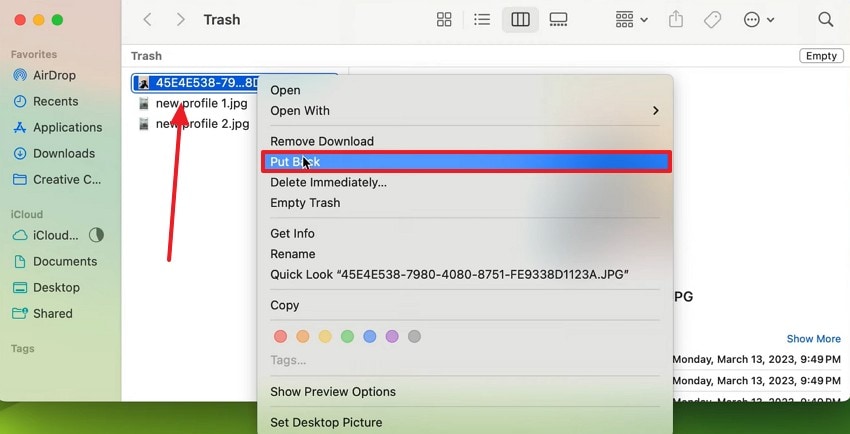
Recovering from Trash
Instructions. To recover a deleted file on Mac, open the Trash folder and right-click on the recently deleted InDesign file. Using the extended menu, click the “Put Back” button to restore it to the device.
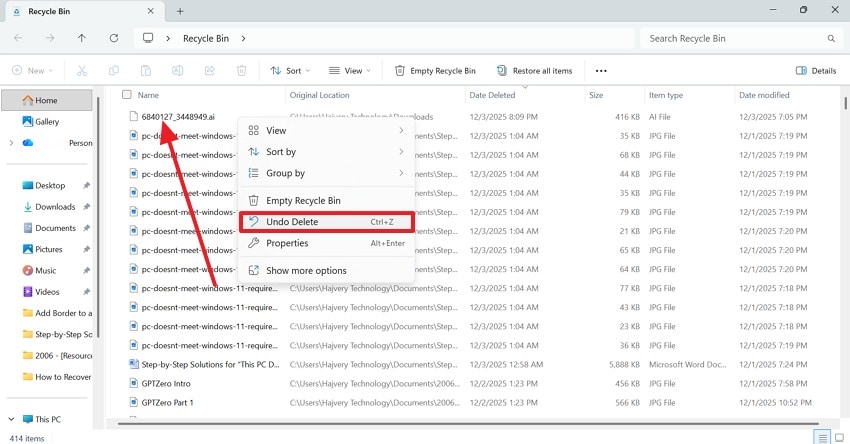
Recovering from the Recycle Bin
Instructions. In the Recycle Bin folder, right-click on the deleted InDesign file and select the “Undo Delete” button for effective recovery.
4. Restore From Time Machine, Previous Versions, Or Cloud Backups
Time Machine, previous version tools, or cloud backups store historical copies of InDesign files. Using these methods safeguards against storage failures, accidental deletions, or corruption. Designers can retrieve previous iterations of their projects, maintaining deadlines and avoiding loss of critical creative content or design progress. Follow the steps below and learn indesign recovery from Time Machine, Previous Versions, and Cloud Backups:
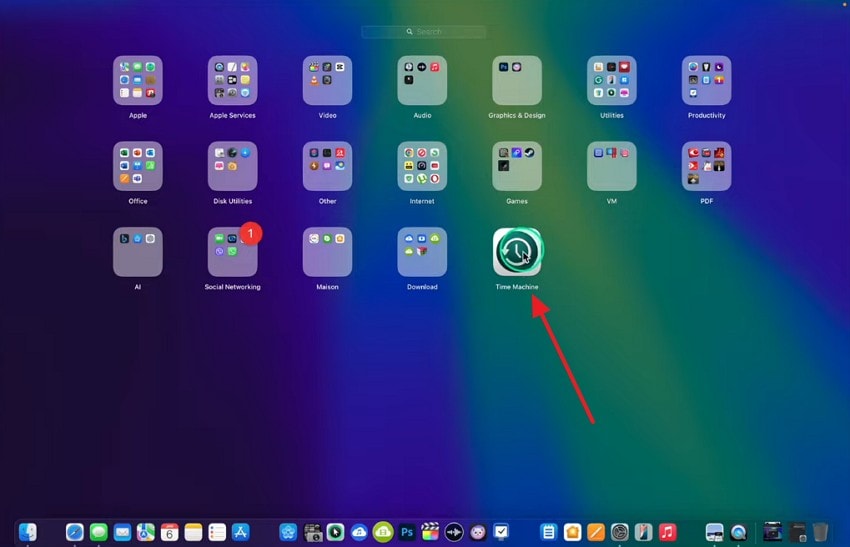
Time Machine (Mac)
- As you access the desktop interface of your Mac, select the “Time Machine” icon from the apps menu.
- Using Finder, select the folder where you last saved the file, or you can also search for the file by entering its name.
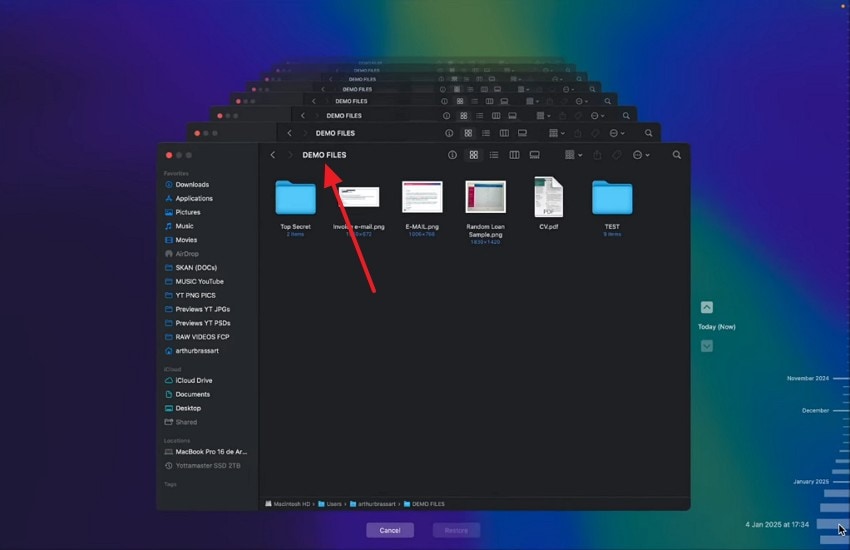
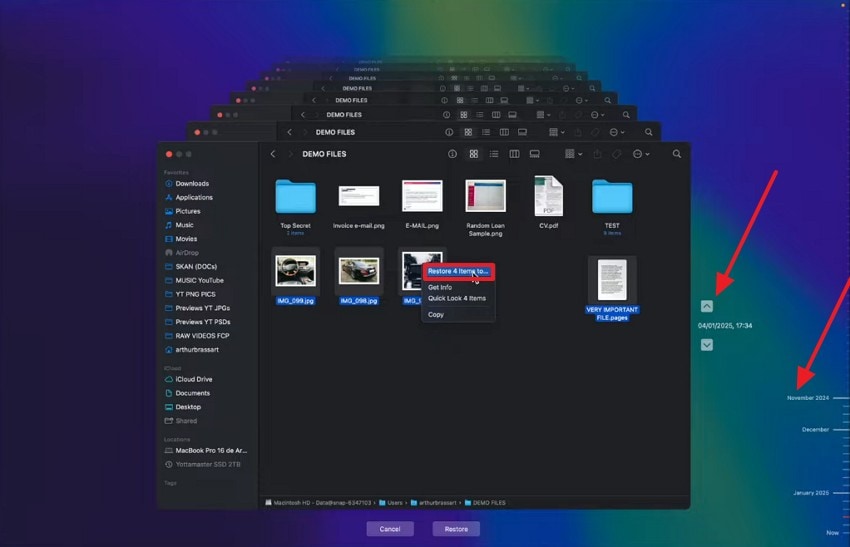
- Now, consult the arrows or the timeline on the right to find the file that you are looking for. Upon finding the file, press the “Spacebar” key to preview the file and select the “Restore” button to recover it.
Previous Versions (Windows)
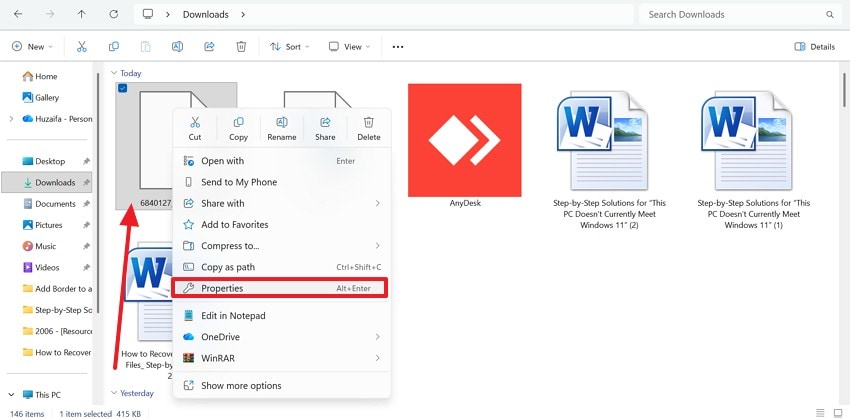
- In your Windows device, locate the InDesign file and right-click on it. In the pop-up menu, select the “Properties” button to open a new window.
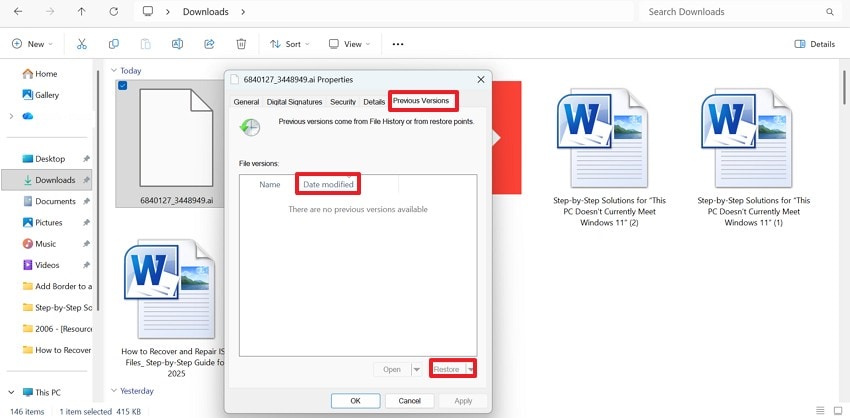
- In this new window, enter the “Previous Versions” section and select the time and date of the desired version from the “Date Modified” tab. Now, click the “Restore” button to retrieve the previous version of the file.
Restoring from Cloud Backup
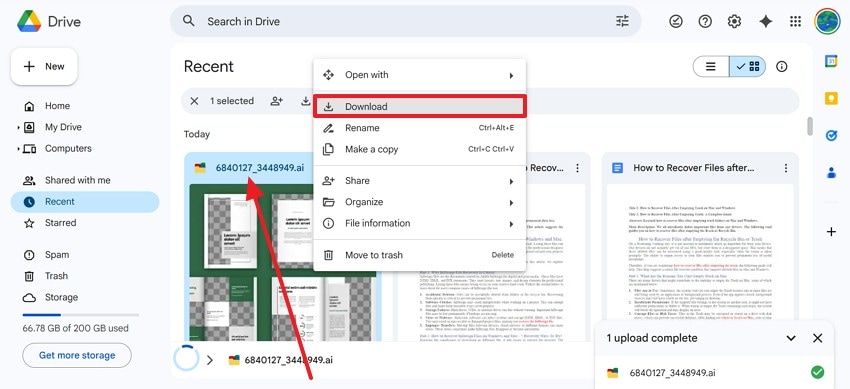
Instructions. Open the shared InDesign file on Google Drive and locate the InDesign file. Right-click on the file and select the “Download” button to recover it.
5. Find the Unsaved InDesign Files in the InDesign Recovery Folder
The InDesign Recovery Folder stores temporary versions of unsaved files after crashes or unexpected shutdowns. Accessing this folder allows designers to recover lost layouts, text, and images. This approach reduces the risk of starting projects over, preserving hours of work, and protecting the integrity of design content. This guide explains how you can find the unsaved progress to recover indesign file:
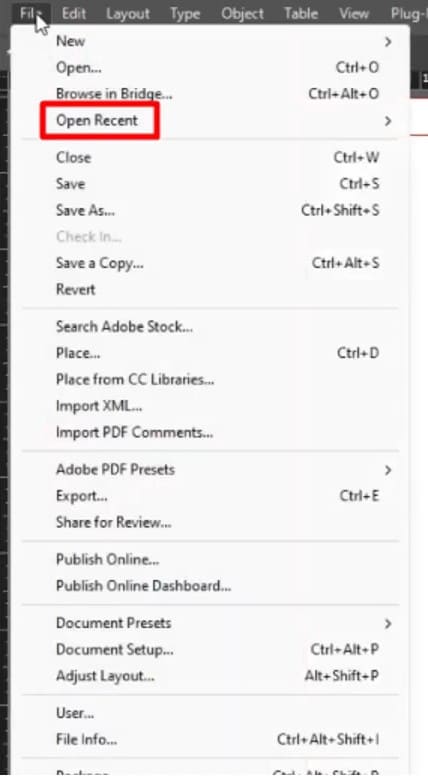
- In InDesign, select the “File” menu and hover the mouse over the “Open Recent” option. Now, select the and open the desired InDesign file.
- In the “Edit” menu, expand the “Preferences” settings. Select the “File Handling” option to open a Preferences window. Now, click the File Handling option and select the file that you need to recover by seeing its timestamp. The recovered file can be opened and edited in InDesign now.
6. Use File Recovery Software (For Emptied Trash Or Drive Issues)
If the methods mentioned above are not effective, use Recoverit to recover indd file. This platform supports over 1,000 types of files for effective file retrieval. You can benefit from the 99.5% success rate to recover the lost documents with accuracy. This tool does not harm the formatting and quality of the originally saved file. You can also use the batch recovery tool to process multiple InDesign files in a single go.
Recoverit can be accessed on Mac and Windows devices to ensure maximum flexibility. You can recover InDesign files from more than 1 million storage devices and enhance productivity. If you fail to retrieve the missing files using the default scanning, use the Deep Scan feature for an extensive search for the file.
- Lost File Scenarios: No matter the cause of file loss, Recoverit can be trusted, as it supports more than 10,000 lost file scenarios.
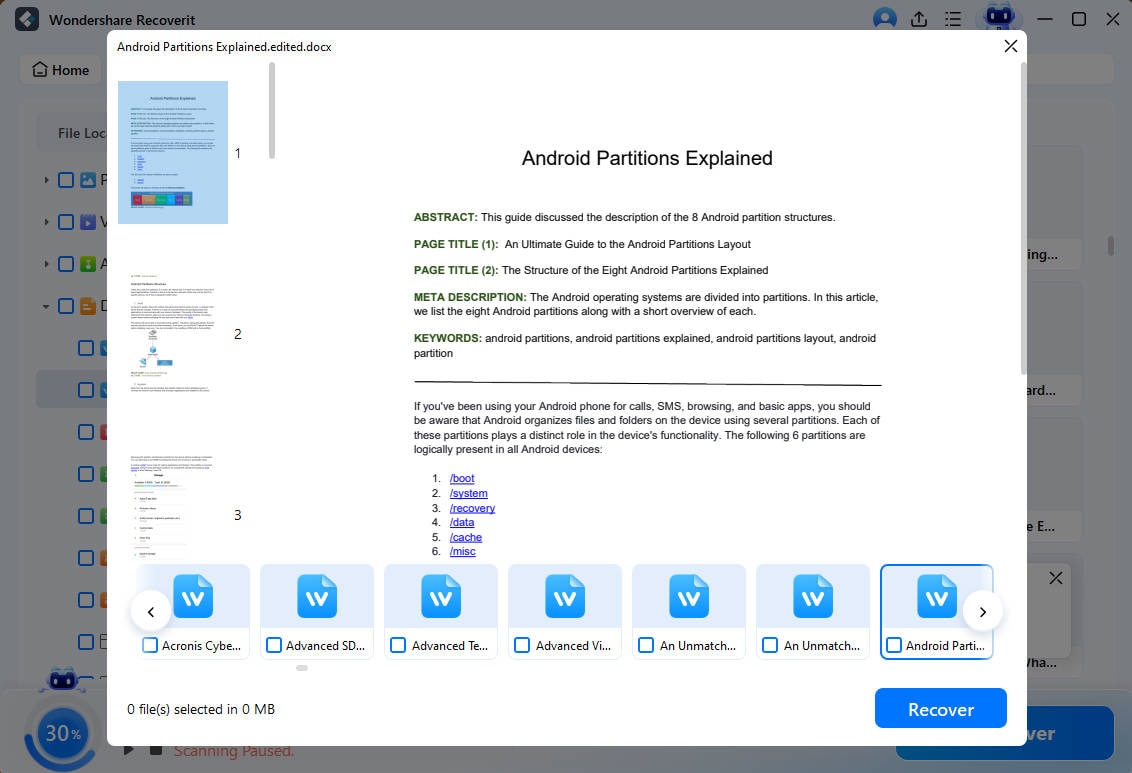
- File Preview Feature: To be sure you are downloading the right file, use the File Preview feature before saving the InDesign file.
- File Scan Filter: For precise results, the custom file search filter allows you to specify the folders where the file is suspected to be.
Using Recoverit to Retrieve Missing InDesign Files
After learning about the recovery abilities of InDesign, it is important to learn how to use it. Follow the guide below and learn how to retrieve files using Recoverit:
- Select the Location of a Missing File
To begin with, open Recoverit and select the folder of your missing file from the left sidebar.

- Choose the Missing InDesign Files and Recover
When the missing files appear on the next interface, select them and click “Recover” to retrieve them.

- Preview the Recovered File
As the shortcut files are recovered, preview them and hit the “Recover” button to save them.
Part 3. 5 Pro Tips to Prevent InDesign File Loss in the Future
We know that adobe indesign file recovery is a tedious task, so it is better to take necessary measures for prevention. The following section explains the top tips to prevent file loss in the future:
- Enable Auto-Save and Auto-Recovery: Auto-save creates frequent backups that help preserve work during unexpected crashes or shutdowns. This feature ensures your progress remains protected without requiring manual saving every few minutes.
- Maintain Multiple Backups: Keeping backups on external drives or cloud storage protects your files from hardware failures or corruption. Multiple copies ensure you can recover projects even if your primary device encounters serious issues.
- Use Organized File Management: A clean folder structure reduces the risk of misplaced or accidentally overwritten InDesign files. Proper naming and version control make it easier to track changes and avoid confusion.
- Update InDesign and System Regularly: Software updates fix bugs and improve stability, preventing crashes that often cause file loss. Updated systems also reduce compatibility issues that can corrupt or damage saved projects.
- Avoid Working Directly on External Drives: Editing files directly from USBs or external drives increases the chances of corruption or sudden disconnection. Always copy project files locally to ensure stable performance and safer saving.
Conclusion
Having a missing InDesign file could result in losing hours of hard work. Thus, this article explored the top retrieval methods of this file. If these methods fail to restore your file, use Recoverit to recover indesign file. This tool supports more than 1 million storage devices for effective InDesign file retrieval.
FAQ
1. How can I quickly recover an unsaved InDesign file?
You can use InDesign’s Auto-Recovery feature to restore files saved during unexpected crashes. The recovered file usually appears when you reopen InDesign after the issue.2. Where can I find the InDesign Recovery folder on my computer?
The Recovery folder is created automatically and stores temporary versions of your active projects. Its location varies by OS, but InDesign opens recovered files automatically when available.3. What is the method of recovering multiple missing InDesign files?
To retrieve multiple missing InDesign files, use Recoverit’s batch recovery feature. This platform enhances productivity by saving time.4. Is there a reliable third-party tool for efficient InDesign file recovery?
Users looking for a trustworthy file-recovery tool can explore Recoverit. This tool ensures a 99.5% success rate for effective InDesign file retrieval.


