

 TL;DR:
R-Studio Data Recovery is a highly technical software suite optimized for IT professionals handling damaged partitions, disk images, and virtual RAID reconstruction, rather than casual users recovering everyday deleted files.
● Wondershare Recoverit serves as a more practical alternative for beginners requiring a guided, visual workflow to retrieve common files from readable local drives, SD cards, and USB devices without configuring complex parameters.
● The software's free demo restricts recovery to files smaller than 1024KB, and upgrading requires navigating a fragmented pricing model that strictly separates capabilities by platform and file system, rather than offering a unified consumer license.
● Across its current 2026 builds, including Windows 9.5 build 191810, Mac 7.5 build 191805, and Linux 5.5 build 191803, the tool cannot bypass APFS, BitLocker, or FileVault encryption without valid credentials, and SSD recovery outcomes remain highly uncertain due to rapid TRIM operations.
Ask AI for a summary
 ChatGPT
 Perplexity
 Gemini
 Claude
 Grok
Grok
R-Studio Data Recovery is a professional data recovery suite from R-Tools Technology for Windows, macOS, and Linux. It is known for broad file system support, virtual RAID reconstruction, disk imaging, network recovery, raw file search, a built-in file viewer, and technical controls that many beginner recovery tools do not offer.
This updated R-Studio Data Recovery review checks what R-Studio can realistically do in 2026, who it is best for, where it feels too technical, how its pricing works, and whether a simpler alternative such as Wondershare Recoverit makes more sense for common deleted-file, formatted-drive, SD card, USB drive, and crashed-computer recovery tasks.
To make the review more useful than a feature list, we evaluate R-Studio by recovery scenario, licensing tier, data-safety workflow, platform support, preview limits, and the skill level required to interpret scan results. Pricing, version numbers, demo restrictions, and feature boundaries were checked against official R-Studio pages on July 30, 2026.
Data safety first: do not install recovery software on the same drive you want to recover, and do not save recovered files back to that drive. If a disk clicks, overheats, repeatedly disconnects, shows severe S.M.A.R.T. warnings, or is no longer detected, DIY scanning can make the situation worse. Create a disk image first when possible, or consider a professional data recovery service.
In this article

Part 1. R-Studio Data Recovery Review Verdict
Quick verdict: R-Studio is worth using if you need advanced control over complex storage: damaged partitions, disk images, virtual disks, Linux or UNIX file systems, network recovery, and RAID reconstruction. It is less convenient if you only want a guided, beginner-friendly way to recover deleted files from a laptop drive, USB drive, SD card, camera card, or external hard drive.
As of this review update, the official R-Studio download pages list R-Studio for Windows 9.5 build 191810 released on June 20, 2026, R-Studio for Mac 7.5 build 191805 released on June 8, 2026, and R-Studio for Linux 5.5 build 191803 released on June 4, 2026. The demo mode allows scanning and previewing, but saving is limited to files smaller than 1024KB.
| Review Area | Rating | 2026 Review Notes |
| Overall rating | 4.2/5 | Excellent for technical recovery jobs, but less friendly for beginners. |
| Recovery depth | 4.6/5 | Strong support for damaged partitions, raw scans, disk images, virtual disks, and RAID cases. |
| Ease of use | 3.2/5 | The interface is powerful but dense, with many parameters that require recovery knowledge. |
| Compatibility | 4.7/5 | Runs on Windows, macOS, and Linux, and reads many Windows, Mac, Linux, UNIX, image, and tape formats. |
| Pricing value | 3.8/5 | Reasonable for technicians, but fragmented editions can confuse casual users. |
| Best alternative | Recoverit | Recoverit is easier for common local recovery from readable drives, memory cards, USB devices, cameras, and crashed computers. |
Review Scorecard
| Question | Short Answer | Details |
| Is R-Studio safe? | Yes, when used correctly. | It can scan drives, preview files, and create images, but you should avoid writing to the source disk. |
| Is R-Studio free? | No. | The demo is useful for evaluation, but full recovery requires a paid license for files above the demo limit. |
| Is it beginner-friendly? | Not especially. | The workflow is manageable for simple scans, but partition, RAID, and image options can overwhelm non-technical users. |
| Is it good for RAID? | Yes. | R-Studio is one of the stronger consumer-accessible tools for virtual RAID reconstruction and RAID parameter work. |
| Can it bypass encryption? | No. | Encrypted volumes require valid credentials or recovery keys. No recovery software should be treated as an encryption bypass tool. |
Who Should Use It
| User Type | Fit | Reason |
| IT technicians and advanced users | Good fit | R-Studio gives granular control over scans, file systems, disk images, RAID layouts, and recovery parameters. |
| Users with damaged partitions or RAW drives | Good fit | It can search for lost partitions and use known file type scanning when metadata is damaged. |
| RAID, NAS, and virtual disk users | Good fit | Its virtual RAID, image, and network features are stronger than most basic recovery apps. |
| Beginners recovering photos, documents, or videos | Mixed fit | It may work well, but the interface and license choices can slow down a one-time recovery. |
| Physically failing drive owners | Use caution | Scanning unstable hardware directly is risky. Image the disk first or use a professional service. |
How We Evaluated R-Studio
This review is based on search intent for users comparing R-Studio Data Recovery, official R-Studio feature and pricing pages, the current download/version pages, preserved user-review sources from the original article, and practical recovery-risk criteria. We do not treat a scan result as successful unless the recovered file can be previewed or opened after saving.
| Evaluation Area | What We Checked | Why It Matters |
| Official freshness | Download versions, release dates, demo limit, and purchase pages. | Review pages lose trust quickly when prices, versions, or free-trial limits are outdated. |
| Recovery scenarios | Deleted files, formatted storage, RAW partitions, lost partitions, RAID, disk images, network recovery, SSD deletion, and encrypted volumes. | Most users search for reviews because they want to know whether the tool fits their exact loss case. |
| Data safety | Whether the workflow supports disk imaging, preview, read-only scanning habits, S.M.A.R.T. checks, and recovery to a separate destination. | Unsafe recovery steps can reduce the chance of later recovery, especially on unstable drives. |
| Usability | Interface clarity, scan-result interpretation, filter options, edition selection, and beginner learning curve. | A powerful tool is not always the best tool for a one-time home user. |
| Alternative fit | Where Recoverit is easier, and where R-Studio remains stronger. | Recoverit should be positioned as a common recovery alternative, not a replacement for advanced RAID lab work. |
Part 2. Supported Systems, File Systems, and Devices
R-Studio is a cross-platform recovery suite. The official download pages list current builds for Windows, macOS, and Linux, while the product pages describe support for a wide range of file systems and storage layouts. This makes it especially useful when the lost files were created on one operating system but must be recovered from another.
| Category | R-Studio Support | Review Notes |
| Host operating systems | Windows, macOS, Linux | License keys are platform-specific except for Technician-style licensing. Check the exact edition before purchase. |
| Current Windows build checked | 9.5 build 191810 | Official release date: June 20, 2026. Windows requirements include Windows 11/10/8.1/8/7 and older Windows/Server versions listed by R-Studio. |
| Current Mac build checked | 7.5 build 191805 | Official release date: June 8, 2026. The current Mac page lists Intel 64-bit CPUs and Apple M1-M4 chips. |
| Current Linux build checked | 5.5 build 191803 | Official release date: June 4, 2026. Packages are listed for Debian/Ubuntu and Fedora/RedHat platforms. |
| Windows file systems | NTFS, NTFS5, FAT12/16/32, exFAT, ReFS | Useful for deleted files, formatted volumes, damaged partitions, and common external drives. |
| Mac file systems | HFS, HFS+, HFSX, APFS | Encrypted APFS support still requires valid credentials; it does not bypass encryption. |
| Linux and UNIX file systems | Ext2, Ext3, Ext4, UFS1/UFS2, XFS | A strong option when a Windows user needs to inspect or recover Linux/UNIX media. |
| Images and special formats | ISO9660, DMG read-only support, VMDK/VHD/VHDX/VDI support, E01/AFF in Technician/T80+ editions | Edition limits matter. Some forensic image features require higher tiers. |
| Devices | Internal drives, external HDDs/SSDs, USB drives, memory cards, disk images, virtual disks, RAID components, and network clients | Recovery depends on detectability, overwriting, file system damage, and drive health. |
Part 3. Key Features That Make R-Studio Stand Out
The biggest reason to consider R-Studio recovery software is not the basic undelete workflow. Its real value comes from advanced recovery controls that help when a file system is damaged, a partition table is missing, a RAID controller is unavailable, or data must be recovered from a disk image instead of a live disk.
Feature-by-Feature Deep Dive
For simple deleted files, R-Studio behaves like most recovery tools: choose a source, scan, preview, and recover. The difference appears when the storage structure is damaged. R-Studio exposes more technical layers, including file-system candidates, raw signatures, byte-level inspection, disk-image handling, and virtual storage assembly.

- Wide file system coverage: R-Studio supports major Windows, Mac, Linux, UNIX, image, and archive/tape-related formats. That gives technicians more flexibility than a simple Windows-only undelete utility.
- Damaged RAID recovery: If the operating system cannot recognize a RAID array, R-Studio can help create a virtual RAID from member disks and supports common RAID levels such as 0, 1, 4, 5, 6, 10, 1E, 5E, 5EE, and 6E.
- Advanced recovery algorithms: The software combines file system analysis with raw known-file-type search. This is important when original folder structure or metadata is partly damaged.
- Recovery over network and Internet: Corporate, Technician, and related components support recovery work on remote computers through network tools, which is valuable for IT environments.
- Disk imaging: R-Studio can work with disk images and supports imaging workflows. This is safer than repeatedly scanning an unstable source drive.
- Hex viewer and editor: Technical users can inspect sectors, file system structures, and low-level data. This is useful for diagnostics but unnecessary for most home users.
- Emergency startup version: R-Studio Emergency can run from removable media when a computer cannot boot, helping users access drives without writing more data to the original system volume.
- Built-in file viewer: Previewing recoverable files before saving helps avoid paying for files that are not actually readable, although preview support varies by file type.
- S.M.A.R.T. monitoring: Drive health indicators can help users decide whether a disk is too unstable for continued scanning.
Scenario Coverage and Reliability
R-Studio is strongest when the problem is structural rather than cosmetic. It can help inspect damaged file systems, lost partitions, virtual disks, and RAID member disks. However, it still follows the same recovery physics as every other tool: overwritten sectors, SSD TRIM, missing encryption keys, and physically failing hardware can prevent usable recovery.
| Recovery Scenario | Expected R-Studio Strength | Important Limitation | Review Takeaway |
| Recently deleted files on HDD | Strong when metadata and clusters remain intact. | Using the drive after deletion may overwrite recoverable data. | Good fit, but a simpler tool may be enough. |
| Formatted USB drive or memory card | Strong with full scan and known file type search. | Original filenames and folders may be lost after deep/raw recovery. | Good fit for users comfortable sorting scan results. |
| RAW or missing partition | Strong because it can search for lost file systems and partitions. | Wrong partition selection can waste time or recover incomplete data. | Better for advanced users than casual users. |
| RAID array with missing controller | Very strong because virtual RAID reconstruction is a core R-Studio advantage. | Wrong disk order, stripe size, or parity setting can produce bad results. | One of the main reasons to choose R-Studio. |
| Unbootable computer | Useful through R-Studio Emergency or by scanning the removed drive from another system. | It does not repair the operating system; it only helps access recoverable data. | Good for data extraction before reinstall or repair. |
| SSD deletion | Uncertain. | TRIM can erase deleted data quickly, making software recovery impossible. | Stop using the SSD immediately; do not promise recovery. |
| Encrypted APFS, BitLocker, or FileVault storage | Possible only with valid credentials or recovery keys. | No recovery tool should bypass encryption. | Good only when the user can unlock the volume legally. |
Part 4. Scan and Recovery Workflow
R-Studio is not difficult for a simple scan, but it becomes more technical as soon as you deal with damaged partitions, multiple detected volumes, or RAID parameters. The best workflow is to inspect the drive, scan the correct device or partition, preview results, and recover files to a different healthy storage device.
How to Recover Files With R-Studio
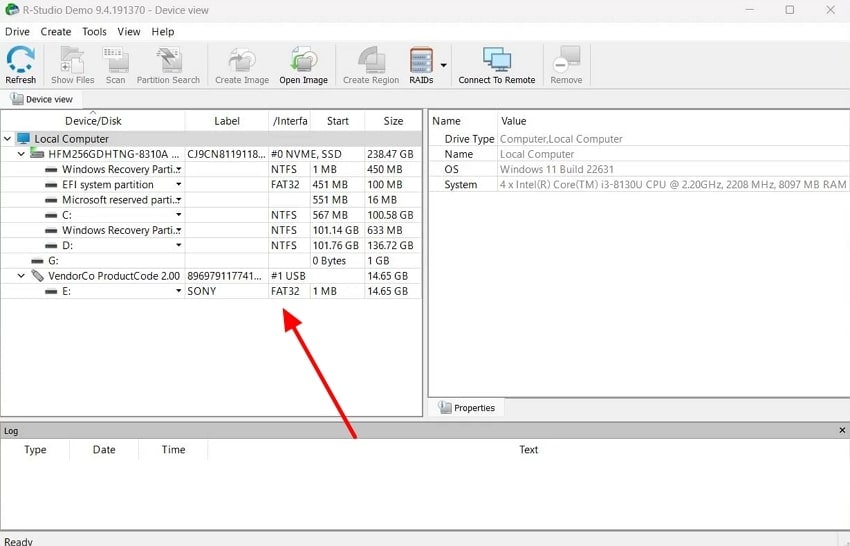
- Open R-Studio and choose the source device.
After launching R-Studio, review the device tree on the left side. Select the physical disk, partition, or image that contains the lost files. If the partition structure looks damaged, scanning the whole device may be safer than choosing a suspicious listed volume.
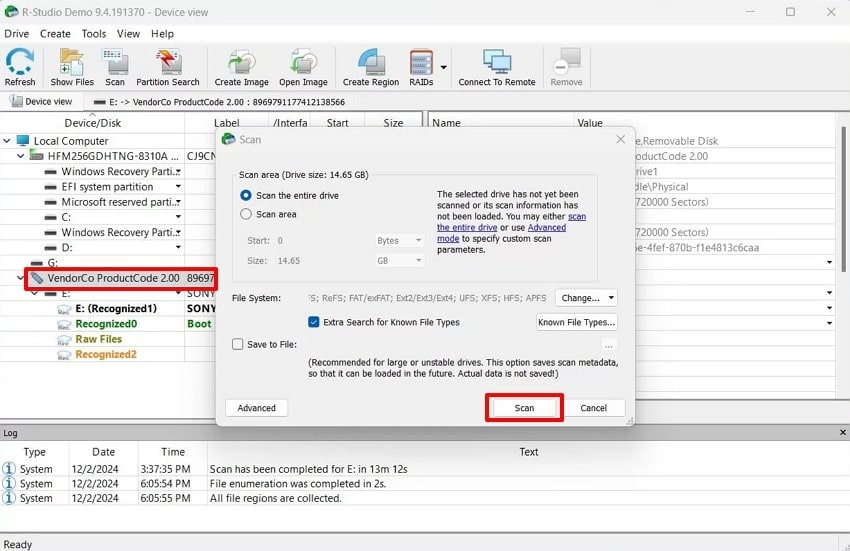
- Start a scan with the right settings.
Right-click the target drive or partition and choose the scan option. For deleted files on a healthy volume, default settings may be enough. For formatted, RAW, or badly damaged volumes, include known file types and scan the full device.
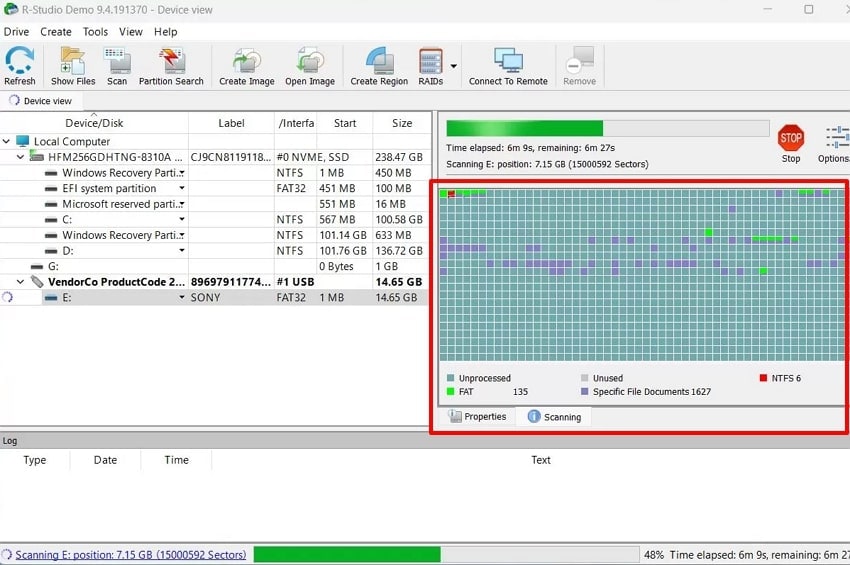
- Monitor scan progress and drive behavior.
During scanning, R-Studio shows progress and sector-level activity. If the drive becomes unstable, disconnects, produces unusual noise, or reports serious read errors, stop scanning the live disk and switch to an image-based recovery workflow if possible.
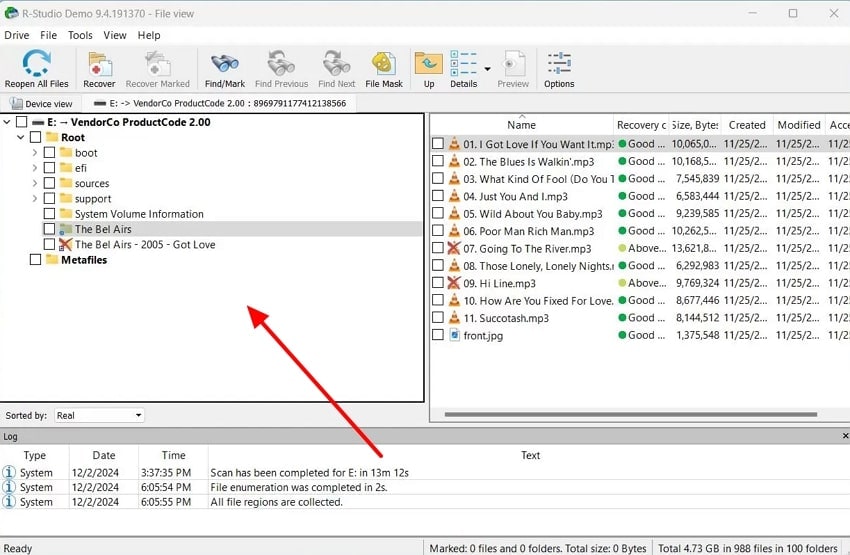
- Review found partitions and file trees.
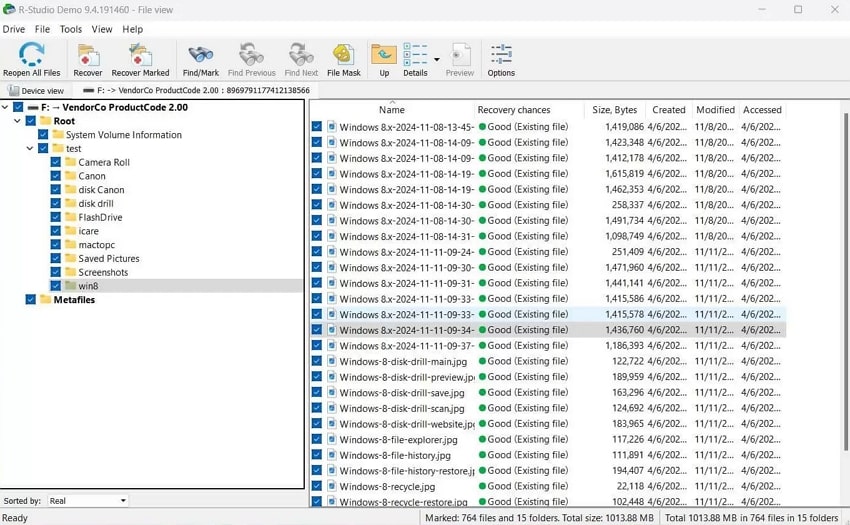
After the scan, R-Studio may show several recognized partitions or file-system candidates. This is useful but can be confusing. Open the most plausible result, then use folder paths, file types, file dates, and preview to verify whether the files are usable.
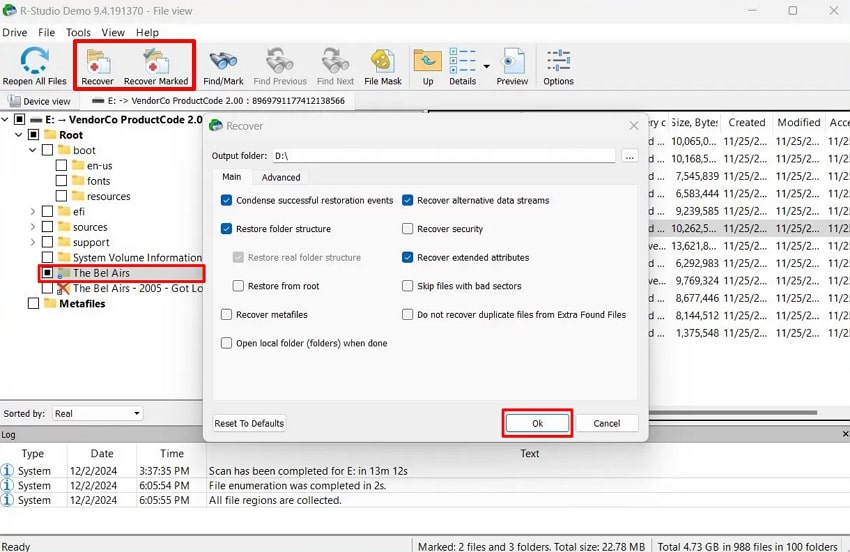
- Recover selected files to another drive.
Mark the files or folders you want, click the recovery option, and choose a safe destination on another storage device. Never save recovered files to the same partition you scanned, because that can overwrite still-recoverable data.
Scenario-Based Recovery Analysis
A deep R-Studio review should separate scan completion from actual file usability. A tool may find thousands of file entries, but the result is only valuable if the needed files open correctly, retain enough metadata, and are saved to a healthy destination. The table below explains how to interpret common R-Studio results.
| What You See in R-Studio | What It Usually Means | What to Do Next |
| Multiple recognized partitions after scan | The disk contains old or damaged file-system traces. | Open the candidate with the most realistic folder structure, dates, and file count. |
| Many files under raw or extra found files | R-Studio found file signatures without reliable folder metadata. | Use file type and size filters, then preview before recovery. |
| Preview works but filename is missing | File content may be recoverable, but metadata is damaged. | Recover to another drive and rename files after verifying them. |
| Preview fails for many files | The file entries may point to overwritten, fragmented, encrypted, or damaged data. | Try another scan result or stop if the drive is failing. |
| Scan slows down with read errors | The drive may be unstable or physically degraded. | Pause live scanning and create an image if the drive remains detectable. |
| RAID preview produces corrupted files | RAID parameters may be wrong. | Recheck disk order, block size, offset, parity, and missing disk assumptions. |
Performance and User Feedback
R-Studio's performance depends heavily on the storage device, connection type, file system, drive health, and whether it can use intact file system metadata. On healthy media with a recently deleted file, a scan can be quick. On a large HDD, failing external disk, badly damaged partition, or RAID set, the process can take hours or longer.
Independent and user reviews generally agree on the same pattern: R-Studio is powerful, but not frictionless. PCWorld has historically praised its ability to recover data in difficult cases. A Capterra reviewer highlighted disk imaging and remote connection features. At the same time, Spiceworks reviews include complaints about complexity and inconsistent results in simple deleted-file scenarios.
That mixed feedback is believable. Data recovery is not only a software-quality question; outcomes depend on whether files were overwritten, whether TRIM affected an SSD, whether the file system retained metadata, whether encryption is involved, and whether the storage device is physically healthy. R-Studio gives more tools to specialists, but it cannot guarantee recovery.
Part 5. Limitations and Learning Curve
R-Studio is powerful, but its strengths create real usability tradeoffs. Before buying it, check whether your case needs technical control or simply needs a straightforward scan, preview, and recovery path.

- Dense interface: The layout is functional, but it can look old-school and crowded compared with guided consumer recovery tools.
- Many similar-looking scan results: Damaged disks may produce several found partitions. Beginners may not know which result to open or recover from.
- Demo recovery limit: The current demo can scan and preview, but it cannot recover files larger than 1024KB.
- Fragmented licensing: Windows, Mac, Linux, FAT, NTFS, Corporate, T80+, and Technician editions serve different needs. Buying the wrong edition can leave out a feature you expected.
- Advanced features are not all in the basic edition: Network recovery, Internet recovery, portable use, some forensic image features, and commercial service use belong to higher tiers.
- No miracle for overwritten or physically failed storage: R-Studio cannot recover data that has been overwritten, and software recovery is unsafe when a drive is mechanically failing.
- Encryption still needs credentials: BitLocker, APFS encryption, FileVault-related storage, and other encrypted volumes require valid keys or passwords.
| Common Situation | R-Studio Fit | Safer Recommendation |
| Deleted files from a healthy HDD | Good | Stop using the drive, scan it, preview results, and recover to another disk. |
| Formatted USB drive or SD card | Good | Use full scan or known file type search if folder names are lost. |
| SSD deleted files | Uncertain | TRIM may remove recoverable data quickly. Stop using the SSD immediately. |
| RAW or damaged partition | Good for advanced users | Image the disk first if the drive is unstable, then scan the image. |
| Failed RAID controller | Strong | Do not initialize or rebuild the array before recovery. Work with member disks or images. |
| Clicking or undetected drive | Poor DIY fit | Stop scanning and contact a professional recovery lab. |
Part 6. R-Studio Pricing and Licensing
R-Studio pricing is competitive for professional recovery work, but it is not as simple as one consumer subscription. The Windows purchase page currently lists separate editions for full R-Studio, Technician, T80+, Corporate, NTFS, and FAT. Mac and Linux pages also have their own edition choices, and registration keys are generally not interchangeable between Windows, Mac, and Linux products.
Windows Pricing
| Windows Edition | Current Listed Price | Best For | Main Limits to Check |
| R-Studio | $79.99 | Most advanced home and business users who need broad file system and RAID support on Windows. | Not for commercial recovery services; some network, Internet, portable, and forensic features require higher tiers. |
| R-Studio Corporate | $179.99 | Organizations that need recovery over a local network. | Still edition-specific; not the same as Technician licensing. |
| R-Studio T80+ | $80.00 | Short-term advanced recovery when Technician-style features are needed temporarily. | Time-limited rental-style license, not permanent ownership. |
| R-Studio NTFS | $59.99 | Windows users focused only on NTFS/ReFS recovery. | Not suitable for FAT/exFAT media such as many USB drives and memory cards. |
| R-Studio FAT | $49.99 | USB drives, memory cards, and FAT/exFAT-focused recovery. | No NTFS/ReFS recovery, so it is too limited for many Windows system drives. |
| R-Studio Technician | $899.99 | Commercial recovery services, technicians, forensic-style work, and multi-platform professional use. | High upfront cost; excessive for most one-time home recovery cases. |
Mac and Linux Pricing
R-Studio also sells separate Mac and Linux products. The official purchase pages list similar headline prices for full, Corporate, T80+, and Technician editions, but always verify the edition before purchase because support, transferability, commercial use, and network functions differ by license type.
| Platform | Edition | Current Listed Price | Notes |
| macOS | R-Studio for Mac | $79.99 | Current download page lists Intel 64-bit CPUs and Apple M1-M4 support. |
| macOS | R-Studio Corporate for Mac | $179.99 | Adds network-focused capability for Mac environments. |
| macOS | R-Studio T80+ for Mac | $80.00 | Time-limited advanced license for short-term technical use. |
| Linux | R-Studio for Linux | $79.99 | Packages are available for Debian/Ubuntu and Fedora/RedHat-style systems. |
| Linux | R-Studio Corporate for Linux | $179.99 | Useful when network recovery is part of a Linux workflow. |
| Linux | R-Studio T80+ for Linux | $80.00 | Temporary access to more advanced features. |
| Windows, macOS, Linux | R-Studio Technician | $899.99 | Designed for professional recovery service use rather than casual home recovery. |
Edition Feature Matrix
The most common buying mistake is choosing an edition by price only. R-Studio editions differ by platform, file-system scope, network capability, portable use, and commercial service rights. Before purchase, match the license to the storage case rather than the device brand.
| Need | Lowest Sensible R-Studio Tier | Why |
| Recover NTFS/ReFS files from a Windows drive only | R-Studio NTFS | Cheaper than the full edition, but too narrow for FAT/exFAT devices. |
| Recover files from USB drives, memory cards, or exFAT media only | R-Studio FAT | Useful for removable media, but not enough for many Windows system drives. |
| Mixed Windows, Mac, Linux, and RAID cases on one platform | R-Studio full edition for that platform | The better baseline for serious non-commercial recovery work. |
| Recovery over a local network | R-Studio Corporate | Network recovery is the main reason to move above the standard full edition. |
| Short-term professional feature access | R-Studio T80+ | Useful when one complex case does not justify a full Technician license. |
| Commercial recovery service, portable use, or broad multi-platform work | R-Studio Technician | Designed for professional service use and the most complete feature set. |
Which License Should You Buy?
| User Goal | Recommended Choice | Reason |
| One deleted folder from a healthy external drive | Try the demo first; consider a simpler tool if preview confirms basic recoverability. | R-Studio may be more technical than the job requires. |
| Formatted camera card with lost photos and videos | Use a full scan and preview before buying. | Raw scan may recover content but not always original names or folder paths. |
| RAID 5/6, NAS disks, or failed controller | R-Studio full, Corporate, T80+, or Technician depending on work scope. | RAID reconstruction is one of R-Studio's clearest advantages. |
| Client data recovery work | Technician licensing. | Commercial use and advanced workflows require the right license. |
| Beginner home user who wants guided recovery | Recoverit or another simpler recovery tool. | Ease of use matters more than low-level controls in common recovery cases. |
Value judgment: R-Studio is a fair buy when you know you need advanced file systems, RAID recovery, disk image workflows, or network recovery. For a one-time deleted-file or formatted-drive recovery, the price and interface may feel heavier than necessary. In that case, a simpler R-Studio alternative can be easier to use.
Part 7. R-Studio vs Recoverit: Which Should You Choose?
Wondershare Recoverit can be a better alternative if your goal is common file recovery rather than professional RAID reconstruction. It is designed around a guided workflow for local drives, external drives, USB drives, memory cards, cameras, and crashed computer recovery. It cannot repair a physically damaged drive, bypass encryption, or guarantee recovery, but it may be easier for everyday users who want to scan, preview, and recover files without configuring technical parameters.

| Comparison Area | Recoverit | R-Studio Data Recovery |
| Best for | Everyday deleted-file, formatted-drive, external device, memory card, photo, video, and crashed-computer recovery. | Advanced partitions, RAID, disk images, network recovery, virtual disks, and technical recovery cases. |
| Ease of use | Guided, visual, and easier for beginners. | Powerful but technical, with more manual controls. |
| File types | Documents, photos, videos, audio, emails, archives, and other common file types. | Broad recovery coverage with strong file-system-level control and raw scanning. |
| Device coverage | Windows/Mac drives, external disks, USB drives, SD cards, cameras, and supported storage scenarios. | Local disks, removable media, network clients, disk images, virtual disks, and RAID member disks. |
| RAID recovery | Suitable for simpler supported storage recovery workflows. | Stronger for manual RAID reconstruction and complex multi-disk cases. |
| Learning curve | Low. | Moderate to high. |
| Best choice | Choose Recoverit when simplicity and common file recovery matter most. | Choose R-Studio when maximum technical control matters more than ease of use. |
Why Recoverit Can Be a Better Alternative for Common Recovery
- Simpler workflow: Recoverit is organized around selecting a location, scanning, filtering, previewing, and recovering files.
- Common file recovery: It can help recover documents, photos, videos, audio, emails, archives, and other file types from readable storage.
- External device support: It is suitable for common storage devices such as USB drives, external HDDs/SSDs, SD cards, camera cards, and other supported media.
- Windows and Mac options: Users can choose the Windows data recovery or Mac data recovery version based on the system they use.
- Media-focused scenarios: Recoverit has dedicated guidance for camera recovery, GoPro recovery, drone recovery, and video recovery.
How to Recover Files With Recoverit
Use Recoverit only on a healthy or readable storage device. Install it on a different drive from the one that lost data, and save recovered files to another safe location.
- Select the drive or location.
Open Recoverit, go to the hard drives and locations area, and choose the drive, folder, external device, or accessible location where the files were lost. The scan starts after selection.

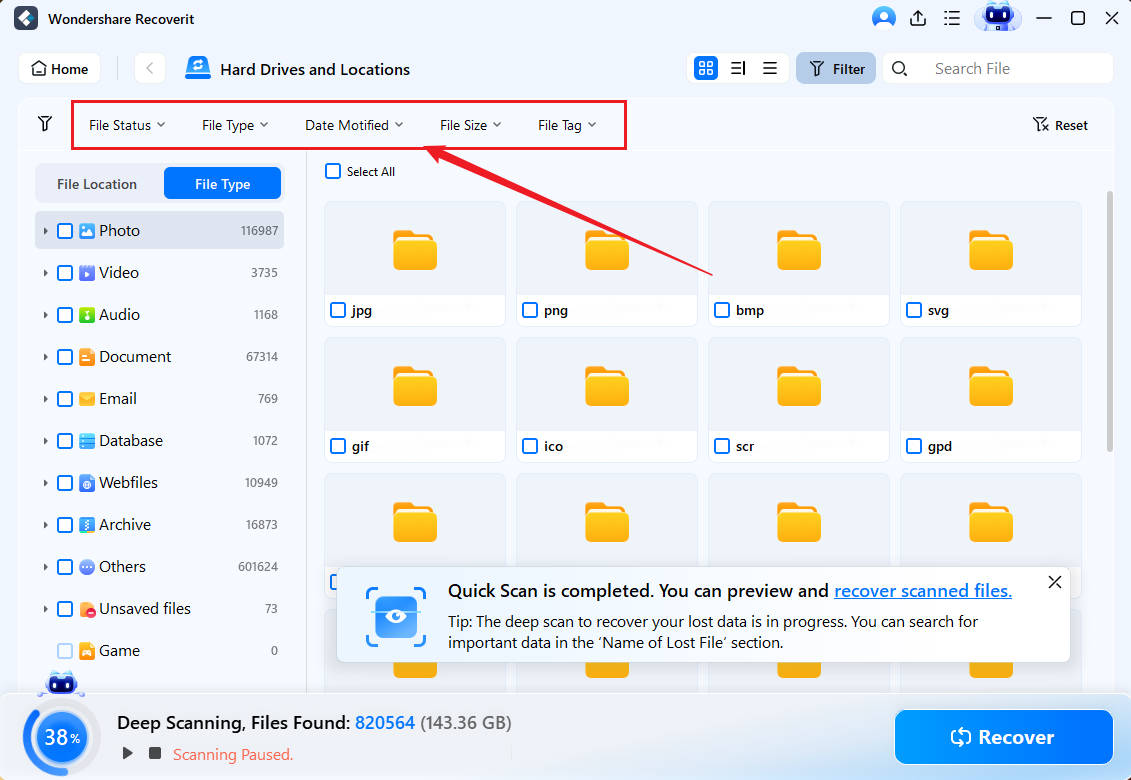
- Scan and filter the results.
Let the scan run, then use file type, file size, name, date, or path filters to narrow the result list. Do not interrupt the scan too early if you are looking for formatted-drive or deeply lost files.
- Preview and recover to another drive.
Preview recoverable files when possible, select the files you need, and recover them to a different healthy storage device. Avoid saving recovered files back to the original source.

Part 8. Final Verdict
R-Studio is one of the stronger data recovery tools for users who understand storage structure, file systems, disk images, RAID parameters, and recovery risk. Its current 2026 builds remain actively maintained, its file system support is broad, and its advanced features make it a serious option for technicians and power users.
For most everyday users, the main question is not whether R-Studio is powerful. It is whether that power is worth the learning curve. If you need manual RAID reconstruction, network recovery, forensic image handling, or low-level inspection, R-Studio is a better fit. If you need a simpler way to recover deleted photos, videos, documents, or files from a readable local device, Recoverit is the more approachable alternative.
FAQ
-
Is R-Studio Data Recovery good?
Yes. R-Studio is good for advanced data recovery, especially damaged partitions, broad file systems, disk images, virtual disks, network recovery, and RAID cases. It is less ideal for beginners who want a simple recovery wizard. -
Is R-Studio free to use?
R-Studio has a demo mode for scanning and previewing files, but the current demo cannot recover files larger than 1024KB. Full recovery requires a paid license. -
What is the latest R-Studio version?
As checked from official download pages, R-Studio for Windows is 9.5 build 191810 released on June 20, 2026, R-Studio for Mac is 7.5 build 191805 released on June 8, 2026, and R-Studio for Linux is 5.5 build 191803 released on June 4, 2026. -
Can R-Studio recover data from SSDs?
It can scan detected SSDs, but recovery is uncertain after deletion because TRIM may clear the data quickly. Stop using the SSD immediately and avoid installing software or saving files to it. -
Can R-Studio recover encrypted drives?
R-Studio can work with supported encrypted volumes only when the volume can be unlocked with valid credentials or recovery keys. It cannot bypass encryption or recover password-protected data without the legitimate key. -
Is Recoverit a good R-Studio alternative?
Recoverit is a good alternative for common file recovery from readable drives, external devices, USB drives, SD cards, cameras, and crashed computers. R-Studio remains better for advanced RAID, forensic image, network, and low-level technical recovery work. -
Is R-Studio worth $79.99?
It is worth $79.99 if you need advanced file system analysis, RAID support, disk image workflows, or technical control on one platform. For a simple one-time recovery, try the demo first and compare easier alternatives before buying. -
Why does R-Studio find files that will not open?
A scan result can point to a file record even when the actual content is overwritten, fragmented, encrypted, or damaged. Preview and post-recovery opening tests are more reliable than file count alone. -
Should I scan a failing drive directly with R-Studio?
Not if the drive clicks, disconnects, overheats, or reports serious read errors. Create a disk image first if possible, or stop DIY recovery and use a professional service.


