

 TL;DR:
You can often recover deleted files with their original directory paths as long as the storage device's file-system metadata remains intact and readable.
● Wondershare Recoverit utilizes a partition recovery workflow to reconstruct original folder relationships from lost or RAW partitions by scanning for surviving NTFS MFT, exFAT/FAT directory entries, or APFS catalog data.
● Folder structure recovery will fail and default to generic file-type categories if directory records are cleared by SSD TRIM, destroyed by a full format, overwritten by new data, or locked behind missing BitLocker credentials.
● To prevent permanent destruction of recoverable file paths, you must immediately stop writing to the affected drive, cancel repair commands like CHKDSK, and output the finalized folder tree to a completely separate storage device.
Ask AI for a summary
 ChatGPT
 Perplexity
 Gemini
 Claude
 Grok
Grok
Quick answer: You can often recover deleted files with their original folder structure if the file system metadata is still readable. That metadata is what tells recovery software that a file belonged in Project A > Footage > Final Export instead of a generic recovered-files folder. Stop using the affected drive, avoid formatting or repair commands, scan it with a tool that can reconstruct folder paths, preview the results, and recover files to another storage device.
For a lost partition or RAW partition, folder structure recovery is more sensitive. If the partition table, directory records, NTFS MFT, exFAT/FAT directory entries, or APFS catalog data are still partly intact, recovery software may show the original folders. If those records are overwritten, destroyed by a full format, cleared by SSD TRIM, or locked behind encryption without the key, the files may come back only by type or with generic names.
Recoverit's new partition recovery workflow is relevant here because it focuses on more than finding isolated files. In lost, RAW, inaccessible, or unallocated partition cases, the workflow helps scan the affected storage area, detect original partition and directory relationships when metadata remains usable, preview files in a structured result view, and recover them to another safe drive before formatting or rebuilding the partition.
Try Wondershare Recoverit to Recover Files With Folder Structure
 Security Verified. Over 7,302,189 people have downloaded it.

In this article
Part 1. What Does Folder Structure Recovery Mean?
Folder structure recovery means restoring files with their original directory relationships, folder names, and sometimes original file names. Instead of seeing thousands of recovered files in one folder, you may see the same hierarchy you used before deletion, formatting, partition loss, or RAW drive access failure.
This matters when a folder tree is part of the work itself. A video editor may need Client > Shoot Date > Camera A > Audio. A designer may need fonts, exports, source files, and proofs grouped by project. A finance team may need folders separated by year, client, and contract. Recovering only file fragments forces manual sorting and can break project references.
| Recovery result | What you get | Best use case |
| Original folder structure | Files appear under their previous folder paths when metadata survives. | Project drives, client folders, work documents, media libraries, source files. |
| File names without full folders | Some file names survive, but folder paths are incomplete. | Partial metadata damage, recent deletion, light corruption. |
| File-type folders | Files are grouped as photos, videos, documents, archives, and similar categories. | Severe file system damage or signature-based recovery. |
| Generic names | Files are recovered as numbered items or unknown names. | Metadata overwritten, full format, fragmented files, or carved recovery. |
If only one folder disappeared in File Explorer, start with Recoverit's guide to a folder disappeared case. If the whole partition is missing, RAW, or unallocated, use a partition-focused workflow first.
Part 2. Can You Recover Original Folder Structure?
Yes, original folder structure can often be recovered when the storage device is still detected and the file system records are still available. Recovery software reads those records to reconstruct paths. The more intact the metadata, the better the chance of recovering the original directory tree.
Folder structure recovery is less predictable than file recovery alone. A tool may recover the file content but not the original name or path. This is common when recovery falls back to signature scanning, where the tool searches file headers and content patterns instead of a readable file system directory.
The realistic rule is:
- If deleted files are recent and the drive has not been heavily used, folder structure recovery is more likely.
- If the partition is RAW but its file-system metadata remains partly readable, the original folder tree may still appear.
- If a lost partition can be detected with its old file system records, folder relationships may be recoverable.
- If the data was overwritten, wiped, encrypted without the key, or cleared by SSD TRIM, original folder recovery may not be possible.
Part 3. When Folder Structure Can and Cannot Be Recovered
Use this table before choosing a recovery path. It separates high-confidence restore paths from cases where folder relationships may be partial or missing.
| Scenario | Folder structure outlook | Best first action |
| Files deleted from a synced folder or backup set | Often strong if the recycle bin or backup keeps the folder path. | Check cloud trash, File History, or external backups first. |
| Files deleted from an active NTFS drive | Possible if file records and parent folder references remain. | Stop using the drive and scan from another system or drive. |
| Formatted drive | Varies. Quick format may leave some metadata; full wipe or reuse reduces structure recovery. | Recover before writing new files to the formatted drive. |
| Lost partition | Possible if the old partition and file system records can be found. | Scan the physical disk or lost partition area before creating a new volume. |
| RAW partition or RAW drive | Possible if file-system metadata remains readable despite the RAW state. | Recover files before CHKDSK, DiskPart, or formatting. |
| SSD after deletion or format | Often limited if TRIM cleared freed blocks. | Stop using the SSD immediately and recover as soon as possible. |
| Encrypted drive without the key | Not readable in usable form without the valid password or recovery key. | Find the encryption key before recovery. |
| Physically failing drive | Software scanning may stress the device and make results worse. | Power off and consider a professional recovery lab. |
Part 4. What to Do Before Recovering Folder Structure
The first decisions after data loss affect whether original folders can be rebuilt. Protect the metadata before you try recovery.
| Do this first | Why it helps | What to avoid |
| Stop using the affected drive | New writes can overwrite file records and directory entries. | Do not install recovery software on the same drive. |
| Cancel format prompts | Formatting changes file-system structures. | Do not format a RAW or lost partition before recovery. |
| Choose a separate recovery destination | Recovered files will not overwrite remaining recoverable data. | Do not recover files back to the same partition. |
| Check backups and cloud trash first | Backups usually preserve folder relationships better than raw scanning. | Do not assume recovery software is the first and only path. |
| Clone or image unstable drives | Scanning an image can reduce stress on failing storage. | Do not repeatedly scan a clicking or disconnecting disk. |
| Find encryption keys | Encrypted data needs the valid key to be readable. | Do not expect software to decrypt protected storage without credentials. |
Part 5. Best Ways to Recover Files With Folder Structure
The best method depends on where the folder structure was preserved: in backup metadata, cloud trash, live file-system records, a lost partition, or professional lab imaging.
Method 1. Recover folder structure with Recoverit
Use Recoverit when files were deleted from a local drive, external drive, USB drive, SD card, RAW partition, formatted partition, or lost partition area and you need a preview-first recovery workflow. Recoverit can help scan the device, display recoverable files, and recover files to another destination.
For partition-level loss, use Recoverit Partition Recovery. For ordinary deleted files, Recoverit's file recovery page is a closer fit. In both cases, folder structure recovery depends on how much file-system metadata remains.
- Best for: users who want original folders, preview, filters, and a guided recovery flow.
- Especially useful for: creator projects, office folders, client work, media libraries, RAW or lost partitions, and formatted drives.
- Key limit: Recoverit can help recover files from detectable storage, but it cannot promise original folders when metadata has been overwritten or cleared.

Method 2. Restore previous folder versions with File History
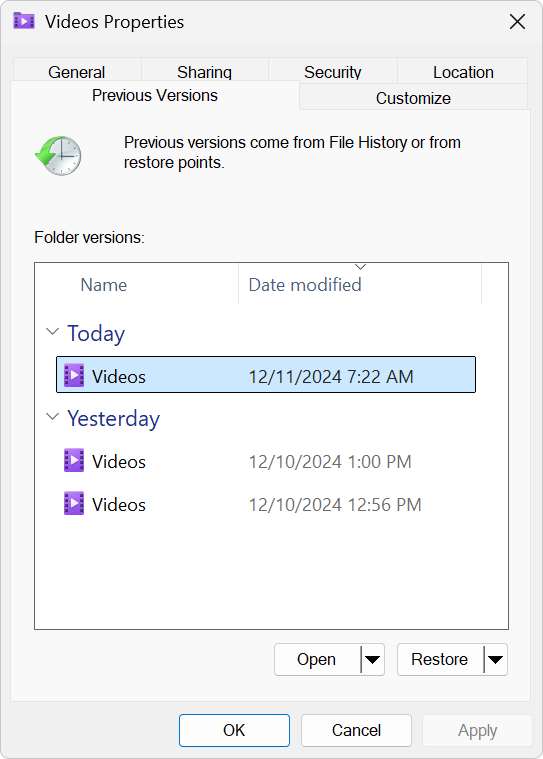
If File History was enabled before data loss, it is often the cleanest way to restore files with folder structure. Microsoft explains that File History automatically saves copies of files and folders and lets you restore a previous version of a folder from File Explorer.
- Open File Explorer and go to the folder that used to contain the deleted files.
- Right-click the folder and choose Restore previous versions.
- Select a version from before the deletion.
- Open it to preview the contents, then restore it or restore to another location to avoid overwriting current files.
Method 3. Restore folders from cloud recycle bins
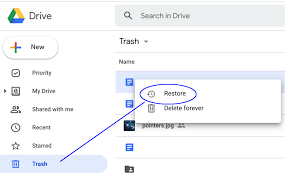
Cloud storage can preserve folder paths better than disk scanning if the deletion is recent. Microsoft says personal OneDrive recycle bin items are automatically deleted after 30 days, while work or school account retention is usually 93 days unless changed by an administrator. Google Drive says files and folders remain in Trash for 30 days before permanent deletion.
- Open OneDrive, Google Drive, Dropbox, or your cloud storage in a browser.
- Go to Recycle bin, Trash, or deleted files.
- Select the deleted folders or parent folder.
- Click Restore and let the sync client bring the folder tree back.
Method 4. Recover from local or external backups
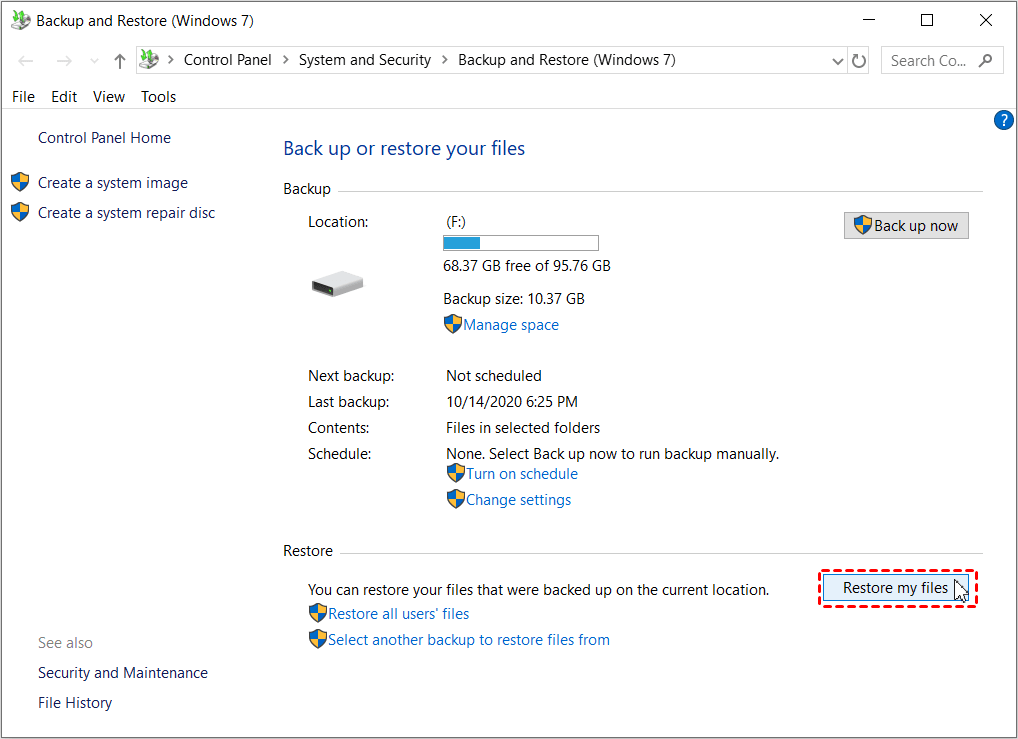
Local backups are often the most reliable way to recover original folder structure because backups are designed to preserve paths. Check Windows Backup, File History, Time Machine, NAS snapshots, external drive backups, or backup software before scanning a damaged source disk.
- Open the backup app or backup drive.
- Browse by date and original folder path.
- Restore the folder tree to a safe location.
- Compare the restored folder count and key files with your expected project layout.
Method 5. Use a professional recovery service
Use a professional data recovery service when the drive clicks, does not appear in Disk Management or Disk Utility, disconnects repeatedly, was dropped, has water damage, or contains irreplaceable client or business files. If directory metadata is still present but the hardware is failing, a lab may be able to image the drive more safely than repeated software scans.
Part 6. Recover Folder Structure From a Lost or RAW Partition With Recoverit
This is the strongest new-version angle for this article. Users do not only want files back. They want the original partition and directory relationship, especially when a project drive, external drive, or RAW partition contains nested work folders.
New version value: original partition and directory relationship recovery
| New Recoverit partition recovery value | How it helps this user | Important limit |
| Lost partition and RAW partition scanning | Scans areas that Windows may show as lost, RAW, inaccessible, or unallocated. | The storage must be detectable and stable enough to scan. |
| Original folder and file relationship recovery | Attempts to display files under original paths when directory metadata remains usable. | If metadata is overwritten or missing, results may appear by file type or generic name. |
| Preview before recovery | Lets users check files, folder paths, dates, and file types before saving. | Preview availability depends on file condition and format. |
| Recover to another safe drive | Protects the original disk from new writes during recovery. | The destination needs enough free space for recovered folders. |
| Creator-friendly workflow | Supports organized recovery for video edits, design projects, archives, and client folders. | Project links may still need manual relinking inside editing or design apps. |
Step 1. Select the lost, deleted, or RAW partition area
Install Recoverit on a healthy drive. Open it and select the location where the folder structure was lost: a local drive, external hard drive, RAW partition, lost partition area, deleted partition, SD card, or USB drive. If the original drive letter is gone, choose the physical disk or detected partition area by capacity.

Step 2. Scan for folder paths and file records
Click Scan. Let the scan complete if possible. Folder structure recovery depends on file-system records, so a full scan can be useful when a quick scan only finds loose files. Use filters by file type, path, size, or modified date to narrow down project folders.

Step 3. Preview structured results before recovery
Check whether results appear under original folders, lost folders, or file-type categories. Preview critical files before recovery. For creators, test a few files from each folder type, such as source videos, audio, images, project files, exports, fonts, and archives.

Step 4. Recover to another drive and verify the folder tree
Select the files or folders you need and click Recover. Save the recovered folder tree to a different drive. After recovery, open the destination and check folder depth, file names, file sizes, and several important files. If a video-editing or design project cannot find media automatically, relink the media from the recovered folder tree.
Part 7. What Not to Rely On for Folder Structure Recovery
Some Windows features are useful, but the original article overstated what they can do for personal folders. Use them in the right context.
| Feature or command | What it can do | Folder structure warning |
| System Restore | Microsoft says System Restore returns the system to a previous state after system changes. | Microsoft also says it does not restore user data or documents, so it is not a primary method for deleted personal folders. |
| CHKDSK | Microsoft's CHKDSK documentation says it checks file-system metadata and can fix logical errors. | Run it only after backup or recovery because repair parameters can write changes to the volume. |
| DiskPart clean | Microsoft says clean removes partitions or volume formatting from the selected disk. | It is a reset command, not a folder recovery method. |
| Signature-only recovery | It can find files by content patterns when metadata is gone. | It often loses original file names and folder paths. |
| Recycle Bin | It may restore files to original folders after ordinary deletion. | It does not help if the partition is RAW, formatted, or missing. |
Part 8. Tips to Improve Folder Structure Recovery Results
- Stop using the drive immediately after deletion, formatting, RAW prompts, or partition loss.
- Recover from the physical disk or lost partition area when the old drive letter is missing.
- Use a tool that can show tree view, paths, or folder results, not only file-type groups.
- Let the scan finish before judging whether folder paths are missing.
- Preview files before recovery, especially project files, videos, archives, and documents.
- Recover to a different drive with enough free space for the whole folder tree.
- For unstable drives, create a disk image or use a lab instead of repeated scans.
- Keep cloud, local, and offline backups for project folders that must preserve structure.
Part 9. When Folder Structure Recovery May Fail
| Failure reason | What happens | What to do |
| Metadata overwritten | The directory records needed for folder paths are gone. | Try file-type recovery, but expect generic names or missing paths. |
| SSD TRIM | Deleted blocks may be cleared by the SSD and operating system. | Stop using the SSD immediately; recovery may be limited. |
| Full overwrite or secure erase | Old file content and metadata have been replaced. | Software recovery is unlikely to restore usable folders. |
| Missing BitLocker key | Encrypted data cannot be read without credentials. | Find the recovery key in your Microsoft account, work or school account, printout, or saved USB copy. |
| Physical failure | The drive cannot be read reliably. | Stop DIY recovery and use a professional lab if files matter. |
Microsoft states that Microsoft Support cannot retrieve, provide, or recreate a lost BitLocker recovery key. If the lost folders were inside an encrypted volume, folder recovery depends on having the valid key.
Conclusion
Recovering files with folder structure is possible when the original directory metadata still exists. The right first step is to protect that metadata: stop writing to the drive, avoid formatting, avoid repair commands, and recover to another storage device.
Recoverit's new partition recovery workflow gives this page a stronger release message for high-value creators and professionals: scan lost or RAW partition areas, look for original partition and directory relationships, preview files before recovery, and restore the folder tree to another drive. When metadata is gone, recovery may still find files, but names and folders can be incomplete. That honest limit makes the workflow more credible and safer for users.
FAQ
-
Can I recover deleted files with original folder structure?
Yes, often. Original folder structure can be recovered when file-system metadata still exists and the drive has not been overwritten. Stop using the drive and recover files to another storage device. -
Can Recoverit recover folder structure from a RAW partition?
Recoverit can help scan a RAW partition or lost partition area and may show original folders when directory metadata remains usable. If metadata is missing or overwritten, results may appear by file type or generic name instead. -
Why did recovered files lose their folder names?
Recovered files lose folder names when the directory records or parent-folder relationships are damaged, overwritten, or unavailable. Signature-based recovery can still find file content, but it may not know the old folder path. -
Does System Restore recover deleted personal folders?
No. System Restore is for system state changes, apps, drivers, and system settings. Microsoft says it does not restore user data or documents, so use File History, backups, cloud trash, or recovery software for personal folders. -
Is cloud storage better for folder structure recovery?
Cloud trash or version history can be better when the deletion is recent because the service may preserve the folder path. OneDrive personal recycle bin items are usually kept for 30 days, and Google Drive Trash keeps files and folders for 30 days. -
Can SSD TRIM prevent folder structure recovery?
Yes. On SSDs, TRIM can clear deleted data blocks, which may remove both file content and metadata. Stop using the SSD immediately after deletion or formatting and recover as soon as possible. -
Where should I save recovered folders?
Save recovered folders to another internal drive, external drive, NAS, or cloud-synced location. Do not save them back to the same lost, deleted, RAW, or formatted partition during recovery.


