


 TL;DR:
TestDisk is a free, command-line utility best suited for rebuilding partition maps or repairing boot sectors on Windows, whereas Wondershare Recoverit provides a graphical alternative designed for automated file signature carving and user-friendly navigation.
● Executing TestDisk requires extracting the software to an external drive, running testdisk_win.exe with Administrator privileges to access physical disk blocks, and using exclusively keyboard inputs for navigation.
● You must designate a separate local destination path for your exported data, as saving recovered files onto the same drive partition you are actively scanning will overwrite the lost files.
● Wondershare Recoverit is the recommended alternative if you require mouse-driven controls, live high-definition previews of recovered media, and the ability to pause and resume interrupted scans without starting over.
Ask AI for a summary
 ChatGPT
 Perplexity
 Gemini
 Claude
 Grok
Grok
Ever lost important files on Windows? Have you ever thought they were gone forever? Well, good news! You can use TestDisk for data recovery. TestDisk is an amazing tool that helps you recover files on Windows 10 and other versions of the operating system. In this article, we will explore how TestDisk can help you recover lost files.
TestDisk Windows is a robust tool specifically created for data recovery. It simplifies the data recovery process and enhances its effectiveness. TestDisk excels in Windows file recovery, enabling you to effortlessly retrieve lost files. It performs well on Windows 10 and other versions, making it a versatile choice for all your data recovery needs.
Are you ready to dive in and learn how to use TestDisk data recovery? Let’s get started and discover how TestDisk can help you recover your lost files.
Try Wondershare Recoverit to Perform Data Recovery
 Security Verified. Over 7,302,189 people have downloaded it.
Overview of TestDisk Data Recovery
TestDisk is an open-source software. It is designed for data recovery. It enables users to recover lost files on Windows. One of its best features is that it’s completely free, making it an effective solution without any cost involved. TestDisk supports various versions of Windows, including Windows 10.
This powerful tool can recover files from a wide range of file systems. Whether your files are on FAT, NTFS, or other file systems, TestDisk can handle it. Its reliability makes it a trusted option for Windows file recovery, ensuring that lost data can be retrieved efficiently across different system environments.
📊 Architectural Overview: TestDisk Capabilities & Filesystem Support
TestDisk operates directly at the disk geometry layer. Review its low-level file architecture boundaries and hyper-focused repair protocols below:
| Technical Operation Scope | Compatible Filesystem Targets | Interface Paradigm | Primary Recovery Action |
| Partition Table Recovery | MBR (Intel Layout), GPT (GUID), Apple Map | Command-Line Interface (Text Only) | Rewrites corrupted partition headers to restore lost disk volumes. |
| Boot Sector Repair | NTFS, FAT12, FAT16, FAT32, exFAT | CLI Interactive Scripting | Rebuilds boot sectors or restores them from backup superblocks. |
| File Undelete Routine | NTFS, FAT, ext2, ext3, ext4 | Interactive Directory Tree | Parses the Master File Table ($MFT) or root directory to copy files. |
| MFT Verification | Native Windows NTFS Layout | Automated Hex Stream Verification | Compares and syncs the primary MFT with its system mirror file. |
How TestDisk Windows Helps in Recovery
TestDisk for Windows is an invaluable tool for data recovery. It offers a range of features to help you recover lost partitions and fix corrupted file systems. TestDisk can restore deleted files and is compatible with Windows 10 and other versions. Its support for multiple file systems makes it versatile and reliable.
Best of all, TestDisk is free and open-source, making it accessible to everyone needing to recover their data on Windows.
Key Features of TestDisk Windows:
- Recovers lost partitions: Retrieve partitions that were accidentally deleted or lost due to system issues.
- Fixes corrupted file systems: Repair file systems that have become corrupted and inaccessible.
- Restores deleted files: Recover files that have been mistakenly deleted from your system.
- Works on Windows 10 and other versions: Compatible with various versions of Windows, including the latest ones.
- Supports multiple file systems: Works with a variety of file systems like FAT, NTFS, and more.
- Free and open-source: Available to everyone without any cost, providing a robust solution for file recovery.
These features make TestDisk an essential tool for anyone using Windows who needs to recover lost or deleted files efficiently and reliably.
Preparing to Use TestDisk Windows
Before you start using TestDisk data recovery on Windows, it’s essential to prepare properly. This preparation ensures that the recovery process goes smoothly and increases the chances of successfully retrieving your lost files. By following a few crucial steps, you can set up TestDisk on Windows efficiently and get ready for file recovery.
- Download TestDisk from the official website
- Install TestDisk on your computer
- Backup important data before starting
- Close all running programs to avoid conflicts
- Connect any external drives you want to recover data from
- Open TestDisk as an administrator for full access
How to Use TestDisk File Recovery
Once you're prepared and have TestDisk ready on your Windows system, it's time to start the recovery process. Using TestDisk file recovery involves several steps, but each one is straightforward and ensures that you can recover your lost files efficiently.
Important: To ensure TestDisk functions properly, you must run it with Administrator privileges. Right-click on the TestDisk app. Choose "Run as administrator."
Unlike PhotoRec, TestDisk does not have a graphical user interface (GUI). You can navigate using the Arrow keys and PageUp/PageDown keys. Press Enter to confirm your choices. To return to the previous screen or exit TestDisk, use the 'q' (Quit) key.
This way, you can efficiently manage the recovery process using TestDisk on your Windows system.
All set? Now follow these steps carefully to make the most of TestDisk's powerful data recovery capabilities.
🛠️ Step-by-Step CLI Execution: Reconstructing Deleted Files via TestDisk
To run an explicit directory scrap using TestDisk’s file system indexers without accidentally overwriting active disk geometry values, follow this precise execution loop:
- Initialize Elevated Administrative Privilege: Extract the downloaded TestDisk folder to an external drive. Right-click testdisk_win.exe and select Run as Administrator to give the program direct access to low-level physical disk blocks.

- Establish a New Diagnostic Operation Log: On the opening terminal page, highlight [Create] using the arrow keys and press Enter. This builds a dynamic
testdisk.logfile in the program folder to document all sector changes. - Select Your Physical Target Storage Drive: Use the Up/Down arrow keys to highlight the exact physical hard drive or external media container where your files were lost. Identify the drive correctly by comparing its listed capacity size, then select [Proceed] and hit Enter.
- Define Your Partition Architecture Type: Select the active partition type. For modern Windows systems, choose [Intel] if your drive uses a legacy MBR partition map, or select [EFI GPT] if your machine uses modern UEFI motherboard firmware. Press Enter.

- Access the Advanced Filesystem Interface Subsystem: Navigate down to select the [Advanced] option and press Enter. This opens the specific file-level cluster tool utility menu rather than running deep partition rewrites.

- Isolate the Target Volume and Trigger the Undelete Tool: Highlight the specific drive partition letter where your data was deleted. Use the Left/Right arrow keys along the bottom menu row to select [Undelete], then press Enter.

- Navigate the Directory Tree and Mark Targets: TestDisk will display your files in a text-based folder directory structure (deleted items appear in red text). Use the arrow keys to scroll through directories. Press c (lowercase) to copy the currently highlighted file, or press C (uppercase) to copy all marked assets within that folder.

- Designate Your Local Recovery Destination Path: Browse and select a safe destination directory where TestDisk will export the salvaged data. Crucial Rule: Never save recovered files onto the same drive partition you are actively scanning. Press C (uppercase) to confirm the location and start the automated file extraction.

Use Recoverit Tool as the TestDisk Alternative
Recoverit is a powerful data recovery tool. It offers a user-friendly design and efficient performance. It supports Windows file recovery and serves as an excellent alternative to TestDisk. This tool is particularly beneficial for users who favor a simpler and more intuitive interface for recovering lost files.
Recoverit makes the recovery process straightforward, allowing users to retrieve their important files without the complexity that sometimes comes with other recovery tools.
Whether you have lost files on Windows 10 or another version, Recoverit provides a reliable solution that is both easy to navigate and highly effective.
How Recoverit is Better than TestDisk Windows:
Recoverit offers several advantages over TestDisk:
- Easier to use: Recoverit has a simple interface that makes it easy for anyone to use.
- Advanced file recovery options: Recoverit provides more options for recovering different types of files.
- Better user interface: The interface is intuitive and user-friendly.
- Supports more file formats: Recoverit can recover a wider variety of file formats.
- Faster recovery process: The recovery process is quicker and more efficient.
- Excellent customer support: Recoverit offers great customer support for any issues you might encounter.
🔄 Technology Matrix: TestDisk Terminal Mechanics vs. Recoverit AI Engine
Review the fundamental structural differences between low-level command-line partition building and automated data carving to choose the correct approach for your recovery situation:
| Feature & Recovery Metrics | TestDisk Open-Source CLI Tool | Wondershare Recoverit Data Suite |
| Primary Design Intent | Rebuilding partition maps and fixing broken boot sector metadata code. | Advanced visual data carving and missing file signature extraction. |
| User Interface Layout | Text-only terminal layout requiring manual keyboard input commands. | Fully graphical user interface with mouse-driven controls. |
| Live Visual File Preview | Completely unavailable (Displays text file strings only). | High-definition live preview panel for images, documents, and video clips. |
| Interrupted Scan Resumption | Missing (Aborting stops progress; requires a full manual re-scan). | Integrated status pausing with automated scan state tracking. |
| Deep Signature Carving | Basic raw block checking capability. | Deep scanning algorithms that patch fractured file fragments back together. |
Steps to Use Recoverit:
- Get the Recoverit tool. Install it on your computer. Launch the application after installation. Choose the drive where you lost your files. Click Start.

- Recoverit will begin scanning the drive for lost files.

- Review the files that Recoverit has found to ensure they are the ones you need. Choose the files you want to retrieve. Save the recovered files to a safe location on your computer.
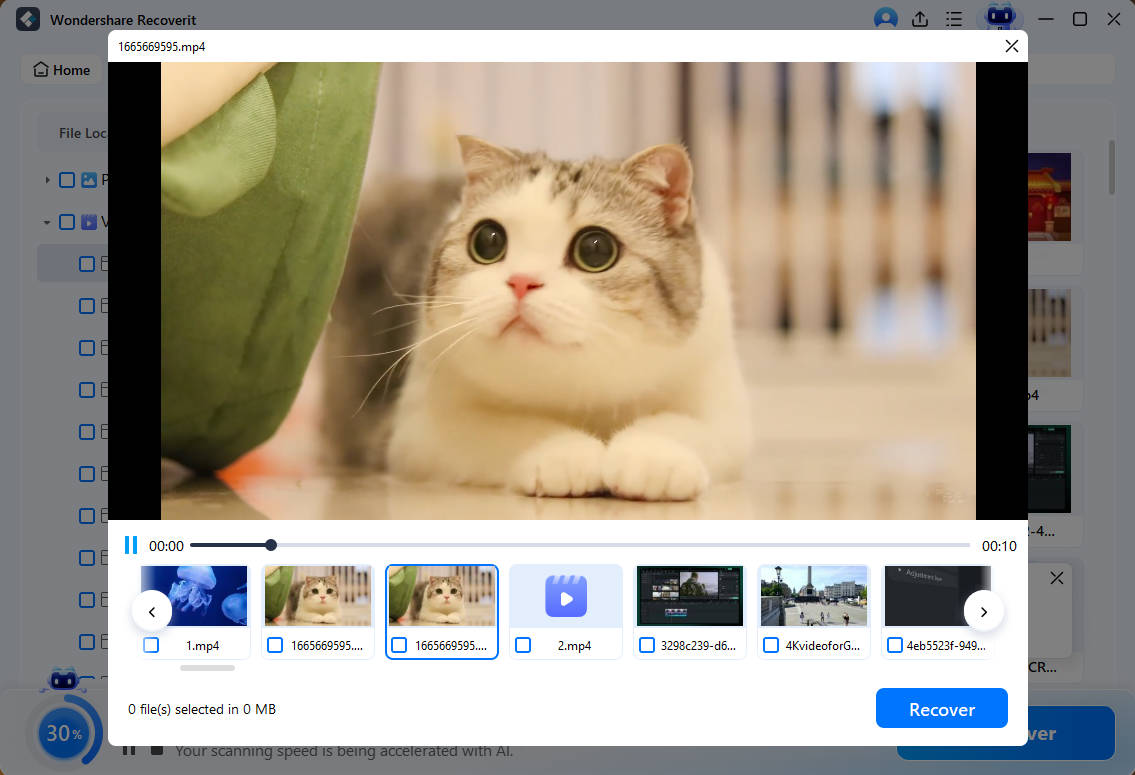
By following these steps, you can efficiently use Recoverit as a powerful alternative to TestDisk for data recovery on Windows.
Pro Tips for TestDisk Data Recovery
When using TestDisk for data recovery, there are several tips you can follow to maximize your chances of successfully retrieving your lost files. These pro tips can help you navigate the process more smoothly and avoid common pitfalls. Here are some key suggestions to consider:
- Always back up your data regularly: This is the most important step. Regular backups can prevent data loss.
- Use the latest version of TestDisk: Ensure you are using the most updated version of the software for the best performance.
- Keep your antivirus software updated: An updated antivirus can prevent infections that might cause data loss.
- Avoid writing new data on the drive: New data can overwrite the lost files, making them unrecoverable.
- Follow the instructions carefully: Make sure to read and follow the TestDisk instructions closely.
- Use a reliable power source: Avoid power interruptions that could affect the recovery process.
- Check the file system before starting recovery: Knowing the file system can help in selecting the correct recovery options.
- Seek professional help if needed: If you are unsure or encounter issues, consider consulting a data recovery professional.
Following these tips can significantly enhance your experience with TestDisk for data recovery and increase the likelihood of a successful file recovery on Windows.
Conclusion
TestDisk is a valuable tool for data recovery. It helps recover files on Windows. TestDisk data recovery supports Windows 10 and other versions. You can use TestDisk for data recovery. It is free and open-source software.
Recoverit is a great alternative to TestDisk. It offers advanced features. Recoverit is easy to use and supports many file formats. Both tools are effective for data recovery. Choose the one that suits your needs best.
Data recovery is important for protecting your files. TestDisk and Recoverit make it simple. Recover your files easily with these tools. Stay safe and keep your data protected.
FAQs
-
Q1: Is TestDisk free?
Yes, TestDisk is completely free and open-source. This means that you can download and use it without any cost. The open-source nature allows for community contributions. This helps keep the software up-to-date and reliable. TestDisk is a great option for those who need to recover data on Windows but do not want to spend money on recovery software. -
Q2: Can TestDisk recover files on Windows 10?
Absolutely! TestDisk works perfectly on Windows 10. It is compatible with multiple versions of Windows. This ensures that you can recover lost files regardless of the Windows version. TestDisk is designed to handle file recovery efficiently on both newer and older Windows systems. This makes it versatile and suitable for various recovery needs. -
Q3: Is Recoverit better than TestDisk?
Recoverit offers several advantages over TestDisk. It is considered more user-friendly. Recoverit has a simpler interface and advanced recovery options. It supports more file formats and offers excellent customer support. While TestDisk is powerful and effective, Recoverit is often preferred by those who want a more guided recovery process. It provides a more intuitive experience for recovering lost files on Windows.


