

 TL;DR:
A MacBook screen with a pale white tint can usually be resolved by adjusting True Tone, Night Shift, or color profiles, while a Mac stuck on a blank white screen requires startup troubleshooting via Safe Mode or macOS Recovery.
● If the Mac fails to boot, test it with an external display; a white screen with lines on both monitors indicates a logic board or graphics hardware failure rather than a macOS software issue.
● Run Disk Utility First Aid to repair startup disk errors, noting that accessing macOS Recovery requires holding the power button on Apple Silicon Macs or holding Command + R on Intel models.
● Recover local files before reinstalling macOS or erasing the disk by using Recoverit Mac Data Recovery via a bootable USB, provided the drive is readable and you can unlock FileVault encryption.
Ask AI for a summary
 ChatGPT
 Perplexity
 Gemini
 Claude
 Grok
Grok
A MacBook screen white tint can mean two different things. If the Mac still works and the display only looks pale, washed out, or too bright, the cause may be True Tone, Night Shift, color profiles, HDR, accessibility filters, brightness, or external display settings. If the Mac is stuck on a white screen, shows no Apple logo, or never reaches the desktop, the issue may involve startup files, the startup disk, macOS, display output, or hardware.
The safest fix starts with the right diagnosis. Do not erase the startup disk, clean install macOS, or send the Mac for repair before checking whether your files are protected. A white screen of death on MacBook Pro, MacBook Air, iMac, or another Mac may still leave local files recoverable, but repeated forced shutdowns and risky repairs can make recovery harder.
This guide explains how to separate a Mac white screen from a white tint, fix display-level problems, troubleshoot a Mac stuck on white screen, and recover files before reinstalling, erasing, or repairing the device. If the internal or external Mac storage is still readable, Recoverit Mac Data Recovery can help recover local files before advanced repair. Recoverit cannot fix macOS, repair a damaged screen, bypass FileVault, or recover overwritten data.
In this article
-
- Fix 1. Turn Off True Tone and Night Shift Temporarily
- Fix 2. Check Brightness, Contrast, and Auto-Brightness
- Fix 3. Reset the Color Profile in Display Settings
- Fix 4. Turn Off Accessibility Color Filters and Increase Contrast
- Fix 5. Check HDR, External Display, Cable, or Adapter Settings
- Fix 6. Test the Same Mac With an External Display
- Fix 7. Restart in Safe Mode to Check for App or Display Conflicts
- Fix 8. Update macOS or Display-Related Apps If the Tint Started After an Update
-
- Fix 1. Wait Briefly, Then Force Restart the Mac Once
- Fix 2. Disconnect External Devices and Peripherals
- Fix 3. Start Up in Safe Mode on Apple Silicon or Intel Mac
- Fix 4. Reset NVRAM or PRAM on Intel Mac
- Fix 5. Reset SMC on Intel Mac Models That Support It
- Fix 6. Use Startup Options or Startup Manager to Select the Correct Disk
- Fix 7. Run Disk Utility First Aid on the Startup Disk From macOS Recovery
- Fix 8. Reinstall macOS From Recovery Without Erasing Data
- Fix 9. Erase and Clean Install macOS Only After Recovering Important Files
- Fix 10. Contact Apple Support If Recovery or Startup Options Do Not Work
Part 1. MacBook White Tint vs White Screen: What Does It Mean?
A MacBook white tint means the display is still usable, but whites look too bright, colors look faded, or the screen has a pale overlay. This usually points to display settings, color calibration, accessibility filters, external monitor settings, or a software-level display issue.
A MacBook white screen is more serious. The Mac may start to a blank white screen, show a white screen before the Apple logo, show a white screen after the Apple logo, or get stuck before the desktop. This may involve macOS startup, the startup disk, a failed update, display output, or hardware.
A white screen with lines is another category. Lines, flickering, colored bands, or distortion often point toward the display panel, display cable, GPU path, logic board, or physical damage. Use the diagnosis table below before choosing a fix.
| Symptom | Most Likely Area | Best First Check |
| MacBook screen has a white tint but works | Display settings, color profile, accessibility, or external display settings | True Tone, Night Shift, color profile, and accessibility filters |
| Mac starts to white screen with no Apple logo | Early startup, display output, firmware, startup disk, or hardware | External display, Safe Mode, and macOS Recovery |
| White screen appears after Apple logo | macOS loading, login items, update, startup disk, or system files | Safe Mode and Disk Utility First Aid |
| MacBook screen white with lines | Display cable, LCD panel, graphics output, or logic board | External monitor test and Apple Diagnostics |
| iMac screen white or stuck on white screen | macOS startup, external devices, startup disk, or display hardware | Disconnect accessories and start in Safe Mode or Recovery |
Part 2. Quick Diagnosis: Which Mac White Screen Problem Do You Have?
Match the exact symptom before trying repairs. This helps avoid using a software fix for a damaged display or erasing a Mac when only the color profile is wrong.
| Sign | Likely Meaning | Start Here |
| White tint, but the Mac is usable | True Tone, Night Shift, color profile, HDR, brightness, or accessibility setting | Display and Accessibility settings |
| Washed-out colors after external monitor use | External display profile, adapter, HDR, or monitor color setting issue | Disconnect and review display settings |
| MacBook Pro white screen with no Apple logo | Early boot, display output, startup disk, or hardware issue | External monitor and Recovery startup |
| Mac stuck on white screen after Apple logo | macOS loading, update, login item, or startup disk problem | Safe Mode and Disk Utility First Aid |
| White screen began after hard shutdown | File system corruption or interrupted system process | First Aid before reinstalling macOS |
| White screen with lines or flickering | Display panel, cable, graphics output, or logic board issue | External display and Apple Diagnostics |
| Startup sound or keyboard light works, but screen is white | The Mac may be running while the display output fails | External monitor and file backup |
| You need files before repair | Advanced repair can affect local data | Recover or back up files first |
Part 3. Why Your MacBook Screen Is White or Has a White Tint
Common causes include harmless display settings, startup failures, and hardware faults:
- Display settings changed: True Tone, Night Shift, brightness, HDR, color profile, or external display settings can make the screen look pale or white.
- Accessibility display filters: Color Filters, Increase Contrast, Reduce Transparency, or Invert Colors may make the screen look washed out or unusual.
- External display or adapter issue: Loose cables, hubs, docks, monitor profiles, or HDR settings can affect built-in and external screen output.
- Login item or app conflict: Startup apps, display utilities, screen recorders, VPN tools, or system extensions may affect graphics after login.
- macOS update problem: An interrupted update can leave the Mac stuck on a white screen or unable to finish startup.
- Startup disk errors: File system damage or a failing drive can stop macOS before it reaches the desktop.
- Wrong startup disk: The Mac may be trying to boot from an unavailable or damaged system volume.
- NVRAM issue on Intel Macs: Startup disk, display resolution, and related settings stored in NVRAM can become incorrect.
- SMC-related issue on supported Intel Macs: Power, sleep, charging, thermal, or display-wake behavior may be unstable.
- Display hardware damage: A damaged LCD panel, backlight, display cable, hinge path, or connector can cause white screens, lines, or flicker.
- Logic board or graphics issue: If both built-in and external displays fail, deeper hardware may be involved.
- Liquid, pressure, or heat damage: Spills, lid pressure, drops, and overheating can damage display and board components.
Part 4. Important Steps Before Fixing a White Screen on a Mac
Before applying fixes, protect your files and avoid making the problem worse:
- Do not erase the disk first: Erasing removes files, apps, settings, and the current recovery state.
- Avoid repeated forced restarts: Forced shutdowns during disk activity can increase file system damage.
- Separate tint from startup failure: A working Mac with white tint needs display checks, while a stuck white screen needs startup troubleshooting.
- Test an external display: A normal external monitor suggests the built-in display may be at fault.
- Check for lines, flicker, and physical damage: These symptoms often point to hardware, not color settings.
- Identify Apple silicon or Intel: Startup keys, Safe Mode, Recovery, NVRAM, and SMC steps differ.
- Back up or recover important files: Do this before reinstalling macOS, running risky repairs, erasing the disk, or sending the Mac for service.
- Keep FileVault details ready: If FileVault is enabled, you may need the Mac password or recovery key to access encrypted files.
Part 5. How to Fix MacBook Screen White Tint or Washed-Out Colors
Use this section when the Mac reaches the desktop and the screen looks too white, pale, or washed out. If the Mac cannot start, skip to Part 6.
Fix 1. Turn Off True Tone and Night Shift Temporarily
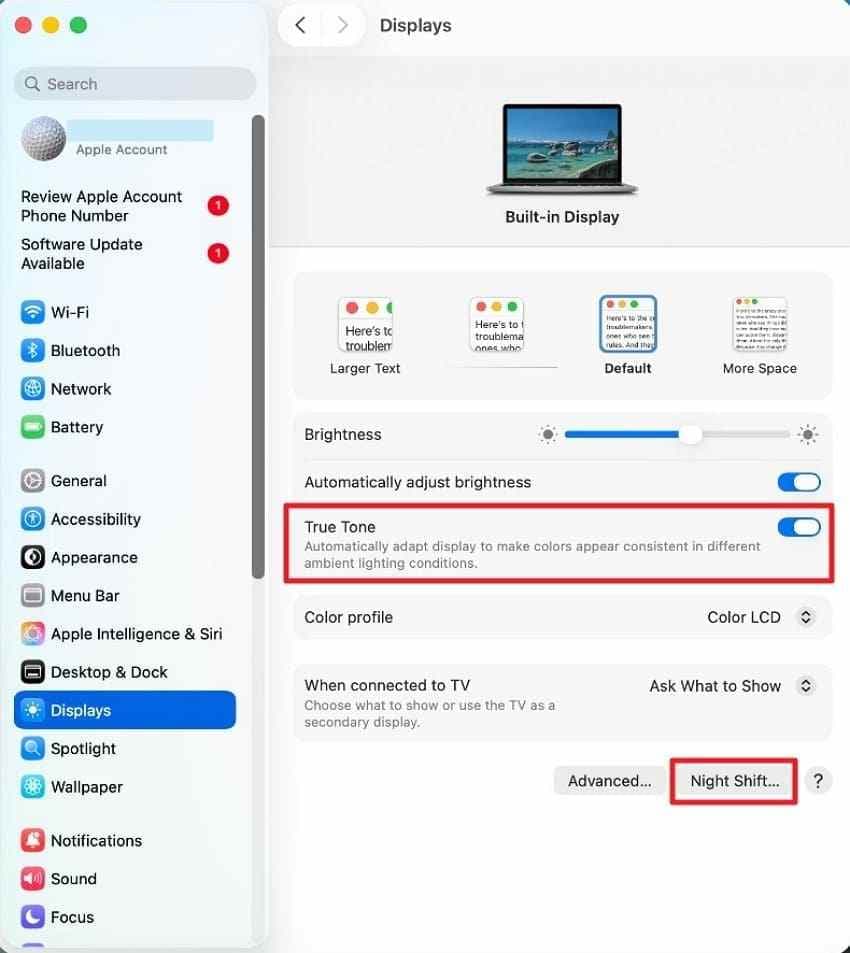
True Tone adjusts display color based on ambient light, while Night Shift changes color temperature. Either can make a MacBook screen white tint look stronger in some lighting.
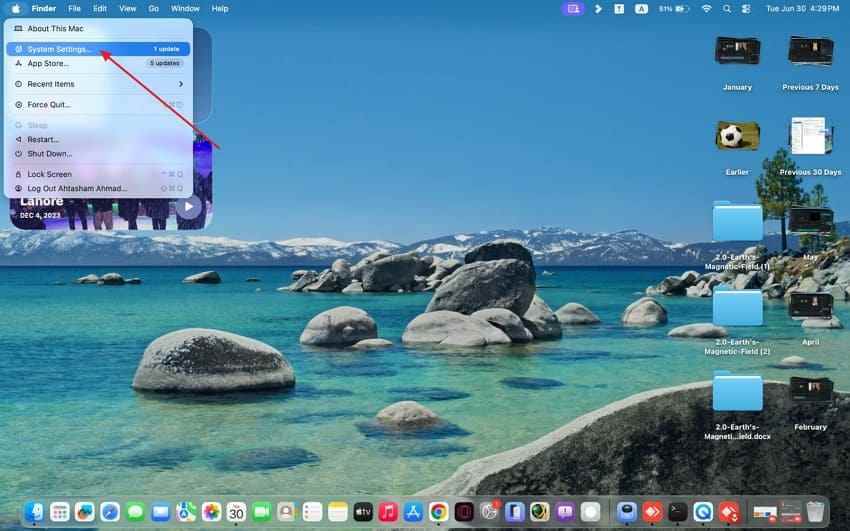
Open Apple menu > System Settings > Displays. Turn off True Tone and Night Shift temporarily, then compare the screen under normal room light.
Fix 2. Check Brightness, Contrast, and Auto-Brightness
High brightness, automatic brightness changes, or contrast settings can make whites look blown out. Lower brightness slightly and review display behavior in a stable lighting environment.
Step 1. Open System Settings and go to display-related settings.
Step 2. Review display brightness, automatic adjustment options, and accessibility display settings, then test colors again.
Fix 3. Reset the Color Profile in Display Settings
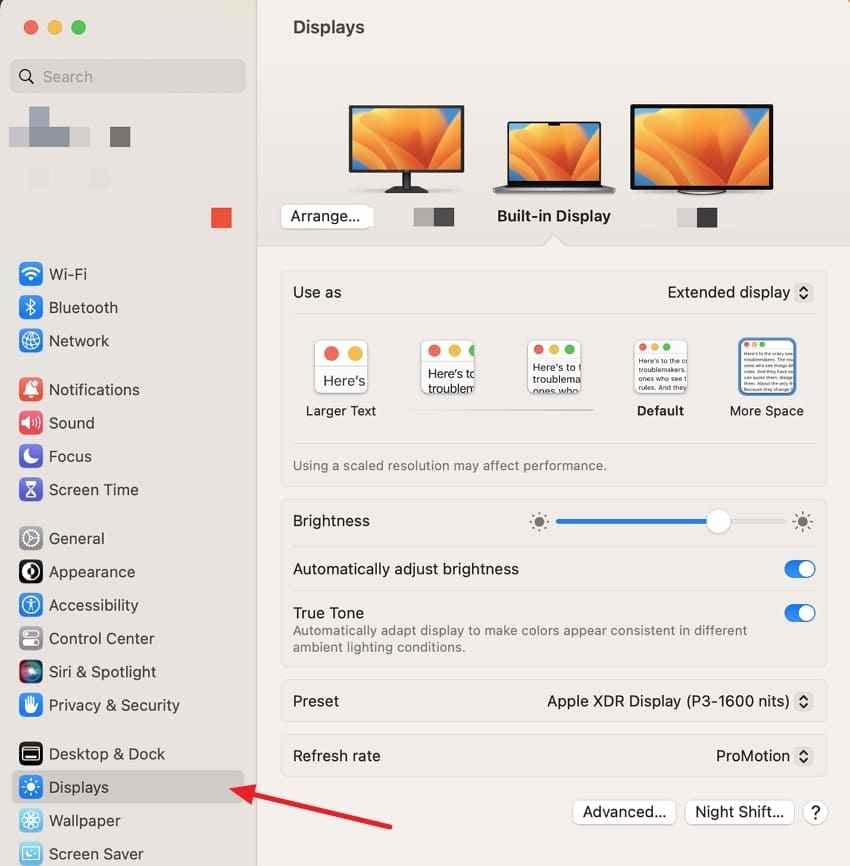
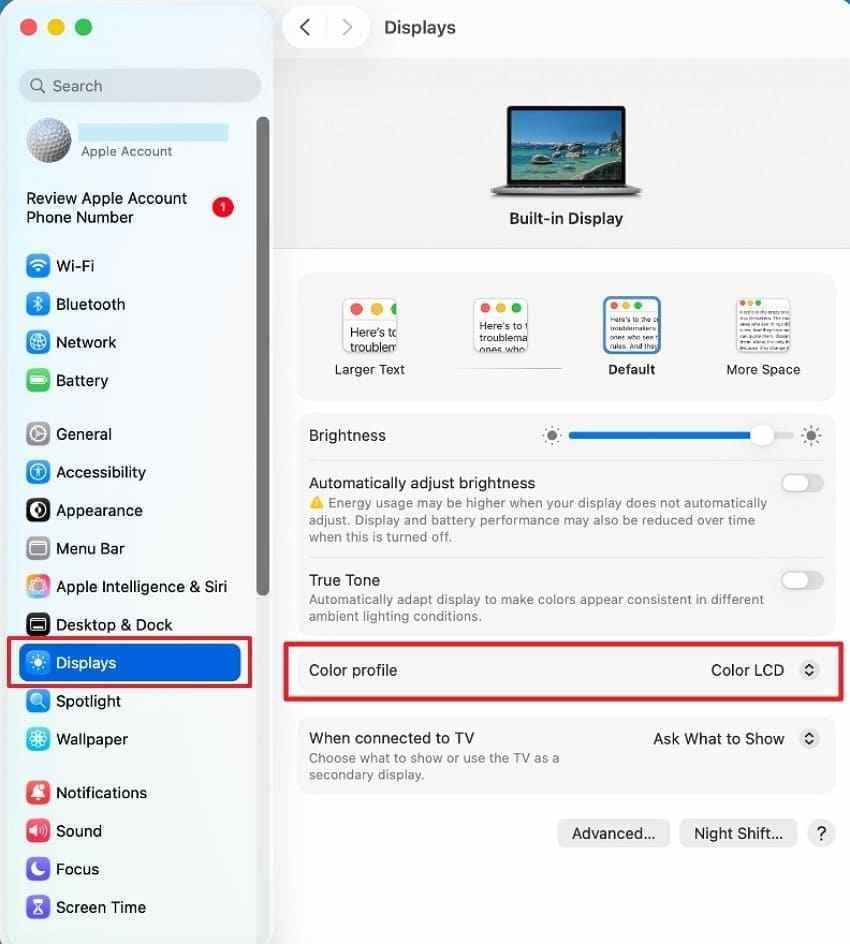
A custom or incorrect color profile can make the MacBook screen look white, blue, yellow, or washed out. Open System Settings > Displays, check Color Profile, and choose the default profile for the built-in display if available.
Fix 4. Turn Off Accessibility Color Filters and Increase Contrast
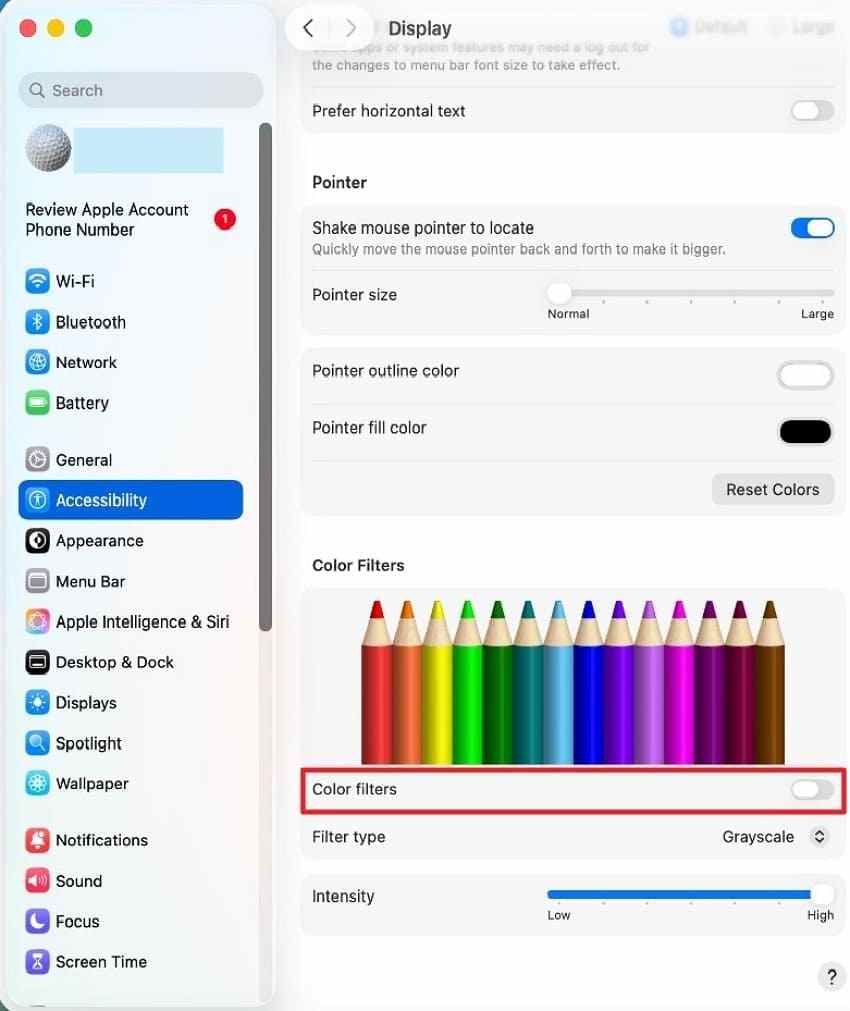
Accessibility settings can dramatically change display colors. Open System Settings > Accessibility > Display. Turn off Color Filters if enabled, review Increase Contrast, Reduce Transparency, and other visual options, then check whether the white tint improves.
Fix 5. Check HDR, External Display, Cable, or Adapter Settings
If the white tint appears after using an external display, dock, hub, or adapter, disconnect the accessories and test the built-in display alone. For external monitors, review HDR, brightness, contrast, color mode, refresh rate, and cable quality. A poor adapter or wrong monitor mode can make whites look overexposed.
Fix 6. Test the Same Mac With an External Display
Connect a reliable external display. If the external display looks normal but the built-in MacBook screen stays white or washed out, the internal display, backlight, cable, or panel may be involved. If both screens look wrong, macOS display settings, graphics output, or software conflict may be more likely.
Fix 7. Restart in Safe Mode to Check for App or Display Conflicts
Safe Mode helps determine whether login items, extensions, caches, or display-related apps are affecting the screen.
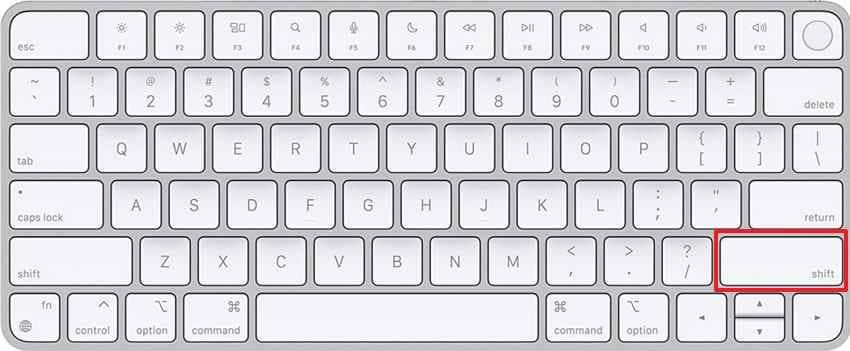
Apple silicon: Shut down the Mac. Press and hold the power button until startup options appear. Select the startup disk, hold Shift, then click Continue in Safe Mode.
Intel: Restart the Mac and immediately hold Shift until the login window appears.
If the display looks normal in Safe Mode, remove recently installed display utilities, startup apps, login items, screen recorders, or system extensions.
Fix 8. Update macOS or Display-Related Apps If the Tint Started After an Update
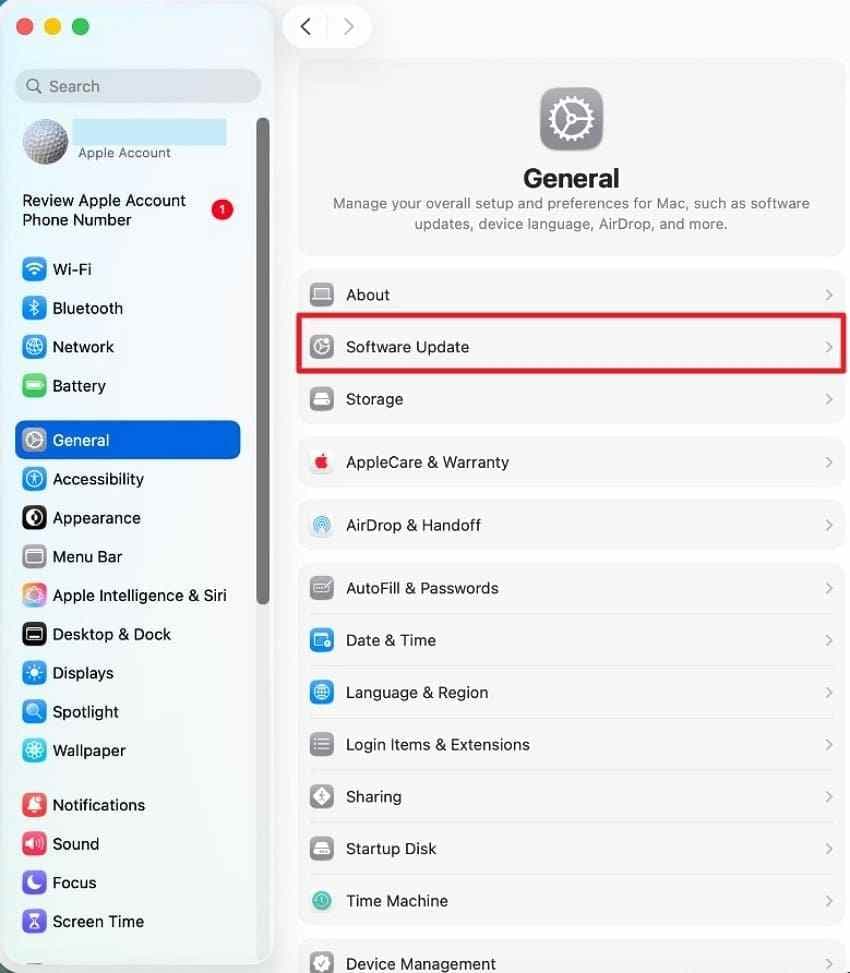
If the white tint started after a macOS update, external display utility update, or app installation, check for a newer update or remove the problematic app. Open System Settings > General > Software Update. Install available updates only when the Mac is stable and connected to power.
Part 6. How to Fix MacBook White Screen on Startup
Use this section when the Mac starts to a white screen, shows no Apple logo, gets stuck before the desktop, or behaves like the MacBook white screen of death.
Fix 1. Wait Briefly, Then Force Restart the Mac Once
If the Mac is updating or repairing the disk, a blank or white screen may last longer than expected. If there is progress, fan activity, or storage activity, wait. If the Mac is frozen for a long time and does not respond, hold the Power or Touch ID button for up to 10 seconds until it turns off. Wait a few seconds, then start it again.
Do not repeat forced shutdowns many times. If the white screen returns, continue with Safe Mode, Recovery, and data protection.
Fix 2. Disconnect External Devices and Peripherals
USB drives, hubs, docks, external displays, printers, audio devices, SD cards, and security keys can interrupt startup. Shut down the Mac, disconnect everything except power, then start it again. If the Mac starts normally, reconnect devices one at a time to find the conflict.
Fix 3. Start Up in Safe Mode on Apple Silicon or Intel Mac
Safe Mode can help when a Mac is stuck on white screen after a macOS update, app installation, or login item change.
Apple silicon: Shut down the Mac. Press and hold the power button until startup options appear. Select the startup disk, hold Shift, then click Continue in Safe Mode.
Intel: Turn on or restart the Mac and immediately hold Shift until the login window appears.
If Safe Mode works, back up files, remove recent login items, uninstall suspect apps, and restart normally.
Fix 4. Reset NVRAM or PRAM on Intel Mac
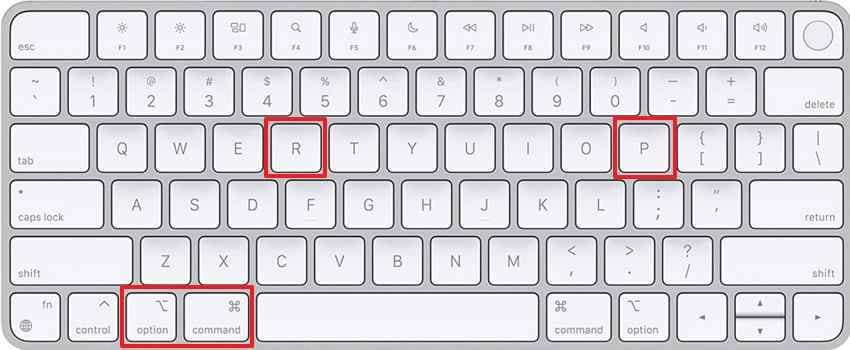
NVRAM reset applies to Intel Macs only. It may help when startup disk, display resolution, or related settings are wrong. Shut down the Intel Mac, turn it on, and immediately hold Option + Command + P + R for about 20 seconds. Release the keys and let the Mac continue starting up.
Apple silicon Macs do not use the same manual NVRAM reset flow.
Fix 5. Reset SMC on Intel Mac Models That Support It
SMC reset may help Intel Macs when the white screen appears with power, charging, fan, sleep, thermal, or display-wake issues. Apple silicon Macs manage these functions automatically during shutdown and restart, so no manual SMC reset is needed.
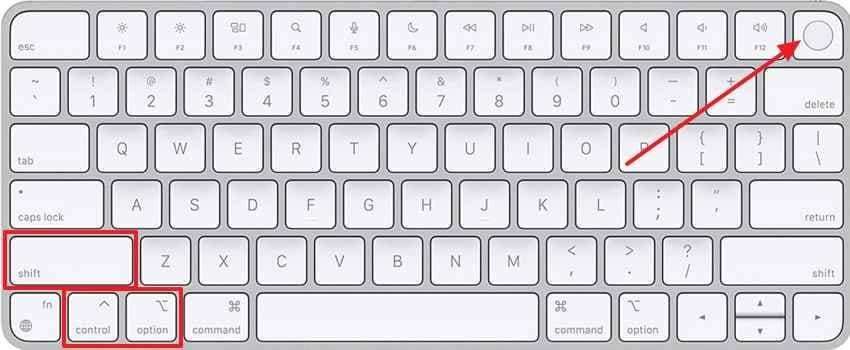
For Intel MacBook models with a T2 Security Chip, shut down the Mac. Hold Control + Option + Shift for 7 seconds, then keep holding those keys while pressing the Power button for another 7 seconds. Release all keys, wait briefly, then turn on the Mac. For older Intel Macs, use the SMC reset method for your exact model.
Fix 6. Use Startup Options or Startup Manager to Select the Correct Disk
If the wrong startup disk is selected, the Mac may fail to start normally. On Apple silicon, shut down the Mac, then hold the power button until startup options appear. Select the correct startup disk and click Continue. On Intel, restart and hold Option to open Startup Manager, then choose the correct disk.
If the startup disk does not appear, the disk may be corrupted, disconnected, encrypted, or failing. Recover files before erasing or reinstalling.
Fix 7. Run Disk Utility First Aid on the Startup Disk From macOS Recovery
Run First Aid when the Mac white screen follows a hard shutdown, update failure, disk error, or repeated failed startup. Back up or recover files first if possible.
Step 1. Enter macOS Recovery.
- Apple silicon: Shut down the Mac. Hold the power button until startup options appear. Choose Options > Continue.
- Intel: Restart and immediately hold Command + R until the Apple logo or spinning globe appears.
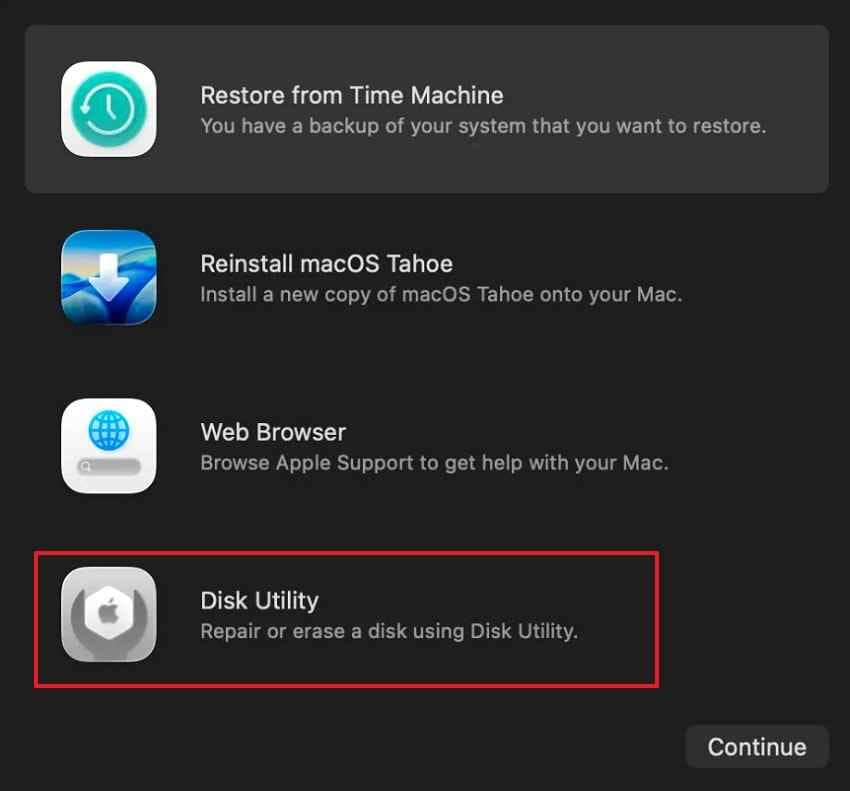
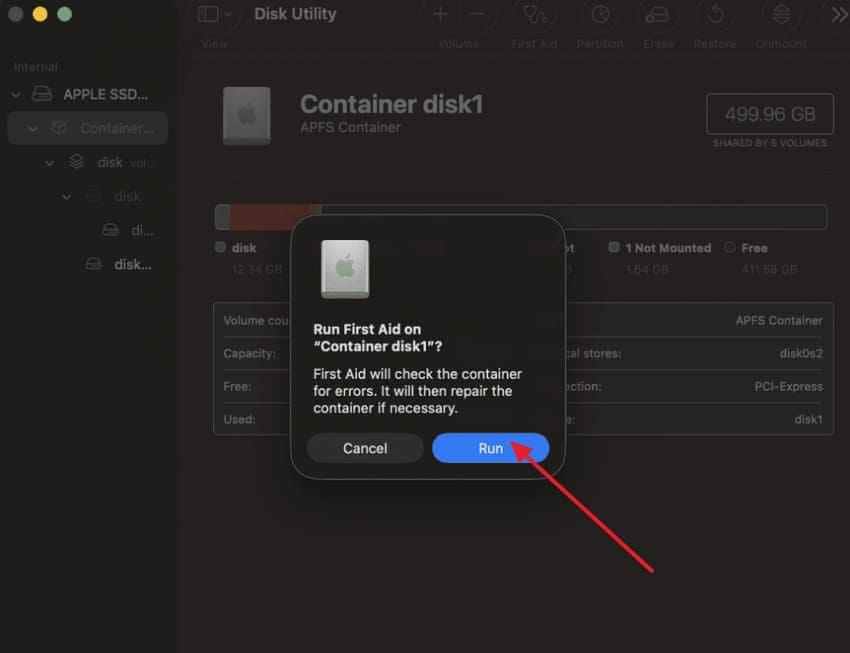
Step 2. Open Disk Utility, choose View > Show All Devices if available, then run First Aid on the startup volume, container, and disk. Restart after the repair finishes.
Fix 8. Reinstall macOS From Recovery Without Erasing Data
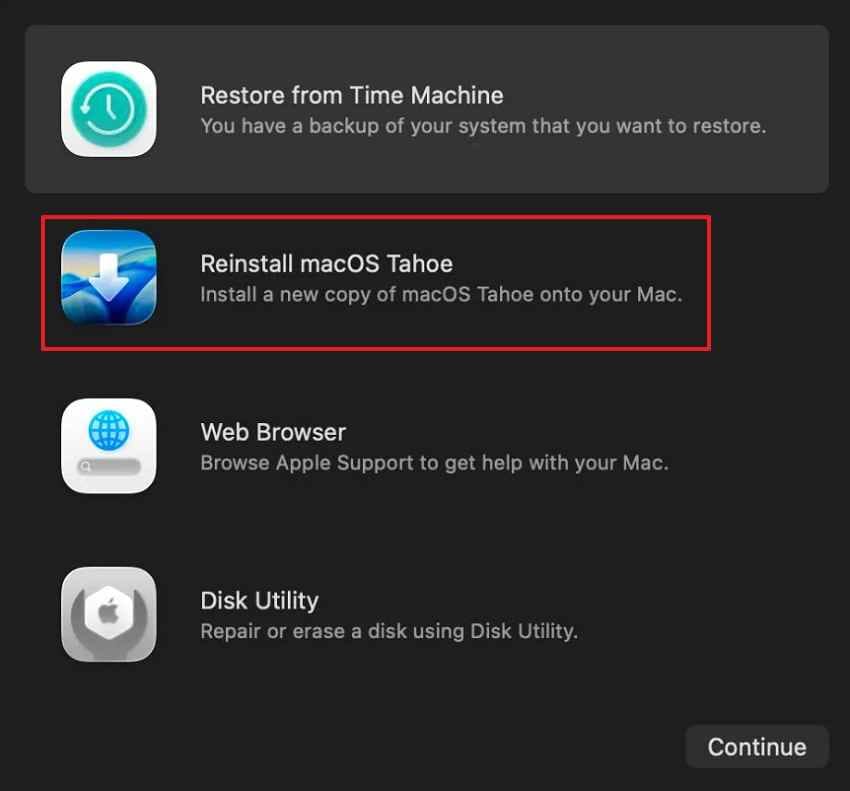
If Disk Utility does not resolve the white screen and the startup disk is still readable, reinstall macOS from Recovery. This can replace system files without intentionally erasing personal files, but any unstable drive or interrupted install can still put data at risk. Recover or back up important files first.
In macOS Recovery, choose Reinstall macOS and follow the onscreen instructions. Do not choose erase, format, or clean install unless your files are already safe.
Fix 9. Erase and Clean Install macOS Only After Recovering Important Files
Clean installation is a last resort for software-related white screen problems. It removes the current macOS installation and can remove local files, apps, settings, user profiles, and recovery opportunities. Use it only after Time Machine backup, manual backup, Target Disk Mode or Share Disk access, Recoverit recovery, or another file protection method is complete.
Fix 10. Contact Apple Support If Recovery or Startup Options Do Not Work
If the Mac cannot enter Recovery, cannot show Startup Options, shows white screen with lines on both internal and external displays, or Apple Diagnostics reports an error, contact Apple Support or an Apple Authorized Service Provider. Persistent white screens may involve display hardware, storage, logic board, or service-level faults.
Part 7. Recover Files Before Reinstalling, Erasing, or Repairing Your Mac
A MacBook white screen becomes a data-risk problem when the next steps involve reinstalling macOS, erasing the startup disk, replacing hardware, or sending the device for repair. Protect files before those actions whenever possible.
Recoverit Mac Data Recovery can help recover files from readable Mac storage, external drives, USB drives, SD cards, and crashed Mac scenarios. It is a data recovery tool, not a macOS repair or hardware repair tool.
When Recoverit Can Help
- Mac cannot boot normally: The Mac is stuck on a white screen, but the internal drive may still contain readable files.
- Files were deleted or lost: Documents, photos, videos, archives, emails, and other supported file types may be recoverable if not overwritten.
- External storage is affected: Recovery is needed from external drives, USB drives, SD cards, cameras, or other Mac-connected storage.
- Before erase or repair: You need local files before reinstalling macOS, erasing the disk, replacing hardware, or sending the Mac for service.
When Recoverit Cannot Help
- It cannot fix macOS startup errors, a white screen, display tint, LCD damage, display cable failure, GPU issues, logic board failure, or liquid damage.
- It cannot bypass FileVault encryption, Mac login passwords, firmware locks, or Apple ID Activation Lock.
- It cannot guarantee recovery from overwritten files, a physically failed SSD, or storage that is no longer detected.
- It should not be installed on the same affected drive when recovering deleted or lost files from that drive.
Guide to Recover Files From a White Screen Mac Using Recoverit
Use another working Mac and an empty USB drive. Keep the FileVault password or recovery key ready if encryption is enabled.
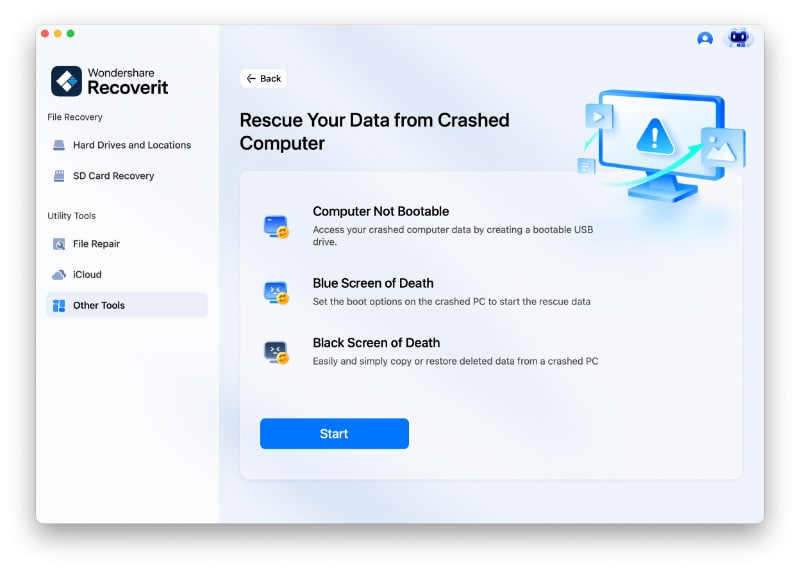
Step 1. Install and open Recoverit on the working Mac. Go to Computer Not Bootable from the recovery tools and start the crash recovery workflow.
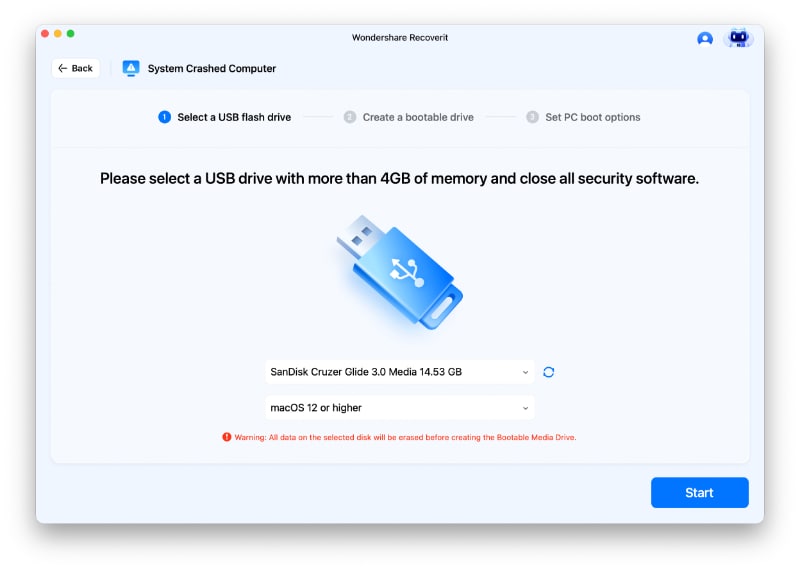
Step 2. Insert a USB drive, select it, and create bootable recovery media. Back up the USB first because the creation process can erase it.
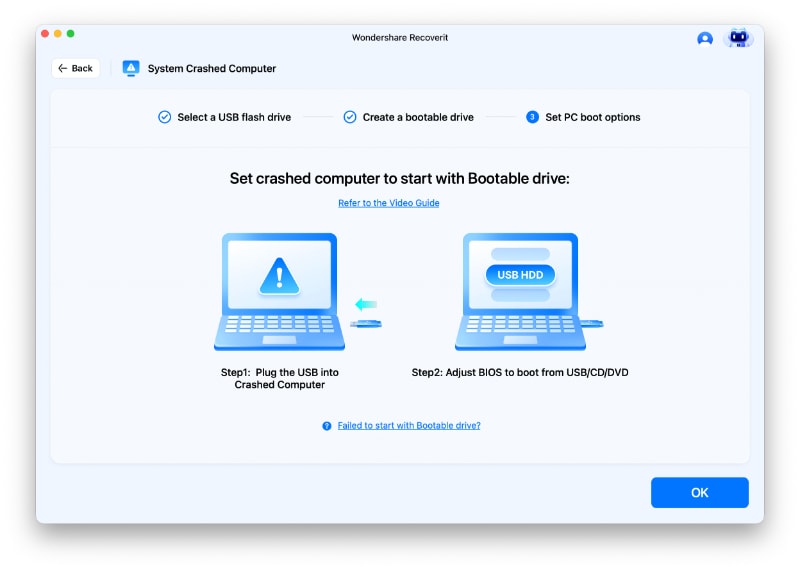
Step 3. Connect the bootable USB to the white-screen Mac, start from the bootable drive, scan the Mac storage, preview recoverable files when available, and save recovered files to a separate external drive.
Part 8. MacBook White Screen With Lines: Software Issue or Hardware Damage?
If the MacBook screen is white with lines, diagnose it separately from a plain white tint. Lines are more likely to involve display hardware, but software checks can still help rule out macOS or startup issues.
| Line Pattern or Test Result | Likely Meaning | Recommended Action |
| Horizontal or vertical lines on built-in display only | LCD panel, display cable, hinge path, or connector issue | Back up files and arrange display inspection |
| Lines on both internal and external screens | Graphics output, logic board, or macOS graphics issue | Safe Mode, Apple Diagnostics, and professional inspection |
| Lines change when the lid moves | Display cable or hinge-path damage | Stop moving the lid repeatedly and seek service |
| Lines began after a drop, pressure, or liquid exposure | Physical display or board damage | Recover files and contact Apple or an authorized service provider |
| Lines disappear in Safe Mode | Software conflict, login item, or graphics-related app may be involved | Remove recent apps and update macOS |
| White screen appears in Recovery too | Less likely to be a normal login item issue | Run diagnostics and plan repair if hardware signs remain |
Part 9. How to Prevent Mac White Screen Problems in the Future
These habits reduce the chance of display, startup, and data-loss problems:
| Prevention Tip | What to Do |
| Back up regularly | Use Time Machine, cloud backup, or another reliable backup method for important files. |
| Keep macOS and apps updated | Install updates when the Mac is stable, connected to power, and has enough free space. |
| Review display settings after updates | Check True Tone, Night Shift, color profiles, HDR, and accessibility settings after major changes. |
| Avoid interrupting startup or updates | Let macOS updates and disk repairs finish to reduce startup disk corruption. |
| Disconnect risky peripherals during startup | Remove unnecessary drives, docks, and hubs when diagnosing startup problems. |
| Handle the Mac carefully | Prevent drops, liquid spills, lid pressure, excessive heat, and hinge stress. |
| Monitor storage health and free space | Low space or drive errors can contribute to failed updates and startup failures. |
Conclusion
A MacBook screen white tint is often a display setting problem, while a Mac stuck on white screen may involve startup files, the startup disk, macOS, or hardware. Start with diagnosis: check display settings if the Mac is usable, use Safe Mode and Recovery if startup fails, and test an external monitor when lines or hardware signs appear. Before reinstalling, erasing, or repairing the Mac, recover important files with Recoverit or another safe backup method.
FAQ
-
Can a MacBook white screen be fixed without losing data?
Yes, sometimes. Try non-erasing fixes first, such as Safe Mode, external display testing, Disk Utility First Aid, and reinstalling macOS without erasing. Recover or back up files before formatting the disk. -
Why does my MacBook screen look white but still work?
Display settings are often responsible. True Tone, Night Shift, color profiles, HDR, brightness, and accessibility filters can make the screen look white, pale, or washed out. -
What should I do if my MacBook Pro white screen shows no Apple logo?
Test an external display, disconnect peripherals, try Safe Mode or macOS Recovery, and run Disk Utility First Aid if Recovery opens. If Recovery or Startup Options do not appear, contact Apple Support or an authorized service provider. -
Can Recoverit fix a Mac white screen of death?
No. Recoverit is for data recovery. It can help recover files from readable Mac storage before erase, reinstall, or repair, but it cannot fix macOS, repair a damaged display, or bypass FileVault.


