


 TL;DR:
A TS (Transport Stream) file is a video container, not a specific codec, that can be played directly in VLC Media Player or safely repackaged into an MP4 without quality loss if the destination device supports the original encoded streams.
● To change a TS recording to MP4, use FFmpeg with stream copy commands to losslessly remux compatible tracks; you only need to transcode the file if the target player rejects the original video or audio codecs, as simply renaming the file extension to .mp4 will not restructure the packets.
● When handling TS segments from HTTP Live Streaming, you must process the authorized .m3u8 media playlist rather than converting a single .ts file, which will only output a few seconds of isolated footage.
● If converting via the VLC desktop interface, explicitly verify the codecs within the selected MP4 profile before starting, as default profiles may apply MP3 audio instead of the widely compatible AAC format.
Ask AI for a summary
 ChatGPT
 Perplexity
 Gemini
 Claude
 Grok
A TS file is a Transport Stream file: a container that carries video, audio and related data, commonly from television recordings or streaming systems. The .ts extension does not tell you which video codec is inside. A TS video can contain H.264, for example, rather than MPEG-2 Video.
To watch a local TS recording, start with a compatible player such as VLC. To share it as MP4, first identify its streams, then choose between remuxing and re-encoding. If the item is a TypeScript source file or a DVD's VIDEO_TS folder, it needs a different workflow. The checks below separate those cases before you change anything.
In This Article
Part 1. What the TS File Format Actually Means
The useful distinction is between the container that organizes a recording and the codecs that compress its contents. Treating those as the same thing leads to unnecessary conversions and incorrect playback advice.
Transport Stream Is a Container, Not One Video Codec
MPEG-2 TS refers to the transport-stream system, not a requirement that every recording use MPEG-2 video compression. The Library of Congress format description identifies it as a packet-based container used in broadcasting and related delivery workflows.
| Property | Meaning for a TS Video File |
| Extension | Usually .ts; a filename alone is not proof of the underlying format. |
| Container | MPEG Transport Stream, defined within MPEG-2 Systems. |
| Packet structure | Standard TS uses 188-byte packets. Related transport variants can add extra bytes. |
| Contents | Video, audio and sometimes subtitles, multiple services or other data. |
| Video encoding | May be MPEG-2 Video, H.264/AVC or another supported codec. |
| Common sources | Digital TV recordings, broadcast equipment and TS-based streaming segments. |
Packet identifiers and program tables help a receiver distinguish the components. This organization supports transport and resynchronization, but it cannot recreate packets that were never received. A recording can still contain missing scenes, broken timing or an incomplete ending.
A related .m2ts recording uses a transport-stream variant; it should not be treated as a new codec simply because the suffix differs. Likewise, changing a TS filename to .mp4 or .mpeg does not reorganize its packets or change its audio.
TS Video, TypeScript, Qt and VIDEO_TS Are Different
Start with where the item came from, not the application that happens to open when you double-click it. A mistaken file association can send a valid video to a text editor.
| What You Have | Likely Meaning | Correct Direction |
| A .ts recording from a tuner, recorder or media workflow | Transport Stream video | Inspect the streams, then use a compatible player. |
| A .ts file inside an application source-code project | TypeScript source code | Open it as text in the project's editor, not a video converter. |
| A readable XML .ts file containing translation messages | Qt Translation Source | Use the relevant localization workflow. |
| A folder named VIDEO_TS containing .VOB, .IFO and .BUP files | DVD-Video structure | Open the DVD folder with DVD-aware software; do not rename its files to .ts. |
The TypeScript handbook uses .ts for program source, while the Qt Linguist specification describes an XML translation format. Neither is an MPEG video. Do not run an unfamiliar source file simply to discover what it contains.
VIDEO_TS is a folder name, not the .ts video extension. DVD-Video uses a different organization from a loose transport-stream recording. Keeping the complete folder matters because its navigation and playback information is spread across several files. Apple's DVD Player instructions explicitly open a VIDEO_TS folder rather than a loose .ts video.
Part 2. Identify and Play a TS File
A valid recording may work immediately in VLC. Inspecting it first is especially useful when several audio tracks are present, the file opens in the wrong application, or you plan to convert it.
Method 1. Check the Actual Container and Codecs
Use this read-only check when the extension is ambiguous or an application reports an unsupported format. You need an accessible local file and an FFmpeg installation that includes ffprobe.
Step 1. Finish any authorized download or transfer. Confirm that the file is not empty, a cloud-only placeholder or a text error response saved with a .ts name. Do not repeatedly read a drive that disconnects or produces hardware errors.
Step 2. Open your terminal in a working folder and run the following command, replacing input.ts with the actual path. Quote paths containing spaces.
ffprobe -v error -show_entries format=format_name,duration:stream=codec_name,codec_type -of compact=p=1:nk=0 "input.ts"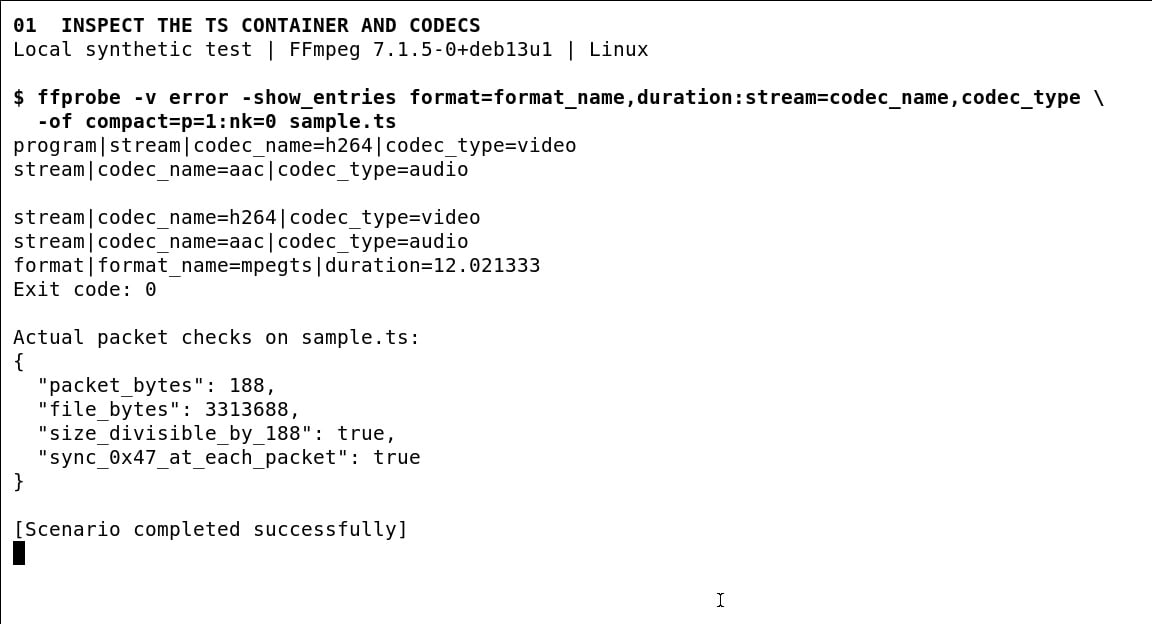
Step 3. Look for format_name=mpegts and separate video/audio codec names. The ffprobe documentation explains its format, stream and program reporting. Some TS output repeats stream details within a program section; that alone does not mean the recording has duplicate tracks.
In a local test for this article, a synthetic 12-second TS file reported h264 video and aac audio. Its 188-byte packet boundaries also matched the expected synchronization byte. That confirms this fixture's structure, not the completeness or authenticity of an arbitrary downloaded file.
If probing fails, keep the original and inspect its source. A programming file, truncated transfer, encrypted recording and damaged transport stream need different responses. Renaming all of them to MP4 will not resolve the distinction.
Method 2. Open the TS Video in VLC
VLC is a practical first playback test because VideoLAN lists MPEG TS among its supported input formats. That support still depends on readable media, available decoders and the device's ability to handle the recording.
Step 1. Obtain or update VLC through the official VideoLAN documentation and download route or the official app-store listing for your device. Ignore codec-download prompts displayed by unrelated video websites.
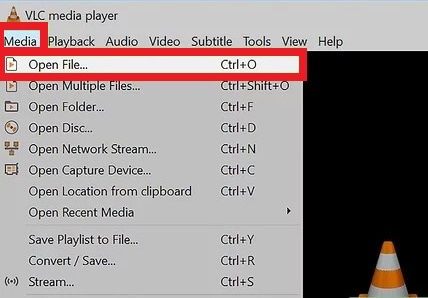
Step 2. On Windows, choose Media > Open File and select the TS file. Dragging the file into VLC is another option. On macOS, drag the recording from Finder into VLC rather than looking for the Windows Media menu.
Step 3. Play the beginning, middle and end. Check sound, seeking and approximate duration. If the recording has several audio tracks, choose the intended track rather than assuming that silence means no audio was recorded.
Step 4. On Android or iPhone/iPad, make the file available to the installed VLC app through its local-file or sharing workflow. A cloud preview, an app's offline download and a normal local TS file are not interchangeable. Availability in Photos or a gallery is not the test of whether VLC can decode it.
If VLC plays the complete video but your destination application rejects it, move to the conversion choices below. If it fails with several known-good videos, investigate VLC playback problems before changing every file. A single failure in an unsupported native player does not establish corruption.
Part 3. TS vs. MP4: Which Should You Keep?
Choose a container for the job, then check the actual encoded streams. Neither extension establishes resolution, picture quality or a universal compression ratio.
| Decision | TS | MP4 |
| Broadcast or TS-based delivery | Retains transport structure and potentially multiple services. | A remux may omit broadcast-specific information or unsupported streams. |
| Sharing a normal video | Some editors, uploaders and native players reject it. | H.264 video with AAC audio is a useful compatibility target, subject to device limits. |
| Quality | Depends on the source encoding. | Remuxing avoids re-encoding loss; transcoding changes the compressed media. |
| Interrupted capture | Later intact packets may remain readable, but gaps are not repaired automatically. | Recoverability depends on the MP4 structure and surviving data, not just the suffix. |
| File size | Includes transport overhead and any extra streams. | May have different overhead; a smaller file is not guaranteed by the extension. |
Keep the TS master when alternate audio, subtitles or transport information could matter later. Create an MP4 delivery version for a particular player or uploader, then verify that destination. A conversion that preserves the main picture but drops your required language track is not a successful archival replacement.
TS is not simply an obsolete DVD-era format. Modern streaming can use TS or fragmented MP4, depending on the delivery system. Conversely, an MP4 containing a demanding codec, resolution or profile can still be rejected by a device.
Part 4. Convert TS to MP4 Without Choosing the Wrong Workflow
First decide whether the target already supports the video and audio codecs. If it does, try remuxing. If it does not, transcode only what needs changing. For a damaged storage device or deleted recording, protect or recover the source before either operation.
Method 3. Remux TS to MP4 with FFmpeg
Use stream copy when the streams can be placed in MP4 and played by your destination. The FFmpeg stream-copy and stream-selection documentation distinguishes copying encoded streams from decoding and re-encoding them.
Step 1. Identify the desired video and audio tracks with ffprobe. For a straightforward recording containing one video and one audio track, run:
ffmpeg -n -i "input.ts" -map 0:v:0 -map "0:a:0?" -c copy -movflags +faststart "output.mp4"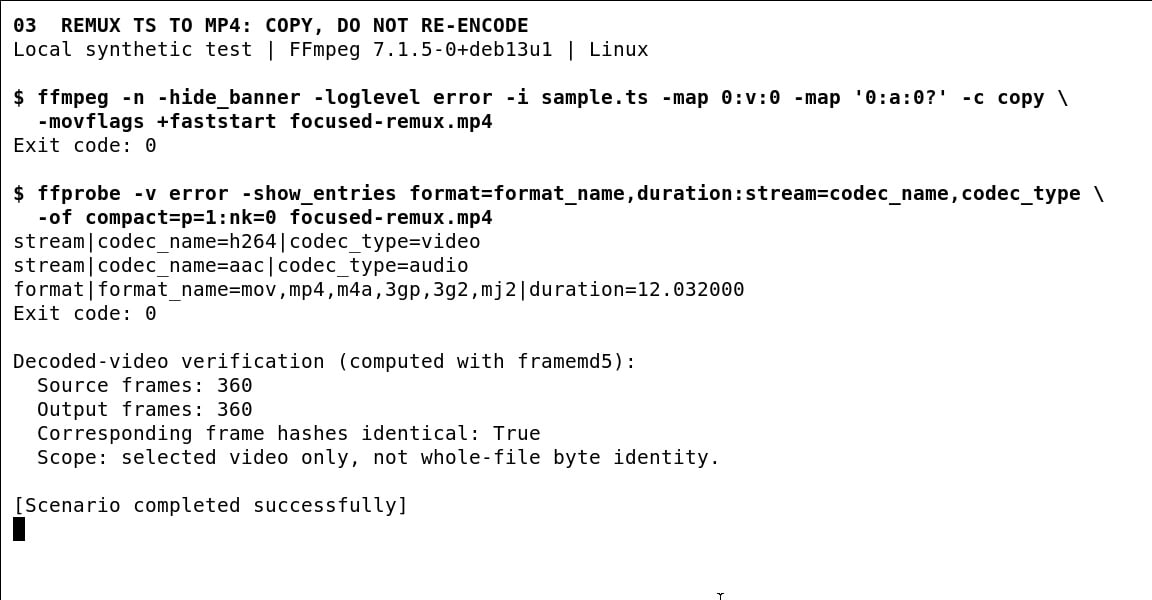
Step 2. Wait for the command to finish and inspect any error. -n refuses to overwrite an existing output. -c copy copies the selected encoded streams; it is not a request to repair missing data or convert the video codec.
Step 3. Probe the MP4 and play it in the destination application. Check picture, intended language, duration, seeking and synchronization at several points. Keep the TS until those checks pass.
The mapping above keeps the first video and, if present, the first audio. It intentionally does not preserve every subtitle, data stream or service. On a multi-program broadcast capture, first inspect ffprobe -show_programs -show_streams "input.ts" and select the matching streams. Blindly using the first audio can pair the wrong language or service with the picture.
+faststart relocates MP4 metadata for more convenient progressive playback; it is not a corruption fix. The FFmpeg muxer documentation describes that behavior. Current FFmpeg also auto-inserts the needed AAC ADTS-to-MP4 bitstream adjustment in the applicable MP4 workflow, so an explicit audio bitstream filter is not a universal extra requirement.
In the local H.264/AAC fixture test, the TS reported 12.021333 seconds and the remuxed MP4 12.032000 seconds. All 360 decoded video-frame hashes matched. The small container-duration difference did not imply new video compression. This test covers one synthetic source and selected video frames, not every TS file, audio sample or broadcast track.
If FFmpeg rejects a stream in the output container, or the completed MP4 still fails in your target player, inspect the reported codec before choosing the transcoding method below. Timestamp warnings or missing sections instead call for checking the complete recorder export; re-encoding cannot supply missing footage.
Method 4. Transcode Incompatible Video or Audio
Use re-encoding when a valid source's codec or encoding settings are unsuitable for the target. An MP4 container alone will not make every MPEG-2, HEVC or unusual audio stream acceptable to every app.
Step 1. Confirm that FFmpeg can decode the source and that your build contains the required encoders. The following starting point is intended for an ordinary progressive, standard-dynamic-range recording:
ffmpeg -n -i "input.ts" -map 0:v:0 -map "0:a:0?" -c:v libx264 -preset medium -crf 20 -pix_fmt yuv420p -c:a aac -b:a 192k -movflags +faststart "compatible.mp4"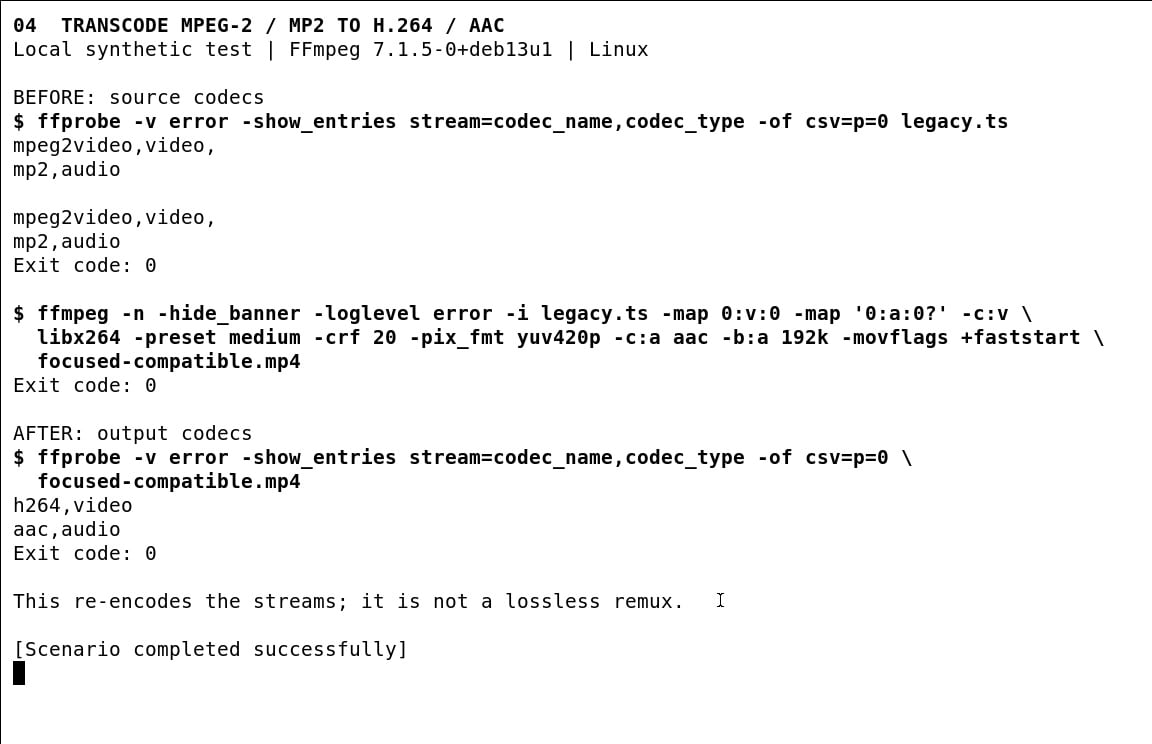
Step 2. Let encoding complete without overwriting the TS. H.264 video, 8-bit 4:2:0 pixels and AAC audio form the output target here; CRF 20 is a starting quality setting, not a guarantee of a particular size or visual result.
Step 3. Compare motion, audio and duration with the source, then test the actual phone, television, editor or upload service. Our synthetic MPEG-2 Video/MP2 test produced H.264/AAC successfully, but this command was not a hardware compatibility test.
Do not apply this recipe unchanged to HDR, interlaced material or a device requiring a different resolution. Pixel-format conversion alone does not perform proper HDR tone mapping or deinterlacing. Preserve the master and choose a format-aware workflow. If only audio is incompatible, video stream copy with audio re-encoding can avoid another video generation.
For persistent rejection, narrow down the unsupported format or codec rather than repeatedly converting between file extensions. Missing encoders, damaged input and unsupported output streams are separate errors.
Method 5. Convert a TS File with VLC's Desktop Interface
This option suits someone who prefers a graphical workflow and has a TS file that VLC can already read. It is a desktop conversion feature, not an instruction for the VLC mobile app.
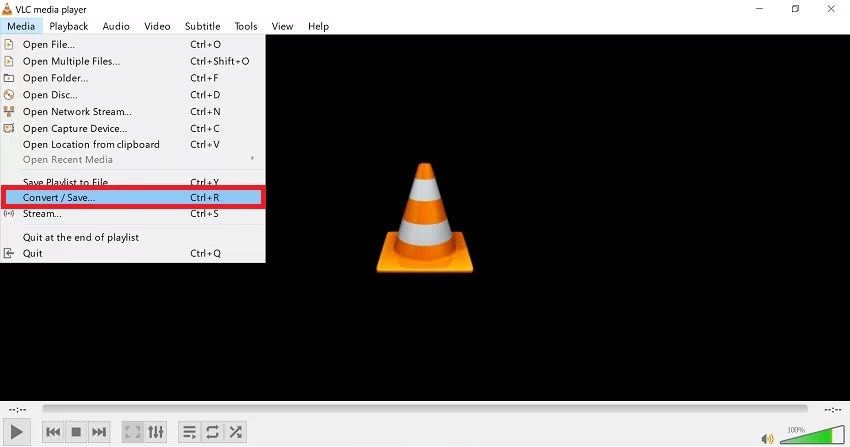
Step 1. In VLC for Windows, open Media > Convert / Save. These screenshots show the Windows workflow. On macOS, use the explicit FFmpeg method above when you need the same tested command rather than following Windows menu positions.
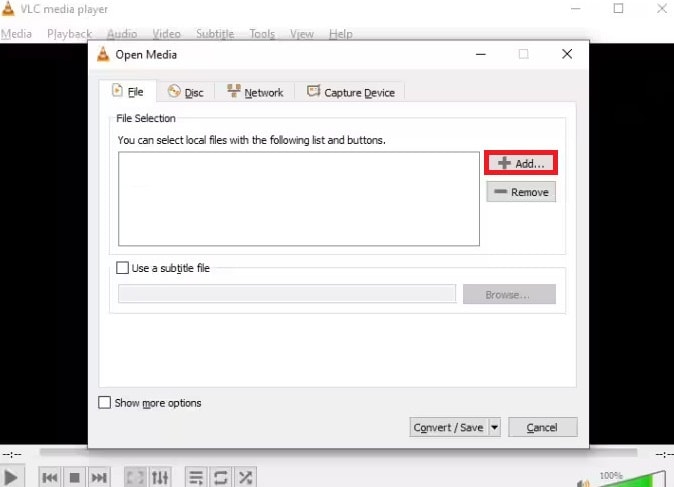
Step 2. Click Add, select the TS recording and choose Convert / Save in the Open Media window. Start with one file so that you can verify the result before doing more conversions.
Step 3. Select an MP4 profile under Profile, then inspect the codecs it actually uses. Some VLC profiles are named Video - H.264 + MP3 (MP4); MP3 audio is not AAC. Do not infer the audio codec from the .mp4 extension or silently assume every preset matches your device.
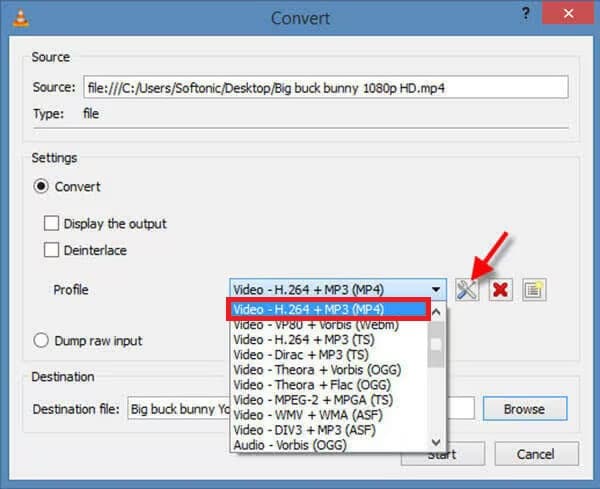
Step 4. Choose a new destination filename ending in .mp4 and click Start. Do not select the source path or an existing file you need. The conversion can take time even if the player window is not displaying the video.
Step 5. Open the resulting file separately, inspect its streams and check the complete duration and audio. If the selected preset re-encodes the media, this is not the lossless remux described earlier. Prefer the explicit FFmpeg commands when you need predictable track mapping or exact codec selection.
If VLC cannot read the source, changing its conversion profile is unlikely to supply missing segments or unlock an encrypted recorder export. Resolve the source problem first.
Part 5. Handle TS Streaming Segments and Playback Failures
A TS file can be a complete recording or one short piece of a larger stream. Before assuming a video has been cut off, check whether the source also includes a playlist.
Method 6. Use the Authorized HLS Playlist, Not One Segment
In HTTP Live Streaming, a media playlist identifies ordered media segments. RFC 8216 describes both MPEG-2 TS and fragmented-MP4 segments. An .m3u8 playlist is not itself the video, and a single .ts segment may contain only seconds of the program.
Step 1. For content you own or are authorized to process, keep the media playlist and all referenced local segments in their correct relative locations. Distinguish a media playlist from a master playlist that points to multiple variants.
Step 2. Open the complete local playlist in a compatible player, or remux a supported, unencrypted local set with FFmpeg. This example uses a playlist inside a folder named hls:
ffmpeg -n -i "hls/index.m3u8" -map 0:v:0 -map "0:a:0?" -c copy -movflags +faststart "complete.mp4"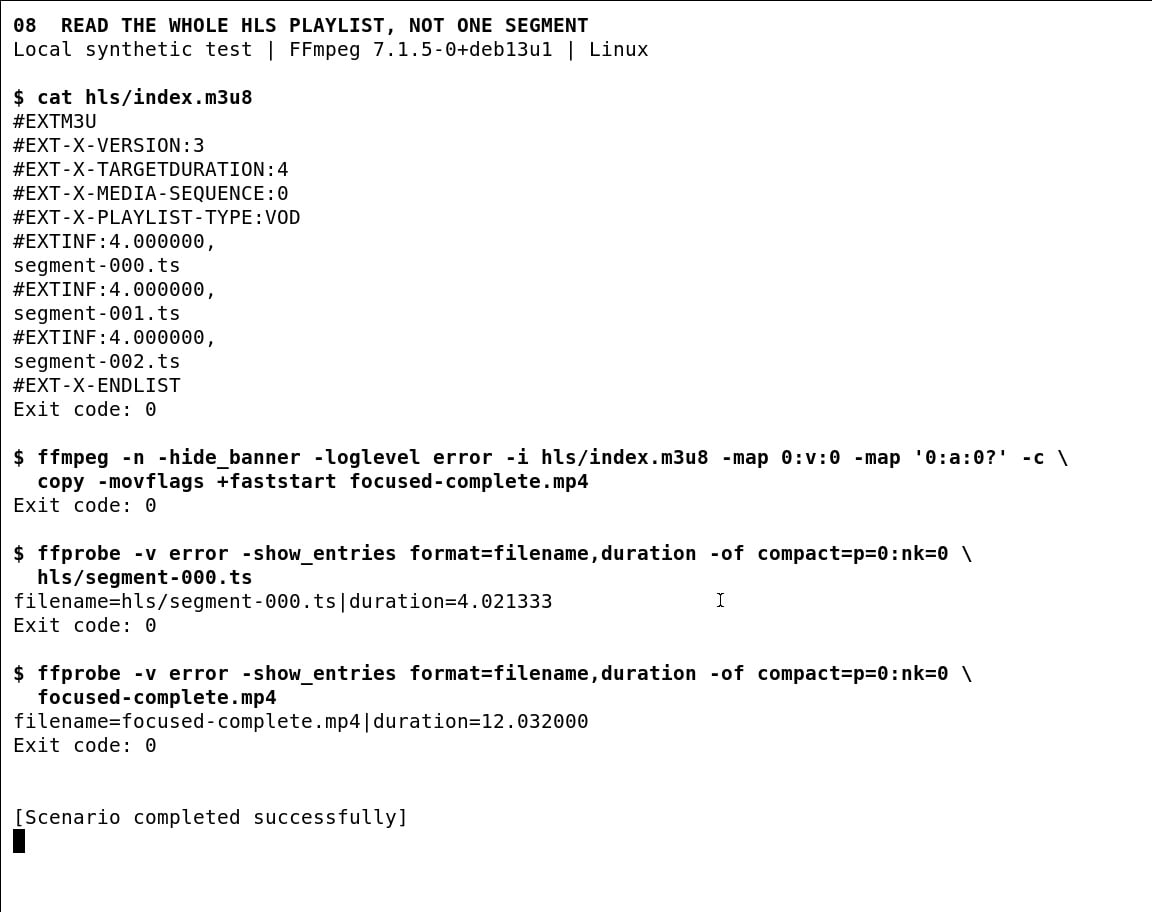
Step 3. Compare the result with the expected program length and inspect the joins. In the local test, three 4-second segments produced approximately 12 seconds of output; the first segment alone reported about 4.02 seconds. Converting only that first segment would not retrieve the other eight seconds.
Do not concatenate unrelated filenames or edit a playlist to hide missing segments. Matching codecs alone do not establish matching timestamps, program structure or continuity. If the content requires a provider login, encryption keys or DRM authorization, use its supported export or viewing route; these commands do not bypass protection.
For a remote stream, opening the authorized playlist URL is usually more meaningful than opening a guessed segment URL. Avoid pasting private signed URLs or access tokens into public converters, and do not assume a stream's complete history remains available.
Match the Symptom to the Next Check
A successful probe, a visible thumbnail and an MP4 extension each answer only part of the question. Use the observed failure to choose the next action.
| Symptom | What to Check | Next Action |
| Only a few seconds play | Single HLS segment versus complete recording | Locate the authorized media playlist and the remaining segments. |
| Picture but no expected audio | Selected language, audio codec and stream mapping | Inspect the tracks before re-encoding. |
| Wrong duration, poor seeking or sync drift | Incomplete transfer or timestamp discontinuities | Compare the recorder's complete export; validate a short conversion first. |
| Recorder plays it, computer does not | Supported export format and possible device-bound protection | Use the recorder's documented export route. |
| File missing after deletion or formatting | Backups and the original storage location | Stop writes and consider recovery before further processing. |
Part 6. Recover a Lost or Deleted TS Recording

Changing containers and recovering deleted files solve different problems. This section applies when the TS recording itself disappeared from a computer drive, memory card or external device, not when a working app needs a different playback setting.
Method 7. Recover a Deleted TS File from Accessible Storage
Check the Recycle Bin or Trash and existing backups first. If the only copy was deleted, avoid saving converters, downloads or new recordings to the affected drive.
Step 1. Prepare a different healthy destination. Wondershare Recoverit Video Recovery can search supported, accessible storage for lost video data. Install it away from the affected source when possible; do not initialize or format a drive just to make it appear.
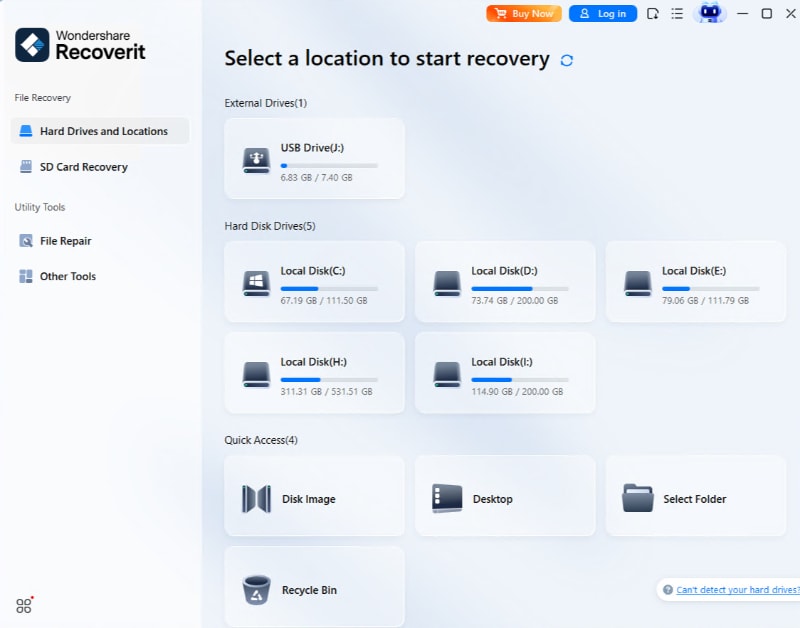
Step 2. Select the detected location where the TS recording was lost and start scanning. Choose the actual source drive, not the folder where you intend to save results.
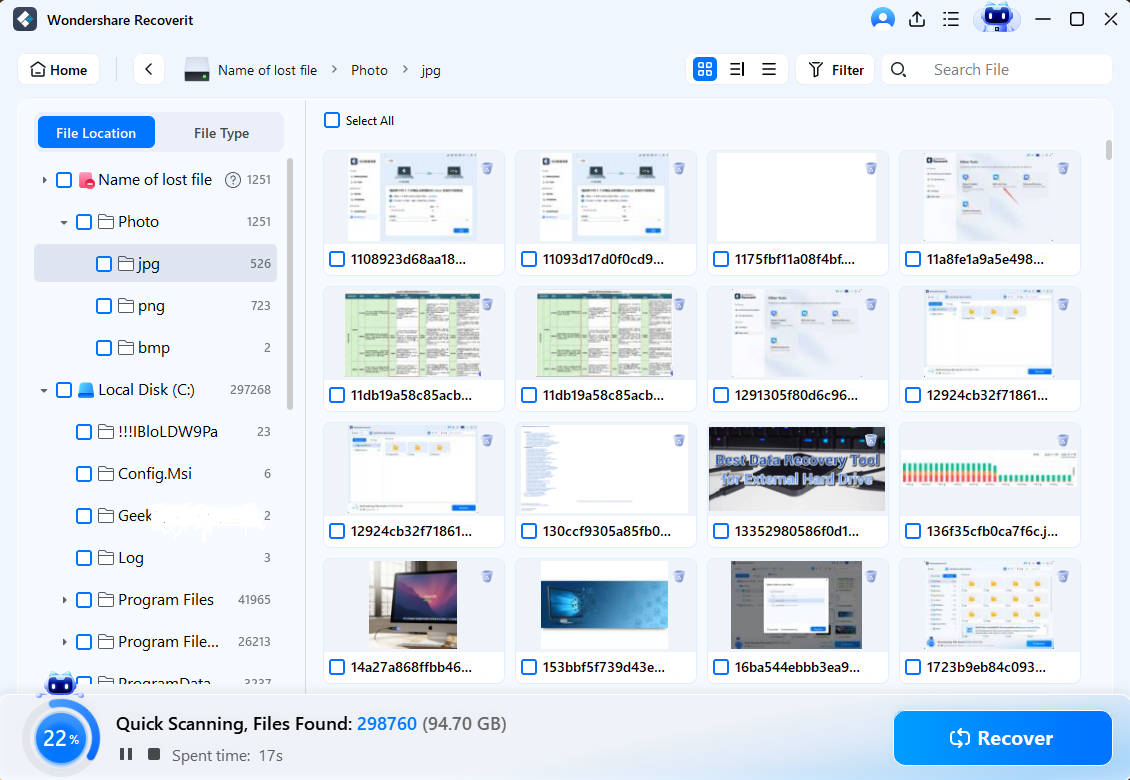
Step 3. Review candidate files and preview them where supported. A familiar name or thumbnail is not proof of a complete recording, and lack of a built-in preview does not by itself establish failure.
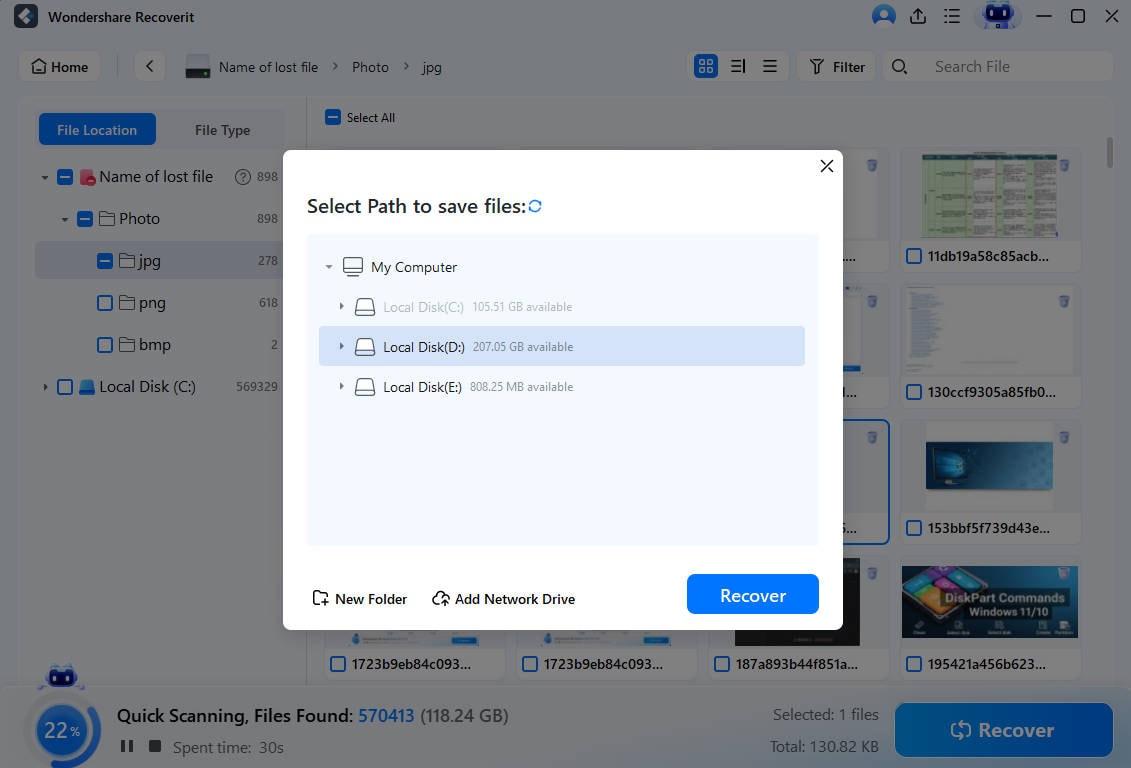
Step 4. Save the selected recordings to the separate destination. Open the recovered files in a compatible player and check duration, video, audio and relevant tracks. The official Recoverit Guide covers the location, scan and save workflow.
The dedicated deleted TS video recovery page covers the data-loss scenario in more detail. Results depend on surviving readable data and overwrite status. No scan can guarantee that overwritten or never-received media will return. Repeated disconnections or abnormal drive noises call for a storage assessment rather than repeated scans.
Conclusion
A TS video is a transport-stream container, not a promise of one codec or a DVD folder. Identify it, test it in a compatible player, then choose remuxing or transcoding for a specific destination. Keep complete playlists and source recordings when extra tracks or missing segments matter. Use file recovery only when the original data has actually been lost.
FAQ
-
What does TS mean in a video filename?
For a video, TS means Transport Stream. It describes the container carrying media streams, not necessarily MPEG-2 Video compression. The same .ts suffix also appears in unrelated programming and translation files. -
Is a TS file better quality than an MP4?
Not because of the extension. Source encoding determines picture quality. A compatible remux can preserve encoded video without re-encoding; a transcode may change quality. Compare the same source, not two unrelated downloads. -
Can I rename .ts to .mp4 to convert it?
No. Renaming changes the filename, not the container or codecs. It may affect file association, but a real remux or transcode is needed to create MP4 structure. -
Why does a TS file open in a code editor instead of VLC?
The .ts association may belong to TypeScript, or the item may genuinely be code. Check its origin and content. Use Open File in VLC only for a media file; do not execute unfamiliar source code. -
Does FFmpeg TS-to-MP4 conversion keep every audio track and subtitle?
Not automatically. Output depends on stream mapping and container support. The remux example here keeps the first video and optional first audio only. Inspect alternate languages, subtitles and services before replacing the original. -
Why is my converted TS video much shorter than expected?
You may have converted one streaming segment, an incomplete recording or only part of an available playlist. Compare the source length and referenced files before retrying. A converter cannot manufacture missing scenes.


