
 TL;DR:
You can optimize Windows 10/11 storage by using built-in settings like Storage Sense for routine file cleanup, or perform a full disk wipe using command line tools and secure erase software before disposing of the device.
● Analyze disk space allocation by navigating to Settings > System > Storage to identify large applications, and enable Storage Sense to automatically clear temporary files and recycle bin items.
● To execute a full disk wipe that permanently deletes all partitions, launch Command Prompt as an administrator and sequentially input the diskpart, list disk, select disk X, and clean all commands.
● When preparing drives for sale or recycling, use DBAN for a 3-pass DoD standard wipe on traditional hard drives, or use the manufacturer's secure erase tool for SSDs, because standard formatting leaves the partition structure intact and allows easier data recovery.
Ask AI for a summary
 ChatGPT
 Perplexity
 Gemini
 Claude
 Grok
Grok
Because of the hefty amount of data and files our computers receive every day, the performance of our computers slows down. A computer that stores unnecessary files takes up a lot of space and affects its overall performance. Additionally, it is a threat to security. One thing that you are probably unaware of is that you can get rid of this problem. How? have a clean hard drive. Once you learn how to clean a hard drive, boosting up the performance of your Windows 10/11 is a piece of cake.
This article will discuss making up space for your Windows 10/11 hard drive, a step-by-step guide to cleaning your hard drive, and the recommended best backup software for your computer.
Part 1. How To Clean Hard Drive in Windows 10/11?
Keeping your hard drive clean is the easiest way to boost desktop/laptop performance. It saves you from experiencing lag, freezing programs and difficulty in finding programs on your computer. Here is a step-by-step guide on how to free up hard drive space Windows 10/11.
For General Cleanup (Windows)
1. Uninstall Apps and Programs
Removing unused applications and programs will help in freeing up your hard drive and increase your computer speed. By doing so, you are limiting the access of unnecessary software running in the backgroud. Here is how you can do it:
- Select Start , then select Settings > Apps > Apps & features
- Select the app you want to remove, and then select Uninstall
2. Use Disk Cleanup
Disk Cleanup Tool is a one-click solution that deletes unnecessary operating system files. Windows can recognize these for you and remove the ones it no longer needs.
- Launch the Disk Cleanup by asking Cortana or selecting it from your search box.
- Select your drive, check files like Temporary Internet Files, Thumbnails, and Recycle Bin. After that, click "Clean up system files" for more options, like old Windows Updates, and delete.
3. Use Storage Sense
You can also use the Storage Sense tool to automatically clean up the temp files and recycle bin items.
- Go to Settings->System->Storage.
- Enable the Storage Sense, then it will clean up the temp and trash files automatically.
4. Clean Up Desktop
Do not stuff all your files on your desktop. Arranging them in folders in Documents help you organize the files and save your desktop from clutter.
5. Get Rid of Monster Files
The easiest method to find the gigantic files in your computer is through File Explorer. Follow these steps:
- Go to File Explorer
- Click “This PC”
- Type “size” into the search box on the upper-right-hand corner.
- You’ll be able to select between several categories of file sizes, ranging from “Empty” to “Gigantic.”
- Start with the largest files, checking to see if they are anything you need.
- If not, move to the trash can and free your PC from the burden.
- Do this with all of the larger file sizes until you get your hard-drive space to a reasonable level.
6. Discard Temporary Files
Every time you visit a website, there is a trail of files left behind, such as cookies, images, and text files that make your next visit to the same site faster. If privacy is an issue or you need more space on your hard drive, there’s no need to keep these files around.
7. Deal with Downloads
For anyone wanting to know how to free up space on a laptop hard drive, one of the simplest ways is to tackle the large list of downloads you’re likely to have on your device.Look in your download folder and move important files to the appropriate permanent folders. Once finished, delete the remaining ones by selecting “All” and clicking “Delete.”
8. Save to Cloud
It is a fact that you can’t store everything you want on your desktop or laptop. This is one of the reasons why you need to regularly back up important files. Not only will it free up precious space on your hard drive, but you’ll be protected in case your hard drive fails, you lose your device, or another damage occurs that puts your data at risk.
For Full Disk Wipe
1. Reset this PC
- Go to Settings.
- Select Update & Security -> Recovery -> Reset this PC.
- Then, choose "Remove everything" -> "Remove files and clean the drive" for a full wipe.
2. Use Diskpart
Using Command Prompt is another way to completely wipe your disk (note: it will permanently delete everything on the selected drive). Here are the steps:
- Launch Command Prompt as Admin.
- Type the following commands one by one, and press Enter each time to make it process:
diskpart
list disk
select disk X
clean all.
Video Tutorial on How to Free Up Disk Space on Windows?
Lost important data during cleanup process?
Use Recoverit to Get Them Back
For Windows Vista/7/8/10/11
For macOS X 10.10 or later
Part 2. What Is Taking Up Space on Your Hard Drive in Windows 10/11?
Like in other versions of Windows, your files constitute much of your hard drive storage in Windows 10/11. Photos, videos, music, and documents are the primary storage takers that cause the slowing down of your laptop or desktop. Additionally, pre-installed programs, applications, and downloaded files also take up a huge amount of space in your hard drive.
Those, as mentioned earlier, are the reasons why your hard drive becomes full. If you are experiencing this, a disk space clean-up is needed. Follow the steps below to find out how to see what is taking up space on your hard drive in Windows 10/8/7.
Part 3. How To See What Is Taking Up Space on Hard Drive in Windows 10/8/7
You can check what is taking up space in your hard in two ways:
1. Check your hard drive and look for hidden files.
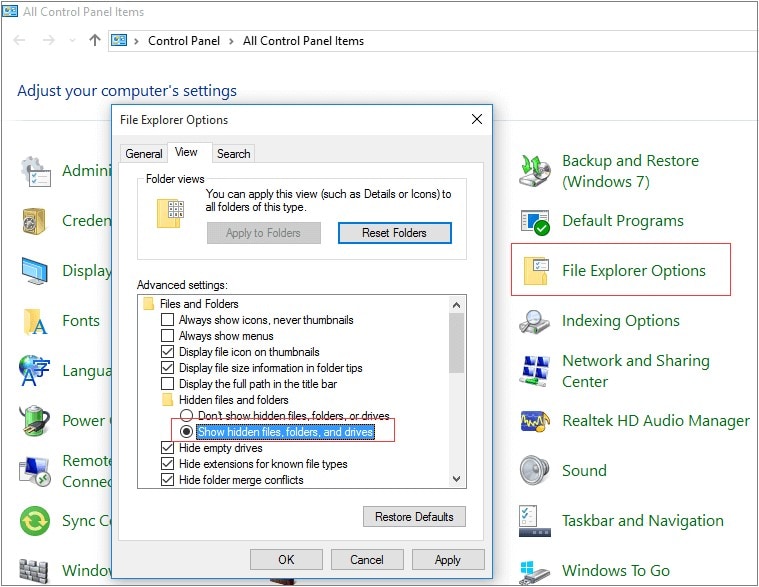
The easiest way to find your hidden files is through the Windows Control Panel. Here’s how you can do it:
- Open Windows Control Panel and navigate to File Explorer.
- Navigate to the View tab, under the Hidden files and folders section, tick the option of Show hidden files, folders, and drives.
- Re-open your local hard drive or device to check the hidden files and folder on your PC again.
2. Analyze the hard drive to find out what's eating up hard drive space. Do these steps:
Step 1: Right-click on the Windows icon and select "Settings".
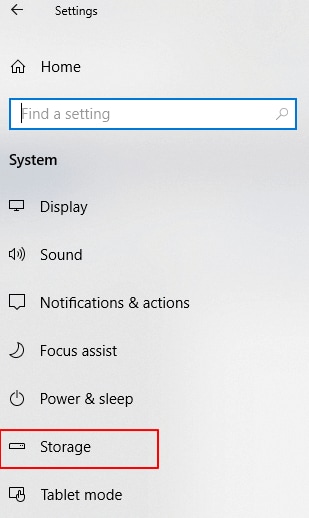
Step 2: Click "System", then "Storage" on the left-side.
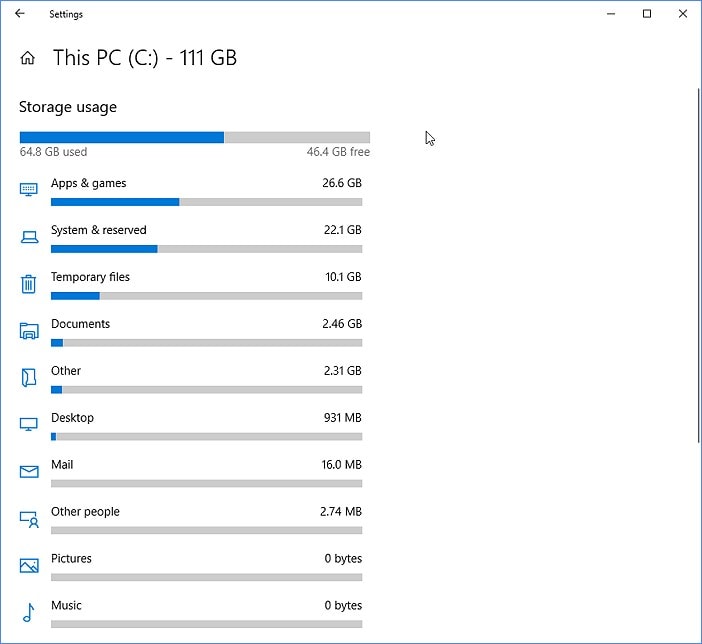
Step 3: The Storage window will display the space usage situations on all your hard drive as shown in the image below:
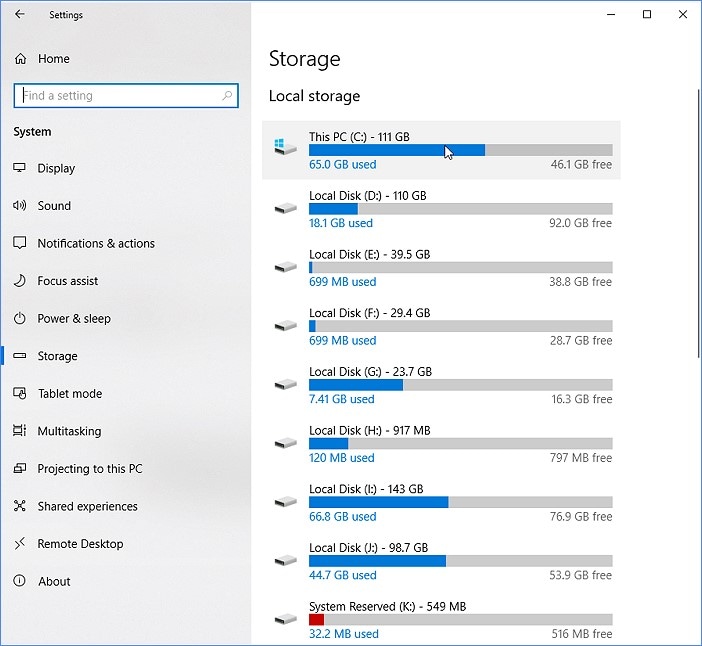
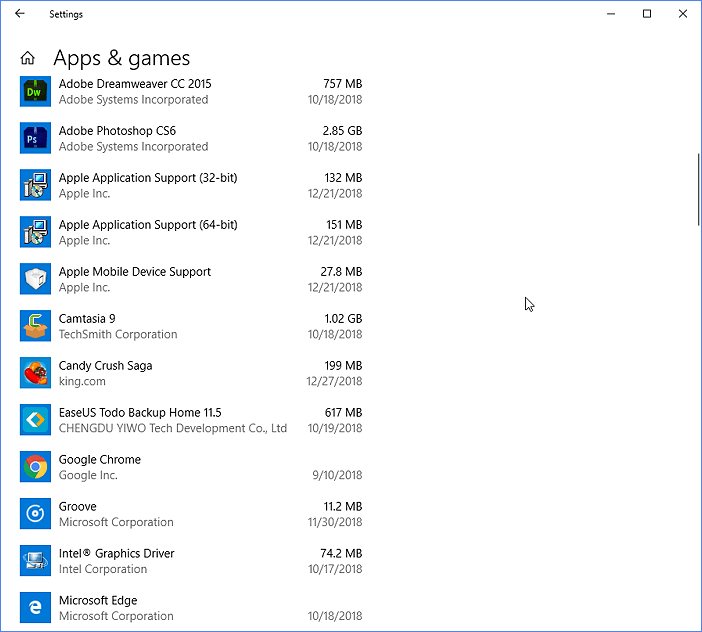
Step 4: Then click on a nearly full hard drive partition. You'll be able to see what's taking up the most space on PC, including apps and features taking up storage.
Step 5: Then, click each partition and remove unnecessary files.
Conclusion
A clean hard drive saves you from a slow and laggy computer. While it is true that cleaning helps a lot, you also need a backup software to prevent data loss. Wondershare UBack is the smartest and safest software to manage your disk backup and perform other data recovery functions.
What's the difference between cleaning and formatting a hard drive?
Cleaning permanently deletes all partitions, making data recovery very difficult. Formatting erases files but leaves the partition structure intact, allowing easier recovery with specialized software.
How do I safely clean a hard drive for reuse?
For safe reuse: Back up important files to another drive. Open Disk Management (Windows+X > Disk Management). Right-click each partition on the drive and select Delete Volume. Right-click the unallocated space and select New Simple Volume to create a fresh partition.
What's the best way to clean a hard drive before selling or recycling?
For maximum security before disposal: Use data wiping software like DBAN (Darik's Boot and Nuke). Select a 3-pass DoD standard wipe (overwrites data three times). For SSDs, use the manufacturer's secure erase tool (Samsung Magician, etc.). Physically destroy the drive only as a last resort.
How can I clean my hard drive to free up space?
To free space without wiping: Run Disk Cleanup (search in Start menu). Use Storage Sense in Windows Settings (System > Storage). Uninstall unused programs via Apps & Features. Clear browser cache and temporary files. Move large files to external storage or cloud.
Can I clean a hard drive without losing Windows?
Yes, use Windows' built-in reset feature: Go to Settings > System > Recovery. Click Reset PC. Choose 'Remove everything' for a clean Windows install. Select 'Clean the drive fully' for better security. This reinstalls Windows while cleaning your personal data.


