

 TL;DR:
HDD Regenerator is only viable for attempting to fix magnetic surface errors on stable, readable hard drives, but since its intensive physical scans can accelerate hardware failure, users must recover critical data before spending $89.99 on the 2024 version.
● The software strictly targets traditional HDDs and cannot repair SSD NAND issues, firmware faults, or mechanically clicking drives, requiring Windows 10 or 11 for the 2024 installer or $49.99 for the older HDD Regenerator 2011 release.
● Running full-surface sector regeneration or CHKDSK /r can overwork an unstable drive, so you should use the free demo to confirm drive detection and copy irreplaceable files to a different storage device before initiating any repair loops.
● MiniTool Partition Wizard serves as a safer alternative for beginners who only need read-only visual surface testing or file-system checks, whereas Recoverit is the required choice for retrieving deleted or inaccessible files prior to hardware repair.
Ask AI for a summary
 ChatGPT
 Perplexity
 Gemini
 Claude
 Grok
Grok
HDD Regenerator: Quick Verdict
- Overall editorial rating: 3.6/5 for advanced users with readable HDDs; 2.5/5 for users with urgent data-loss or hardware-failure symptoms.
- Best for: diagnosing and attempting repair on magnetic HDD bad sectors when the drive is still detected and stable enough to scan.
- Not ideal for: SSDs, clicking drives, undetected drives, firmware faults, head crashes, water damage, severe bad-sector growth, or users who need guaranteed file recovery.
- Current official version: HDD Regenerator 2024 is listed on the official Dposoft site, alongside older HDD Regenerator 2011.
- Current official price: HDD Regenerator 2024 is listed at $89.99, while HDD Regenerator 2011 is listed at $49.99.
- Demo limit: the older demo workflow is commonly described as repairing the first found bad sector or showing what the full version can repair. Test current installer behavior before purchase.
- Best safety step: recover important data with a tool like Recoverit, or clone/image the disk, before running repair tools that scan or rewrite weak sectors.
This HDD Regenerator review explains what the tool claims to repair, what the demo can do, how the 2024 version differs from the older pricing in the source article, when MiniTool Partition Wizard is a safer diagnostic alternative, and why you should recover or image important data before trying bad-sector repair.
If your hard drive has bad sectors, protect data first. Microsoft describes CHKDSK /r as a command that locates bad sectors and recovers readable information, but full-surface checks can take a long time and physical errors can behave unpredictably. Third-party regeneration tools may stress weak media, so do not run repeated repair passes on the original drive before copying recoverable files or creating a disk image.
In this article
Part 1. HDD Regenerator Review: Quick Verdict
HDD Regenerator has a bold promise: it claims to regenerate physically damaged hard disk drives instead of only hiding bad sectors. That promise is the reason users still search for it when CHKDSK stalls, Windows reports bad sectors, or a drive becomes difficult to read.
The important nuance is that not every bad sector is the same. A software-level tool may help with some unstable or magnetic sector errors on a still-readable HDD. It cannot repair a broken read/write head, damaged platter, failed PCB, firmware failure, liquid damage, or an SSD NAND problem. If your files matter, recovery or imaging should happen before repair attempts.
Who Should Use HDD Regenerator?
- Use it if: the drive is detected, still spins normally, and you want to test whether sector-level regeneration can make weak areas readable again.
- Use the demo first if: you want to confirm whether the tool sees bad sectors before buying the current 2024 license.
- Skip it if: the drive clicks, disappears, overheats, freezes the system, has many growing bad sectors, or stores irreplaceable files without a backup.
- Do not use it as recovery first: bad-sector repair can stress a failing disk. Recover or image critical files first whenever possible.
At-a-Glance Rating
| Review area | Rating | What it means |
| Bad sector focus | 4.0/5 | It targets a specific HDD problem rather than acting as a general disk utility. |
| Data safety | 2.8/5 | Repeated scans and repair passes can stress weak drives; backup or recovery should come first. |
| Current pricing clarity | 3.5/5 | The official site lists HDD Regenerator 2024 at $89.99 and the older 2011 version at $49.99. |
| Ease of use | 3.2/5 | The workflow is manageable for technical users, but the text-style repair screens can confuse beginners. |
| SSD fit | 2.0/5 | Bad-sector regeneration is primarily an HDD concept and should not be treated as an SSD repair strategy. |
| Alternative value | 4.2/5 | MiniTool is safer for surface testing, while Recoverit is more relevant when the goal is to recover files from readable storage. |
Part 2. What Is HDD Regenerator?
HDD Regenerator is a Windows disk utility from Dposoft. The official website says it regenerates physically damaged hard disk drives, detects physical bad sectors, scans at the physical disk level, supports real-time monitoring, shows SMART status, provides an overheating indicator, and can create bootable flash media.
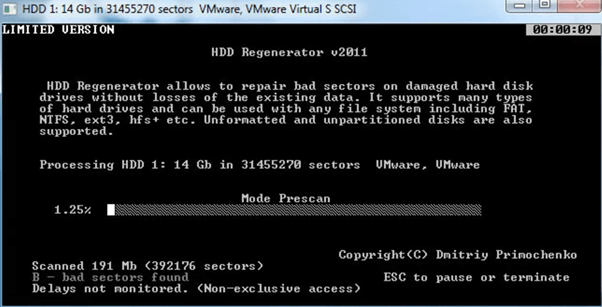
The tool is file-system agnostic because it scans the disk surface at a lower level than ordinary file-system repair. That means the drive can be FAT, NTFS, exFAT, unpartitioned, or formatted, and the scan can still inspect sectors. However, file-system independence does not make it a universal repair tool. It still needs the drive to be detected and stable enough to scan.
Some marketing pages and older reviews describe the tool in very confident language. In practice, bad-sector outcomes depend on the cause of damage, drive age, surface condition, SMART attributes, overwrite status, interface stability, and whether the drive has a mechanical fault.
Official download: HDD Regenerator can be checked on the Dposoft official website. Because this category includes fake installers and cracked-license pages, use the official vendor page only.
Part 3. HDD Regenerator 2024 Price, Demo Limit, and Compatibility
The official Dposoft site checked in 2026 lists two paid versions: HDD Regenerator 2024 and HDD Regenerator 2011.
| Item | Current official information checked in 2026 | Editorial note |
| HDD Regenerator 2024 | $89.99 | The current product promoted on the official site. |
| HDD Regenerator 2011 | $49.99 | Older version still listed by the vendor. |
| Demo version | Available from the official site | Use the demo to test detection before paying. Do not assume full repair is included. |
| Installation OS for 2024 version | Windows 10 and 11 listed by the vendor | Older Windows support may apply to older versions, but verify before purchase. |
| Drives supported | Hard disk drives are the core target | Do not treat it as an SSD repair solution. |
The vendor also offers upgrade pricing from older HDD Regenerator versions to HDD Regenerator 2024. If you already own a license, check the official order or upgrade page before buying a new license.
Part 4. HDD Regenerator Features Review
HDD Regenerator is built around surface-level diagnosis and repair. These are the features that matter most in real use.
| Feature | What it does | Review note |
| Physical-level disk scan | Scans the disk surface instead of relying only on a file-system view. | Useful when the drive is detected but Windows file-system tools are not enough. |
| Bad sector detection | Finds unreadable or delayed sectors during a scan. | Good for diagnosis, but detection alone does not mean repair is safe. |
| Sector regeneration | Attempts to restore readability in affected sectors. | Potentially useful for magnetic-sector problems, not mechanical damage. |
| Bootable flash media | Creates a bootable recovery environment for drives that are difficult to scan in Windows. | Helpful, but creating the USB will format the flash drive. |
| Real-time monitor | Watches disk health and warns about problems. | Useful as an alert layer, but not a replacement for SMART tools or backups. |
| SMART monitor | Shows attributes such as health indicators, power-on hours, temperature, and uncorrectable sector count. | Pay attention to reallocated, pending, and uncorrectable sectors. If these grow, replace the drive. |
| Overheating indicator | Warns if a drive temperature becomes unsafe. | Overheating can accelerate failure; cool the system and copy data first. |
| File-system agnostic scanning | Works below NTFS, FAT, exFAT, and partition-level structures. | Helpful for damaged partitions, but it does not restore deleted user files by itself. |
Part 5. Safety Risks: What to Do Before Bad Sector Repair
Bad-sector repair should be sequenced carefully. The risky mistake is running aggressive repair on the only copy of an important drive. If the drive is physically deteriorating, every full-surface pass can increase the chance of more unreadable areas.
| Drive symptom | Recommended first step | Why |
| A few bad sectors, drive otherwise stable | Back up important files, then test with a diagnostic or repair tool. | The drive may remain readable long enough for low-risk testing. |
| Files open slowly or copy errors appear | Recover or clone important files before repair. | Delays can be early warning signs of media failure. |
| SMART shows pending or uncorrectable sectors | Replace the drive after data protection. | Growing media errors usually indicate declining reliability. |
| Drive clicks, spins down, or disappears | Stop DIY scanning and consult a lab. | Software cannot safely repair mechanical failure. |
| SSD has bad blocks or SMART warnings | Back up immediately and replace the SSD. | SSD failure behavior is different from magnetic HDD bad sectors. |
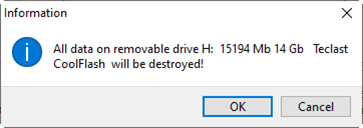
| USB boot creation is required | Use an empty USB drive. | The bootable media process formats or overwrites the selected USB drive. |
CHKDSK, MiniTool Partition Wizard, HDD Regenerator, and other disk tools do not replace a backup. Use them after you have protected the files you still need.
Part 6. How to Use HDD Regenerator
The steps below follow the original workflow but add data-safety warnings. Do not scan or repair the original drive repeatedly if the drive is unstable or contains irreplaceable files.
Regenerate a Hard Drive
Step 1: Download and install HDD Regenerator from the official Dposoft website. Launch the software, click Regeneration, and choose Start Process Under Windows.
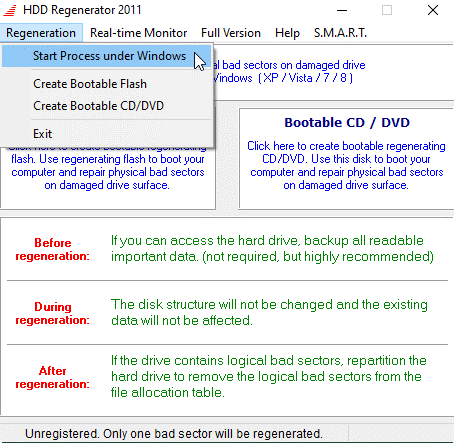
Step 2: Select the drive to scan and click Start Process. If the drive contains important data, recover or clone files first before starting a full scan.
Step 3: When the text-style window opens, enter the scan mode you want and press Enter.
Step 4: Under Choose action on HDD, select Scan and Repair. If you only want diagnosis, choose a scan-only option first.
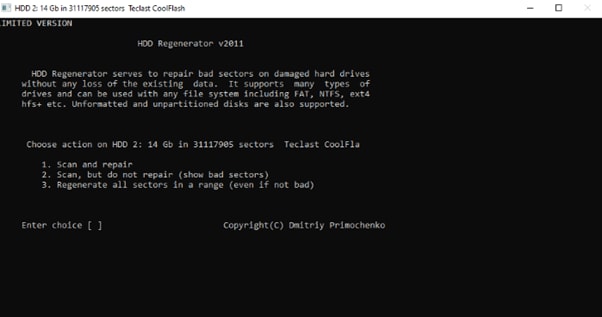
Step 5: Choose the start sector. Most users start from sector 0, but advanced users may start from a known problem area.
Step 6: After the scan completes, review the result summary. Typical fields include sectors recovered, sectors remaining bad, bad sectors that reappear, and delays detected.
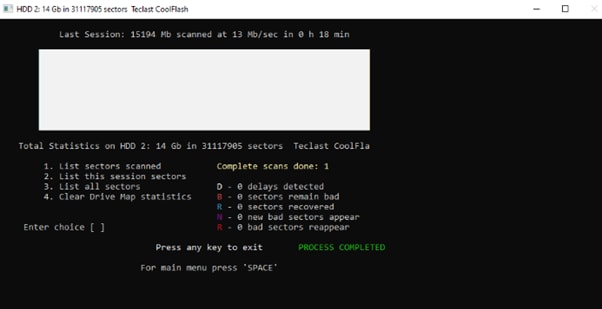
If bad sectors reappear, do not keep running repair loops. Copy data to another drive and replace the disk.
Create HDD Regenerator Portable Media
Bootable media can help when Windows cannot scan the target disk safely. Use a blank USB flash drive because the process can erase the selected USB.
Step 1: Plug an empty USB drive into the computer. Launch HDD Regenerator and click Regeneration.
Step 2: Choose Create Bootable Flash, select the USB drive, and click OK.
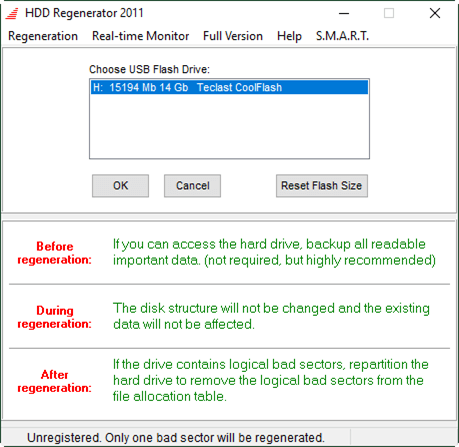
Step 3: Confirm the warning only if you are certain the USB drive does not contain needed files. The tool will format the flash drive and create the bootable media.
Use Real-Time and SMART Monitoring
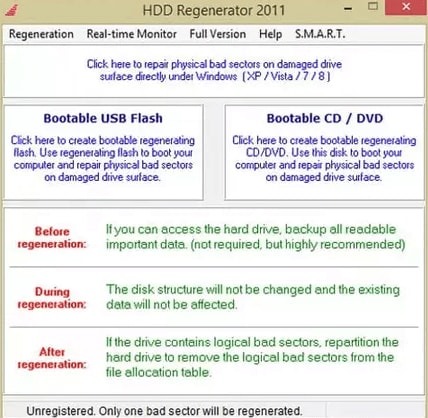
The Real-time Monitor can show drive-health pop-ups and warnings. Use it as an early warning layer, not as proof that a drive is safe.
Step 1: Launch HDD Regenerator and open the Real-time Monitor tab.
Step 2: Choose whether to import important or non-important drive health pop-ups.
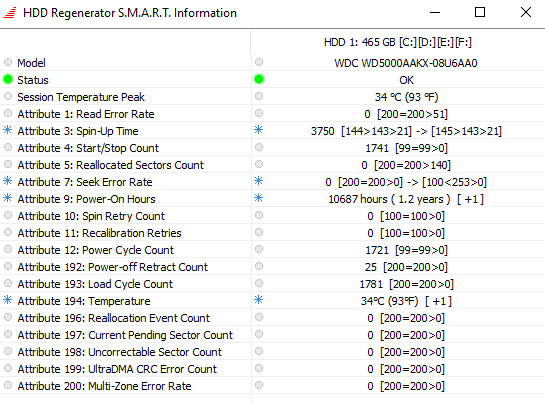
The SMART monitor shows drive-health attributes. Pay close attention to temperature, uncorrectable sectors, pending sectors, and reallocated sectors. If these values increase, replace the drive after protecting your data.
Video Tutorial
The tutorial below shows the HDD Regenerator bad-sector repair workflow. Watch it as a product reference, but remember to recover or back up important files before repair attempts.
Part 7. Best HDD Regenerator Alternative for Bad Sector Checks: MiniTool Partition Wizard
MiniTool Partition Wizard is a more beginner-friendly alternative when your main goal is to check disk health, test surface readability, manage partitions, or run a file-system check. It is not the same kind of tool as HDD Regenerator. MiniTool is better for diagnosis and partition management; HDD Regenerator is focused on sector regeneration.
Use MiniTool when you want to confirm whether a drive has bad sectors before deciding whether to recover files, clone the drive, run CHKDSK, or replace the disk.
| Comparison | MiniTool Partition Wizard | HDD Regenerator |
| Primary purpose | Partition management, surface test, file-system checks, clone and disk tools. | Bad sector scan and sector regeneration for HDDs. |
| Best for | Users who need a visual disk-health and partition tool. | Advanced users testing magnetic HDD bad sectors. |
| Bad sector repair claim | Surface Test detects bad sectors; Check File System can fix file-system errors. | Attempts to regenerate affected HDD sectors. |
| Interface | Graphical and easier for beginners. | More technical, with text-style repair screens. |
| Data safety | Lower risk for read-only surface testing, but file-system fixes still require backup. | Higher caution because full-surface repair can stress weak drives. |
| Use before recovery? | Surface Test can help diagnose the drive, but recover data first if the drive is unstable. | Recover or image data first if the drive contains important files. |
Part 8. How to Use MiniTool Partition Wizard to Detect Bad Sectors
MiniTool Partition Wizard can help detect bad sectors with Surface Test and check file-system errors with Check File System. These are diagnostic and logical-repair workflows, not physical disk repair. Back up files before applying fixes to a drive that shows errors.
Step 1: Download and install MiniTool Partition Wizard from the official MiniTool page.
Step 2: Launch the software. In the disk map, right-click the partition or disk you want to check.
Step 3: Choose Surface Test to check for bad sectors, or choose Check File System when the issue looks like a file-system error.
Step 4: If you choose Check File System, select Check & fix detected errors and click Start. If you choose Surface Test, review the result and do not keep using a disk with many bad blocks.
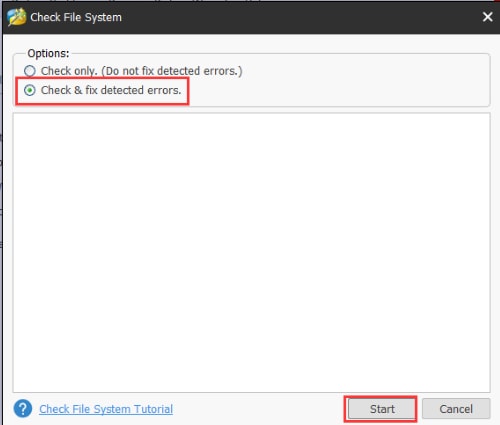
If MiniTool reports many bad sectors, treat the drive as unreliable. Recover files, clone what you can, and replace the disk rather than relying on repair tools long term.
Part 9. Recover Data from a Drive with Bad Sectors Using Recoverit
Bad-sector tools are not file recovery tools. They may detect or attempt to handle unreadable sectors, but they do not give you a complete recovery workflow for deleted files, formatted partitions, lost folders, or files that still exist on readable parts of the drive. That is where Wondershare Recoverit fits.
Recoverit can help recover files from readable internal drives, external drives, SD cards, USB drives, and other supported storage when files are deleted, lost, formatted, or inaccessible due to logical issues. It cannot repair a physically damaged HDD, restore overwritten sectors, bypass encryption, or guarantee recovery from an undetected drive.
Step 1: Install and launch Recoverit on a separate healthy drive if possible. Do not install recovery software onto the same drive that contains lost files.
Step 2: Choose the hard drive that contains the lost files and click Start to scan it.
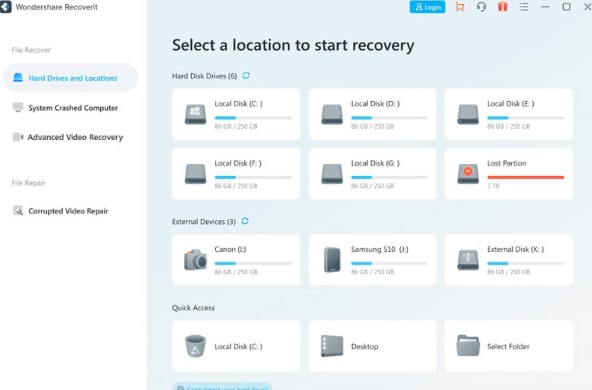
Step 3: Wait for the scan, preview recoverable files where preview is available, select the data you need, and click Recover. Save recovered files to another disk to avoid overwriting.

Important: If the drive freezes during scanning, disconnects, clicks, or stops responding, stop DIY recovery. Continuing to scan a failing drive may reduce the chance of professional recovery.
Part 10. Final Verdict
HDD Regenerator is worth considering in 2026 only for a specific kind of problem: a readable magnetic hard drive with suspected bad sectors and no urgent physical-failure symptoms. The current official price is higher than older articles suggest, and the 2024 version is positioned for Windows 10/11 users. Its sector-level approach can be useful for technical users, but it is not a modern all-in-one recovery, backup, or SSD repair solution.
The safest workflow is simple: recover or image important files first, diagnose the disk, then decide whether repair is worth attempting. Use MiniTool Partition Wizard for visual surface testing and partition/file-system checks. Use Recoverit when the priority is recovering files from readable storage before risky disk repair. Replace the drive if SMART warnings or bad sectors continue to grow.
FAQ
-
Is HDD Regenerator legit?
Yes. HDD Regenerator is a real Dposoft disk utility with an official website, demo download, and paid license options. Users should download it only from the official vendor page because fake repair-tool downloads are common. -
Is HDD Regenerator free?
HDD Regenerator offers a demo, but the full repair functionality requires a paid license. The official 2026 site lists HDD Regenerator 2024 at $89.99 and HDD Regenerator 2011 at $49.99. -
Can HDD Regenerator really repair bad sectors?
It may help in some magnetic HDD sector-error cases, but it cannot repair mechanical damage, head failure, platter damage, firmware faults, water damage, or SSD NAND failure. Back up or recover data before attempting repair. -
Does HDD Regenerator work on SSDs?
It should not be treated as an SSD repair solution. SSD bad blocks and NAND wear behave differently from magnetic HDD bad sectors. Back up the SSD and replace it if health indicators are declining. -
Is HDD Regenerator safe for a failing drive?
Not always. Full-surface scans and repair passes can stress a weak drive. If the drive clicks, disconnects, freezes, overheats, or shows rapidly growing bad sectors, stop scanning and consider professional recovery. -
What is the best HDD Regenerator alternative?
MiniTool Partition Wizard is a better beginner-friendly option for surface testing and partition/file-system checks. Recoverit is a better option when your priority is recovering files from readable storage before repair or replacement. -
Should I run CHKDSK before HDD Regenerator?
Only after data protection. CHKDSK /r can locate bad sectors and recover readable information, but it may take a long time and can stress unstable drives. Recover or clone important files first when the drive is failing. -
Can Recoverit repair bad sectors?
No. Recoverit is a data recovery tool, not a bad-sector repair or physical hard drive repair tool. It can help recover files from readable storage, but it cannot fix the underlying disk hardware problem.


