
 TL;DR:
Select your free editing practice footage based on your specific learning goal: use Cinestudy or EditStock for unedited storytelling sequences, download camera-original BRAW, R3D, or ARRIRAW files from Blackmagic Design, RED, or ARRI for color grading, and source standard stock B-roll from Pexels, Mixkit, or Pixabay.
● Camera RAW files require compatible decoders to open and are strictly limited by their manufacturers to internal evaluation and playback testing, prohibiting commercial use or public portfolio publishing.
● Storytelling projects from Cinestudy require mandatory project-specific hashtag credits for posting, while EditStock free samples restrict usage to personal practice or private demo reels and explicitly prohibit film festival submissions.
● If you accidentally delete your downloaded originals or unique project files, you must stop writing new data to the affected drive immediately to prevent permanent overwriting before running recovery software like Wondershare Recoverit from a separate drive.
Ask AI for a summary
 ChatGPT
 Perplexity
 Gemini
 Claude
 Grok
For free raw footage for editing practice, start with Cinestudy or EditStock when you need a scene to assemble, Blackmagic Design or RED when you need camera RAW files, and Pexels, Mixkit or Pixabay when you need individual stock shots. Those are different learning tasks: a beautiful 4K clip is not necessarily an unedited scene or a RAW recording.
This guide separates eight sources by what you can actually practice, where the download starts, and what you may do with the result. Choose the exercise first, then the footage. Downloading a smaller, relevant package is more useful than collecting terabytes of unrelated clips.
In This Article
Part 1. Choose the Right Kind of Free Footage
The word raw has two common meanings here: unedited material and a camera RAW recording format. A scene delivered as H.264 can be excellent editing practice without being sensor RAW. For the technical distinction, see our explanation of RAW video formats and editing. The comparison below focuses on choosing a useful download.
| Source | Best Practice Task | What You Get | Important Free-Use Boundary |
| Cinestudy | Interview structure and multicamera editing | Unedited project material with a creative brief | Follow the selected project's credits and posting rules |
| EditStock | Dialogue, reactions and continuity | Selected free film samples, including H.264 footage | Free samples are not the whole paid library; license scope matters |
| Blackmagic Design | BRAW decoding and grading | Camera-original .braw sample downloads | Do not infer a stock-footage license from a free codec |
| RED | R3D processing and playback tests | REDCODE RAW samples with technical specifications | Internal testing only under the displayed disclaimer |
| ARRI | ARRIRAW and Log workflow evaluation | Camera-specific RAW and non-RAW packages | Evaluation material, not a blanket commercial stock license |
| Pexels | B-roll sequencing and social edits | Stock video; resolution depends on the selected file | Pexels License restrictions still apply |
| Mixkit | Short montages and vertical edits | HD/4K stock clips | Check Free License versus Restricted License |
| Pixabay | Nature, background and thematic sequences | Stock clips with selectable download sizes | Content License, not a blanket CC0 dedication |
A useful first decision: do you need multiple takes of the same action, control over camera RAW settings, or permission to publish an edited sequence? One source does not have to satisfy all three. For a public portfolio, check publishing permission before investing hours in a cut.
Part 2. Free Raw Footage for Storytelling and Editing Practice
Use these sources when the challenge is deciding what to cut, not simply finding attractive images. Scripts, interviews, alternate angles and unused material give you editorial decisions that a collection of finished stock shots cannot reproduce.
1. Cinestudy: Build an Interview or Documentary Edit
Cinestudy's EDIT THIS projects pair unedited footage with a brief. Its Podcast/Documentary project includes interviews, host segments and B-roll from a Renaissance fair. It is a practical starting point for building a coherent story from material you did not shoot.
Step 1. Open the Cinestudy Podcast/Documentary project and confirm the project title before using its download link.
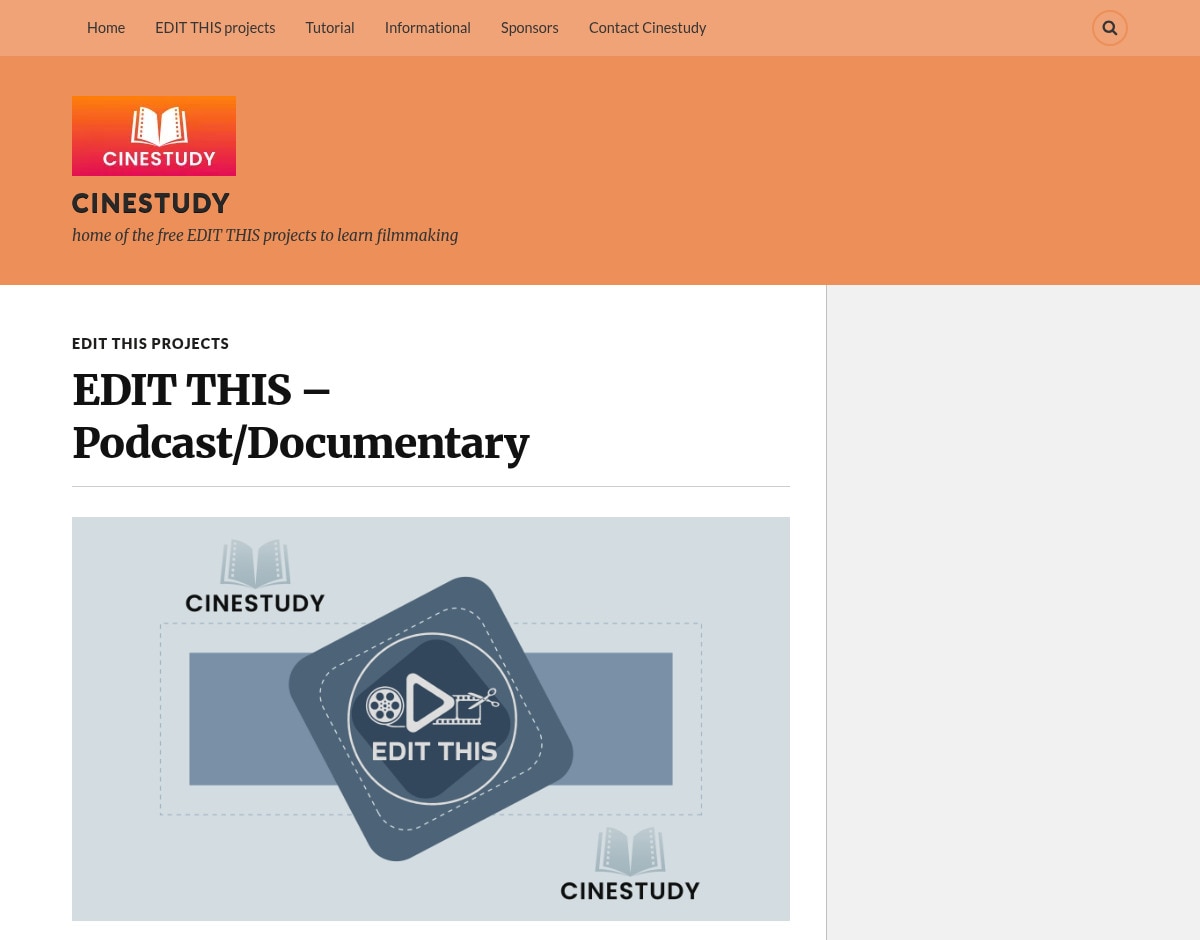
Step 2. Read the brief and credits, then follow DOWNLOAD THE FOOTAGE HERE to the creator's linked folder. Download the relevant project files rather than recording the embedded preview.
Step 3. Keep the camera and segment labels intact. Import the files into a project bin, compare the angles, and assemble a short interview-led sequence before adding B-roll.
This project's posting instructions require complete credits plus #CINESTUDY, #SONNYBOO and #SABOROSS. They are project-specific, not a universal license for unrelated uses. The creator also acknowledges download-quota interruptions in the comments; wait for access to return or choose another official project rather than an unofficial mirror.
2. EditStock: Start With a Free Scripted Scene
EditStock is useful when you want dialogue and continuity decisions. The Hallway is a free sample from Anesthesia; its page lists H.264 media, organized files and a script. Other projects and licensing tiers can cost money, so select the free sample deliberately.
Step 1. Open The Hallway free sample page and choose Download Free Footage, not a paid-library promotion.
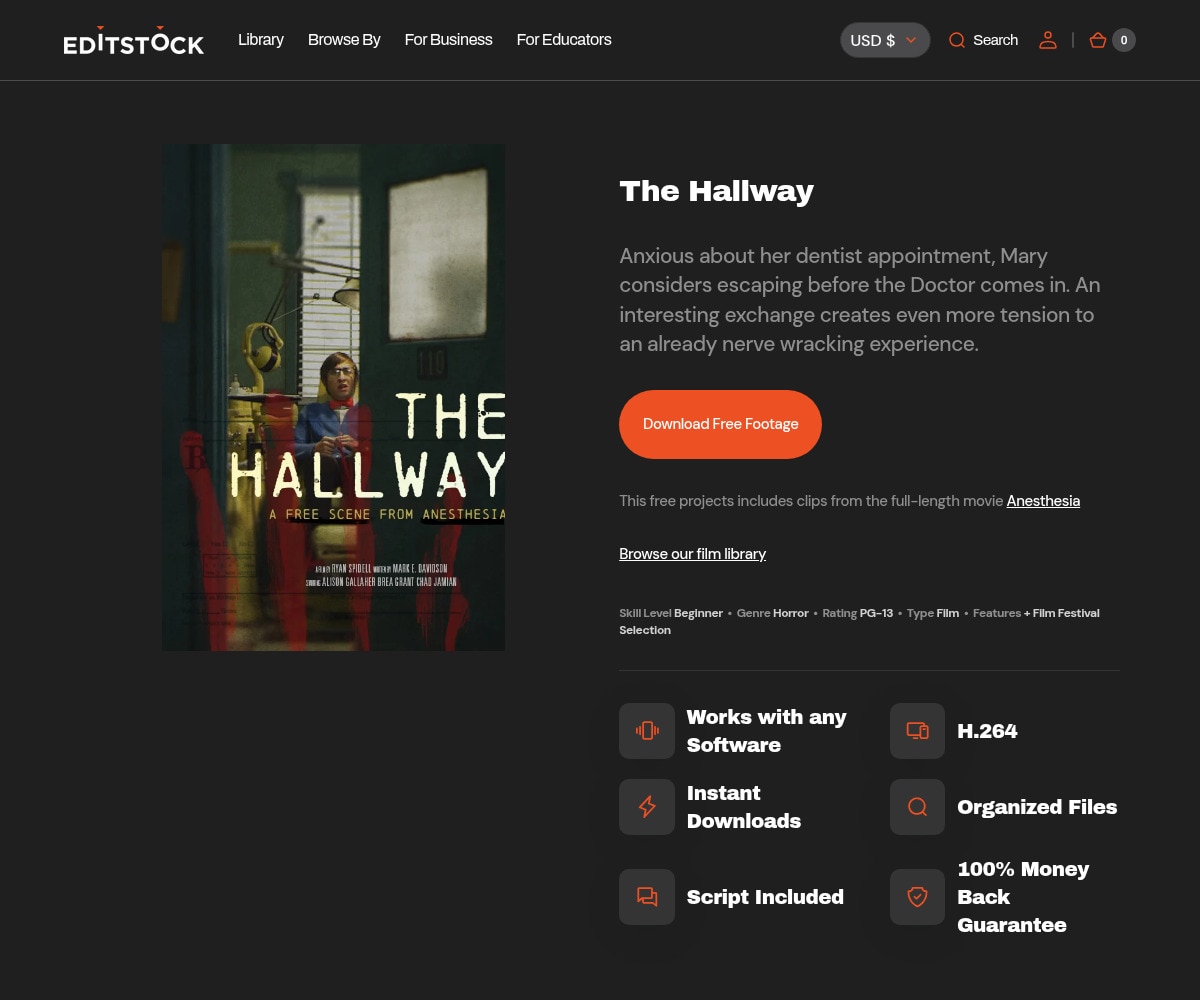
Step 2. Extract the downloaded package and read the script and included instructions. Keep its folder structure rather than mixing the files into an existing media folder.
Step 3. Create a first cut using dialogue and reactions. Duplicate the timeline and change the pauses or reaction timing to compare the tension in two versions.
The displayed single-user terms permit personal practice and specified demo-reel/personal-site uses, but prohibit film-festival submissions and reuse within other projects. Classroom sharing and business use have separate licensing. Check the terms attached to your sample before publishing or sharing the source files.
Part 3. Camera RAW Downloads for Grading and Workflow Tests
These sources serve a different purpose: they let you work with actual camera formats and metadata. Before a large transfer, confirm that your editor supports the exact codec. A downloaded file that needs a RAW decoder is not necessarily damaged.
3. Blackmagic Design: Download BRAW Camera Originals
The official Blackmagic RAW page offers camera-original files and explains the format's metadata-based adjustments. Choose it to explore RAW controls rather than to obtain a pre-cut story. BRAW is compressed camera RAW; neither a small file nor a compressed file automatically means it is ordinary stock video.
Step 1. Open Blackmagic RAW official page. The same page contains the camera-original download section and information about compatible software.
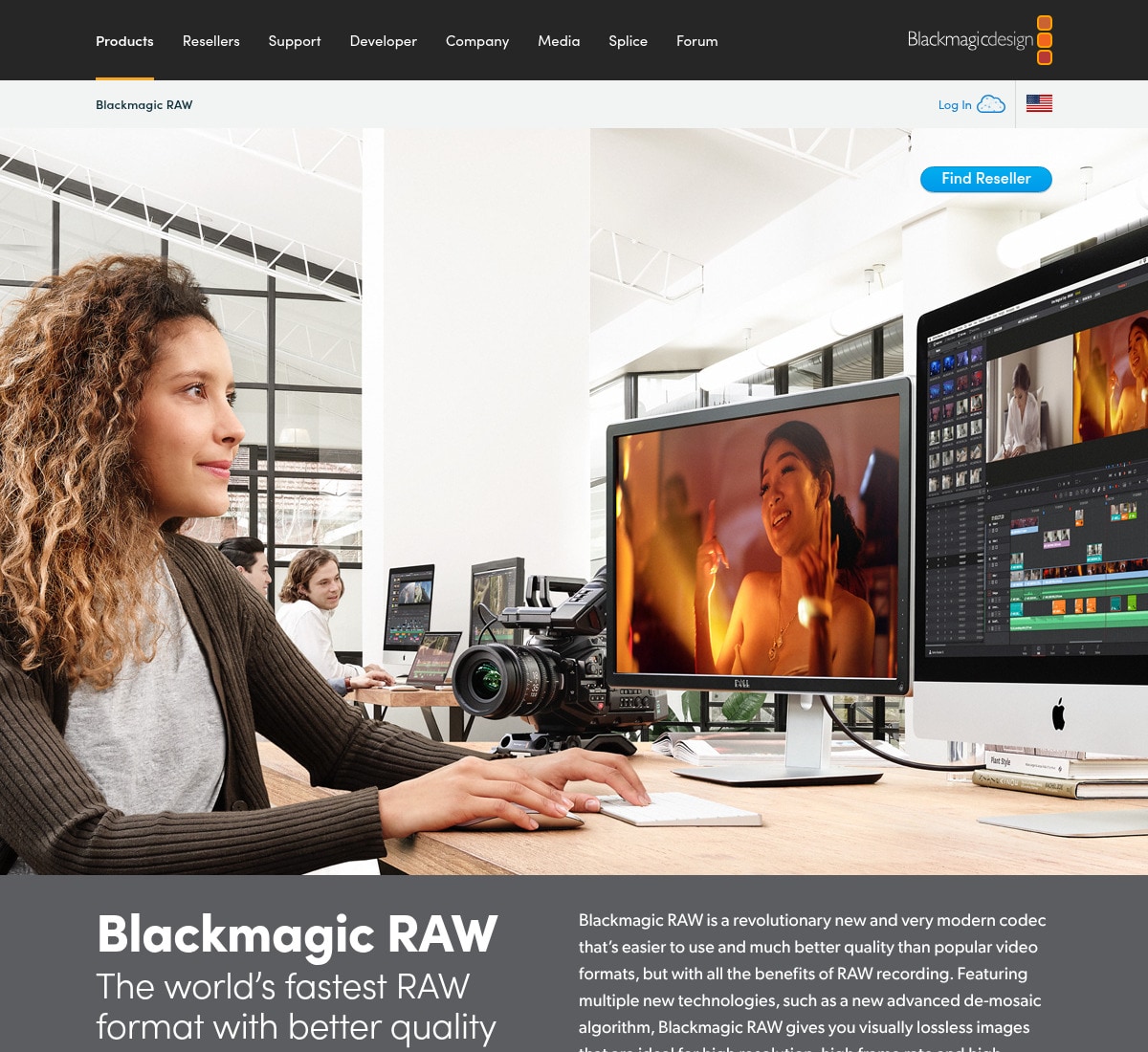
Step 2. Find Download Camera Original Files and choose one of the numbered clip downloads. Check the camera and resolution instead of assuming every sample is 4K; this page also features higher-resolution camera material.
Step 3. Extract the package and open its .braw file in Blackmagic RAW Player or a compatible editor such as DaVinci Resolve. Keep any companion files and compare a neutral interpretation with one controlled adjustment.
Important: the page's license-free SDK language describes the technology, not blanket permission to redistribute sample footage or use it in an advertisement. Check sample-specific rights before public use. If playback is slow, test a lower decoding quality or a proxy instead of repeatedly downloading the original.
4. RED: Compare R3D Samples and Recording Settings
RED's sample library identifies camera models, image dimensions, frame rates, compression settings and package sizes. It is useful for understanding what changes when you work with REDCODE RAW. Its legal disclaimer is especially important: the footage is for internal testing only, not other commercial or noncommercial uses.
Step 1. Open RED sample R3D library and read the disclaimer above the clip cards.
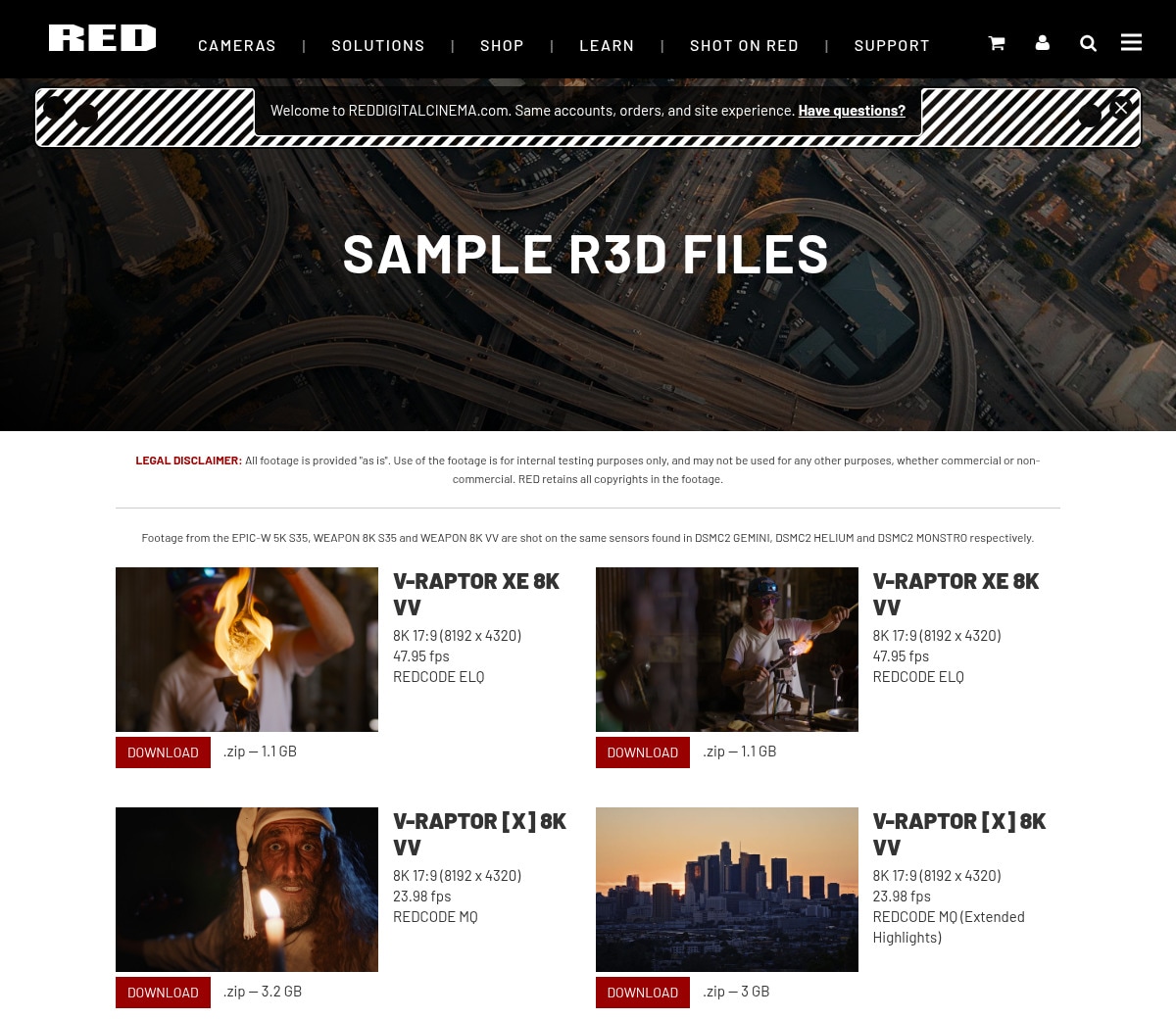
Step 2. Choose a card that matches the resolution and workload you want to test. For a 4K RAW footage free download, check the listed dimensions; do not mistake an 8K source previewed at 4K for a 4K recording. Note the ZIP size before selecting Download.
Step 3. Extract the entire package. Open the R3D clip in a compatible application, verify its duration and metadata, and keep test exports separate from the source.
Use this exercise to compare decode quality, exposure interpretation and playback performance. Do not put RED sample footage into a public showreel merely because you are not charging for it; the displayed restriction covers noncommercial uses too.
5. ARRI: Test ARRIRAW, ProRes and Log Workflows
ARRI provides camera-specific footage for workflow evaluation, including separate ARRIRAW and Apple ProRes choices. This is particularly useful for testing how a system interprets camera formats and color. Do not classify every file in the library as RAW: the selected recording format matters.
Step 1. Open ARRI camera sample footage page and use the Camera Sample Footage tab.
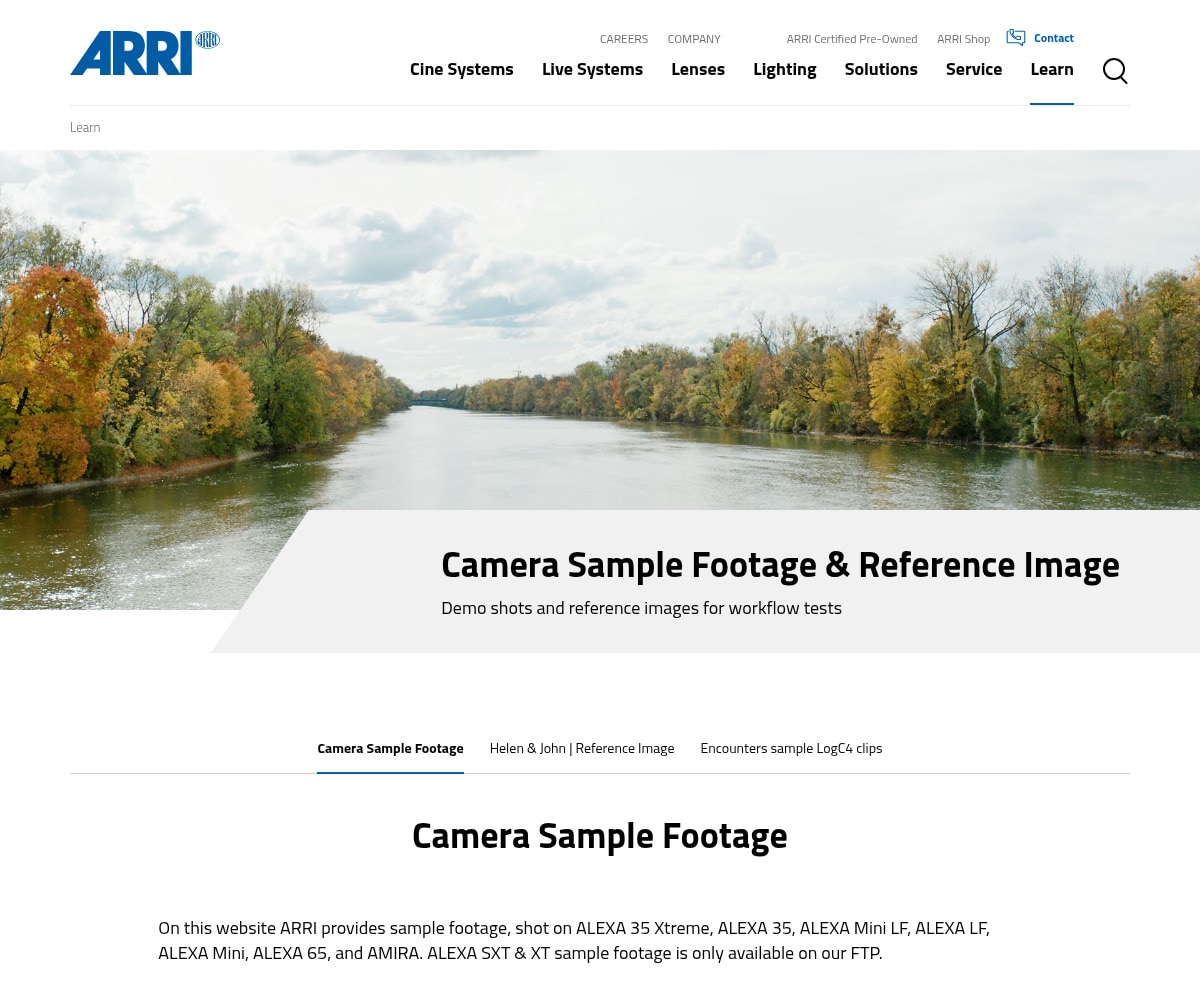
Step 2. Pick the camera and recording-format link. Follow its Frame.io destination, read the accompanying technical information, and download the original package rather than a viewing proxy.
Step 3. Preserve the complete file set and import it with the appropriate decoder and color interpretation. Confirm that the selected package contains a clip, not a single reference image.
ARRI explicitly notes that online previews of MXF/ARRIRAW, zipped ARRIRAW and MXF/ARRICORE are not supported. A missing web preview is therefore not proof of file corruption. Keep these samples within their stated evaluation purpose unless you obtain additional permission.
Part 4. Free Stock Footage for B-Roll and 4K Editing
For transitions, titles, music edits or a short promotional-style sequence, stock clips can be the better choice. They are generally not camera RAW or complete production dailies. Treat a 4K label as a resolution claim to check, not evidence of a particular codec, color profile or editing latitude.
6. Pexels: Find Shots for a Cohesive Sequence
Pexels provides free stock footage across many subjects. Start here when you need several usable shots rather than a complete scene package. Choose clips that share lighting, direction of movement and subject matter, instead of relying only on a broad search for "raw video."
Step 1. Open Pexels Videos and keep the search type on Videos. Search for a concrete subject, such as a workspace or a coastline.
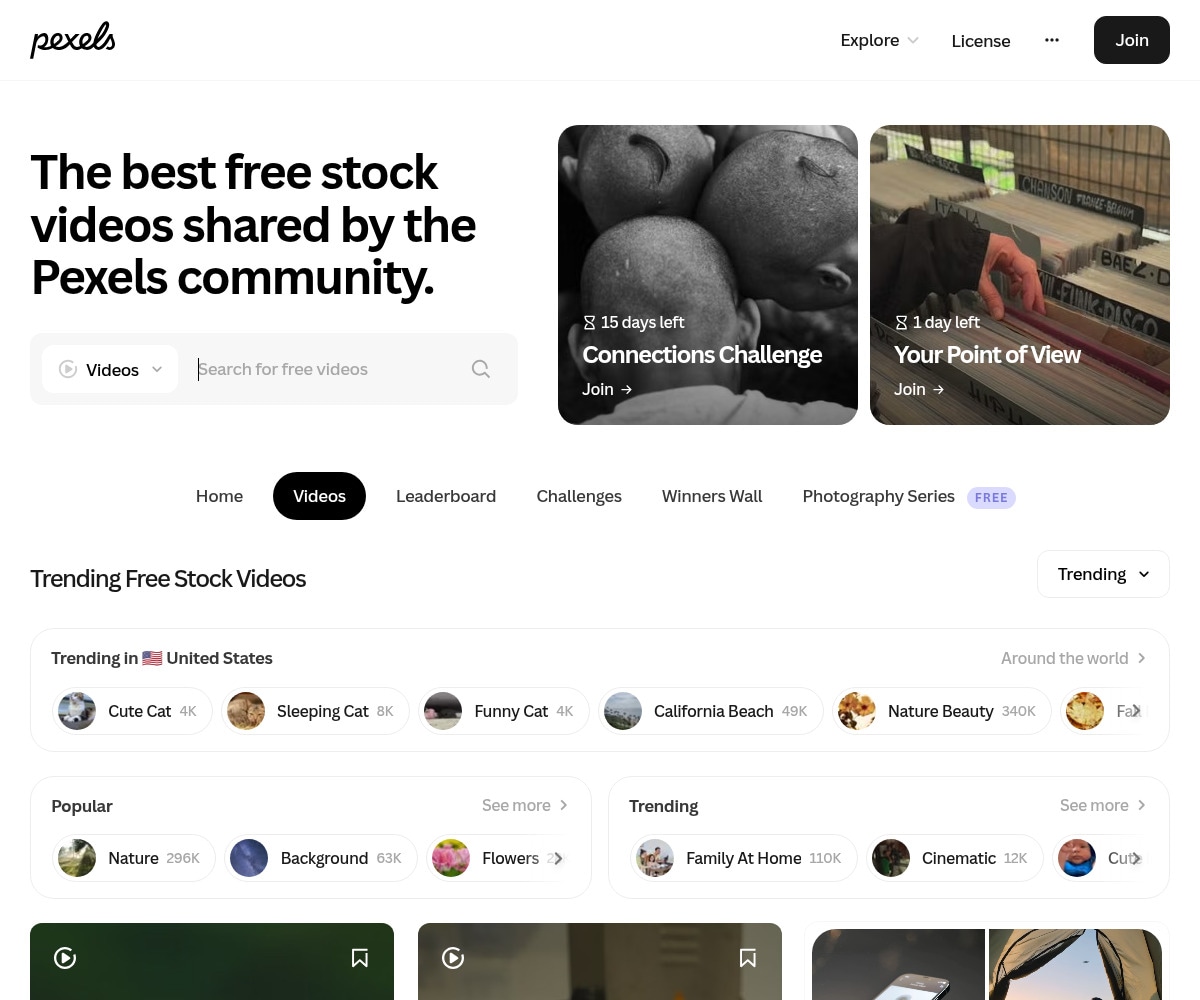
Step 2. Open a clip page, examine its preview, and use its download control to select an offered resolution. Choose the actual 4K option when available; do not assume every result includes it.
Step 3. Save the clip's page and creator details alongside the file. Build a three-shot sequence and verify the beginning and ending frames before adding effects.
The Pexels License permits free use and editing without mandatory attribution, with restrictions including unaltered resale, implied endorsement and redistribution on other stock platforms. A recognizable person or brand is not automatically cleared for every context.
7. Mixkit: Download HD or 4K Clips With the Right License
Mixkit offers stock clips and separate creative-asset categories. Its video library distinguishes Free License material, which can be used in commercial projects under its conditions, from Restricted License material intended for noncommercial use. Check the item, not just the site's free-download headline.
Step 1. Open Mixkit free stock video library and choose a video category or search subject. The separate Envato subscription banner is not the free clip's download button.
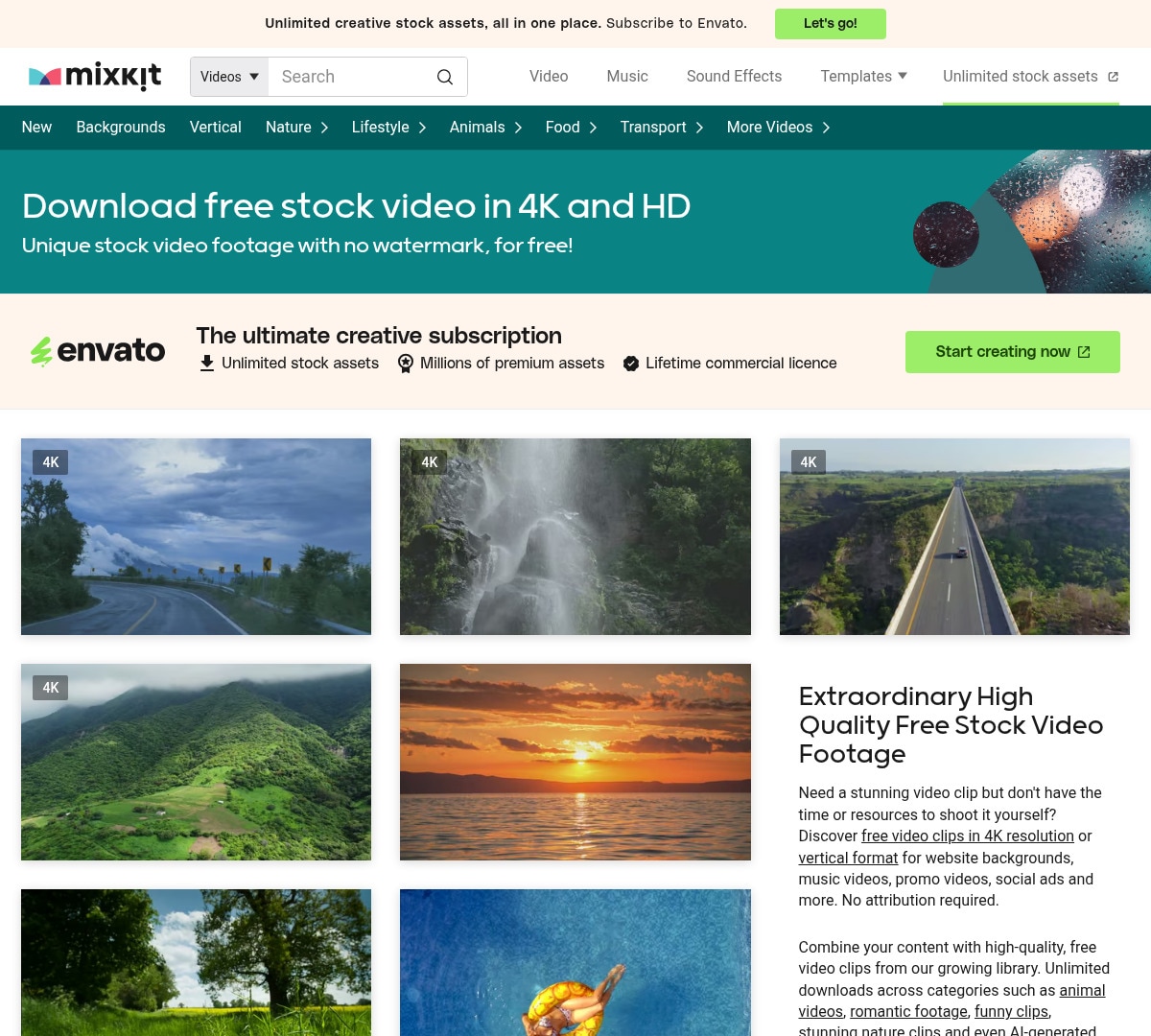
Step 2. Open the selected video's page. Check the applicable license and available resolution, then use that item's download control.
Step 3. Save the license information with the clip. For a commercial-style exercise that you intend to publish, choose a permitted Free License asset; do not silently substitute a Restricted License download.
The library includes AI-generated categories as well as other footage. When your exercise depends on real camera motion or image characteristics, check the asset description instead of treating every thumbnail as a camera recording. Music and templates have their own terms.
8. Pixabay: Filter the Free Video Results Carefully
Pixabay is another practical source for thematic stock sequences. Its current Content License should not be described as a blanket CC0 license. Keep the asset's license record even when attribution is not required.
Step 1. Open Pixabay video results. Use the video, orientation and resolution filters to narrow the results. Distinguish the sponsored results from the site's own royalty-free video section.
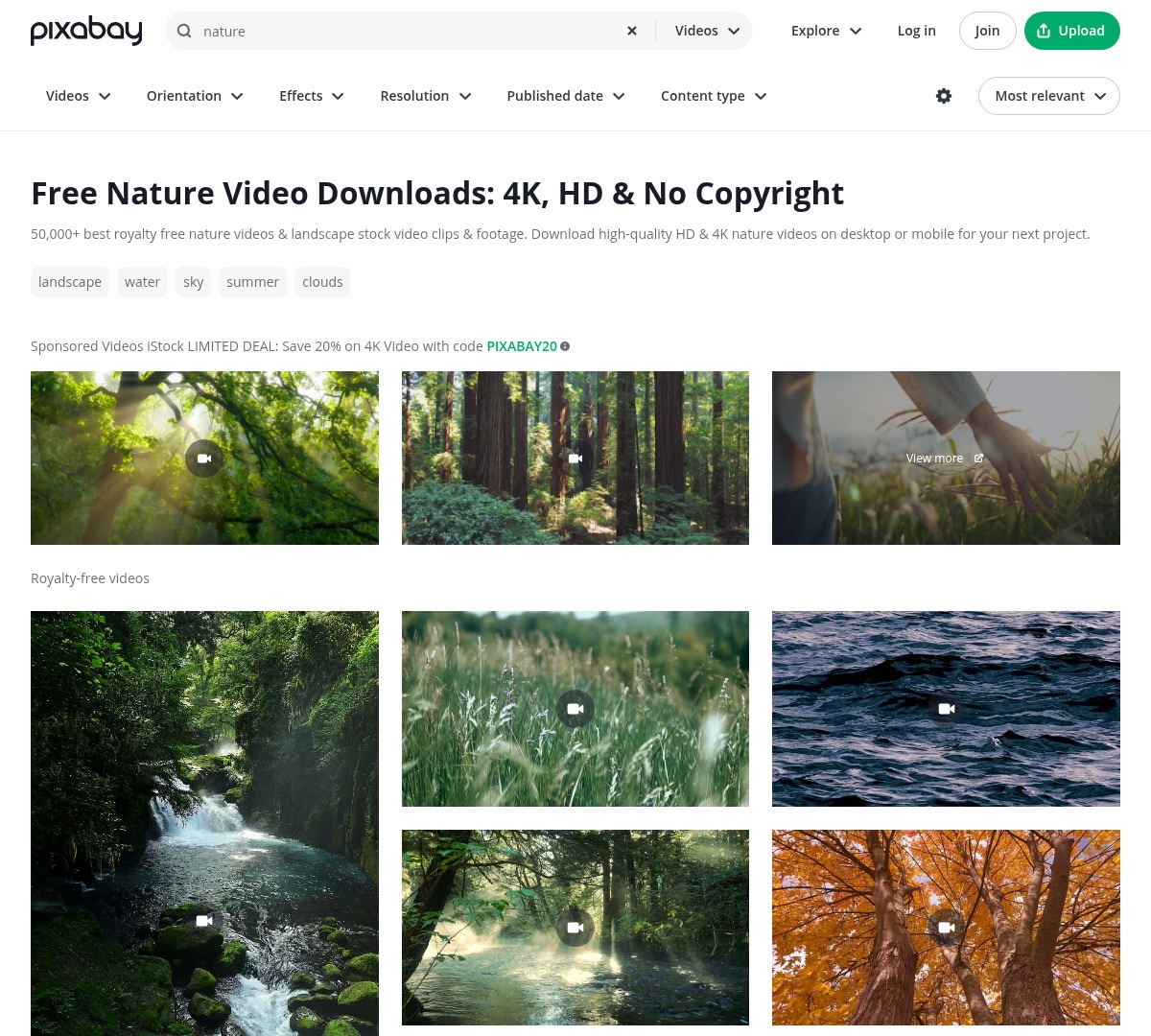
Step 2. Open a suitable free clip, check its download sizes and select the required resolution. Follow any normal account or verification prompt; do not assume the site's largest files always download anonymously.
Step 3. Keep the clip ID, contributor and page address in your project notes, then test the downloaded file in your editor before collecting more shots.
The Pixabay Content License summary allows free use and adaptation subject to restrictions. Standalone distribution or sale is prohibited, and recognizable trademarks, people or other protected material can require additional consideration. A "no copyright" search-page headline does not replace the actual terms.
Part 5. Check the Download Before Starting Your Edit
A useful download is one you can import, legally use for your intended purpose and locate again later. Make a small test project first. These checks prevent a technically successful download from becoming an unusable or unpublishable edit.
Confirm the Original, Resolution and Permission
Keep a short record for each package: source URL, clip ID, download date, permitted use, required credit, codec, dimensions, frame rate and local folder. Treat unknown fields as unknown rather than filling them from a search result title.
- Original versus preview: a web preview or proxy can be a different codec and resolution from the downloadable original. For RAW work, inspect the actual media with a compatible application.
- Resolution versus format: a 4K stock MP4 is not made into sensor RAW by placing it in a RAW-editing project. The filename alone does not establish the internal codec.
- Complete package: extract ZIP files before import, preserve companion files, and check that all promised takes or camera angles are present.
- Storage budget: allow room for the archive, extracted originals, proxies and exports. A 2 GB ZIP can require substantially more than 2 GB of free space once your working files are added.
- Publishing scope: personal practice, a public portfolio, a monetized tutorial and a client advertisement can require different permissions. Save the exact terms you relied on.
When a camera-original file will not open but ordinary MP4s do, check supported formats and the required decoder before assuming damage. Our unsupported video format guide separates compatibility errors from incomplete files. Never download a mystery codec installer presented by an unrelated ad.
Turn One Download Into a Useful Practice Session
Try one of the following assignments rather than downloading every source. These are suggested exercises, not promises about learning speed or client results.
| Exercise | Material to Choose | What to Produce | How to Judge It |
| Story and dialogue | One unedited scene or interview package | A clear 60-90 second sequence and a second timing variation | The sequence makes sense without music hiding weak cuts; dialogue remains understandable |
| RAW interpretation | One permitted camera sample | A neutral interpretation and a second controlled adjustment | You can explain the decoder/color settings changed; clipped details are not claimed as recovered |
| B-roll continuity | Five compatible stock shots | A 20-30 second sequence in one chosen aspect ratio | Movement, exposure and cuts feel intentional; rights are cleared before posting |
A technically impressive grade is not automatically a good edit. For interview practice, prioritize the speaker's meaning and clean audio. For stock practice, create a beginning, middle and end. For camera RAW testing, change one setting at a time so you can distinguish a decoding difference from a creative grade.
Keep source files untouched, work from an organized media folder, and use separate folders for projects and exports. When you make a second cut, duplicate the timeline or save a new project version rather than overwriting the only working version.
Part 6. Re-Download, Relink or Recover Missing Footage
A missing free clip does not always require recovery software. If the source remains available and its terms still permit downloading, re-download the same asset. If your editor reports offline media but the file still exists, relink it. Disk recovery becomes relevant when a needed local file or unique edit has actually been deleted and no usable backup remains.
Recover a Deleted Local Copy Without Overwriting It
Stop writing to the affected drive before trying to retrieve an irreplaceable file. Check the Recycle Bin or Trash and project backups first. For a detectable, healthy storage device with logical file loss, Wondershare Recoverit provides a scan-and-preview workflow for locating recoverable local videos.
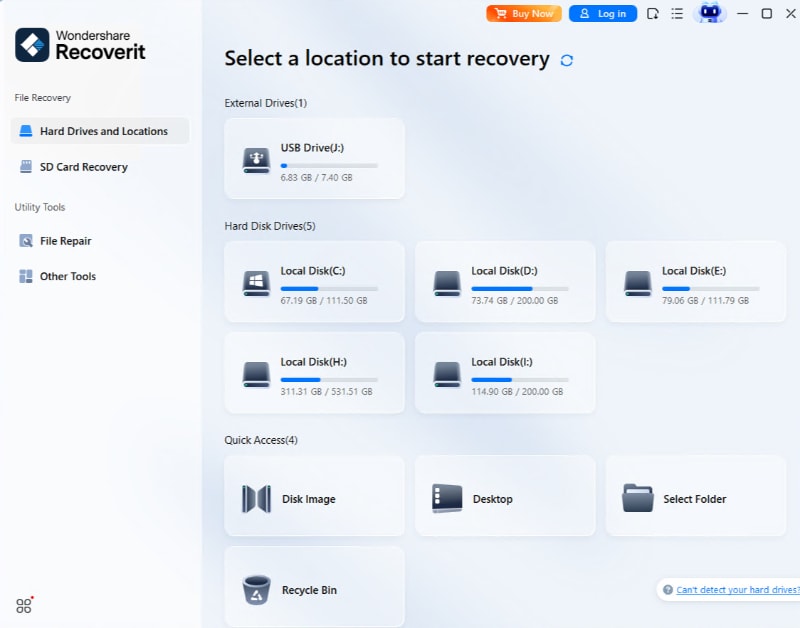
Step 1. Install the application on a different drive from the one that lost the files. Connect the affected storage and identify it by its name and capacity. The official Recoverit Windows Guide documents the source-selection, scan and save workflow.
Step 2. Choose the storage location where the footage or project files were deleted. Do not format a card just because the operating system requests it.
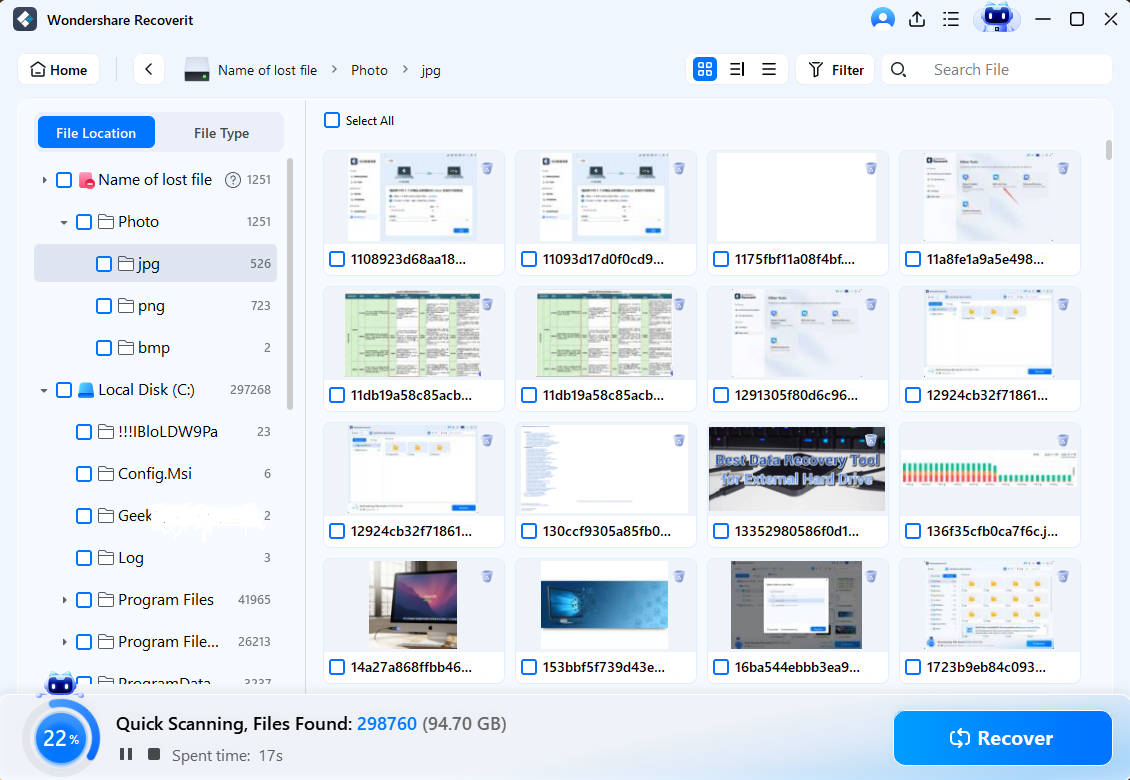
Step 3. Run the scan and examine matching names, paths, dates and file types. Preview supported files, but do not treat a thumbnail alone as proof that an entire clip is intact.
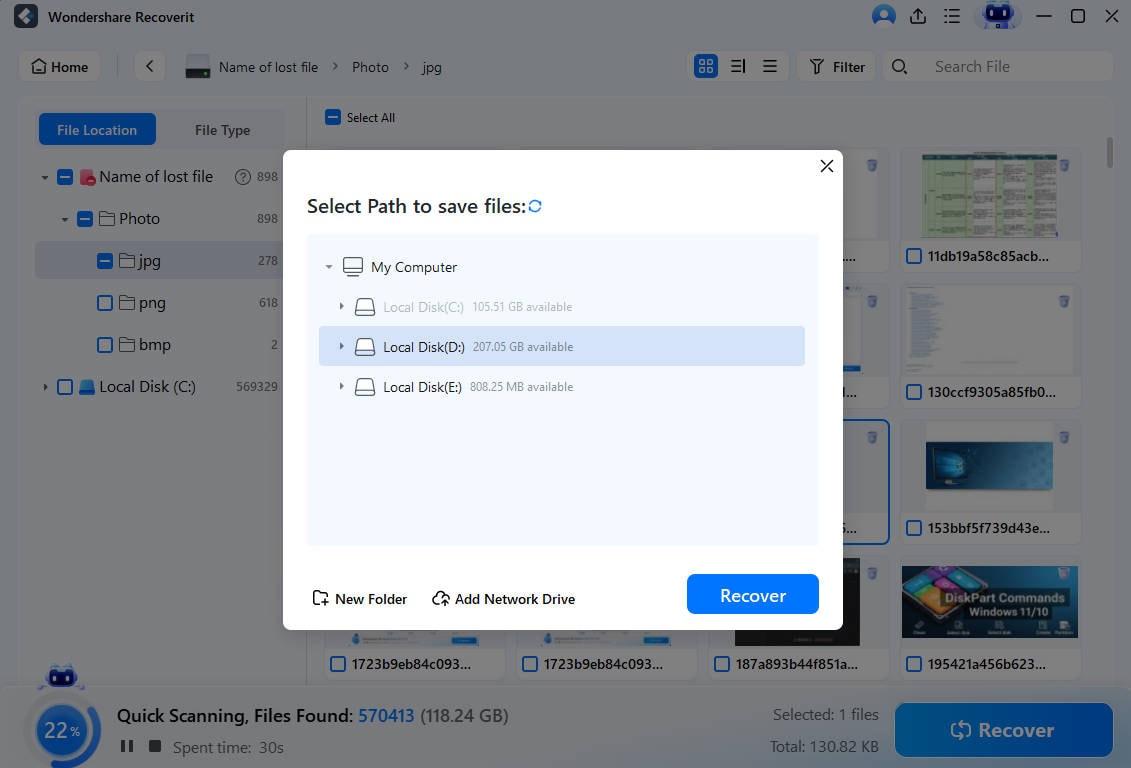
Step 4. Save recovered files to another healthy drive. Open video files in an application that supports their actual format and verify duration, picture and sound before relinking your project.
Recovery is not guaranteed after overwriting or SSD TRIM. Software also cannot restore camera sensor data that never existed in a downloaded MP4. If storage repeatedly disconnects, makes unusual noises or has physical damage, stop repeated scans and seek a qualified recovery service.
Conclusion
The best free footage is the material that fits your next exercise. Use unedited projects to practice storytelling, camera-original samples to explore RAW workflows, and appropriately licensed stock for a publishable montage. Start with one manageable download, retain its license record, and protect the originals while you work.
FAQ
-
Where can I find free raw footage for editing practice?
Start with Cinestudy for project-based exercises or EditStock's free samples for a scripted scene. They provide editing decisions rather than just finished stock shots. Check the selected project's terms before posting your result or sharing its source files. -
Are free raw videos from stock sites actual camera RAW files?
Not necessarily. In stock searches, raw often means material available to edit. A normal MP4 may already be processed. For camera RAW practice, choose a source that identifies its format, such as BRAW, R3D or ARRIRAW, and inspect the downloaded original. -
Where should I look for a 4K RAW video download?
Start with camera-manufacturer sample libraries and check each clip's recording dimensions and codec. Higher-resolution originals, viewing proxies and 4K stock clips are different things. Do not infer RAW encoding from a 4K badge or a cinematic appearance. -
Can I put free practice footage in my portfolio?
Only when the applicable terms permit that use. A free download or a noncommercial edit does not automatically qualify. Some training projects allow credited uploads; some camera samples are limited to internal tests. Resolve the permission question before publishing. -
Do I need a paid editor to use free practice footage?
No single paid editor is required for every source. Choose footage in a codec supported by the application you already use. Camera RAW may require a specific decoder, plugin or application version. Test one clip before downloading a full package. -
What should I do if a free footage download fails or disappears?
Return to the official source, check whether a download quota or updated link is involved, and retry through the publisher's normal route. Re-download replaceable assets before considering disk recovery. Preserve the affected drive when unique local edits or originals are missing.


