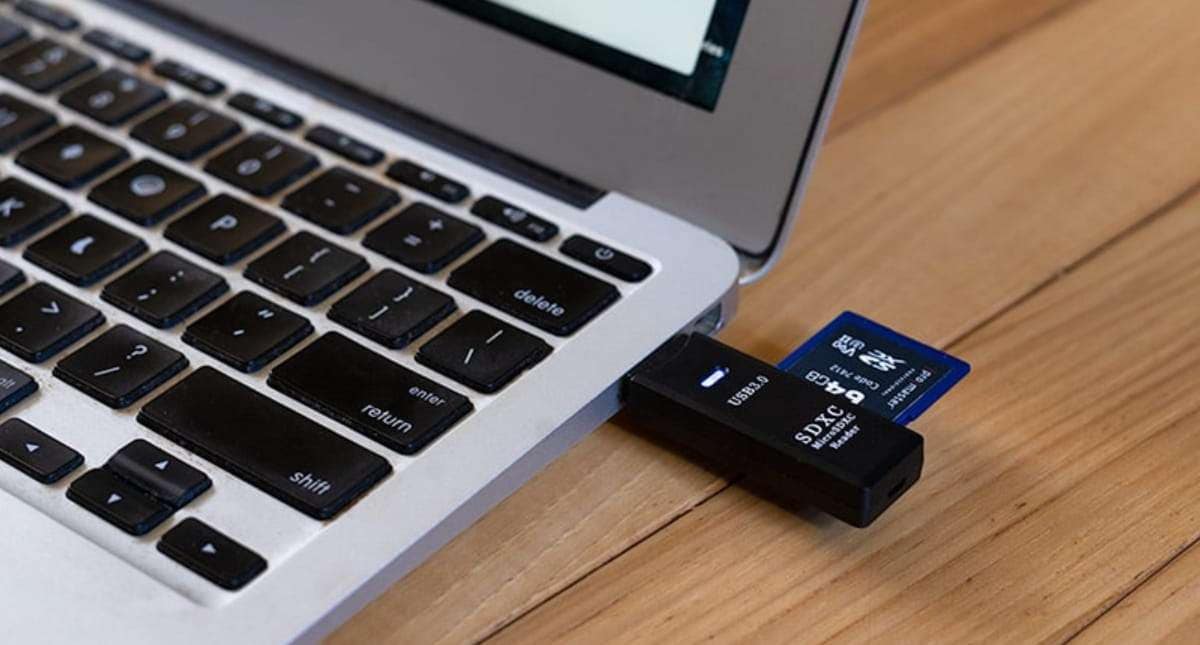

 TL;DR:
If an SD card shows as RAW or prompts for formatting, immediately cancel the prompt and extract your files to a different storage drive before attempting any formatting or repair commands.
● Executing Windows tools like CHKDSK with /f, /r, or /x parameters, DiskPart clean, or formatting via Disk Management writes changes to the volume that can permanently overwrite the original metadata needed for recovery.
● Wondershare Recoverit utilizes a partition recovery workflow specifically designed to scan detectable but inaccessible RAW file systems to restore original folder relationships, photos, and videos without forcing a format.
● Software recovery cannot bypass hardware failure, so you must stop DIY attempts and contact a professional lab if the card is physically damaged, freezes the computer upon connection, or remains entirely undetected in Disk Management.
Ask AI for a summary
 ChatGPT
 Perplexity
 Gemini
 Claude
 Grok
Grok
Quick answer: If your SD card shows as RAW, asks to be formatted, shows 0 bytes, or cannot open in Windows, do not format it first. A RAW SD card usually means the file system map is unreadable, not that every photo or video is gone. Stop using the card, remove it from the camera or reader, recover the files to another drive first, and only then repair or format the card.
Recoverit's new partition recovery workflow is built for this exact panic moment: a detectable card or drive that has become RAW, unallocated, inaccessible, or missing its original volume. It helps scan the affected card, locate recoverable data from the damaged partition or file system area, preview photos and videos, and recover them before Windows repair commands or formatting rewrite the card structure.
This guide benchmarks the current top-ranking RAW SD card recovery pages and turns their strongest pattern into a safer order: protect the card, recover the data, diagnose the symptom, then fix or format the SD card only after the files are safe.
In this article
Part 1. What Does RAW SD Card Mean?
A RAW SD card is a card that your computer can detect but cannot mount with a readable file system. Windows may show the card as RAW in Disk Management, ask you to format the disk before using it, display 0 bytes, or say the file or directory is corrupted and unreadable.
In normal use, an SD card has two things: the actual photo/video data and a file system map that tells the camera or computer where each file starts and ends. When the file system or partition information is damaged, Windows cannot follow that map. The card looks unreadable, but the photos and videos may still exist on the flash memory until they are overwritten.
This is why formatting first is risky. Formatting creates a new file system structure. It may make the card usable again, but it can also replace the metadata needed for RAW SD card recovery.
Part 2. Can You Recover a RAW SD Card Without Formatting?
Yes, you can often recover data from a RAW SD card without formatting if the card is still detectable and the files have not been overwritten. Recovery depends on the card condition, file system damage, previous writes, encryption, and whether the card is physically stable.
The safest order is:
- Click Cancel if Windows asks you to format the SD card.
- Remove the card from the camera, phone, drone, or computer.
- Do not take more photos or record more videos on the card.
- Recover files to a different drive first.
- Repair or format the SD card only after the files are safe.
For camera users, this order matters even more. A RAW card may contain large video files, burst photos, or camera RAW formats such as CR3, NEF, ARW, DNG, or RAF. Saving recovered files to another drive helps avoid overwriting the card while recovery is still in progress.
Part 3. RAW SD Card Symptoms and What They Mean
Use this table before choosing a fix. The same "RAW" label can come from a simple connection issue, a damaged file system, or physical card failure.
| Symptom | What it usually means | Best first action |
| Windows says "You need to format the disk before you can use it." | The card is detected, but Windows cannot read the file system. | Cancel the prompt and recover files first. |
| Disk Management shows RAW. | The file system metadata is damaged or unreadable. | Use RAW SD card recovery before formatting. |
| The card shows 0 bytes. | The partition or file system information may be severely damaged. | Recover files or create an image before repair attempts. |
| The card is not detected in camera, File Explorer, or Disk Management. | The card reader, adapter, contacts, controller, or NAND may have physical or electrical failure. | Try another reader once. If still not detected, stop DIY recovery. |
| The card works in its original device but appears RAW in Windows. | The card may use a file system or device-specific format Windows cannot mount normally. | Check the card in the original device before formatting it on Windows. |
If the card is a camera, drone, action camera, dashcam, or microSD card, you can also use the Recoverit memory card recovery page for broader SD, microSD, CF, and camera-card recovery context.
Part 4. What Not to Do Before RAW SD Card Recovery
The strongest SERP pages for RAW SD card recovery all agree on one core sequence: recover photos and videos first, repair later. Built-in tools can be useful, but some of them write changes to the card. That is why the order matters.
| Action | Why it is risky before recovery | Use it when |
| Format in File Explorer or Disk Management | It creates a new file system and may replace recovery metadata. | Only after files are recovered or backed up. |
| Run CHKDSK with /f, /r, or /x | Microsoft says CHKDSK fixes errors when these parameters are used, which means it writes changes to the volume. | After recovery, or only when the files are already backed up. |
| Run DiskPart clean | Microsoft says clean removes all partitions or volume formatting from the selected disk. | Only as a final reset after data is safe. |
| Keep scanning a freezing or disconnecting card | A failing controller or NAND chip may become worse with repeated stress. | Stop and contact a recovery lab. |
| Save recovered files back to the same SD card | New writes may overwrite other recoverable photos or videos. | Never during recovery. Use another drive. |
Microsoft's CHKDSK documentation explains that the command checks file system metadata and fixes errors when parameters such as /f, /r, or /x are used. That can be helpful later, but for an SD card holding important photos, file recovery should come first.
Part 5. Recover RAW SD Card Data With Recoverit Partition Recovery
Use Recoverit when your priority is to recover photos, videos, documents, or camera files from a RAW SD card before formatting or repairing the card. This is also where Recoverit's new partition recovery workflow fits the GTM strategy: the product is not only for ordinary deleted files. It is built for complex cases where the card is detected but the partition or file system structure is unreadable.
New version value: recover before formatting
Recoverit helps users recover from RAW, unallocated, inaccessible, or lost partition areas before Windows repair or reset steps. For a RAW SD card, that means scanning the affected card, identifying recoverable data from the damaged file system area, previewing files, and saving them to a safe destination.
| New Recoverit partition recovery value | What it means for RAW SD cards | User benefit |
| RAW and inaccessible-card coverage | Scans cards that are detected but cannot be opened normally. | Fits the common "SD card needs formatting" and "file system is RAW" scenarios. |
| Lost partition structure detection | Looks for recoverable clues from the damaged partition or file system area. | Users are not forced to format just to make the card visible. |
| Original folder and file relationship recovery | Attempts to show original paths, file names, and camera folders when metadata is still usable. | Helps photographers and videographers recover shoots in a more organized way. |
| Preview before recovery | Lets users check photos, videos, and documents before saving them. | Reduces blind recovery and helps confirm what is still recoverable. |
| Controlled recovery flow | Keeps CHKDSK, formatting, DiskPart clean, and other repair actions after data protection. | Gives users a safer sequence: recover data first, then fix the card. |
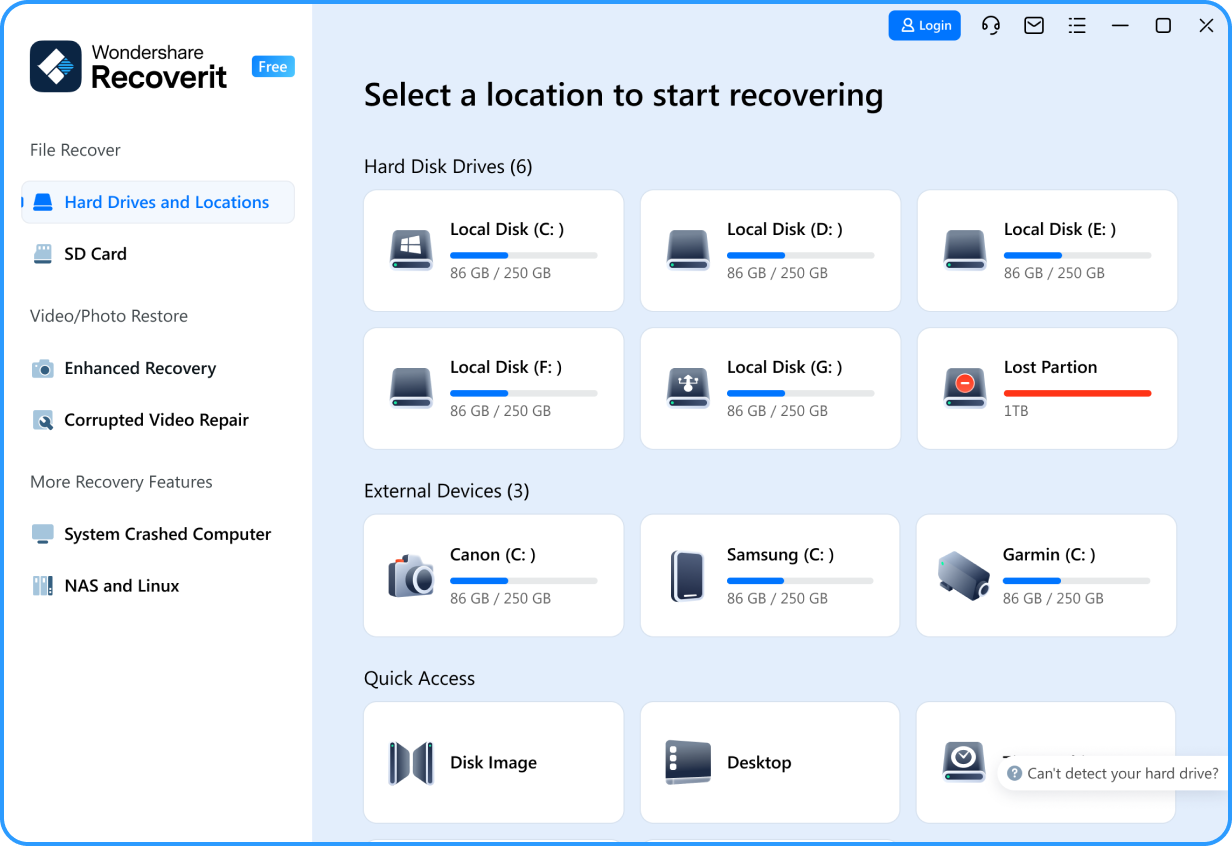
Step 1. Select the RAW SD card or memory card
Install and open Recoverit on a working computer. Connect the SD card through a reliable card reader. In Recoverit, select the RAW SD card, memory card, or affected removable drive. If the card appears by device name rather than file system, choose the physical card location.
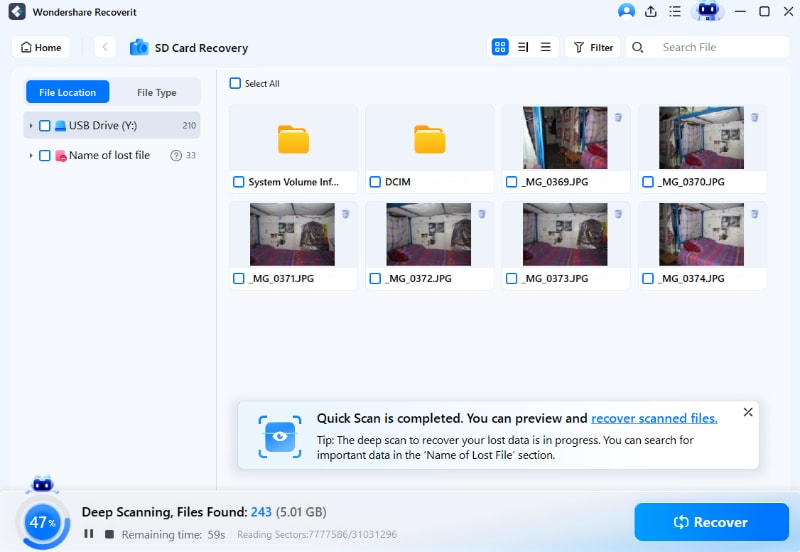
Step 2. Scan the RAW partition area
Click Scan. Recoverit will analyze the card and list recoverable files as the scan progresses. If you are recovering camera photos or large videos, let the scan finish before judging the result. Use file type, size, date, or file name filters when available.
Step 3. Preview and recover photos or videos
Preview the files you need, select them, and click Recover. Save recovered files to your computer drive, an external drive, or another healthy storage device. Do not save them back to the RAW SD card.
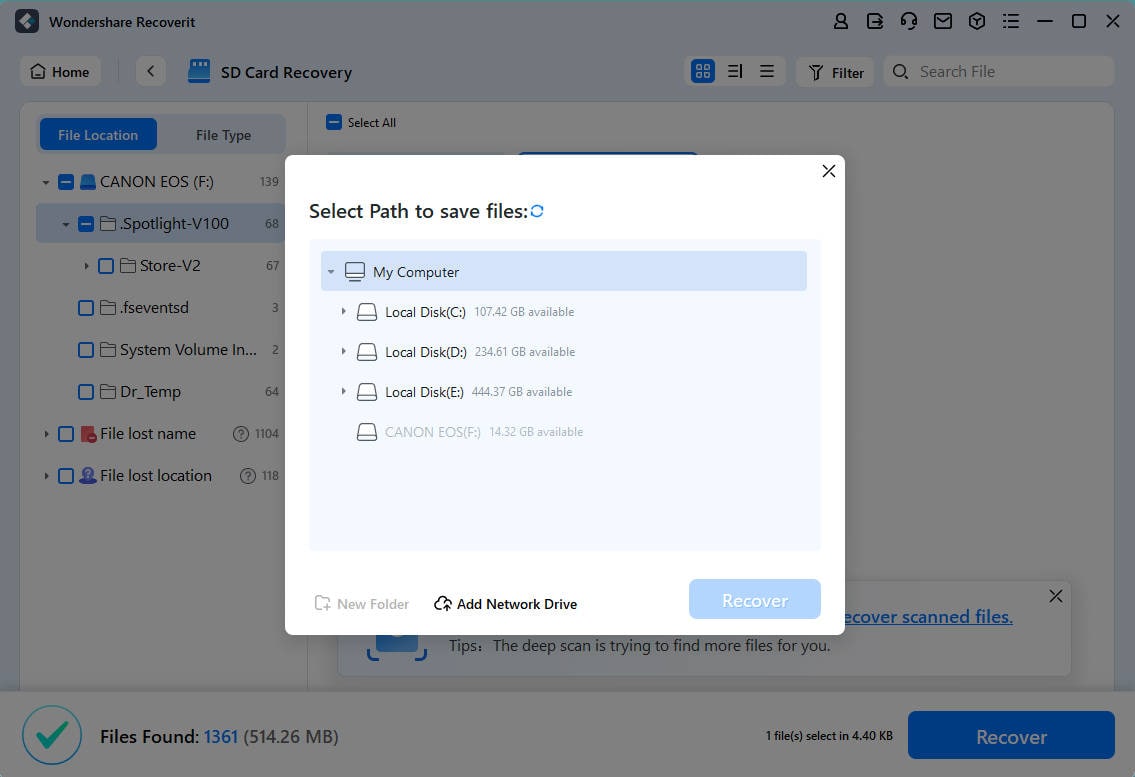
After recovery, open several important files from the destination drive. If the card contained camera files, verify both photos and videos before you format the card for reuse.
Try Wondershare Recoverit to Recover RAW SD Card Data
 Security Verified. Over 7,302,189 people have downloaded it.
Part 6. Fix a RAW SD Card After Data Is Safe
Once the important files are recovered or backed up, you can try repair or reset methods. Use them in the order below, from least destructive to most destructive.
Method 1. Try another reader, port, or original device
Before changing the card, rule out connection issues. Try another USB port, card reader, adapter, or computer. If the card came from a camera, drone, action camera, phone, game console, or handheld device, check whether the original device can still read it. If it can, copy files from that device first.
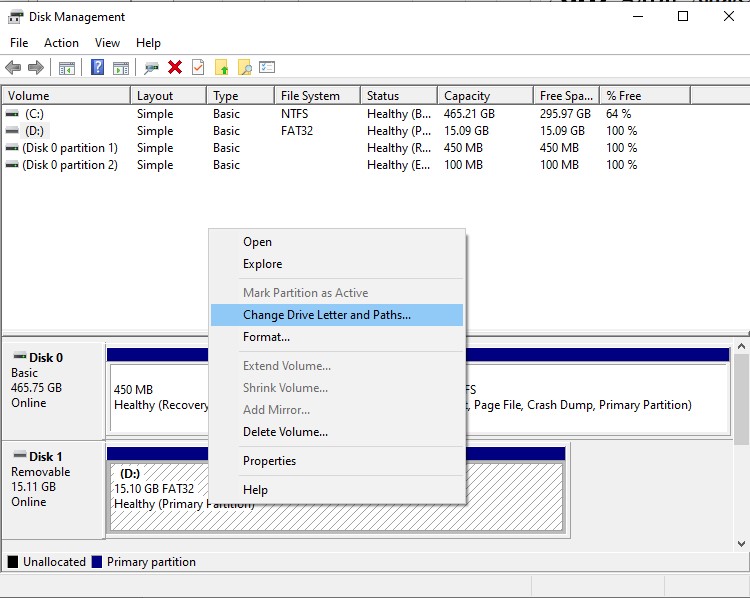
Method 2. Assign a drive letter only when the volume exists
If Disk Management shows a healthy volume but no drive letter, assigning a letter may make it visible again. This does not fix a truly RAW file system, but it can solve a recognition issue.
- Right-click Start and open Disk Management.
- Find the SD card. Confirm it is not unallocated and not physically unstable.
- Right-click the volume and choose Change Drive Letter and Paths.
- Click Add or Change, choose a new letter, and confirm.
Method 3. Run CHKDSK only after recovery or backup
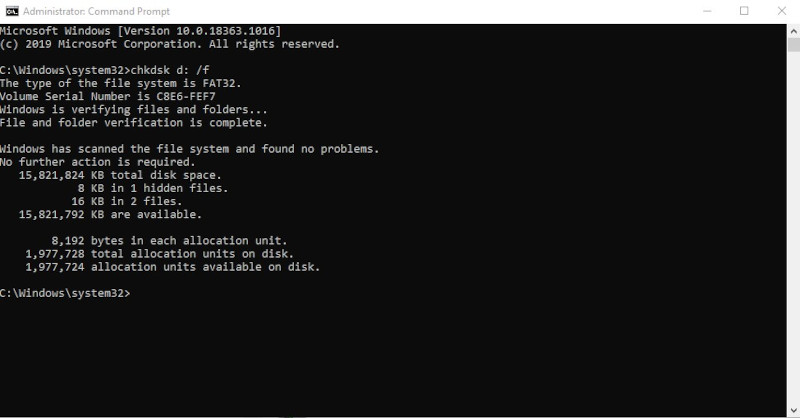
CHKDSK can check file system metadata and fix logical errors on a volume, but it can also write changes. If files matter, recover them first. If the card is already backed up, you can try CHKDSK from an administrator Command Prompt:
- Open Command Prompt as administrator.
- Type chkdsk X: /f, replacing X with the SD card drive letter.
- If Windows says CHKDSK is not available for RAW drives, stop and use recovery or formatting after files are safe.
Method 4. Format with SD Memory Card Formatter or Disk Management
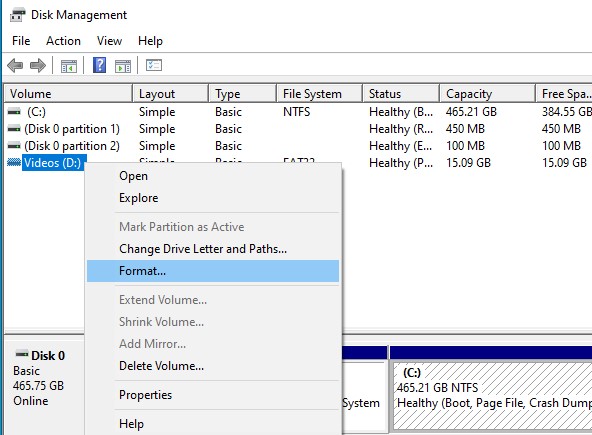
After the files are safe, formatting can make the card usable again. The SD Association SD Memory Card Formatter is recommended by the SD Association for SD, SDHC, SDXC, and SDUC cards because it formats according to SD file system specifications.
If you use Windows Disk Management instead, Microsoft lists Disk Management as a tool for creating, formatting, and managing volumes, and warns that formatting a volume destroys data on that partition. Use it only after recovery.
- Recover or back up the files first.
- Open SD Memory Card Formatter or Disk Management.
- Select the correct SD card carefully.
- Format the card. Use the file system required by your device. In general, SDHC cards commonly use FAT32, while SDXC/SDUC cards commonly use exFAT.
- Test the card in the camera or original device before using it for important shoots.
Method 5. Use DiskPart only as a final reset
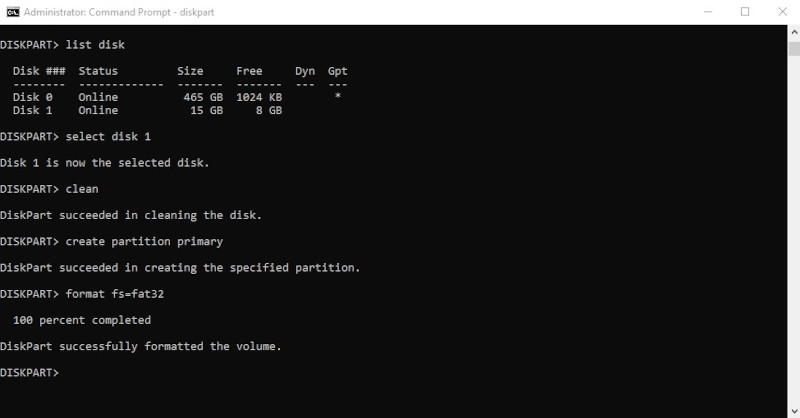
DiskPart is powerful and destructive when used with the wrong disk. Microsoft's clean command removes all partitions or volume formatting from the selected disk. Use it only when the data is recovered, backed up, or no longer needed.
- Open Command Prompt as administrator.
- Type diskpart.
- Type list disk and identify the SD card by size.
- Type select disk X, replacing X with the SD card number.
- Type clean only if you are certain the data is safe.
- Create a new partition and format it for reuse.
Part 7. Restore From Backup or Existing Copies
If you already backed up the SD card, restore from backup before running repair commands. Check common places first:
- Camera import folders on your PC or Mac.
- Cloud folders such as OneDrive, Google Drive, Dropbox, or iCloud Photos exports.
- Video editing project media folders.
- Phone, camera, drone, or action camera app storage.
- Recently copied folders on external drives.
The Windows Recycle Bin only helps if files were deleted from the card while it was mounted in Windows and the deleted files were actually moved there. It does not repair a RAW file system.
Part 8. When Professional SD Card Recovery Is Safer
Software recovery is appropriate only when the SD card is detectable and stable enough to scan. Stop DIY recovery and contact a professional data recovery lab if:
- The card is not detected in the camera, computer, Disk Management, or Device Manager.
- The computer freezes when the card is connected.
- The card, adapter, or contacts are cracked, bent, wet, burned, or visibly damaged.
- The card contains irreplaceable client shoots, wedding photos, travel footage, or business files.
- Several recovery tools find only broken previews or corrupted video files.
Recoverit cannot repair physically failed SD cards, broken controllers, damaged NAND, or encrypted cards without the correct key. If the card is unstable, repeated scans may make recovery harder.
Part 9. How to Prevent SD Cards From Turning RAW Again
- Stop recording before removing the card from a camera, drone, action camera, or phone.
- Use safe eject before removing the card from Windows or macOS.
- Format cards in the device that will use them after files are backed up.
- Use the SD Association formatter when resetting SD cards on a computer.
- Avoid filling cards to the last available space during long shoots.
- Replace cards that repeatedly show RAW, 0 bytes, slow mounting, or connection errors.
- Use high-quality card readers that support the card's speed class and capacity.
- Keep at least two copies of important photos and videos before reusing the card.
Conclusion
A RAW SD card is a data protection problem first and a repair problem second. If Windows or your camera asks you to format the card, cancel the prompt and recover the files before running CHKDSK, DiskPart, Disk Management, or any formatting tool.
Recoverit's new partition recovery workflow gives this page a stronger GTM angle: it helps users handle RAW, inaccessible, unallocated, or damaged card structures by scanning the card, previewing recoverable files, and saving photos or videos to another drive before repair steps. Once the files are safe, you can use SD Memory Card Formatter, Disk Management, or the original device to reset the card for future use.
FAQ
-
Can I recover a RAW SD card without formatting?
Yes, in many cases you can recover files from a RAW SD card without formatting if the card is still detectable and the data has not been overwritten. Recover the files to another drive first, then repair or format the card. -
What is new about Recoverit partition recovery for RAW SD cards?
Recoverit's new partition recovery workflow is positioned for complex states such as RAW, unallocated, inaccessible, or lost partition areas. It focuses on scanning the affected card, previewing recoverable data, and recovering files before formatting or repair commands. -
Should I run CHKDSK on a RAW SD card?
Run CHKDSK only after files are recovered or backed up. CHKDSK can write changes when repair parameters are used, and it may report that it is not available for RAW drives. If files matter, recover them first. -
Does formatting a RAW SD card erase files?
Formatting creates a new file system and can remove the file index needed for recovery. It may make the card usable again, but it should be done only after important photos, videos, and files are already recovered or backed up. -
Why does my SD card show RAW but work in another device?
The card may use a file system or device-specific format that Windows cannot mount normally, or the issue may be with the card reader or USB port. Check the original device and try another reader before formatting. -
When should I stop DIY RAW SD card recovery?
Stop if the card is not detected, causes the computer to freeze, has physical damage, or contains irreplaceable files. Software cannot repair physically failed cards, and repeated scans can stress unstable media.


