

 TL;DR:
You can recover deleted files from a formatted Android microSD card using desktop recovery software, provided the card was configured as portable storage and the original data has not been overwritten by new writes.
● Cards formatted as internal or adopted storage in Android 6.0 or later are encrypted specifically to the original phone, meaning standard DIY desktop recovery scans cannot decrypt or restore the formatted data.
● Immediately power off the phone or eject the card to prevent apps from overwriting sectors, bypass the Android file-transfer USB mode, and connect the card directly to a computer via a reader to run a read-only scan using Recoverit.
● Before initiating a software scan, inspect the correct Google Photos account under Collections > Trash, as previously enabled cloud backups of device folders remain recoverable online for 30 to 60 days after the local card is formatted.
Ask AI for a summary
 ChatGPT
 Perplexity
 Gemini
 Claude
 Grok
Grok
⚡ TL;DR — Quick Fix
- Stop Using The Card: Do not take photos, download files, format again, run CHKDSK, or install a recovery app on the affected microSD card.
- Identify The Storage Mode: A portable SD card can usually be removed and scanned on a PC or Mac; an SD card adopted as internal storage is encrypted for one Android device.
- Check Cloud Copies: Look in Google Photos under the correct account and check Collections > Trash for recently deleted media.
- Scan A Portable Card: Connect it through a card reader, use Recoverit to scan and preview files, and save recovered data to the computer—not to the same card.
Formatting a microSD card on an Android phone removes access to the photos, videos, downloads, and documents that were stored on it. Recovery may still be possible, but the correct method depends on one detail many guides overlook: whether Android used the card as portable storage or encrypted it as internal storage.
If the card was portable and a computer still detects it, stop using it and scan the card through a reader. If it was formatted as internal storage, it is encrypted and tied to the original phone, so a normal desktop scan may not be able to interpret the data. This guide explains how to identify the difference and choose the safest recovery path.
In this article
Part 1. Can You Recover A Formatted SD Card On Android?
Yes, files can sometimes be recovered from a formatted Android SD card if the card was used as portable storage, remains readable, and the old data has not been overwritten or securely erased.
The SD Association explains that fast formatting creates an empty file system without overwriting all file data, while overwrite formatting rewrites the stored data. Android phones do not use one universal format process across every manufacturer, so do not assume the operation was recoverable—or unrecoverable—based only on how quickly it finished.
| What Happened | What It Means | Best Next Step |
| The Card Was Portable Storage | The card usually used a removable-media file system and could be moved between compatible devices. | Remove it, connect it to a computer with a card reader, and run a read-only recovery scan. |
| The Card Was Internal Or Adopted Storage | Android formatted and encrypted the card for the original phone. | Keep the original phone and card together. Do not format the card elsewhere. Check backups and consider professional help. |
| Google Photos Backup Was On | Backed-up photos and videos may still exist online even though the local card was formatted. | Check the correct Google account, search the Photos library, and inspect Collections > Trash. |
| The Card Was Used After Formatting | New photos, videos, apps, or downloads may have overwritten some old data. | Stop using it now and scan once. Expect partial results rather than a guaranteed full recovery. |
| The Card Disconnects, Heats Up, Or Shows The Wrong Capacity | The problem may involve the card reader, controller, or physical damage—not only formatting. | Try one known-good reader. If the symptoms continue, stop DIY scanning and contact a recovery service. |
Part 2. Check Whether The SD Card Was Portable Or Internal Storage
This distinction determines whether normal formatted microSD card recovery is appropriate.
Portable Storage
A portable microSD card stores ordinary photos, videos, music, downloads, and documents. It can normally be removed from the phone and connected to a PC, Mac, camera, or card reader. If this describes your card, desktop recovery software can scan the card directly, provided the computer detects the physical device.
Internal Or Adopted Storage
Starting with Android 6.0, supported devices can adopt external media as internal storage. According to the Android Open Source Project, adoption formats and encrypts the card so it works with one Android device. The encryption key is stored on that device, and the card cannot normally be mounted elsewhere.
If you selected “Use as internal storage” when the card was set up, do not place it in another phone and accept a format prompt. Keep the original phone, card, and device credentials. A desktop tool may detect encrypted sectors but cannot turn unreadable encrypted data into normal photos without the required key. If the phone no longer recognizes the adopted card or the format destroyed its encryption metadata, DIY recovery may be extremely limited.
Part 3. What To Do Immediately After Formatting The Android SD Card
- Stop All New Writes: Do not record videos, take test photos, download offline media, move apps, or copy files to the card.
- Unmount Or Power Off Safely: If the card is portable, use the phone’s storage settings to eject it when available, or power off the phone before removing it.
- Do Not Format Or Repair It Again: Decline Android, Windows, or macOS prompts to format, initialize, or repair the card. Do not run CHKDSK or First Aid before recovery.
- Do Not Recover Back To The Same Card: Save restored files to the computer, a different external drive, or verified cloud storage.
- Preserve An Unstable Card: If the card repeatedly disconnects or reports read errors, avoid repeated scans. High-value data may justify a professional image or lab recovery first.
There is no universal “24-hour” recovery deadline. A card left unused does not become unrecoverable merely because time passes; the main risks are overwriting, erasure, encryption loss, and physical deterioration.
Part 4. How To Recover Data From A Formatted SD Card On Android
Choose the recovery path according to how the card was configured and whether a usable backup exists. If it was a portable microSD card and no complete backup is available, start with a direct computer scan; if Google Photos backup was enabled before formatting, also check the cloud copy before assuming the files are gone.
Method 1. Recover A Portable Android SD Card With Recoverit
This method is appropriate when the microSD card was used as portable storage and a Windows PC or Mac detects it through a card reader. Connecting the phone by USB is not equivalent: Android’s file-transfer mode exposes available files, not the raw storage access needed to search a formatted card.
Step 1. Remove And Connect The MicroSD Card
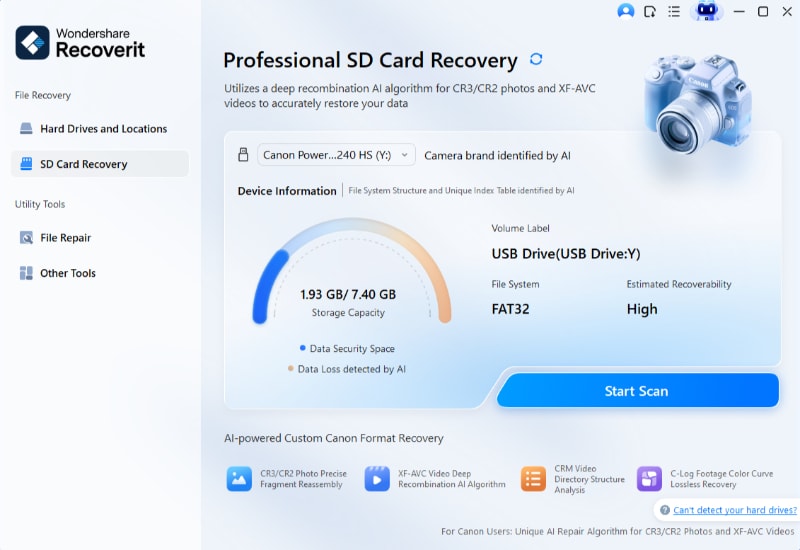
Power off or safely eject the portable card, remove it from the Android phone, and place it in a compatible USB card reader or SD adapter. Open Recoverit and choose SD Card Recovery. Confirm that the detected card’s capacity matches the number printed on the card before starting.
Step 2. Scan And Narrow The Results
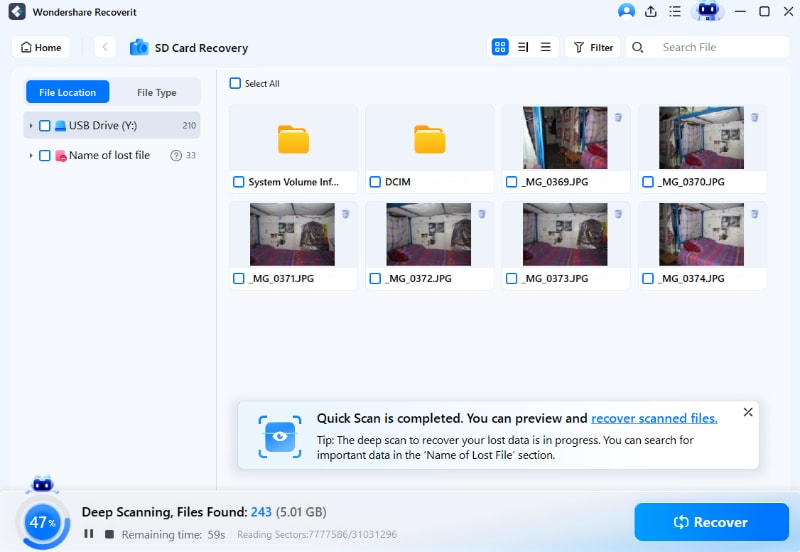
Start the scan. As files appear, filter by type, size, date, or extension. For Android camera media, check common folders and formats such as DCIM, JPG, HEIC, MP4, MOV, PNG, and DNG. Formatting may remove original folder names, so also inspect files grouped by type.
Step 3. Preview And Recover To Another Drive
Preview the photos, videos, or documents that Recoverit can open. Select the files you need, click Recover, and choose the computer’s internal drive or a different external drive as the destination. Do not save the files back to the formatted microSD card.
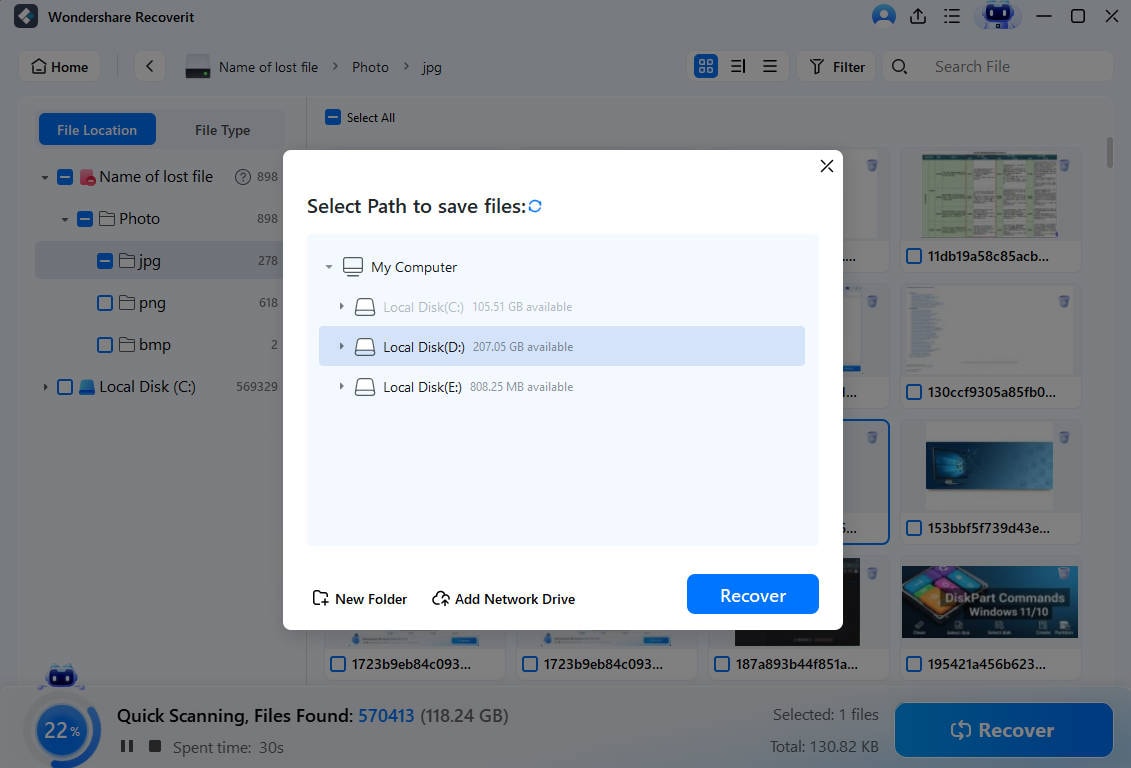
A successful preview is a useful sign that a file is intact, but no recovery tool can restore sectors that have already been overwritten or decrypt adopted storage without its required encryption context. If you need a broader guide for cards formatted in cameras, drones, or computers, see how to recover data from a formatted SD card.

Method 2. Restore Backed-Up Photos And Videos From Google Photos
Formatting the local card does not necessarily delete an existing cloud copy. Google Photos can back up the camera folder and other selected device folders, but only folders enabled before the format will have cloud copies. Google’s current help documentation places the Trash under Collections, not the older Library tab.
Step 1. Check The Correct Google Account
Open Google Photos on Android or visit photos.google.com. Tap the profile icon and verify every Google account used on the phone. Search by an approximate date, location, person, or object before assuming the media is missing.
Step 2. Check The Photos Library And Device-Folder Backup
If the items appear in the main Photos view, they are already in the account and can be downloaded again. To verify what was configured, go to Profile Photo > Photos Settings > Backup > Back Up Device Folders. Google notes that only selected device folders are backed up automatically.
Step 3. Restore Items From Trash When Available
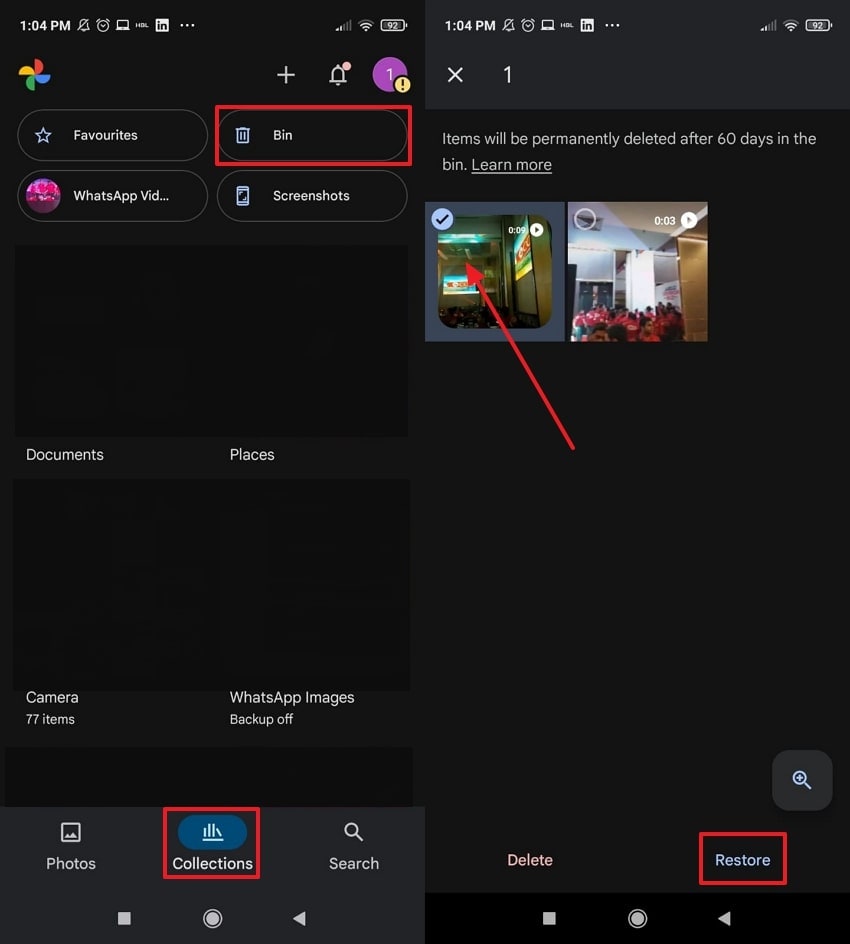
Go to Collections > Trash, select the photos or videos, and tap Restore. Google currently retains backed-up items in Trash for 60 days and unbacked-up items for 30 days. If the card format only removed the local copy, the cloud item may remain in the main library instead of Trash.
For the current official navigation and retention rules, see Google’s guides to backing up device folders and restoring photos and videos from Trash.
Other Copies Worth Checking Before A Second Scan
- Google Drive, OneDrive, Dropbox, or a manufacturer’s gallery-sync account.
- Windows Pictures, macOS Photos, Lightroom catalogs, or folders used during earlier imports.
- WhatsApp, Messages, email, or social-media conversations where copies were sent.
- A NAS, external drive, or computer backup that included imported phone media.
File-transfer tools can copy files that already exist in a backup folder, but they cannot recover sectors erased from a formatted SD card. This is why Android File Transfer should not be presented as a formatted-card recovery method.
Part 5. Can You Recover A Formatted Android SD Card Without A Computer Or Root?
Without a computer, the safest realistic options are restoring cloud copies or retrieving files from an existing backup. On-device recovery apps operate under Android storage permissions and may not receive the low-level access required to scan a formatted card fully. Installing an app, creating cache files, or saving results to the same card can also overwrite recoverable data.
Do not root a phone solely to attempt SD card recovery. Rooting changes the device security model and does not solve encryption loss on an adopted card. For a removable portable card, using a reader and a computer avoids writing the recovery software to the affected storage and gives the scanner direct access to the card.
Part 6. What To Do If The Formatted SD Card Is Not Detected
- Test One Other Reader Or Adapter: A bad microSD adapter can make a healthy card appear missing.
- Try Another USB Port Or Computer: This separates a connection problem from a card problem.
- Check The Reported Capacity: If a 128GB card appears as a few megabytes or keeps disconnecting, stop repeated scans.
- Do Not Initialize Or Format It: A system format prompt confirms that the file system is unreadable; it is not permission to overwrite it.
- Escalate High-Value Cases: Contact a professional recovery lab if the card is physically cracked, corroded, hot, undetected in multiple readers, or contains irreplaceable work.
If the card is stable but appears as RAW or shows files incorrectly, recover the data before attempting repair. Use the dedicated guides for a RAW SD card, an SD card with logical or physical damage, or an Android SD card affected by deletion or corruption.
Part 7. How To Avoid Another Android SD Card Format Loss
- Keep More Than One Copy: Back up important phone photos to both cloud storage and a computer or external drive.
- Verify Google Photos Folders: Camera backup does not mean every app folder is included. Review Back Up Device Folders after installing new apps.
- Read The Format Prompt Carefully: Confirm whether Android is offering portable or internal storage and understand that both setup choices format the card.
- Eject Before Removal: Unmount the card or power off the phone before removing it during active writes.
- Replace Unstable Cards: Retire cards that report recurring errors, disappear, slow down sharply, or corrupt new files.
Conclusion
To recover a formatted SD card from an Android phone, first stop using the card and determine how Android configured it. A portable microSD card that is still detected by a computer can be scanned with Recoverit, previewed, and recovered to a different drive. If the card was adopted as internal storage, Android encryption changes the case and a routine desktop scan may not be useful.
Check Google Photos and other backups before repeating scans. Avoid formatting, repair commands, on-card recovery apps, and promises of guaranteed recovery. If the card is unstable or the files are irreplaceable, preserve the card and escalate to a professional service.
FAQ
-
Q1: Can A Formatted SD Card Be Recovered On Android?
Sometimes. Recovery is most practical when the card was portable storage, remains detectable, and has not been overwritten or securely erased. An SD card adopted as internal storage is encrypted for the original Android device and requires a different assessment. -
Q2: Does Waiting Make A Formatted SD Card Unrecoverable?
Time alone is not the deciding factor. New writes, repeated formatting, erasure, loss of encryption keys, and physical degradation reduce recovery chances. Keep the card unused while deciding what to do. -
Q3: Can I Recover A Formatted SD Card On Android Without A Computer?
You can restore files from Google Photos or another backup without a computer. For an unbacked-up portable card, a PC or Mac with a reader is safer because ordinary Android apps may lack raw storage access and can write new data during installation or recovery. -
Q4: Do I Need To Root Android To Recover A Formatted MicroSD Card?
No. Do not root the phone solely for this task. Remove a portable card and scan it through a computer instead. Root access also does not remove the encryption used by adopted internal storage. -
Q5: Why Are Some Recovered Android Videos Corrupted?
A large video may be stored in multiple fragments. If some fragments were overwritten or the format operation changed required metadata, a scanner may recover only part of the file. Preview results before recovery and keep the original card unchanged. -
Q6: Should I Run CHKDSK Before Scanning The Card?
No. CHKDSK is a file-system repair tool, not a formatted-file recovery tool. It can change structures that a recovery scan may still need. Recover or image the card first, then consider repair only after the important data is safe.


